
What is a Debrief Meeting? A Complete Guide for High-Performing Teams
Excerpt:
In today’s fast-paced business world, where time is money and performance is everything, debrief meetings have become essential for teams aiming to improve continuously. But what exactly is a debrief meeting, and why should it matter to executives managing teams of 40 to 70 employees? This guide breaks it all down—from the purpose and structure of debriefs to best practices and common challenges.
Plus, see how Meeting For Goals—an all-in-one meeting management platform—can help your team stay aligned, accountable, and efficient. Learn how debrief meetings can supercharge your workflow, strengthen team morale, and drive performance across your company.
A debrief meeting is a structured conversation that takes place after a project, event, or key milestone. Its primary goal? To reflect on what happened. It aims to identify what worked, what didn’t, and figure out how to do better next time. Unlike status updates or planning sessions, debriefs are all about looking back. They help teams:
- Capture lessons learned
- Share insights
- Improve future performance
It’s an essential practice for high-performing teams that want to grow smarter with every experience. If you’re managing a team of 40 to 70 people, especially in a fast-moving environment, debriefs aren’t optional—they’re critical. They help prevent repeated mistakes, streamline processes, and uncover hidden opportunities for improvement.
For executives—Directors, VPs, Presidents, and C-suite leaders—debriefs offer a rare window into the frontlines. They reveal what’s really happening, spotlight systemic issues, and reinforce strategic priorities. This is where Meeting For Goals comes in. Our platform is designed to make every meeting—especially debriefs—more effective. With features like:
- Goal tracking
- Automated follow-ups
- Real-time documentation
You can turn every debrief into a performance-driving experience. Explore our free meeting templates to get started: https://meetingforgoals.com/meeting_templates
2 Minute Video
Watch a 2 minute demo of our meeting management software in action
II. The Importance of Debrief Meetings
Debriefs are more than just a check-the-box activity. They’re a core part of any high-functioning team’s workflow. When done well, they promote learning, build trust, and keep everyone aligned.
One of the biggest advantages of debrief meetings is knowledge sharing. In many organizations, valuable insights are stuck in silos. Debriefs provide a platform for team members to openly share what they learned—both the wins and the setbacks. This helps everyone get smarter, faster.
Continuous improvement is another major benefit. In agile and lean environments, iteration is everything. Debriefs allow teams to:
- Pause
- Evaluate
- Adjust before jumping into the next phase
This keeps your organization nimble and competitive. Debriefs also foster accountability. When teams come together to reflect on outcomes, it becomes easier to:
- Assign responsibility
- Follow through on next steps
This transparency builds trust and strengthens execution. For executives, debrief meetings offer strategic visibility. They show you how projects are unfolding, where bottlenecks exist, and whether your teams are aligned with overall goals. That’s powerful insight you can act on.
According to Harvard Business Review, teams that regularly conduct debriefs can improve performance by up to 25%. That’s a significant boost for something that takes less than an hour per project. Meeting For Goals enhances this process with tools built specifically for debriefs:
- Customizable agendas
- Performance dashboards
- Automated task tracking
It’s everything you need to turn meetings into momentum. Ready to bring structure and strategy to your team meetings? Sign up for free.
Adding an Agenda
How to add an agenda instantly on Meeting For Goals
III. Key Components of a Debrief Meeting
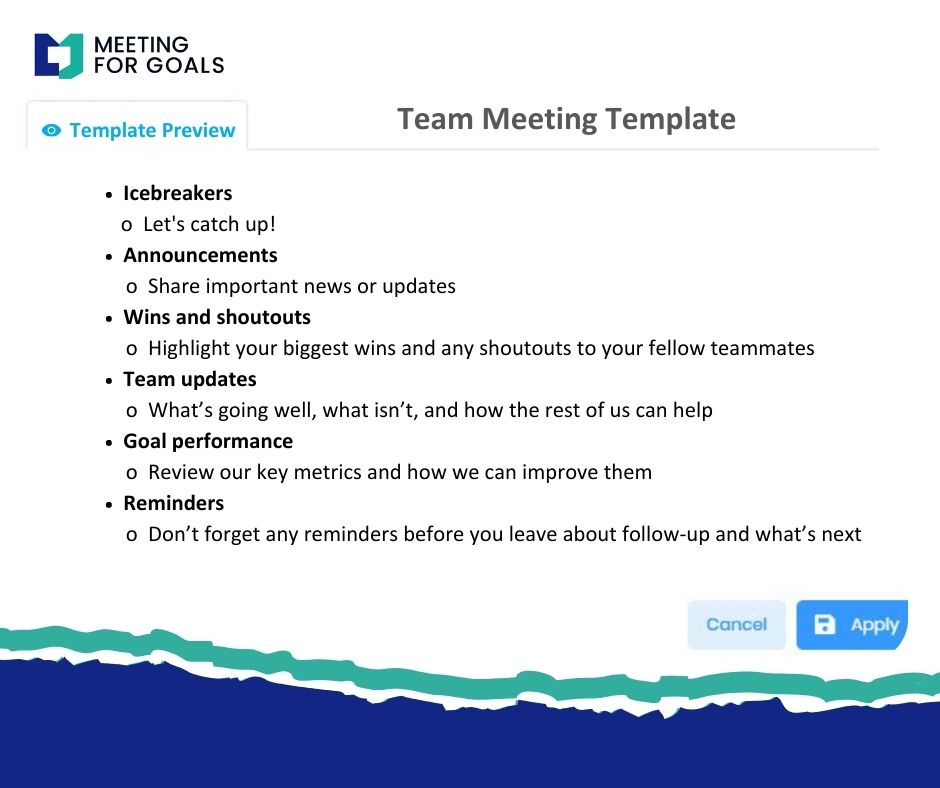
To make your debrief meetings effective, structure is key. Here are the core components every debrief should include:
- Clear Objectives:
Start with a clear goal. Are you reviewing a project, analyzing a failure, or celebrating a win? Knowing the objective helps everyone stay focused and contribute meaningfully. - Agenda Setting:
A strong agenda keeps the meeting on track. It should include:- A quick recap of the project or event
- What went well
- What didn’t go as planned
- Key lessons learned
- Action items and next steps
- Defined Roles:
Assigning roles boosts efficiency. Common roles include:- Facilitator: Guides the discussion and keeps things moving
- Recorder: Takes notes and captures decisions
- Timekeeper: Keeps an eye on the clock
- Documentation:
Don’t let valuable insights slip through the cracks. Document key takeaways, action items, and who’s responsible for what. This creates a clear record and helps with follow-through. With Meeting For Goals, documentation happens in real time. Notes, decisions, and tasks are automatically saved and accessible to everyone. - Follow-Up:
A great debrief doesn’t end when the meeting does. Schedule follow-ups to check progress on action items and see what’s improved. By including these elements, debriefs go from being a routine task to a strategic advantage.
IV. Best Practices for Conducting Debrief Meetings
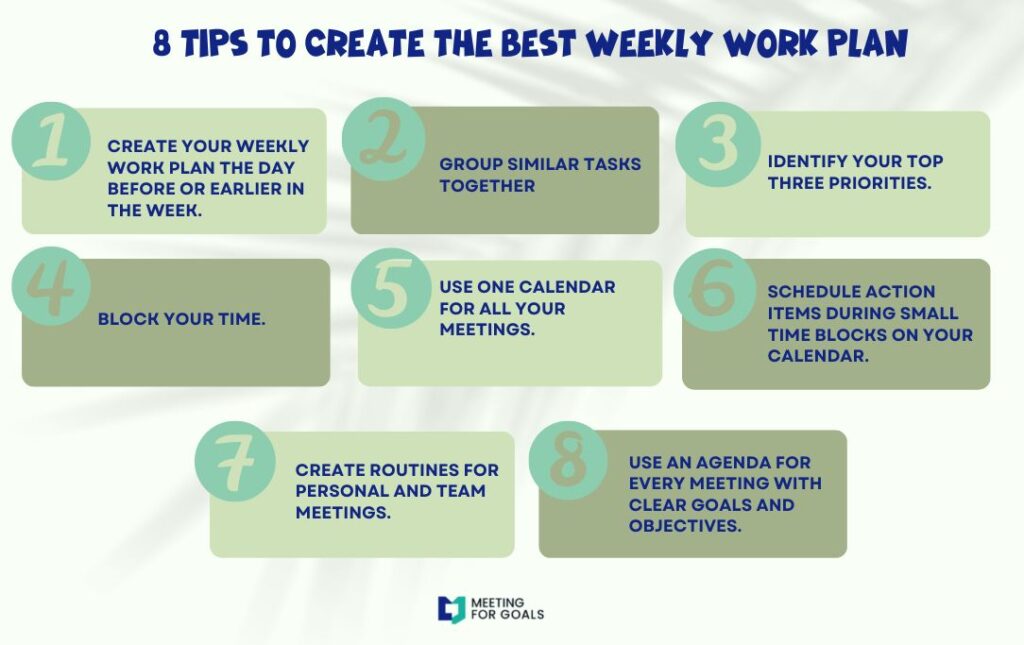
Even with the right structure, how you run the meeting makes all the difference. Here are some best practices to ensure your debriefs are high-impact:
- Keep It Short and Focused:
Aim for 30 to 45 minutes. Stick to the agenda and avoid going off-track. Respect everyone’s time by focusing on insights and outcomes. - Encourage Open Communication:
Create a safe space for honest feedback. Avoid finger-pointing. Instead, focus on learning and improvement. Ask open-ended questions like:- “What could we have done better?”
- “What surprised us?”
- “What would we change next time?”
- Establish Clear Action Items:
Every debrief should end with a list of action items. Assign each one to a specific person with a deadline. This ensures accountability and drives real change. - Use Data to Support Insights:
Back up your observations with data—timelines, budgets, KPIs, customer feedback. This keeps the conversation grounded and objective. - Use the Right Tools:
Technology can make or break your debrief process. Meeting For Goals helps you:- Build structured agendas
- Assign roles and responsibilities
- Capture notes and tasks in real time
- Track follow-ups and progress
- Align meetings with company goals
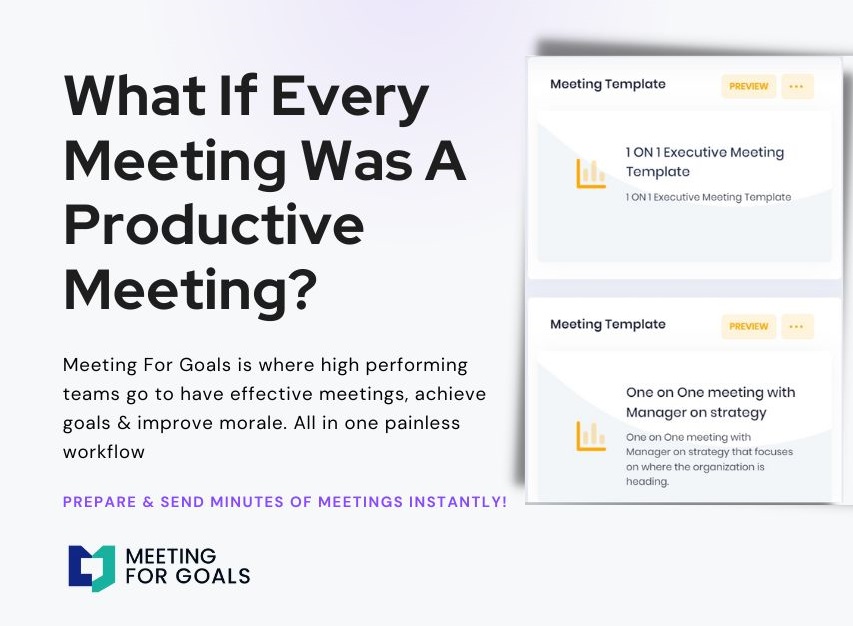
By following these best practices, your debriefs will become a reliable source of growth and alignment. Want to make your next debrief easier? Use our free meeting templates: https://meetingforgoals.com/meeting_templates.
V. Common Challenges in Debrief Meetings and How to Overcome Them
Even great teams can run into issues with debrief meetings. Here’s how to spot and fix the most common problems:
- Lack of Participation:
If people are quiet or disengaged, the meeting loses value. To fix this:- Set expectations ahead of time
- Rotate facilitators to encourage ownership
- Use anonymous input tools if needed
- Unclear Objectives:
Without a clear purpose, debriefs can feel aimless. Always define the goal in the calendar invite and restate it at the start of the meeting. - No Follow-Through:
A common pitfall is failing to act on what’s discussed. Make sure all action items are documented, assigned, and tracked. Meeting For Goals automates this with built-in reminders and progress tracking. - Time Overruns:
Going over time frustrates everyone. Use a timekeeper and stick to the agenda. Our platform even includes built-in timers to keep things moving. - Emotional Tension:
Debriefs can sometimes bring up tough topics. Keep the tone constructive:- Focus on processes, not people
- Reinforce the goal of improvement
- Use neutral language and active listening
By addressing these challenges head-on, you’ll keep your debriefs productive and positive. For more on building a strong meeting culture, check out this article from Atlassian on how to run effective team meetings: https://www.atlassian.com/blog/teamwork/how-to-run-effective-meetings.
VI. How Meeting For Goals Supports Effective Debriefs
Meeting For Goals is built to make your debrief meetings seamless and impactful. Here’s how it helps:
- Structured Agendas:
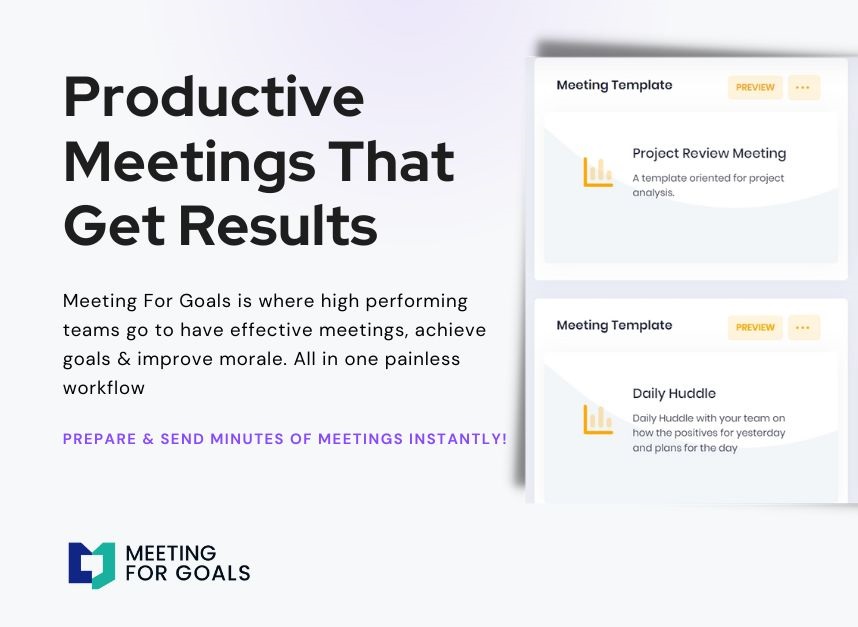
Use our templates or build your own to keep meetings focused. - Real-Time Notes:
Capture key points, decisions, and action items as they happen. - Role Assignment:
Assign facilitators, recorders, and timekeepers with ease. - Task Tracking:
Automatically assign action items with deadlines and reminders. - Performance Dashboards:
See how meetings align with company goals.
Everything is stored in one place, making it easy to refer back and stay accountable. Plus, our platform is intuitive and easy to use—no steep learning curve. Whether you’re a team lead or a C-level executive, you’ll find tools that fit your workflow and help you lead more effectively.
Want to see it in action? Start your free trial today.
VII. Conclusion: Turn Debriefs Into a Competitive Edge
Debrief meetings aren’t just another item on your to-do list. They’re a powerful way to learn, improve, and align your team with your company’s mission. For companies with 40 to 70 employees, especially those led by results-driven leaders, debriefs can become a secret weapon. They help teams:
- Work smarter, not harder
- Save time
- Improve outcomes
- Build a culture of accountability
But to unlock their full potential, debriefs need structure, consistency, and the right tools. That’s where Meeting For Goals shines. From planning to follow-up, our platform helps you turn every meeting into a catalyst for performance.
If you’re ready to take your team to the next level, don’t just meet—meet with purpose. Explore our platform: https://meetingforgoals.com
Sign up for a free trial: https://app.meetingforgoals.com/TenantRegistration/Register
Try our ready-to-use templates: https://meetingforgoals.com/meeting_templates. With the right approach, debrief meetings can become your team’s most valuable habit. Make them count—starting today.