
Effective Meeting Agendas: A Blueprint for Productive Teams
In today’s fast-paced business world, meetings are essential. However, they can also be a massive time sink if not done right. For **growing companies** with **40–70 employees**, where every decision matters, making meetings productive is **non-negotiable**. That’s where a well-structured meeting **agenda** comes in. It’s not just a list of topics—it’s a game plan that drives clarity, keeps everyone aligned, and turns conversations into action.
In this guide, we’ll walk you through how to create effective meeting agendas, share best practices, and show how **Meeting For Goals**—our all-in-one meeting management software—can help you run meetings that actually get things done. Whether you’re a **Director**, **VP**, or **C-suite leader**, this post will show you how to make every meeting count.
Ready to get started? Check out our free meeting templates to jumpstart your next agenda: https://meetingforgoals.com/meeting_templates
2 Minute Video
Watch a 2 minute demo of our meeting management software in action
I. Why Meeting Agendas Matter
Meetings without a plan can quickly go off the rails. For high-performing teams, especially in mid-sized companies, a clear agenda is the difference between a **productive session** and a **frustrating time-waster**.
A solid agenda sets the tone. It tells your team:
- What the meeting is about
- Why it matters
- What you need from them
It also helps leaders steer the conversation toward **company goals**, ensuring that every topic discussed has a purpose.
At **Meeting For Goals**, we built our platform to help teams stay focused and aligned. Our software simplifies the entire meeting process—from planning to follow-up—so you can spend less time managing meetings and more time driving results.
If you’re ready to streamline your meetings, sign up today.
Adding an Agenda
How to add an agenda instantly on Meeting For Goals
II. The Real Purpose Behind a Meeting Agenda
Let’s break it down. A meeting agenda isn’t just a checklist—it’s a roadmap. It keeps everyone on track and ensures that the meeting delivers value.
Clarifying Objectives
Every meeting should have a **clear objective**. Are you making a decision? Solving a problem? Reviewing performance? Whatever the goal, it should be stated **upfront**.
Instead of calling a meeting “Team Sync,” try something like: “**Objective**: Finalize Q3 campaign strategy and assign next steps.” This sets clear expectations and helps everyone prepare.
Aligning With Company Goals
Great meetings are tied to bigger business objectives. If your team is working on **customer retention**, **product development**, or **process improvement**, your agenda should reflect that.
**Meeting For Goals** makes this easy. You can tag agenda items with specific company goals, so every topic stays aligned with what matters most.
Setting Expectations
A strong agenda tells people what to expect and what’s expected of them. If someone needs to present data or lead a discussion, that should be listed in the agenda.
This level of clarity boosts **engagement**, reduces confusion, and ensures everyone comes prepared.
III. What Every Great Agenda Should Include
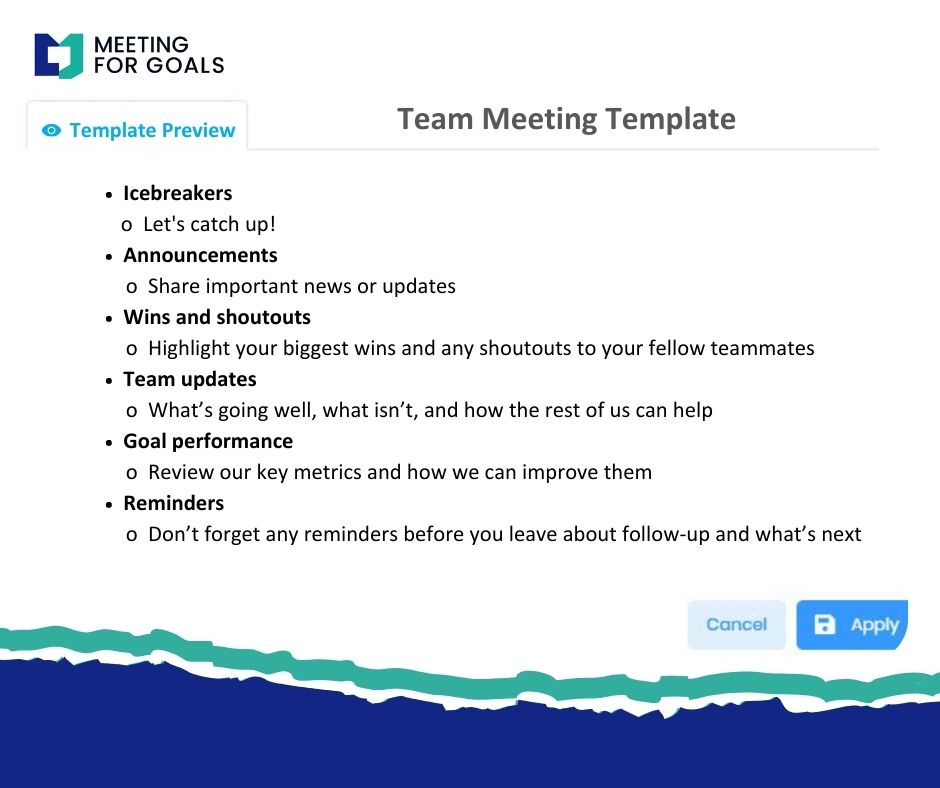
You don’t need a 10-page document. But you do need structure. Here are the key components of a great meeting agenda:
- Meeting Title and Date: Start with the basics. Include the meeting title and date so everyone knows what it’s about and when it’s happening.
- Attendees: List who’s attending and their roles. This helps people understand who’ll be in the room and what perspectives will be shared.
- Time Allocation: Assign a time limit to each agenda item. This keeps the conversation focused and helps avoid running over.
- Q2 Review – 10 minutes
- Feature Launch Planning – 15 minutes
- Open Discussion – 5 minutes
- Discussion Topics: List each topic with a few bullet points. This gives participants a preview of what’s coming and helps them prepare.
- Topic: Customer Feedback Summary
- Key trends from last month
- Suggestions for next sprint
- Prioritization of fixes
- Topic: Customer Feedback Summary
- Action Items: Good meetings lead to action. Your agenda should include space to assign tasks and responsibilities.
**Meeting For Goals** makes this easy—you can assign action items in real time and track them afterward. - Open Floor: Always leave a few minutes for unexpected questions or feedback. This gives team members a chance to bring up anything that wasn’t on the agenda.
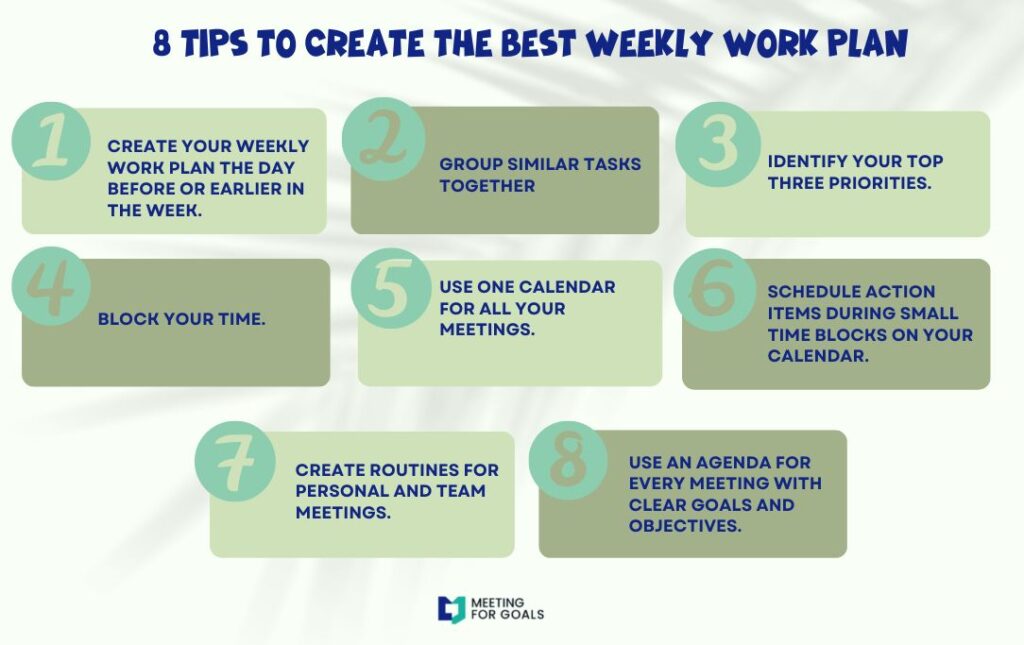
IV. Best Practices for Creating Agendas That Work
Even the best agenda components won’t help if you don’t use them right. Here are some **best practices** to make your agendas truly effective:
- Make It a Team Effort: Don’t create agendas in a vacuum. Involve key stakeholders so you capture the right topics and perspectives. If your meeting includes marketing and product teams, get input from both. **Meeting For Goals** supports **real-time collaboration**, so multiple people can build the agenda together.
- Keep It Focused: Avoid cramming too much into one meeting. Stick to **3–5 key topics** that align with your objective. If more discussion is needed, schedule a follow-up.
- Send It Early: Distribute the agenda at least **24–48 hours** before the meeting. This gives everyone time to prepare and offer feedback. You can easily share agendas through **Meeting For Goals** using email or calendar integrations.
- Build In Flexibility: Things don’t always go as planned. Leave a little buffer time for unexpected issues or deeper discussions. A good agenda is structured but flexible.
V. Using Technology to Supercharge Your Agendas
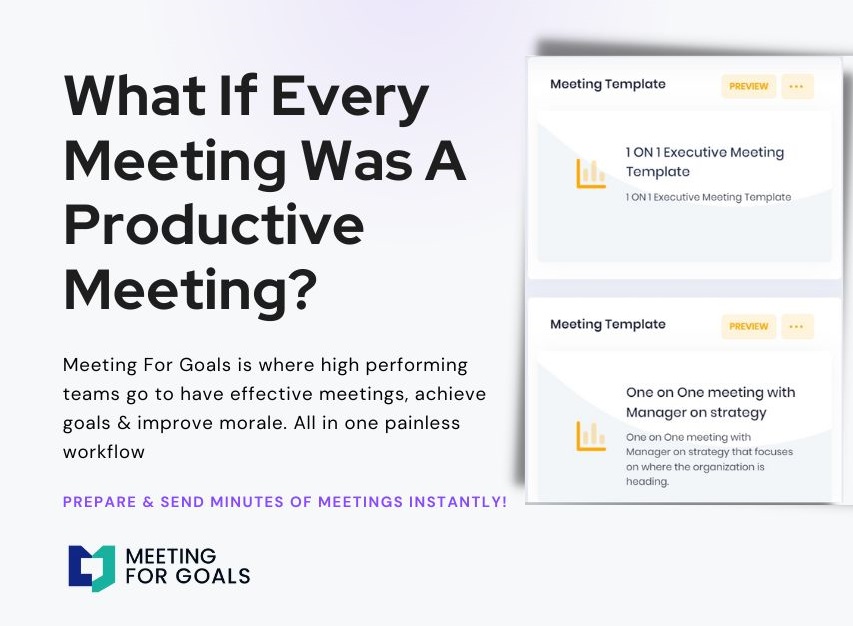
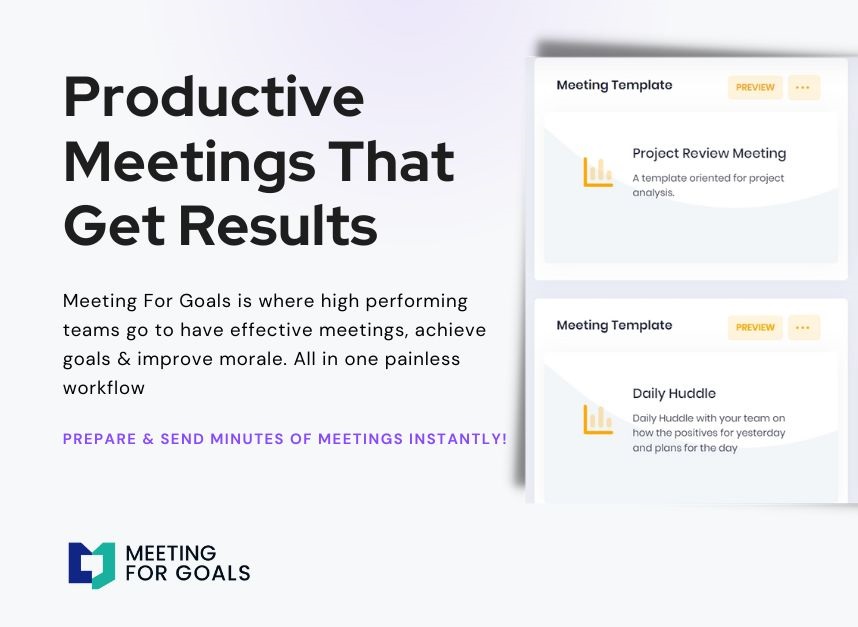
Let’s face it—manual agendas are a pain. That’s why tools like **Meeting For Goals** exist. Our platform helps you create, manage, and follow up on meetings with ease.
Agenda Templates and Goal Tagging
Use our built-in templates to save time and ensure consistency. You can also tag each agenda item with a **strategic goal**, so discussions stay aligned with business priorities.
Real-Time Collaboration
Need input from multiple team members? No problem. Our platform allows **real-time collaboration**, so everyone stays in sync—no version confusion.
Action Tracking and Follow-Up
During your meeting, assign tasks and deadlines directly in the platform. Afterward, automated reminders keep everyone accountable. Executives can even view dashboards to track progress across teams—no more guessing if things got done.
Want to see it in action? Schedule a demo.
VI. Real-World Benefits of Structured Agendas
Still not convinced? Here’s what happens when you start using **structured agendas**:
- Shorter Meetings: When everyone knows the plan, meetings stay on track. You’ll spend less time circling around topics and more time making decisions.
- Better Engagement: Clear expectations lead to better preparation. Team members show up ready to contribute, not just listen.
- More Accountability: With action items built into the agenda, it’s easier to follow up and ensure things get done.
- Stronger Alignment: When your agenda ties back to **company goals**, every meeting becomes a strategic step forward.
VII. Bonus Tips: Make Your Meetings Even Better
Want to take your meetings to the next level? Try these quick tips:
- Rotate Meeting Leads: Let different team members lead meetings. This builds leadership skills and brings fresh perspectives.
- Use Visual Aids: Charts, dashboards, and slides can help make your points clearer and more engaging.
- Start and End on Time: Respect everyone’s time. Starting and ending on schedule builds trust and discipline.
- Review and Improve: After each meeting, ask for feedback. What worked? What didn’t? Use that input to improve future agendas.
VIII. Learn From the Experts
If you want to dive deeper into meeting best practices, check out these two excellent resources:
- Harvard Business Review’s guide on Running Meetings That Are Actually Useful
- The Atlassian Team Playbook for better team collaboration: https://www.atlassian.com/team-playbook/plays/meeting-agendas
Both are packed with insights from top organizations and can help you refine your meeting strategy even further.
IX. Conclusion: Make Every Meeting Count
Let’s be honest—no one likes meetings that drag on with no clear purpose. But with the right agenda, you can turn meetings into powerful tools for alignment, decision-making, and progress.
By using structured agendas, following best practices, and leveraging technology like **Meeting For Goals**, your team can save time, stay focused, and drive results.
Whether you’re leading a product team, managing operations, or setting company strategy, effective agendas are your **secret weapon**.
Ready to transform your meetings? Get started with our free meeting templates: https://meetingforgoals.com/meeting_templates
Or sign up today and start building smarter agendas with **Meeting For Goals**: https://app.meetingforgoals.com/TenantRegistration/Register
Let’s make every meeting a step forward.
Visit us at https://meetingforgoals.com to learn more.