
In today’s fast-paced business world, unproductive meetings don’t just waste time—they hold your team back from hitting key goals.
In today’s fast-paced business world, unproductive meetings don’t just waste time. They hold your team back from hitting key goals. If you’re leading a high-performing team at a mid-sized company (think **40 to 70 employees**), keeping meetings aligned with strategic priorities isn’t just a nice-to-have—it’s essential. That’s where **Keyword Alignment Meetings** come in.
These meetings aren’t your typical team huddles. They’re structured, purpose-driven sessions designed to keep everyone focused on what really matters. Powered by tools like **Meeting For Goals**, Keyword Alignment Meetings make it easy to turn conversations into action.
In this post, we’ll break down what Keyword Alignment Meetings are, how they work, and how you can use **Meeting For Goals** to lead with clarity, purpose, and measurable outcomes.
If you’re ready to transform your meetings, start by exploring our free meeting templates at https://meetingforgoals.com/meeting_templates or sign up to **Meeting For Goals** today at https://app.meetingforgoals.com/TenantRegistration/Register.
2 Minute Video
Watch a 2 minute demo of our meeting management software in action
The Power of Keyword Alignment Meetings
I. Introduction
Meetings are the lifeblood of communication in any organization. But let’s be honest—how many meetings have you left wondering, “What was the point of that?”
Especially in mid-sized companies, where teams are growing and responsibilities are expanding, meetings can easily spiral into time-wasting marathons. Without a clear focus, they drift. And when they drift, productivity and morale suffer.
That’s why **Keyword Alignment Meetings** are such a game-changer.
A **Keyword Alignment Meeting** is a structured approach where every agenda item and discussion point is tied to specific keywords. These keywords are pulled directly from your company’s strategic goals—like **“customer retention,” “market expansion,”** or **“cost efficiency.”**
The idea is simple: keep every conversation anchored to what truly matters.
This isn’t just theory. High-level leaders—Directors, VPs, Presidents, and C-suite execs—need a way to ensure their teams aren’t just busy, but productive. **Keyword Alignment Meetings** offer a proven way to do just that.
And with **Meeting For Goals**, this process becomes seamless. The platform helps you plan, run, and follow up on meetings that are focused, actionable, and aligned with your business objectives.
Let’s dive deeper into how keyword alignment works and how you can start using it today.
Adding an Agenda
How to add an agenda instantly on Meeting For Goals
II. Understanding Keyword Alignment
At its core, **keyword alignment** is about clarity and focus.
Think of keywords as your team’s **North Star**. They’re short, strategic phrases that reflect your company’s top priorities. When you use them to shape your meetings, you’re making sure every discussion helps move the needle.
Let’s say your company’s quarterly goals include:
- Improving customer retention
- Launching a new product
- Reducing operational costs
Your keywords might be: **“customer retention,” “product launch,”** and **“cost reduction.”** Every agenda item in your meetings should tie back to one of these.
Why does this matter?
Because it cuts through the noise. It keeps your team from going off on tangents. It also helps everyone understand how their work connects to the bigger picture.
And there’s data to back this up. According to a study by **Harvard Business Review**, companies that align their meetings with strategic goals are **2.5 times** more likely to outperform their peers in execution and productivity.
**Keyword alignment** also builds accountability. When team members know they’re expected to speak to specific goals, they come more prepared. They think more critically. They deliver better outcomes.
**Meeting For Goals** makes this easy. You can tag agenda items with keywords, track alignment in real-time, and generate reports that show how each meeting supports your company’s mission.
Want to see how it works? Check out our platform at https://meetingforgoals.com.
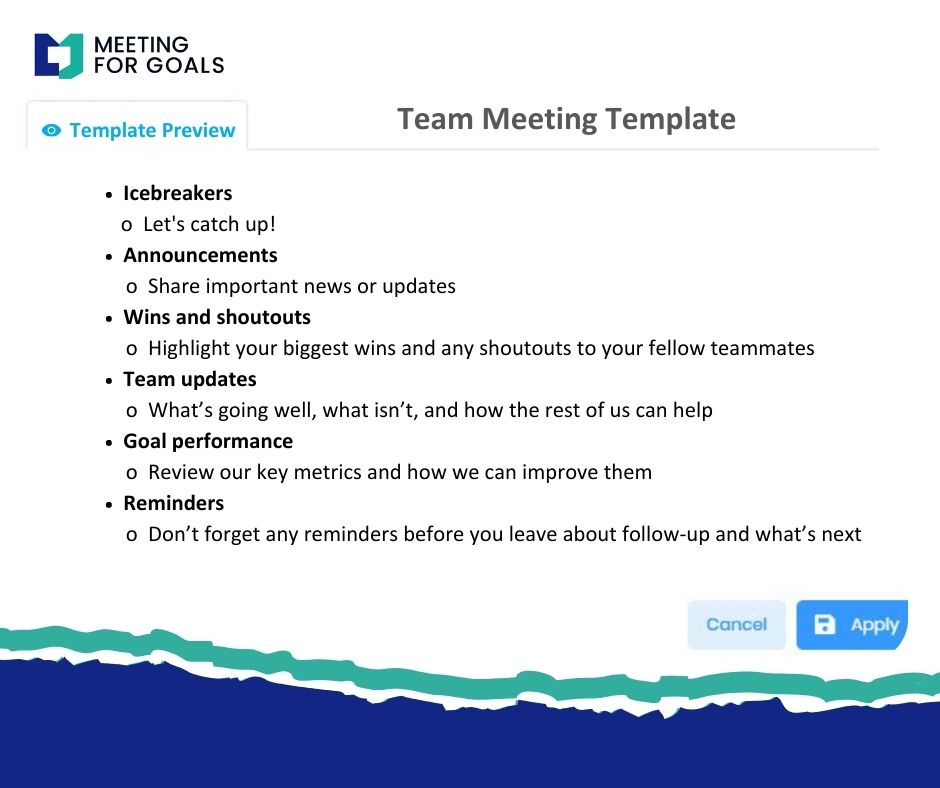
III. Setting the Stage for Effective Meetings
Great meetings start with great preparation.
When it comes to **Keyword Alignment Meetings**, the prep work is everything. You’re not just picking a time and place—you’re designing a strategic session.
Here’s how to get started:
- Identify Your Keywords
Begin by reviewing your company’s strategic goals. What are the top **3–5 priorities** for this quarter? From each goal, extract a keyword. For example, if a goal is to **“expand into new markets,”** your keyword might be **“market expansion.”** - Build a Focused Agenda
Use these keywords to shape your meeting agenda. Each discussion point should tie back to at least one keyword. This ensures that every topic is relevant and purposeful. - Share the Agenda in Advance
Send out the agenda before the meeting. This gives your team time to prepare and align their contributions with the keywords. - Set Clear Objectives
What do you want to achieve in this meeting? Decisions? Action plans? Problem-solving? Define your objectives clearly so everyone knows what success looks like.
**Meeting For Goals** simplifies all of this. With built-in calendar integration, agenda templates, and keyword tagging, you can create a strategic roadmap for every meeting.
The platform also offers pre-meeting prompts and templates to help you structure your sessions effectively. Whether it’s a weekly team check-in or a quarterly strategy review, you’ll be prepared to lead with purpose.
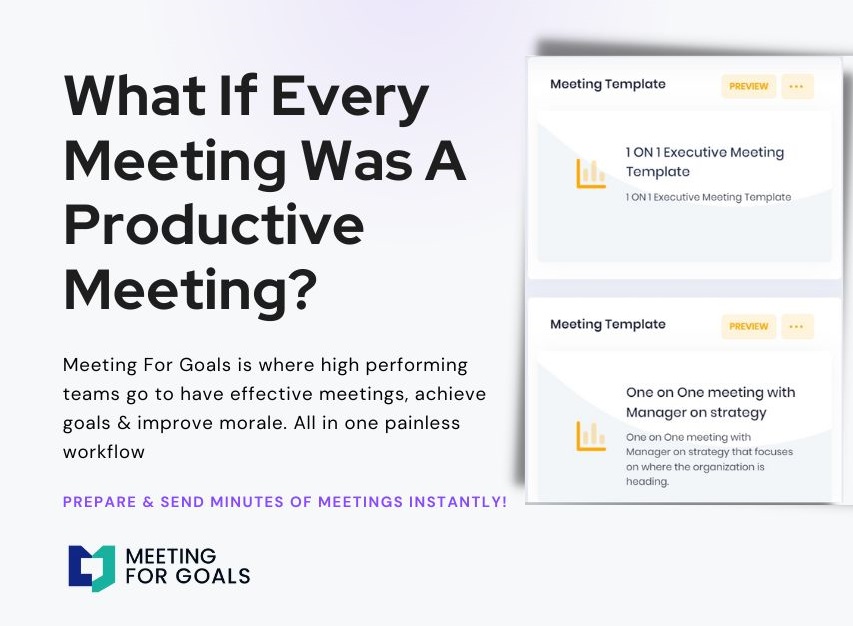
Need help building your next agenda? Use our free templates at https://meetingforgoals.com/meeting_templates.
IV. Executing the Meeting with Purpose
Now comes the moment of truth—running the actual meeting.
Even the best-prepared meeting can fall apart without good execution. That’s why structure and facilitation are key.
Here’s how to run a **Keyword Alignment Meeting** that delivers real results:
- Open with Purpose
Start by reviewing the meeting’s objectives and the keywords. This sets the tone and reminds everyone why they’re there. - Anchor Every Topic to a Keyword
As you move through the agenda, continuously tie discussions back to the keywords. If someone brings up a new idea, ask: “How does this support our goal of customer retention?” - Designate a Facilitator
A good facilitator keeps the meeting on track. They manage time, encourage participation, and steer the conversation back to the keywords when it drifts. - Use Visual Aids
**Meeting For Goals** lets you display your agenda, keywords, and notes in real-time. This keeps everyone focused and makes it easy to track progress. - Encourage Engagement
Ask targeted questions. Invite feedback. Use breakout groups if needed. When people see how their input ties to strategic goals, they’re more motivated to contribute. - Document in Real-Time
Capture key decisions and action items as they happen. With **Meeting For Goals**, this is built into the platform—no more scrambling to remember what was said.
By the end of the meeting, everyone should know what was decided, who’s doing what, and how it connects to your company’s goals.
For more tips on running effective meetings, check out this guide from **Atlassian** on how to lead productive team meetings.
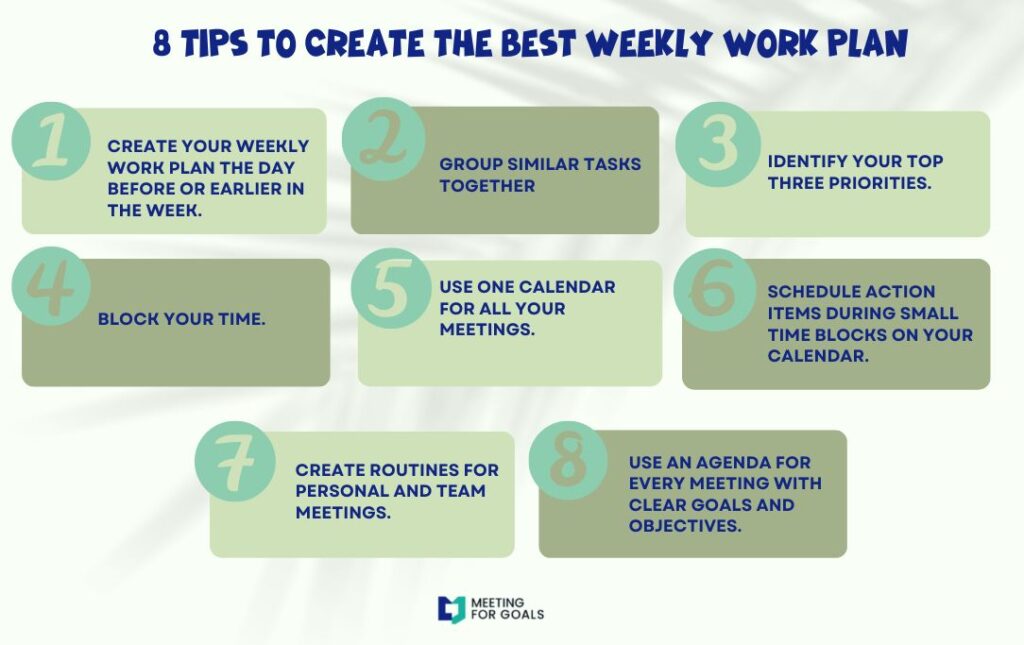
V. Post-Meeting Assessment and Accountability
A meeting isn’t over when everyone leaves the room. In fact, that’s when the real work begins.
Without follow-up, even the best meetings lose their impact. That’s why post-meeting assessment and accountability are essential parts of the **Keyword Alignment** process.
Here’s how to close the loop:
- Send a Recap
Summarize key decisions, action items, and assigned responsibilities. Share this with all participants within **24 hours**. - Assign Ownership
Every action item should have a clear owner and deadline. When people know they’re accountable, they’re more likely to follow through. - Track Progress
Use **Meeting For Goals** to monitor action items over time. The platform sends automated reminders and integrates with your team’s workflow tools, so nothing slips through the cracks. - Reflect and Improve
Ask yourself: Was the meeting effective? Did we stay aligned with our keywords? What can we do better next time? - Schedule Follow-Ups
If an issue needs more discussion, schedule a follow-up meeting. But only if it’s necessary—and make sure it’s keyword-aligned.
**Meeting For Goals** makes all of this easy. With built-in tracking and reporting, you can see how well your team is executing on meeting outcomes. You’ll also get insights into which keywords are driving the most impact.
Want to keep your team accountable and aligned? Sign up now at https://app.meetingforgoals.com/TenantRegistration/Register.
VI. Conclusion
In today’s competitive landscape, you can’t afford to waste time in meetings that go nowhere.
**Keyword Alignment Meetings** offer a simple but powerful solution. By anchoring your discussions in strategic keywords, you bring clarity, focus, and accountability to every meeting.
You eliminate the fluff. You drive real results. And you help your team stay connected to what matters most.
**Meeting For Goals** makes it easy to implement this approach. From agenda planning to execution and follow-up, it’s your all-in-one tool for running better meetings.
Whether you’re a **Director, VP**, or **C-suite executive**, **Keyword Alignment Meetings** can transform how your team communicates and performs.
Ready to lead with purpose?
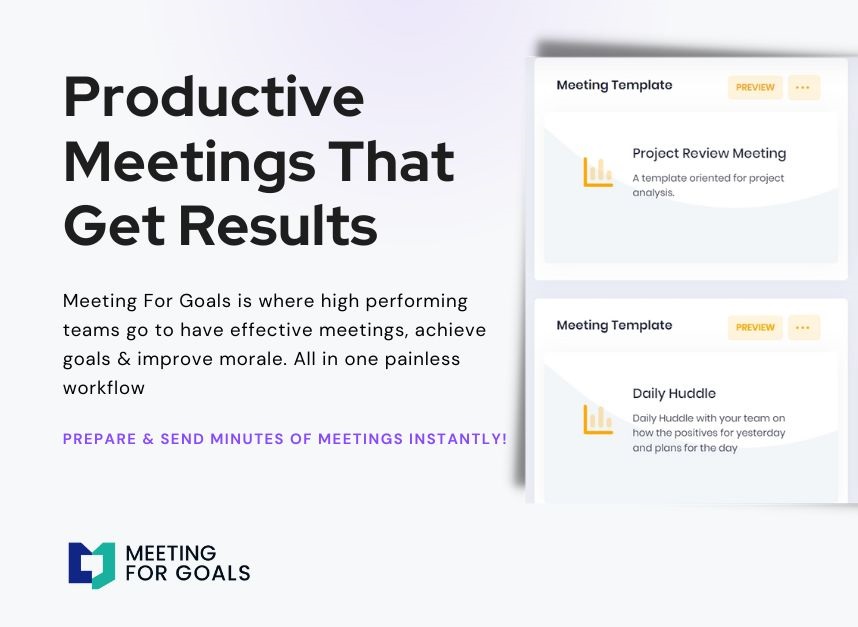
Start by identifying your strategic keywords. Use **Meeting For Goals** to structure your meetings. And explore our free templates at https://meetingforgoals.com/meeting_templates to get started.
Then sign up at https://app.meetingforgoals.com/TenantRegistration/Register and turn your meetings into momentum.
For more resources and insights, visit us at https://meetingforgoals.com. Let’s build a culture of focused, goal-driven collaboration—one meeting at a time.
External Resources
Learn more about the impact of strategic alignment in meetings from **Harvard Business Review**: https://hbr.org/2017/07/why-meetings-go-wrong-and-how-to-fix-them
Explore **Atlassian’s** guide to running productive meetings: https://www.atlassian.com/blog/teamwork/how-to-run-effective-meetings