
The Ultimate Guide to the Keyword Event Agenda Template: Drive Focus, Accountability, and Results in Every Meeting
The Ultimate Guide to the Keyword Event Agenda Template: Drive Focus, Accountability, and Results in Every Meeting
Section 1: Introduction to Effective Meeting Management
Let’s face it—most meetings today are broken. They start late, run long, and often end without any clear decisions or next steps. For Directors, VPs, and C-suite leaders, this isn’t just frustrating—it’s costly. Time spent in unproductive meetings is time not spent moving the business forward.
That’s where the Keyword Event Agenda comes in. It’s a simple, structured approach to planning meetings that actually get things done. Instead of vague topics and open-ended discussion points, this method uses action-oriented keywords to clarify intent, define outcomes, and assign responsibility.
At Meeting For Goals, we help high-performing teams run smarter, more strategic meetings. Our platform is built around tools like the Keyword Event Agenda to help you align every meeting with your company’s objectives. You can even get started today by signing up for a free account at https://app.meetingforgoals.com/TenantRegistration/Register.
Let’s dive into how this agenda format can transform your meetings from time-wasters into productivity powerhouses.
2 Minute Video
Watch a 2 minute demo of our meeting management software in action
Section 2: The Components of a Keyword Event Agenda
A Keyword Event Agenda isn’t just a list of topics—it’s a strategic blueprint. Each component is designed to keep your meeting focused, purposeful, and aligned with your business goals.
- Meeting Title
Start with a clear, descriptive title. It should immediately tell participants what the meeting is about. For example:
- “Q3 Product Launch Planning”
- “Weekly Sales Performance Review”
This sets expectations before the meeting even begins.
- Objectives Aligned with Company Goals
Every meeting should have 2–3 clear, measurable objectives. These should tie directly to your company’s strategic priorities.
For instance, if your quarterly goal is to expand into a new market, a meeting objective might be:
- “Evaluate readiness for Southeast Asia market entry.”
Keep objectives visible at the top of your agenda so everyone stays aligned.
- Keyword-Driven Agenda Items
This is the secret sauce. Instead of writing “Marketing Update,” use keywords like:
- “Review Q2 campaign performance”
- “Decide on Q4 budget allocation”
These action words signal what’s expected—whether it’s a decision, review, or plan.
- Time Allocation
Assign a specific time to each agenda item. This keeps the meeting on track and ensures every topic gets the attention it deserves.
Example:
- “Decide on Q4 budget allocation – 15 minutes”
- Assigned Responsibilities
Each item should have an owner. This person is responsible for leading the discussion or presenting data.
Example:
- “Review Q2 campaign performance – 10 minutes (Led by: Jamie, Marketing Director)”
- Additional Notes or Pre-Reads
Include links to documents or data that should be reviewed before the meeting. This ensures participants come prepared and ready to contribute.
By putting all these elements together, you create a clear, actionable roadmap for your meeting. Want to skip the formatting work? Download our free meeting templates at https://meetingforgoals.com/meeting_templates.
Adding an Agenda
How to add an agenda instantly on Meeting For Goals
Section 3: Setting Meeting Objectives Aligned with Company Goals
One of the biggest reasons meetings fall flat is because they lack clear objectives. Without defined goals, it’s easy for conversations to drift or stall.
Why Objectives Matter
Objectives are your meeting’s north star. They tell everyone what success looks like. For leadership teams, this clarity is critical. You need to know that your meetings are driving real progress toward your company’s strategic goals.
How to Define Effective Meeting Objectives
Here are four quick tips:
- Be Specific: Avoid general goals like “Talk about customer service.” Instead, go for: “Identify top three service issues impacting retention.”
- Make Them Measurable: Tie objectives to metrics when possible. For example: “Finalize hiring plan for Q4—targeting five new roles.”
- Ensure Relevance: Align objectives with key business initiatives. If your focus is customer retention, your objectives should support that.
- Limit the Number: Stick to 2–3 primary objectives. This keeps the meeting focused and achievable.
Examples of Aligned Meeting Objectives
Let’s say your company’s goals include reducing churn and expanding into new markets. Your meeting objectives might be:
- “Analyze churn data to identify top three causes”
- “Develop a go-to-market plan for Southeast Asia”
- “Assign owners for onboarding improvement initiatives”
These objectives are clear, actionable, and aligned with broader company goals.
Embedding Objectives into the Agenda
Place your objectives at the top of your Keyword Event Agenda. This keeps everyone focused and provides a reference point throughout the meeting.
Want to see how this works in action? Visit https://meetingforgoals.com to explore our resources and examples.
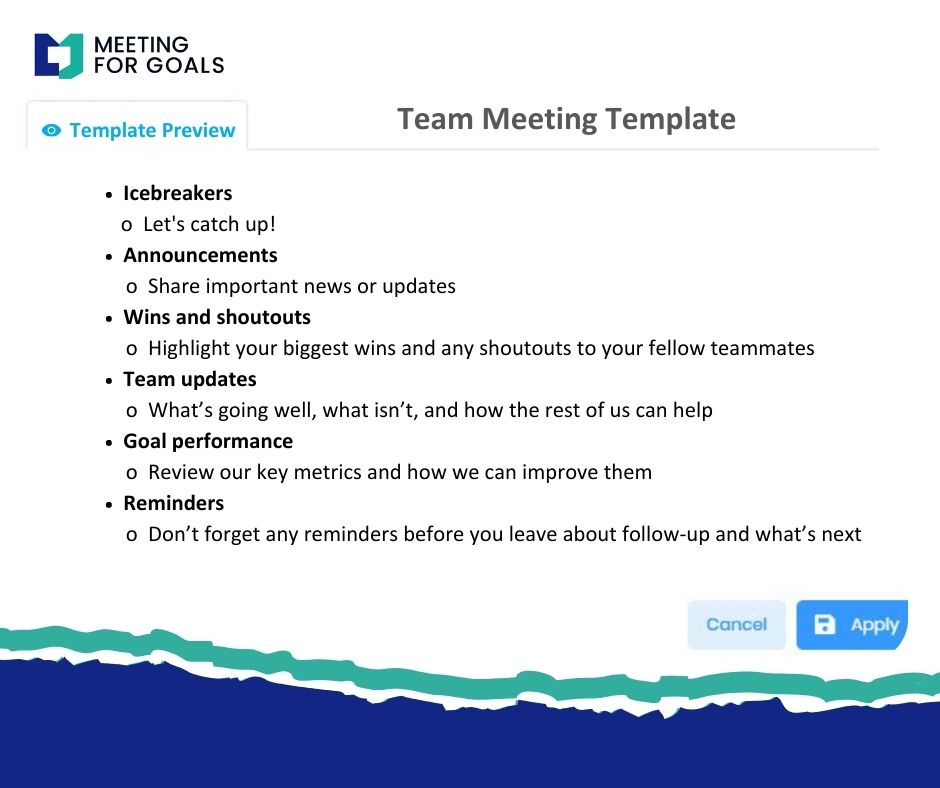
Section 4: Crafting Agenda Items with Keywords
Now that you’ve set your meeting objectives, it’s time to build the agenda. This is where keywords come into play.
The Power of Keywords
Keywords like “Review,” “Decide,” “Plan,” and “Assign” signal what kind of action is expected. This helps participants prepare and stay engaged.
Here’s a breakdown of popular keywords and what they mean:
- Review: Look at data, documents, or progress reports
- Decide: Make a final decision on an issue
- Plan: Outline next steps or strategies
- Assign: Delegate tasks or responsibilities
- Approve: Give final sign-off on a proposal
Best Practices for Writing Keyword Agenda Items
- Keep it short: One line is enough.
- Use one keyword per item: Don’t mix multiple actions into one line.
- Tie to objectives: Make sure each item supports one of your meeting’s goals.
- Assign ownership: Identify who will lead the discussion.
Examples of Keyword Agenda Items
Let’s say one of your objectives is to “Develop an action plan to reduce churn.” Your agenda items might look like this:
- “Review Q2 churn data – 10 min (Led by: Alex, Data Analyst)”
- “Brainstorm retention strategies – 15 min (Led by: Maria, Head of Customer Success)”
- “Assign follow-up tasks – 10 min (Led by: Jamie, Project Manager)”
Each item is clear, time-boxed, and linked to a specific action. No guesswork.
Benefits of Keyword Agenda Items
- Keeps discussions focused
- Clarifies expectations
- Speeds up decision-making
- Improves meeting prep
This small change has a big impact. It turns your agenda into a tool for execution, not just a list of topics.
Section 5: Enhancing Accountability and Responsibility Allocation
Great meetings don’t just end with good ideas—they end with clear ownership. That’s why accountability is a core part of the Keyword Event Agenda.
Why Accountability Matters
Without it, meetings become talk shops. Assigning ownership makes sure that decisions turn into action.
How to Assign Responsibilities in the Agenda
Each agenda item should name someone who is responsible for leading that part of the discussion.
Examples:
- “Review Q2 churn data – 10 min (Led by: Alex)”
- “Decide on final product features – 15 min (Led by: Maria)”
This adds clarity and encourages people to come prepared.
Best Practices for Accountability
- Use names: Don’t say “Marketing Team”—say “Jamie from Marketing.”
- Follow up: Use meeting notes or task trackers to keep tabs on progress.
- Reconfirm responsibilities: At the end of the meeting, summarize who’s doing what.
- Leverage tools: Use Meeting For Goals software to assign and track follow-ups automatically.
How Keywords Reinforce Accountability
Keywords like “Assign,” “Approve,” and “Decide” naturally imply ownership. When paired with a name, they make responsibility crystal clear.
Example:
- “Assign Q4 campaign tasks – 10 min (Led by: Jamie)”
Everyone leaves the meeting knowing what’s expected of them.
Need help tracking follow-ups? Sign up at https://app.meetingforgoals.com/TenantRegistration/Register and use our built-in accountability tools.
Section 6: Conclusion: Measuring Success and Continuous Improvement
The Keyword Event Agenda isn’t just a one-time fix. It’s a framework that helps your team improve over time.
Recap of Benefits
- Clear objectives aligned with business goals
- Focused, keyword-driven discussions
- Built-in accountability
- Efficient use of time
Measuring Success
Here’s how to track whether your meetings are getting better:
- % of objectives achieved
- Number of follow-up tasks completed
- Participant satisfaction scores
- Average meeting duration
Use these metrics to evaluate and refine your approach.
Next Steps
Ready to try it out? Start with your next team meeting. Use our free Keyword Event Agenda template at https://meetingforgoals.com/meeting_templates.
Better yet, use our software to automate the process. With Meeting For Goals, you can:
- Build keyword-driven agendas in minutes
- Align meetings with OKRs or KPIs
- Assign and track responsibilities
- Analyze meeting effectiveness over time
Call to Action
Don’t let another meeting go to waste. Sign up now at https://app.meetingforgoals.com/TenantRegistration/Register and start running meetings that actually move your business forward.
When your meetings work, your whole team wins.