
What is a Stand-Up Meeting? A Productivity Powerhouse for High-Performing Teams
In today’s fast-moving workplace, time is a resource you can’t afford to waste—especially if you’re a Director, VP, or C-suite executive leading a team of 40 to 70 people. That’s where stand-up meetings come in. These quick, focused check-ins are becoming a secret weapon for high-performing teams that want to stay aligned, solve problems fast, and keep projects moving forward.
In this guide, we’ll break down what a stand-up meeting is, why it’s important, and how you can make yours more effective—especially with tools like Meeting For Goals. You’ll also find practical tips, common pitfalls to avoid, and resources to take your meetings to the next level.
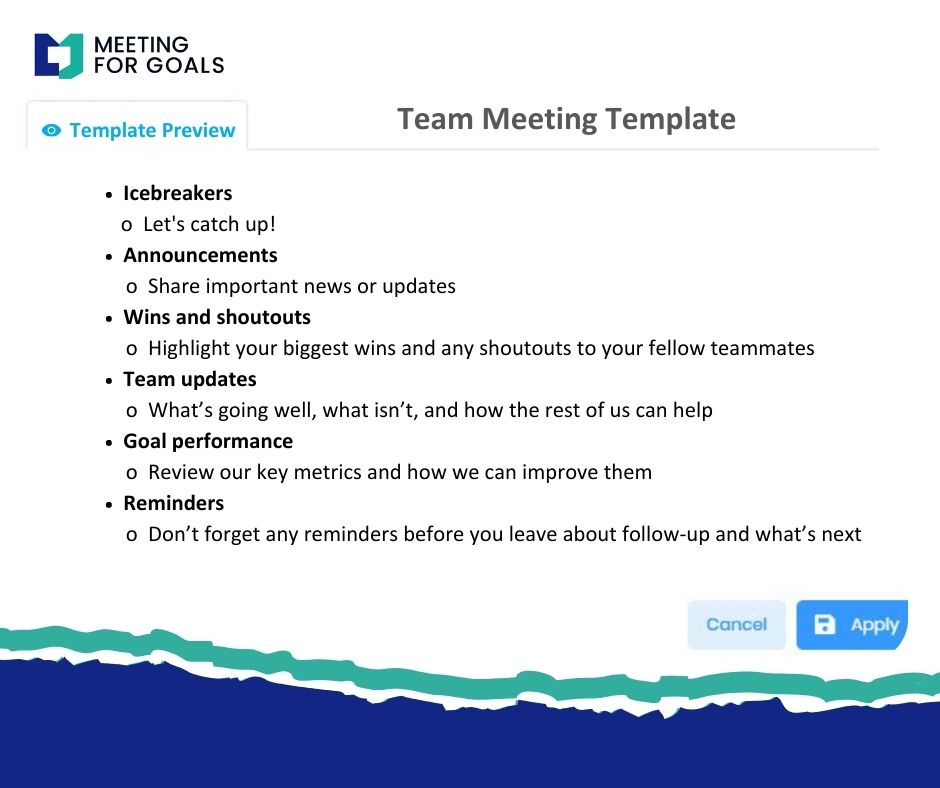
Want to streamline your team meetings and align them with your company goals? Start by exploring our free meeting templates or sign up for Meeting For Goals today.
2 Minute Video
Watch a 2 minute demo of our meeting management software in action
The Purpose of Stand-Up Meetings
A. Why Do Stand-Up Meetings Exist?
The main goal of a stand-up meeting is to keep everyone on the same page—fast. These meetings help teams:
- Communicate Clearly: Short updates from each team member ensure that everyone knows what’s happening. It builds a culture of openness and collaboration.
- Stay Accountable: When you share your daily goals in front of your team, it naturally encourages follow-through. Everyone is accountable—not just to their manager, but to each other.
- Save Time: Instead of long status meetings that eat up hours, a 15-minute stand-up gives you all the essential updates without the fluff.
- Identify Issues Early: If someone’s stuck or facing a blocker, the team can jump in quickly to help—before the problem grows.
B. Aligning Daily Work with Company Goals
One of the biggest challenges in any organization is connecting day-to-day tasks with larger business objectives. Many teams struggle with misalignment—not because they’re not working hard, but because they’re not working on the right things.
Stand-up meetings fix that. By regularly talking about what you’re working on and why, you make sure everyone is moving in the same direction. When you use a platform like Meeting For Goals, you can link each update directly to a strategic goal.
This kind of alignment increases clarity, improves resource allocation, and helps everyone see how their work contributes to the company’s success.
Want to learn more about aligning your team’s work with business goals? Check out this helpful resource from Harvard Business Review on how to connect strategy to execution.
Adding an Agenda
How to add an agenda instantly on Meeting For Goals
Key Features of a Stand-Up Meeting
A. Format and Structure
The magic of a stand-up meeting lies in its simplicity. Here’s what makes it work:
- Time-Boxed to 15 Minutes: Keep it short. A hard stop at 15 minutes forces everyone to be concise and to the point.
- Everyone Stands: Standing keeps the energy up and discourages long-winded updates or side conversations.
- Same Time, Same Place: Consistency helps build a habit. Pick a time and stick with it—whether it’s 9:00 AM sharp or right after lunch.
B. The Three Core Questions
To keep the meeting focused, most teams use this simple framework:
- What did I accomplish since yesterday?
- What am I working on today?
- Are there any blockers in my way?
These three questions help team members reflect, plan, and ask for help when needed. They also make it easier for leaders to spot trends and adjust priorities.
C. Who Should Attend?
Everyone on the core team should attend. This includes:
- Project leads
- Individual contributors
- Cross-functional partners (as needed)
Keep the group small enough to stay efficient but inclusive enough to ensure alignment.
Best Practices for Running Stand-Up Meetings
A. Be Consistent
Hold the stand-up at the same time and place every day. This builds rhythm and reduces scheduling conflicts.
B. Stay Focused
Avoid going off-topic. If a deeper discussion is needed, take it offline. Use a “parking lot” to note topics that need follow-up.
C. Encourage Everyone to Speak
Make sure every team member shares their update. This builds accountability and ensures no one is left out of critical conversations.
D. Use Tools to Streamline the Process
Meeting For Goals can help you:
- Auto-generate agendas based on goals
- Track progress in real-time
- Log notes and action items automatically
- Align updates with company objectives
Using a tool like this not only saves time—it also turns your stand-up into a strategic driver of team performance.
Want to try it for yourself? Sign up for Meeting For Goals or explore our free meeting templates to get started.
Common Challenges and How to Solve Them
A. Common Pitfalls
Even the best teams can run into problems. Here are a few common issues:
- Long Conversations: When team members start problem-solving during the stand-up, it slows everything down.
- Off-Topic Updates: Updates that don’t relate to the team’s goals dilute the meeting’s value.
- Low Participation: If only a few people talk, the meeting loses its collaborative edge.
B. How to Fix Them
Here’s how to keep your stand-up productive:
- Use a “parking lot” to table deep discussions
- Rotate facilitators to keep things fresh
- Set clear expectations: short updates only
C. How Meeting For Goals Helps
Meeting For Goals is built to solve these problems. With features like:
- Automated reminders
- Time tracking
- Goal alignment dashboards
You can keep your meetings on track and your team engaged. Plus, it integrates with tools like Slack and Microsoft Teams, so you don’t have to change your workflow.
Looking for more ways to improve your meetings? Check out our latest blog post on how to run effective team check-ins.
Real-World Example: How a VP Improved Team Efficiency with Stand-Ups
Let’s take a real-world scenario.
A VP at a mid-sized tech company was struggling with long, unfocused team meetings. Projects were slipping, and accountability was low.
They introduced daily stand-up meetings using Meeting For Goals.
Within two weeks:
- Meeting time dropped by 40%
- Team engagement went up
- Project timelines became more predictable
By linking each update to a goal, the team stayed focused and aligned. The VP also used Meeting For Goals’ dashboard to track progress and flag blockers early.
This kind of transformation is possible for your team too.
Conclusion
A. Stand-Up Meetings Are a Game Changer
If you’re leading a high-performing team, stand-up meetings aren’t just a nice-to-have—they’re essential. They keep your team aligned, accountable, and moving fast. With just 15 minutes a day, you can eliminate confusion, surface roadblocks, and ensure everyone is working toward the same goals.
B. Start Small, Improve Over Time
If you’re not doing stand-ups yet, start small. Pick a time, use the three-question format, and stick to 15 minutes. If you’re already doing them, look for ways to improve. Are they focused? Are they aligned with your goals? Are they helping your team move faster?
C. Ready to Take Your Stand-Ups to the Next Level?
Meeting For Goals makes it easy. Whether you want to save time, increase accountability, or align your team with strategic objectives, our platform helps you do it all.
Explore our free meeting templates or sign up now to see how Meeting For Goals can transform your daily meetings into a productivity powerhouse.
Want to learn more about how daily stand-ups fit into agile workflows? This guide from Atlassian offers a great overview.
Let’s make every meeting count.