
Types of Agile: A Guide for High-Performing Teams
Excerpt: For high-performing teams, adopting the right Agile methodology can be the difference between chaotic meetings and focused, goal-driven collaboration. In this guide, we explore the most effective types of Agile practices and how they can transform your team's productivity—especially in meetings.
Introduction
In today’s rapidly evolving business world, agility isn’t just helpful—it’s essential. Agile methodology has reshaped how teams work together, innovate, and deliver results. For companies with 40 to 70 employees, where maximizing productivity without overwhelming complexity is key, Agile offers a smart, scalable framework.
But Agile isn’t a one-size-fits-all solution. There are several types of Agile methodologies, each with its own strengths. Understanding these differences is crucial for executives—Directors, VPs, C-suite leaders—who are responsible for aligning teams and achieving strategic goals.
One of the most overlooked areas where Agile can make a huge impact? Meetings. Meetings are the pulse of your organization. Done right, they foster alignment, accountability, and momentum. Done wrong, they drain time and morale. That’s where Meeting For Goals comes in. Our meeting management software helps teams align discussions with company goals, assign responsibilities, and track follow-ups—making every meeting a powerful step forward.
In this guide, we’ll explore the most effective types of Agile—Scrum, Kanban, Lean Agile, and Extreme Programming (XP)—and how each can help your team run better meetings and achieve more. Whether your goal is to cut down meeting time, boost clarity, or improve team morale, you’ll find the Agile approach that fits.
To get started with transforming your meetings, check out our free meeting templates or sign up for a free trial of Meeting For Goals.
2 Minute Video
Watch a 2 minute demo of our meeting management software in action
Section 1: What Is Agile Methodology?
Agile is more than a process—it’s a mindset. It’s about being flexible, collaborative, and focused on delivering value. Originally created for software development, Agile has now expanded into nearly every business function, including marketing, HR, and leadership.
At its core, Agile is guided by the Agile Manifesto, which values:
- Individuals and interactions over processes and tools
- Working outcomes over excessive documentation
- Customer collaboration over contract negotiation
- Responding to change over sticking to a rigid plan
These principles promote adaptability, teamwork, and continuous improvement. Agile teams work in short, repeatable cycles—called sprints—where they gather feedback, adapt, and deliver value quickly.
For high-performing teams, Agile provides a structured way to keep moving forward without losing focus. It encourages clear communication, better decision-making, and faster execution.
And when it comes to meetings? Agile can be a game-changer. Traditional meetings often lack purpose. They run long, go off-topic, and end without clear next steps. Agile fixes that.
With tools like:
- Time-boxing
- Defined roles
- Focused agendas
Agile transforms meetings into productive sessions that drive action. For example, Agile encourages regular check-ins like daily stand-ups or retrospectives. These aren’t just for software teams—they work for any team that wants to stay aligned and accountable.
At Meeting For Goals, we’ve built our platform around these Agile principles. You can align every agenda item with your company’s goals, assign clear responsibilities, and track follow-ups—all in one place.
Want to see how it works? Sign up here to start your free trial.
Adding an Agenda
How to add an agenda instantly on Meeting For Goals
Section 2: Scrum—Agile with Structure
Scrum is one of the most widely used Agile frameworks. It’s especially popular with software teams, but its principles apply across industries.
Scrum helps teams break complex projects into manageable pieces. These pieces are tackled in short, focused bursts called sprints—usually lasting 1 to 4 weeks.
Key Components of Scrum:
- Roles: Scrum defines three main roles—Product Owner, Scrum Master, and Development Team. Each has a clear purpose and responsibility.
- Events: Scrum uses structured meetings like Sprint Planning, Daily Stand-ups, Sprint Reviews, and Retrospectives to keep the team aligned.
- Artifacts: Tools like the Product Backlog and Sprint Backlog help track progress and maintain transparency.
Scrum is all about focus and accountability. Everyone knows what they’re working on and why. Regular meetings ensure that problems are caught early and handled quickly.
Scrum for Better Meetings:
- Daily Stand-ups: Quick, 15-minute check-ins where team members share progress, plans, and blockers. These meetings keep everyone on the same page.
- Sprint Planning: This meeting sets the direction for the upcoming sprint. It’s all about aligning on priorities and deliverables.
- Sprint Retrospectives: A chance to reflect on what worked, what didn’t, and how to improve.
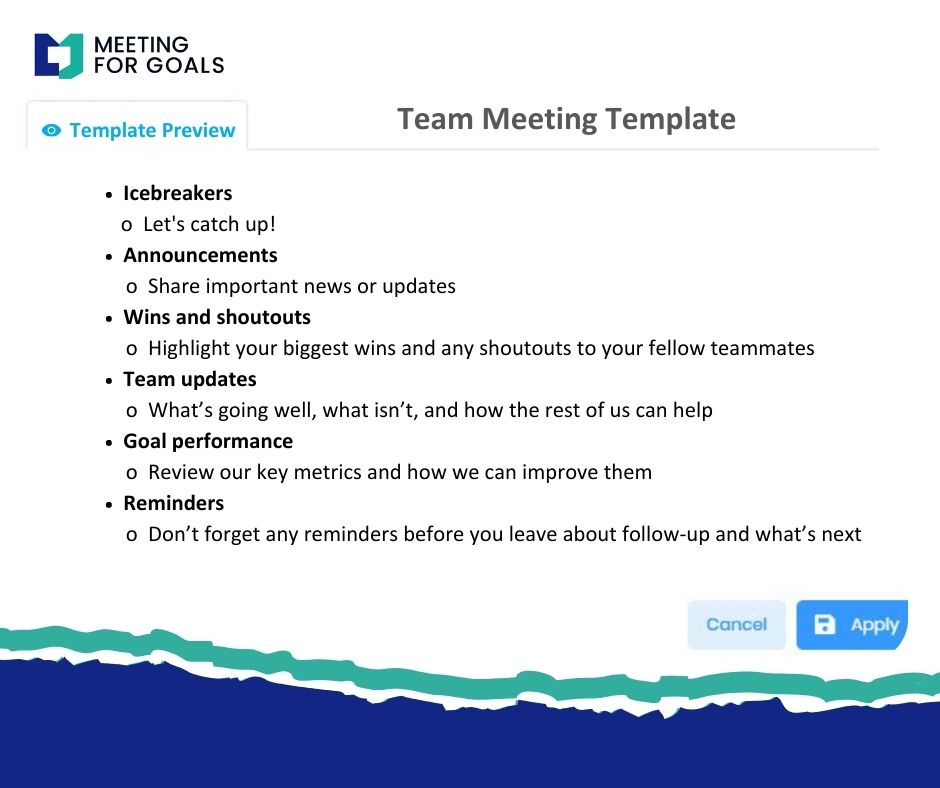
Meeting For Goals makes it easy to run Scrum-style meetings. Use our templates to schedule meetings, align agenda items with sprint goals, and assign follow-ups. Everything is tracked in one place so nothing falls through the cracks.
Want to run more effective Scrum meetings? Explore our free meeting templates to get started.
Section 3: Kanban—Agile That Flows
Kanban is another Agile methodology, but it’s more flexible than Scrum. Instead of working in fixed sprints, Kanban allows for continuous delivery.
The core idea? Visualize your work. Kanban uses boards—physical or digital—to show tasks moving through stages like “To Do,” “In Progress,” and “Done.”
Core Principles of Kanban:
- Visualize Work: Helps teams see what’s being worked on at any time.
- Limit Work in Progress (WIP): Prevents multitasking and overload.
- Manage Flow: Identifies bottlenecks and keeps work moving smoothly.
- Make Policies Explicit: Sets clear expectations and rules.
- Improve Collaboratively: Encourages teams to reflect and improve over time.
Kanban is perfect for teams that handle incoming work on a rolling basis—like marketing, customer support, or operations. It’s flexible, visual, and easy to adapt.
Kanban for Better Meetings:
- Visual Agendas: Use a Kanban board to structure your meeting topics—“To Discuss,” “Discussing,” and “Resolved.” This keeps meetings organized and on track.
- Limit Agenda Items: Just like WIP limits, capping the number of topics helps keep meetings focused.
- Track Action Items: Move follow-up tasks to a “To Do” column and assign owners. This ensures accountability.
Meeting For Goals supports Kanban-style meeting management. Our visual interface lets you drag and drop agenda items, assign tasks, and track progress in real time.
Want to see Kanban in action? Sign up here and start organizing your meetings visually.
Section 4: Lean Agile—Efficiency Meets Agility
Lean Agile blends the efficiency of Lean thinking with the adaptability of Agile. It’s all about maximizing value while minimizing waste.
Lean principles originated from manufacturing—most notably the Toyota Production System—but they apply to any business.
Key Lean Principles:
- Eliminate Waste: Cut non-value-adding activities.
- Amplify Learning: Encourage experimentation and feedback.
- Decide Late: Keep options open until you have the right info.
- Deliver Fast: Move quickly without compromising quality.
- Empower Teams: Trust those closest to the work.
- Build Integrity In: Maintain quality throughout.
- See the Whole: Optimize the entire system, not just parts.
For executives, Lean Agile is a powerful way to ensure that every meeting, project, and initiative contributes directly to the company’s goals.
Lean Agile for Better Meetings:
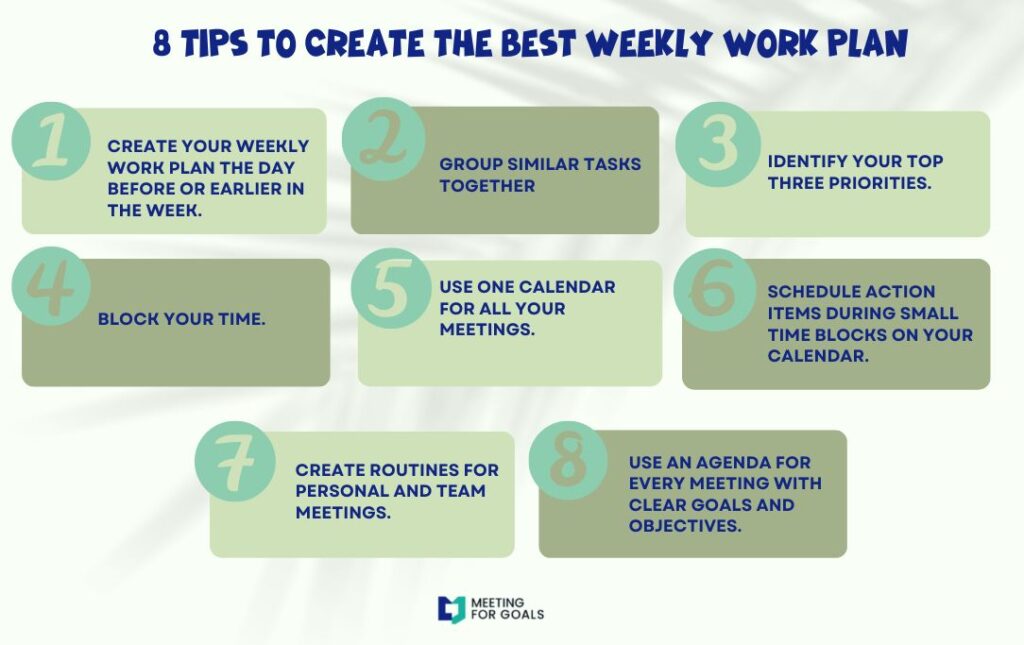
- Value-Driven Agendas: Only include topics that move the needle.
- Time-Boxing: Set time limits for each item to stay on track.
- Continuous Improvement: Use retrospectives to refine your meeting process.
- Customer Focus: Keep the end-user in mind during discussions.
Meeting For Goals is designed with Lean Agile in mind. You can align every agenda item with a strategic goal, eliminate distractions, and continuously improve your meeting formats.
Want to eliminate meeting waste? Visit our homepage to learn how.
Section 5: Extreme Programming (XP)—Agile for Excellence
Extreme Programming (XP) is a type of Agile designed for software development, but its principles can benefit any high-performing team.
XP emphasizes quality, collaboration, and fast feedback. It’s all about doing the right things—and doing them well.
Core XP Practices:
- Pair Programming: Two people work together on the same task to improve quality and share knowledge.
- Test-Driven Development (TDD): Write tests before writing code to ensure functionality.
- Continuous Integration: Frequently merge and test code to catch problems early.
- Refactoring: Continuously improve code structure.
- Simple Design: Keep solutions as simple as possible.
- Collective Ownership: Everyone owns the work and contributes to its success.
XP for Better Meetings:
- Fast Feedback: Use real-time tools to gather feedback during meetings.
- Collaborative Problem Solving: Break into pairs or small groups to brainstorm solutions.
- Quality Retrospectives: Regularly review what’s working and what needs improvement.
- Continuous Improvement: Just like code, your meetings should evolve.
Meeting For Goals supports XP-inspired collaboration. Our platform makes it easy to collect feedback, assign follow-ups, and iterate on your meeting processes.
Want to bring XP principles into your meetings? Start your free trial today.
Conclusion
Agile isn’t just a framework—it’s a mindset that helps teams move faster, stay aligned, and deliver real results. Whether you choose Scrum’s structure, Kanban’s flexibility, Lean Agile’s efficiency, or XP’s focus on quality, each approach offers valuable tools for running better meetings.
For companies with 40–70 employees, Agile can be the key to scaling productivity without adding complexity. And with the right meeting management software, you can turn every meeting into a high-impact session.
Meeting For Goals is built to support Agile teams. From structured agendas to visual boards and real-time collaboration, our platform helps you apply Agile principles to every meeting.
Ready to transform your meetings?
👉 Start your free trial today at https://app.meetingforgoals.com/TenantRegistration/Register
👉 Want ready-to-use agendas? Explore our free meeting templates at https://meetingforgoals.com/meeting_templates
👉 Learn more about our solutions at https://meetingforgoals.com
External Resources:
Learn more about the Agile Manifesto and its principles at https://agilemanifesto.org
Explore how companies like Spotify use Agile at scale: https://www.scaledagileframework.com/the-spotify-model
Total Word Count: ~2,050 words