
SMART Goals for Work: The Key to Productive Meetings and Goal-Oriented Teams
In today’s fast-moving business world, where time is money, team alignment can make or break success. Setting SMART goals for work is more critical than ever. For high-achieving teams and visionary leaders, SMART goals provide a clear roadmap to productivity. In this article, we’ll explore how SMART goals can transform your meetings, boost accountability, and align your team with big-picture objectives—all while using Meeting For Goals, the meeting management software built for results-driven teams.
I. Introduction
Let’s face it—meetings can be a major time sink. Especially for companies with 40 to 70 employees, it’s common to have meetings that feel like they go in circles, with no clear outcomes or follow-ups. That’s where SMART goals come in.
SMART stands for Specific, Measurable, Achievable, Relevant, and Time-bound. These five elements turn vague intentions into actionable plans. When used effectively, SMART goals can supercharge your team’s performance and streamline your meetings.
At Meeting For Goals, we know that executives—Directors, VPs, and C-suite leaders—need more than just a calendar app. They need a system that drives focus, accountability, and alignment. That’s why our platform is built around SMART goal-setting and meeting optimization.
If you’re looking to make every meeting count, align your team with strategic goals, and cut down on wasted time, you’re in the right place. In this article, we’ll break down SMART goals, show how they can improve your meetings, and explain how to implement them with Meeting For Goals.
Get started today by signing up here: Meeting For Goals Registration
2 Minute Video
Watch a 2 minute demo of our meeting management software in action.
What Are SMART Goals?
To get the most out of SMART goals, you need to understand what each letter stands for and how it contributes to success.
- Specific: A goal should be crystal clear. Instead of saying, “We need to grow,” say, “We want to increase Q3 sales revenue by 15% in the Northeast region.” This gives your team a clear target to aim for.
- Measurable: You need to track progress. A measurable goal might be, “Gain 50 new B2B customers by the end of the quarter.” Numbers help you know exactly how far you’ve come—and how far you have to go.
- Achievable: Goals should stretch your team, but not break them. If your team of three is expected to double customer support tickets overnight, that’s not realistic. SMART goals should push you forward while staying within reach.
- Relevant: Your goals should tie back to your company’s mission or strategy. If your company is focused on customer retention, then a goal like “Improve Net Promoter Score by 15% this quarter” is highly relevant.
- Time-bound: Deadlines drive action. A goal like “Launch the new product line by September 30th” gives your team a timeline and helps prioritize work.
Traditional goals often lack clarity. Compare “Improve marketing” with “Increase website traffic by 30% through SEO by the end of Q2.” The second one is specific, measurable, and actionable.
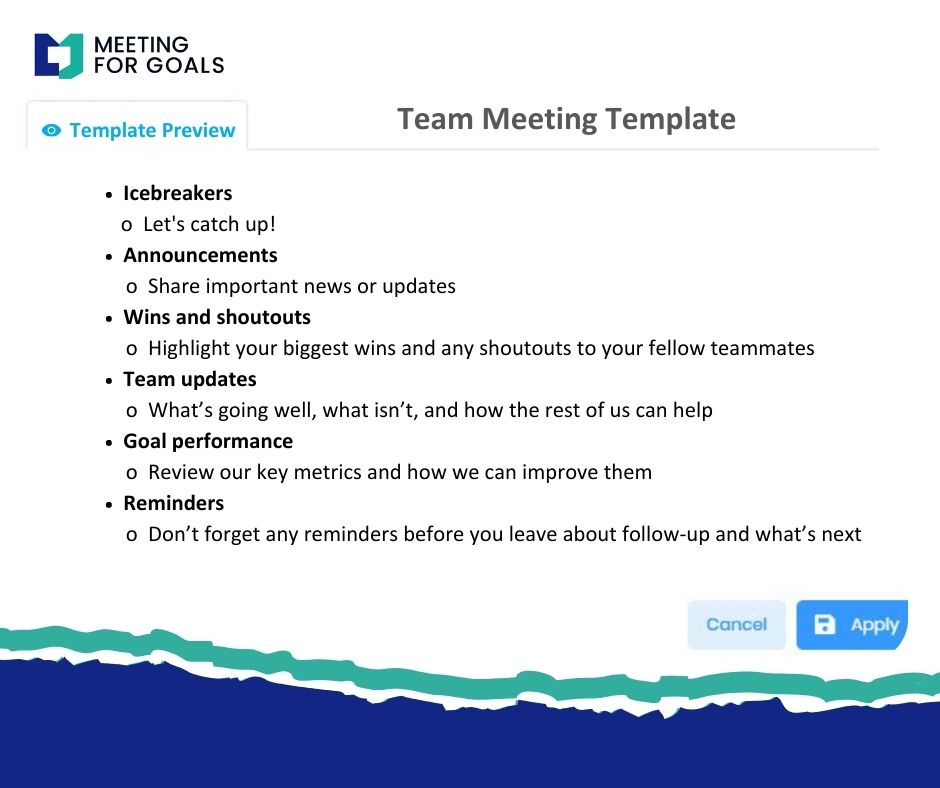
Want help crafting better goals? Check out our free meeting templates here: Meeting Templates
Adding an Agenda
How to add an agenda instantly on Meeting For Goals.
The Role of SMART Goals in Effective Meetings
Meetings are where plans are made and progress is tracked. However, without a clear framework, they can easily lose focus. SMART goals bring structure and clarity to every conversation.
A. Enhancing Focus During Meetings
When your meetings are built around SMART goals, every agenda item has a purpose. Instead of vague updates, discussions are tied to specific outcomes.
For example, rather than saying “Let’s talk about marketing,” your team might discuss “How are we progressing toward increasing our social media engagement by 25% this month?” That’s a focused, actionable conversation.
B. Improving Accountability Among Team Members
SMART goals make it clear who’s doing what—and by when. When people know what’s expected and have a deadline, they’re more likely to follow through.
Meeting For Goals makes this easy. You can assign goals during the meeting, track progress between meetings, and follow up without micromanaging. Everyone stays on the same page.
C. Time Management Benefits
Meetings that focus on SMART goals are faster and more efficient. No more going in circles or revisiting the same topics. You’ll leave every meeting with clear action items and next steps.
And for busy leaders, saving even 15 minutes per meeting adds up fast. That time can be reinvested into strategy, coaching, or client work.
Want to see how this works in action? Learn more at Meeting For Goals.
Implementing SMART Goals with Meeting Management Software
SMART goals are powerful on their own—but when you pair them with the right tools, they become unstoppable. That’s where Meeting For Goals comes in.
A. Using Meeting For Goals to Set and Track SMART Goals
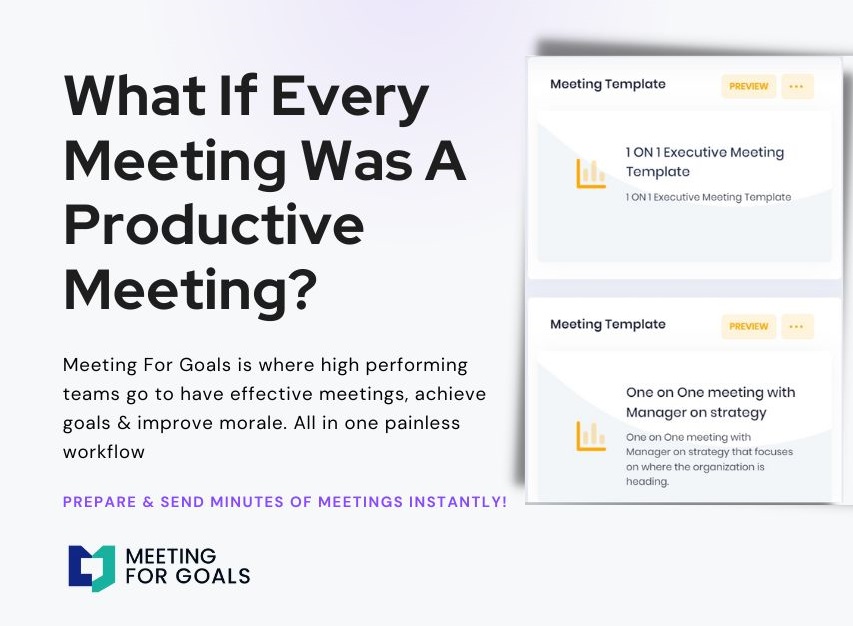
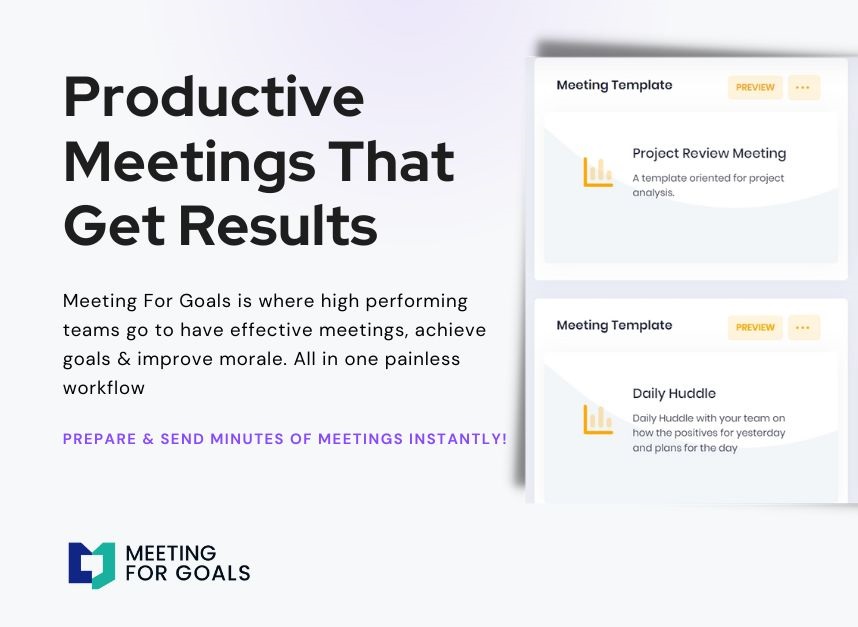
Our platform is designed to help teams define, assign, and monitor SMART goals directly within the meeting flow. You can use built-in templates, customize agendas, and track progress in real-time.
From your dashboard, you can instantly see which goals are on track, which need attention, and what’s coming next. It’s visibility and accountability—all in one place.
B. Real-World Examples
Let’s take a look at how companies are using Meeting For Goals to level up their meetings.
- A mid-sized tech firm used the platform to streamline their product development meetings. By setting SMART goals like “Complete beta testing for Feature X by July 15th with a 95% success rate,” they cut meeting time by 35% and improved delivery timelines by 20%.
- A marketing agency used Meeting For Goals to manage campaign objectives across multiple clients. With clear KPIs and deadlines, they boosted client satisfaction and internal accountability.
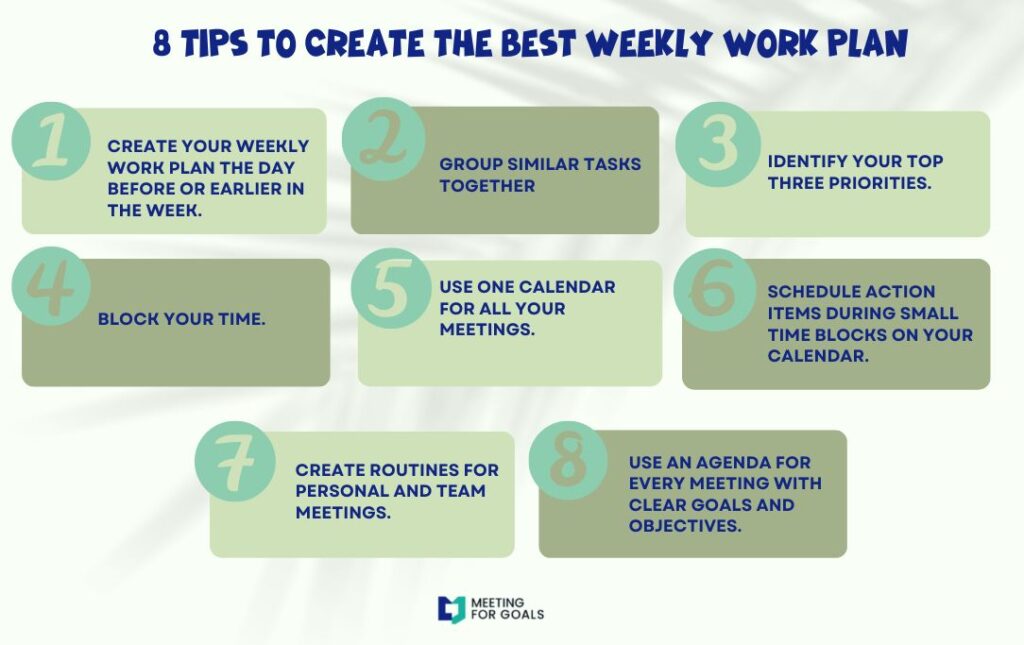
C. Tips for Integrating SMART Goals into Your Meeting Culture
- Start each meeting by reviewing current SMART goals and their status.
- Use the platform to assign new goals with clear owners and deadlines.
- Wrap up with a summary of updated goals and next steps.
- Use analytics to track goal completion rates and improve over time.
Looking for a system to help your team stay aligned and on track? Sign up now at Meeting For Goals Registration.
Overcoming Common Challenges in Setting SMART Goals
Even though SMART goals are simple in theory, they can be tricky in practice. Let’s look at some common hurdles—and how to overcome them.
A. Avoiding Vague Goals
Some teams struggle with clarity. If a goal is too broad, it’s hard to measure or act on.
Use the SMART checklist: Is it specific? Measurable? Achievable? Relevant? Time-bound? If not, refine it. Meeting For Goals has built-in prompts to guide you through the process.
B. Setting Realistic Expectations
Overly ambitious goals can lead to missed targets and team frustration. Use past performance data and input from your team to set goals that stretch—but don’t overwhelm.
C. Keeping People Engaged
If your team doesn’t care about the goal, they won’t work toward it. Involve them in the goal-setting process. When people help create the goal, they’re more invested in achieving it.
D. Adapting to Change
Business priorities shift. SMART goals should be flexible enough to adapt. Use regular check-ins to reassess goals. If something changes, update the goal in Meeting For Goals without losing your tracking history.
Want to explore more ways to run better meetings? Browse our free templates here: Meeting Templates.
Why SMART Goals Work (Backed by Research)
Still not convinced? Let’s look at the science.
According to a study published in the American Journal of Lifestyle Medicine, goal-setting—especially when goals are specific and time-bound—significantly improves performance and motivation. Another study from Dominican University found that people who write down their goals and share updates with others are 33% more successful in achieving them.
SMART goals combine both of these principles. They provide structure and encourage accountability—two key ingredients for success.
Want more insight? Check out this Harvard Business Review article on how goal setting improves team performance.
Conclusion
In today’s results-driven workplace, SMART goals are more than just a productivity hack—they’re a necessity. They turn vague ideas into clear plans. They align teams, improve meetings, and drive real results.
When you combine SMART goals with a platform like Meeting For Goals, you get a streamlined system that makes every meeting count. From setting objectives to tracking progress, everything is in one place.
If you’re ready to take your meetings from mundane to meaningful, it’s time to integrate SMART goals into your workflow.
Start your journey today: Meeting For Goals Registration.
Want to explore more tools and templates? Visit Meeting Templates.
Make every meeting a step toward your biggest goals. Visit Meeting For Goals and see how we can help your team thrive.