
How to Run a Productive Quarterly Review That Drives Team Performance
Excerpt: Quarterly reviews are more than just a scheduled meeting. They’re a strategic opportunity to align your team, recalibrate goals, and drive performance. For high-performing teams, especially in organizations with 40–70 employees, quarterly reviews can be the game-changer that turns static processes into scalable success. In this blog post, we’ll show you how to conduct quarterly reviews that actually make a difference—and how Meeting For Goals software can help you do just that. From setting clear objectives to engaging your team and tracking results, we’ll walk you through a six-step framework to run effective, efficient, and goal-oriented quarterly reviews.
Introduction: In today’s fast-moving business world, quarterly reviews are more than a formality. They’re a powerful tool to boost team performance and make sure everyone is working toward the same goals. For leaders like Directors, VPs, and C-suite executives in mid-sized companies (40 to 70 employees), these reviews offer a chance to pause, reflect, and refocus. But here’s the thing: not all quarterly reviews are effective. Without structure, purpose, and the right tools, they can feel like a waste of time. That’s where Meeting For Goals comes in.
Meeting For Goals is a meeting management platform built for high-performing teams. It helps you run shorter, more focused meetings that are aligned with company goals. With features that improve accountability, streamline workflows, and support goal tracking, it’s ideal for executives who want to make every meeting count.
In this blog, we’ll break down the quarterly review process into six practical steps:
- Understanding the Importance of Quarterly Reviews
- Setting Objectives for the Quarterly Review
- Structuring the Quarterly Review Meeting
- Engaging Team Members During the Review
- Analyzing Outcomes and Adjusting Goals
- Conclusion and Next Steps
If you’re ready to make your meetings more productive and your team more aligned, let’s dive in. Before we begin, check out our free meeting templates to help you get started:
2 Minute Video
Watch a 2 minute demo of our meeting management software in action
Section 1: Understanding the Importance of Quarterly Reviews
Quarterly reviews are more than a recurring meeting on your calendar. They’re a moment to hit pause, assess progress, and make strategic adjustments.
What Is a Quarterly Review? A quarterly review is a meeting that happens every three months to evaluate how your team is performing. It’s a chance to look at your goals, check your progress, and decide what needs to change for the next quarter. Unlike annual reviews, which can feel too far removed from day-to-day work, quarterly reviews are more timely and actionable.
Why Are Quarterly Reviews Essential for Mid-Sized Teams? In companies with 40–70 employees, you’re big enough to need coordination across departments but small enough to move quickly. Quarterly reviews help you stay aligned, spot issues early, and keep everyone focused. Here’s how they help:
- Alignment: Everyone knows what the priorities are and how their work contributes to the bigger picture.
- Early Problem Solving: You can catch small issues before they become big ones.
- Accountability: Team members understand what they’re responsible for and know they’ll be asked about it.
- Morale Boost: When people see their work being recognized and their input valued, they feel more engaged.
The Power of Reflection: One of the biggest benefits of quarterly reviews is the opportunity to reflect. Teams often move from task to task without stopping to ask, ‘What’s working? What’s not?’ Taking time to reflect leads to better decisions and smarter planning. Meeting For Goals helps you capture these reflections so they don’t get lost.
With built-in tools for documenting feedback and tracking progress, you can turn insights into action. Want to see how it works? Sign up here.
Adding an Agenda
How to add an agenda instantly on Meeting For Goals
Section 2: Setting Objectives for the Quarterly Review
A productive quarterly review starts with clear goals. Without them, the meeting can drift into vague conversations that don’t lead to real outcomes.
Aligning Objectives with Company Goals: Start by asking yourself: What are our top business priorities this quarter? Which goals or KPIs matter most right now? Where are we falling short, and what needs to change? When your quarterly review objectives are tied to your company’s strategic goals, the meeting becomes more focused and impactful. You’re not just talking—you’re making decisions that move the company forward.
Involving the Team in Setting Goals: While leadership sets the direction, involving your team in setting review goals builds engagement. Use Meeting For Goals to collect input before the meeting. You can send out a quick survey asking team members:
- What went well this quarter?
- What challenges did you face?
- What should we do differently?
- What questions or concerns do you have?
This inclusive approach ensures that everyone feels heard, and it uncovers insights you might otherwise miss.
Assigning Ownership and Accountability: Each objective should have an owner. That way, when it comes up in the meeting, someone is ready to speak to it with data, context, and recommendations. With Meeting For Goals, you can assign agenda items to specific team members and track follow-ups. This makes it easy to keep everyone accountable and ensures that nothing slips through the cracks.
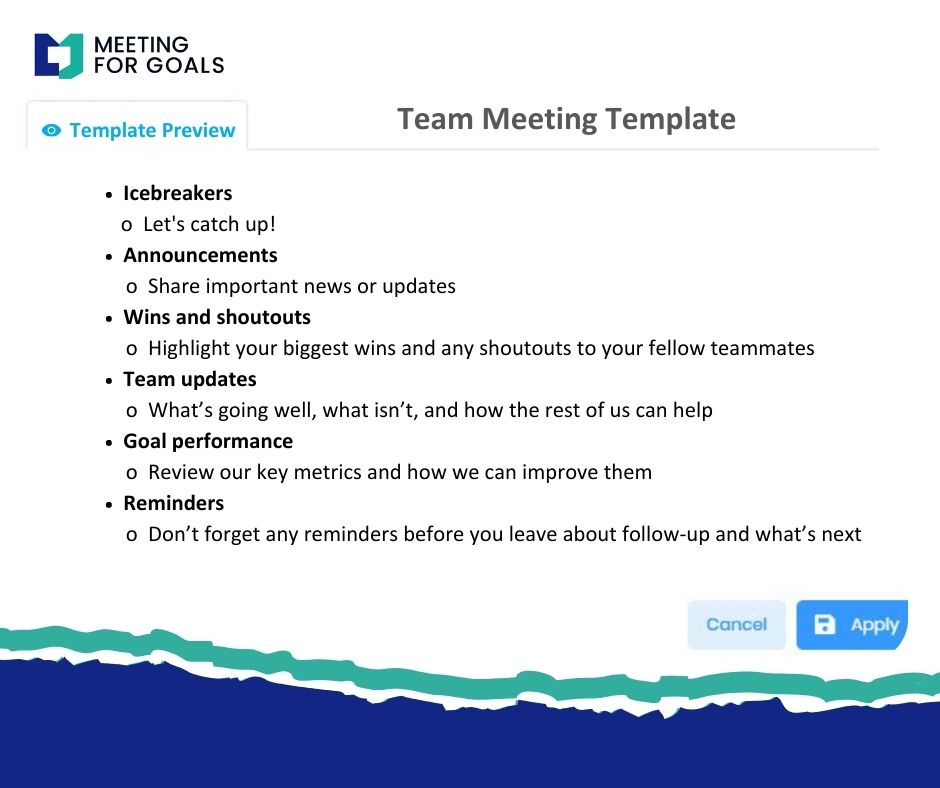
Section 3: Structuring the Quarterly Review Meeting
Structure is what turns a good meeting into a great one. Without it, even the best intentions can result in a scattered conversation.
Best Practices for Structuring the Meeting: Here’s a sample structure for a 2-hour quarterly review:
- Welcome and Purpose (5–10 mins): Set the tone. Remind everyone why they’re here and what you hope to accomplish.
- Review of Previous Quarter (20–30 mins): Discuss goals that were met, missed, or exceeded. Highlight wins and lessons learned.
- Performance Metrics (30 mins): Review KPIs, OKRs, and other key metrics. Use visuals and dashboards to make data easy to understand.
- Team Feedback and Discussion (30 mins): Open the floor for team input. Use guided questions to keep the conversation focused.
- Strategic Planning for Next Quarter (30 mins): Set new goals, assign responsibilities, and discuss what support is needed.
- Wrap-Up and Action Items (10–15 mins): Summarize decisions, clarify next steps, and confirm who’s doing what.
Using Meeting For Goals to Simplify Structure: Meeting For Goals makes it easy to build and manage your meeting agenda. You can:
- Create time-boxed agenda items
- Assign owners
- Attach relevant documents
- Take real-time notes
- Set follow-up tasks
This keeps the meeting organized and ensures that every minute is used wisely.
Creating a Productive Environment: Structure doesn’t mean rigidity. It means clarity. When people know what to expect, they can focus on the conversation instead of wondering what’s next. If you’re managing hybrid or remote teams, this structure becomes even more important. With Meeting For Goals, everyone stays on the same page—whether they’re in the room or dialing in from across the country.
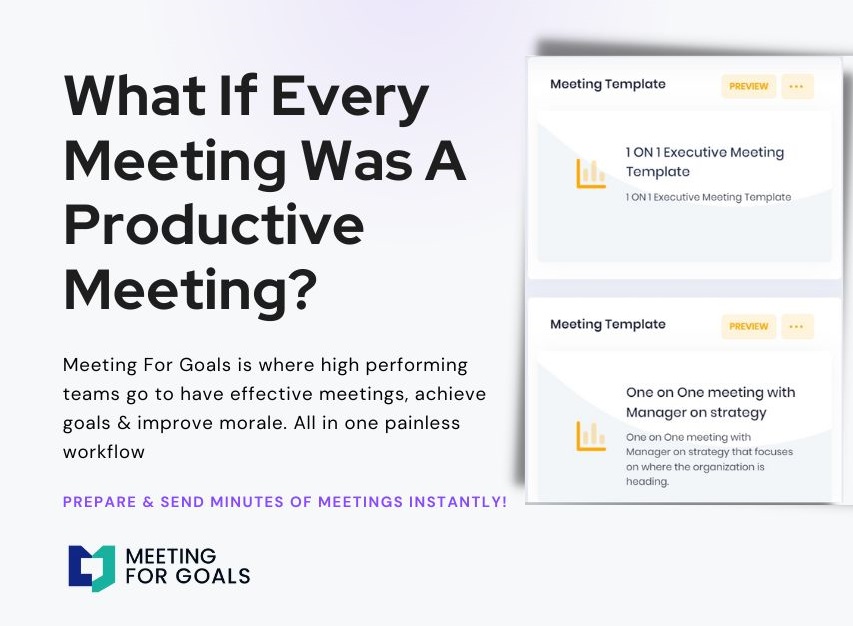
Section 4: Engaging Team Members During the Review
A quarterly review shouldn’t be a one-way presentation. It should be a conversation. Engagement is key to making the meeting meaningful.
Creating a Safe Space for Input: Start by setting a tone of openness and respect. Let your team know that their input matters. Use simple icebreakers or quick wins to get people talking. Then, ask open-ended questions like:
- What’s one thing we did well this quarter?
- What’s one thing we could improve?
- What’s holding us back?
With Meeting For Goals, you can use built-in polls and feedback tools to gather input in real time. This keeps everyone engaged and helps surface valuable insights.
Capturing Feedback on the Spot: Don’t wait until after the meeting to collect feedback. With Meeting For Goals, participants can add comments, tag agenda items, and suggest actions as the meeting unfolds. This creates a living document that captures the full context of the discussion. It also makes it easy to follow up later.
Focusing on Inclusivity: Not everyone is comfortable speaking up in a group. That’s why it’s important to create multiple ways for people to contribute. Encourage quieter team members to share their thoughts. Use anonymous feedback options to get honest input. Rotate speakers so everyone has a chance to be heard. Inclusivity leads to better decisions and stronger team culture. And with the right tools, inclusivity becomes easy to implement.
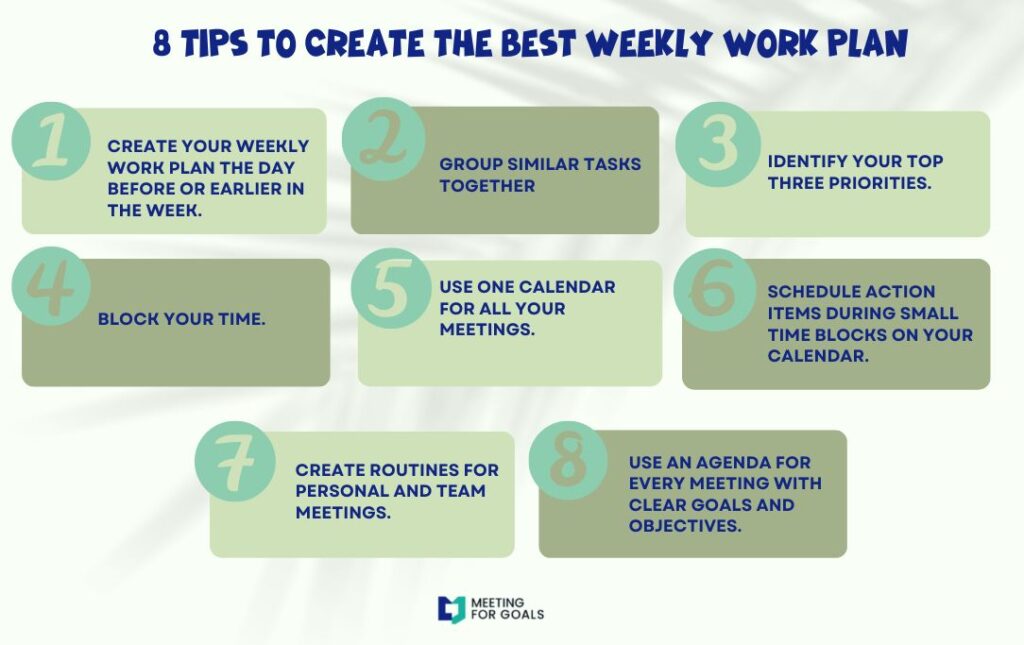
Section 5: Analyzing Outcomes and Adjusting Goals
The real value of a quarterly review comes after the meeting—when you take what you’ve learned and turn it into action.
Reviewing Key Metrics: Go back to your KPIs and OKRs. What did you hit? What did you miss? Why? Look for patterns. If a goal was missed, was it due to lack of resources, unclear expectations, or something else? Meeting For Goals gives you a clear visual of progress over time. You can quickly see what’s working and what needs attention.
Using Feedback to Guide Strategy: Data tells you what happened. Feedback tells you why. Look at the comments and suggestions collected during the meeting. What themes are emerging? Are there recurring challenges or opportunities? Meeting For Goals organizes feedback by agenda item, making it easy to connect insights to specific parts of the meeting.
Recalibrating for the Next Quarter: Based on your analysis, adjust your goals. Maybe you need to shift priorities, reassign responsibilities, or redefine success metrics. Update your goals directly in Meeting For Goals. Assign new owners, set deadlines, and track progress—all in one place. This keeps your team aligned and ensures that your quarterly review leads to real outcomes.
Want to explore more tools to run better meetings? Visit Meeting For Goals.
Section 6: Conclusion and Next Steps
Quarterly reviews aren’t just a management task. They’re a strategic advantage. When done right, they help you align your team, improve accountability, and drive performance. But to get the most from them, you need the right process and the right tools.
Meeting For Goals helps you:
- Build structured agendas
- Engage your team
- Track goals and outcomes
- Capture and act on feedback
If you’re a Director, VP, President, or C-suite leader looking to run more effective meetings, it’s time to take the next step. 👉 Sign up today and start transforming your quarterly reviews.
👉 Want a head start? Check out our free meeting templates.
👉 Learn more about how we help teams align and perform at Meeting For Goals.
For additional reading on performance management best practices, check out this guide from Harvard Business Review: The Performance Management Revolution.
And for insights into team alignment, explore this article by McKinsey & Company: How to Align Your Team Around a Common Goal.
Make your next quarterly review the most productive one yet.