
Personal Objectives Examples: A Guide to Driving Individual and Team Success
In today’s fast-paced business world, high-performing teams don’t just happen. They’re intentionally built through clarity, accountability, and a shared vision. One effective way to create this alignment is by setting personal objectives. Whether you’re a Director, VP, or C-suite executive, helping your team set and follow through on personal objectives can significantly boost performance, engagement, and productivity.
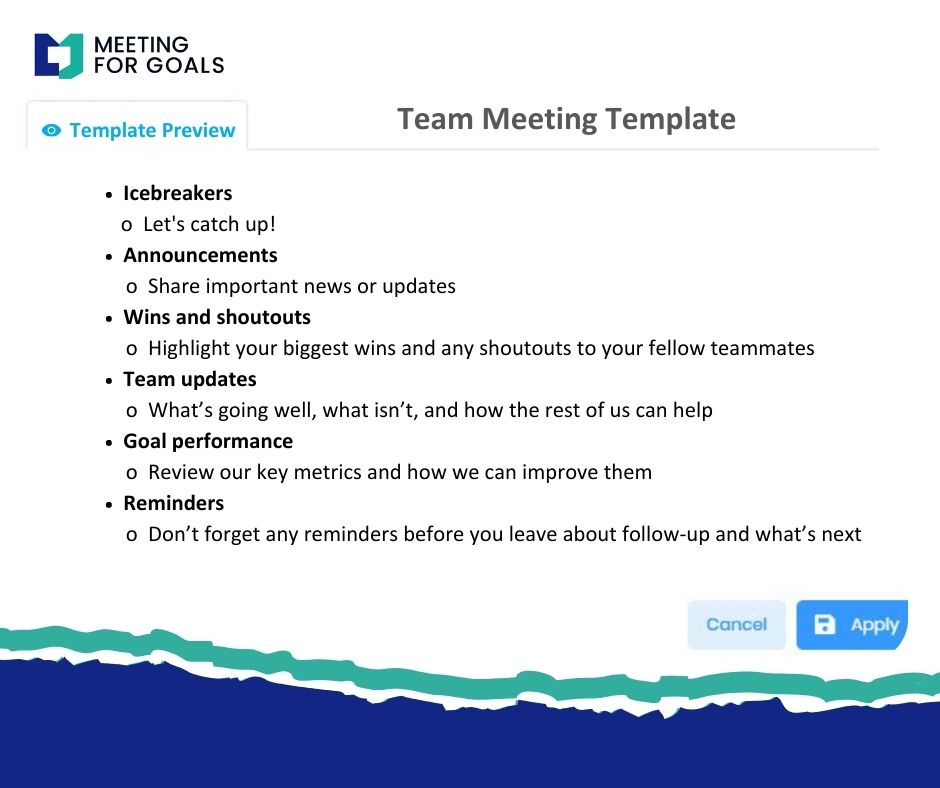
Looking to get started quickly? Check out our free meeting templates or sign up today at Meeting For Goals to start building goal-driven meetings.
Let’s dive into how personal objectives can transform your team. We’ll also explore how tools like Meeting For Goals can make it effortless.
I. Introduction
Success in business doesn’t happen by chance. It’s the result of consistent effort, strategic planning, and clear goals. One of the most powerful tools to drive this success is setting personal objectives. These are clear, actionable goals that individuals commit to achieving within a set timeframe.
For mid-sized companies (typically 40–70 employees), every team member plays a critical role. When each person aligns with the company’s vision and goals, the entire organization moves forward faster and more effectively.
That’s where Meeting For Goals comes into play. It’s a powerful meeting management software built for high-performing teams. It helps you turn every meeting into a results-driven session by integrating personal and team objectives directly into your workflow. No more meetings that feel like time-wasters—just focused, purposeful collaboration.
In this guide, we’ll cover:
- What personal objectives are
- Why they matter
- How to set them effectively
We’ll provide categorized examples, demonstrate how to structure them using the SMART framework, and explain how to align them with larger team goals. Plus, we’ll show you how Meeting For Goals can help make it all easier.
2 Minute Video
Watch a 2 minute demo of our meeting management software in action
II. Understanding Personal Objectives
Let’s start with the basics: what exactly are personal objectives?
Personal objectives are specific, measurable outcomes. Individuals aim to achieve them over a certain period. They’re not vague hopes like “become better at communication.” Instead, a personal objective would be something like: “Attend a communication skills workshop by Q2 and apply one new technique in weekly team meetings.”
Why are these objectives so powerful?
- They bring focus. Clear goals prioritize what matters most.
- They boost motivation. Tracking progress creates a sense of momentum and achievement.
- They create accountability. Shared objectives become commitments when tracked.
- They support growth. Objectives help individuals develop professionally and personally.
It’s important to distinguish between goals and objectives. For example:
- Goal: “Increase customer satisfaction.”
- Personal Objective: “Respond to all customer support tickets within 24 hours for the next three months.”
The latter is specific, actionable, and measurable.
Using a platform like Meeting For Goals, managers can help team members define objectives clearly. They can also check in regularly to track progress, ensuring everyone stays aligned.
Adding an Agenda
How to add an agenda instantly on Meeting For Goals
III. Categories of Personal Objectives
Personal objectives can span different areas of life and work. Encouraging a balanced approach helps your team grow holistically, ultimately benefiting the organization.
Here are four key categories of personal objectives, with practical examples:
A. Career Development Goals
These goals focus on professional growth through learning, leadership, or networking.
- Complete a Google Project Management certification by the end of Q3.
- Deliver one internal lunch-and-learn presentation each month to improve public speaking.
- Attend three industry webinars per quarter to stay updated on trends.
- Apply for a leadership development program within the next six months.
- Schedule monthly mentorship sessions with a senior executive.
Career development objectives help build a stronger, more capable team. They also boost engagement by showing employees you’re invested in their growth.
B. Health and Wellness Goals
Wellness goals are often overlooked but are crucial. Healthy employees are more focused, energized, and productive.
- Exercise for 30 minutes, three times a week.
- Take a 10-minute mindfulness break each workday.
- Prepare healthy meals every Sunday to avoid last-minute takeout.
- Limit caffeine intake to two cups of coffee per day.
- Schedule and attend annual health screenings.
Encouraging wellness goals can reduce burnout and improve morale. You can even integrate wellness check-ins into team meetings using Meeting For Goals.
C. Personal Growth Goals
These goals focus on self-improvement and creativity—critical elements of a well-rounded, resilient team.
- Read one personal development book per month.
- Dedicate 30 minutes daily to learning a new skill, like coding or graphic design.
- Start a creative hobby, such as painting or journaling.
- Volunteer once per quarter to build empathy and community involvement.
- Reduce social media use to 30 minutes per day to improve focus.
Personal growth goals might not seem directly related to work, but they can lead to improved focus, creativity, and problem-solving skills.
D. Financial Goals
Financial stress can impact job performance. Helping employees set and achieve financial goals supports their overall well-being.
- Save 20% of monthly income in a high-yield savings account.
- Use a budgeting app to track spending and reduce unnecessary costs.
- Pay off one credit card within the next six months.
- Review and rebalance investment portfolio quarterly.
- Build an emergency fund covering three months of expenses.
When employees feel financially secure, they’re more focused and less stressed at work.
Encouraging your team to set goals in all four categories creates a balanced and engaged workforce. When tracked using Meeting For Goals, it’s easy to keep everyone aligned and accountable.
IV. SMART Criteria for Personal Objectives
Now that you have ideas for personal objectives, how do you ensure they’re effective? Use the SMART framework.
- Specific – What exactly do you want to achieve?
- Measurable – How will you know you’ve succeeded?
- Achievable – Is this realistic given your resources and time?
- Relevant – Does this align with your values or team goals?
- Time-bound – What’s the deadline?
Let’s turn vague goals into SMART objectives:
- Vague: “Improve leadership skills.”
SMART: “Complete a leadership training course by Q2 and apply one new technique each month in team meetings.” - Vague: “Get healthier.”
SMART: “Exercise for 30 minutes, three times per week for the next three months.” - Vague: “Save money.”
SMART: “Save $500 per month for the next six months to build an emergency fund.”
SMART objectives are easier to track and manage. They also make performance reviews more objective and meaningful.
Meeting For Goals simplifies this process. You can create SMART-aligned objectives for each team member, track progress in real-time, and adjust as needed—all within your regular meeting cadence.
V. Aligning Personal Objectives with Team Goals
One of the most powerful aspects of personal objectives is their ability to support broader team and company goals. When individual objectives align with the organization’s priorities, the team operates with clarity and purpose.
Here’s an example:
Company Goal: Increase customer satisfaction by 15% this year.
Aligned personal objectives:
- Customer Support Rep: “Resolve 90% of support tickets within 24 hours for the next quarter.”
- Product Manager: “Conduct bi-weekly user feedback sessions and implement two new features based on feedback by Q3.”
- Sales Executive: “Improve onboarding process and reduce client churn by 10% over the next six months.”
This alignment ensures everyone is pulling in the same direction. Meeting For Goals makes it easy to map personal objectives to team goals. You can visualize connections, track progress, and make adjustments during regular check-ins.
Here are a few tips for creating alignment:
- Share personal objectives during team meetings to build transparency.
- Use cross-functional check-ins to ensure departments work toward the same goals.
- Utilize Meeting For Goals’ visual tools to map individual contributions to company objectives.
When personal objectives align with team goals, they transform from mere tasks into strategic levers for growth.
Want to see how this works in action? Sign up for Meeting For Goals at Meeting For Goals and start aligning your team today.
VI. Conclusion
In today’s competitive business environment, setting personal objectives isn’t just a best practice—it’s essential.
We’ve covered:
- What personal objectives are and why they matter.
- How to structure them using the SMART framework.
- Examples across four key categories: career, wellness, personal growth, and finance.
- How to align them with team and company goals.
- How Meeting For Goals can help you track, manage, and achieve these objectives with ease.
The bottom line? Personal objectives drive performance, boost morale, and create alignment. When supported by a tool like Meeting For Goals, they become part of your team’s daily rhythm—not just something you discuss during annual reviews.
Ready to take your meetings—and your team—to the next level? Get started today at Meeting For Goals and explore our free meeting templates at Meeting Templates. Build a culture of accountability, alignment, and success.
For more insights on building high-performing teams and effective meetings, visit Meeting For Goals.