
Maximizing Productivity with Monthly Meetings: A Strategic Guide for High-Performing Teams
Monthly meetings can be a game-changer for team productivity—when done right. If you’re leading a team of 40 to 70 employees, chances are your organization is growing in complexity. That means alignment, accountability, and communication are more important than ever.
But let’s be honest: too many monthly meetings waste time, drain energy, and leave teams unclear about what to do next. The good news? With the right approach—and the right tools—you can turn your monthly meetings into powerful engines of progress.
In this guide, we’ll break down how to run monthly meetings that actually move the needle. We’ll cover:
- How to set clear goals
- Choose the right people
- Keep the conversation focused
- Ensure action happens after the meeting ends
We’ll show you how Meeting For Goals, our meeting management software, can help you streamline the entire process.
Ready to make every meeting count? Let’s dive in.
Want to start improving your meetings today? Sign up for Meeting For Goals and get instant access to our free meeting templates.
2 Minute Video
Watch a 2 minute demo of our meeting management software in action
I. Why Monthly Meetings Matter More Than You Think
Monthly meetings are often seen as routine check-ins. But for high-performing teams, they’re much more than that. They’re a chance to:
- Step back
- Align on priorities
- Ensure everyone is working toward the same goals
They help break down silos between departments, surface roadblocks early, and create a rhythm of accountability.
For companies with 40 to 70 employees, monthly meetings hit the sweet spot. You’re big enough that communication can slip through the cracks—yet still small enough to stay agile and make changes quickly.
The problem? Many monthly meetings feel like a waste of time. They can turn into:
- Status updates
- Vague brainstorming sessions
- Disengaged rituals
The key is structure. When you design your meetings with intention, they become a strategic advantage. They help your team stay focused, move faster, and deliver better results. Let’s explore how to make that happen.
Adding an Agenda
How to add an agenda instantly on Meeting For Goals
II. Set Clear, Goal-Aligned Objectives
Every productive meeting starts with a purpose. Before you send a calendar invite, ask yourself:
- What do we need to accomplish in this meeting?
- What decisions need to be made?
- What progress should we review?
Without a clear objective, meetings drift. People leave confused, and nothing gets done.
Your meeting objective should tie directly to your company’s strategic goals. If your team is focused on launching a new product, your monthly meeting should revolve around:
- Timelines
- Cross-functional updates
- Resource needs
Be specific. Instead of “Discuss marketing,” try “Finalize Q3 marketing campaign deliverables.” Once you’ve set your objective, build an agenda that supports it.
A strong agenda acts like a GPS—it keeps everyone on track and ensures you cover what matters most. Meeting For Goals makes this easy. You can create dynamic agendas that:
- Link directly to your company goals
- Assign time slots
- Attach relevant documents
Everyone shows up prepared, and your meeting stays focused. You can also set recurring objectives for standing meetings, so each one builds on the last. This consistency helps teams stay aligned and make steady progress.
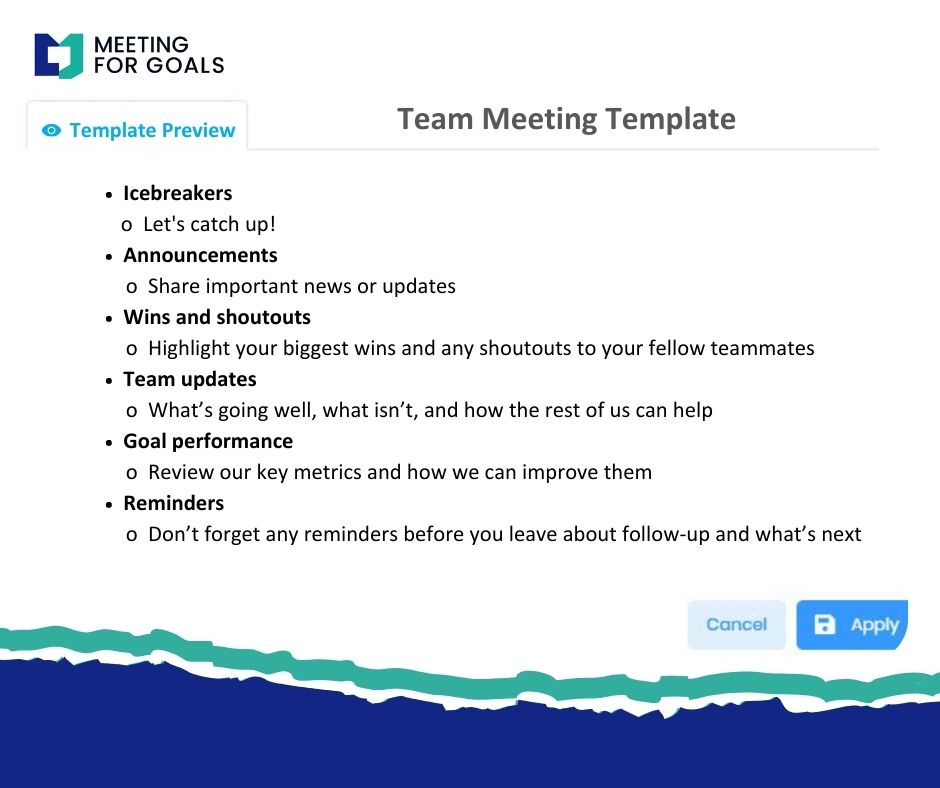
Want a head start? Check out our free meeting templates to see how high-performing teams structure their monthly meetings.
III. Invite the Right People
Too many meetings fail because the wrong people are in the room—or too many are. When people don’t know why they’re there, they tune out. When meetings are too big, discussions drag and decisions stall.
The solution? Be intentional about who you invite. Start by identifying who’s essential to the meeting’s objective:
- If you’re reviewing sales performance, invite leaders from sales, finance, and marketing.
- If it’s a product update, bring in engineering, design, and product management.
Every person should have a purpose—whether it’s to share updates, make decisions, or take ownership of next steps.
Clarify roles in advance. Assign a facilitator to run the meeting, a timekeeper to stay on schedule, and a note-taker to capture action items. This structure keeps things moving and ensures nothing falls through the cracks.
Meeting For Goals helps you manage participants with ease. You can:
- Assign roles
- Tag people to specific agenda items
- Track attendance over time
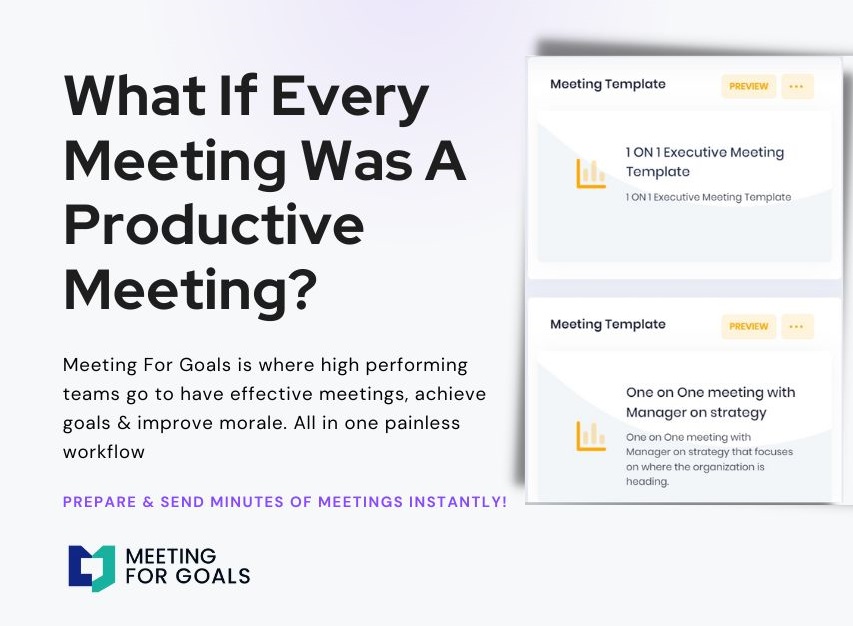
You can also create templates with pre-set participant lists for recurring meetings—saving time and ensuring consistency. Smaller, focused meetings lead to better conversations, faster decisions, and more engaged teams.
IV. Choose the Right Format and Structure
Not all monthly meetings should look the same. The format should match the purpose. Here are a few common types:
- Progress Reviews: Great for tracking key performance indicators (KPIs), project milestones, or departmental updates. Use a structured agenda and stick to time limits.
- Strategic Planning Sessions: Ideal for setting long-term goals, discussing resource allocation, or adjusting priorities. These meetings benefit from open discussions and collaborative tools.
- Cross-Functional Syncs: Perfect for aligning teams working on interconnected projects. These meetings need clear timelines and decision-making authority.
- Brainstorming Sessions: Used to generate ideas or solve problems. Keep them interactive with whiteboards or breakout groups.
No matter the format, pacing is key. Long, meandering meetings kill energy. That’s why it’s essential to allocate time for each topic and stick to it.
Meeting For Goals includes built-in timers and time-tracking features. You’ll get alerts when a topic is running over, so you can adjust in real time.
Pre-meeting prep is just as important. Share your agenda and materials in advance so people come ready to contribute. In Meeting For Goals, all documents and agenda items are in one place—easy to access and comment on before the meeting even begins.
After the meeting, the platform automatically generates summaries, action items, and follow-up tasks. This turns your meeting into a launchpad for execution—not just another conversation.
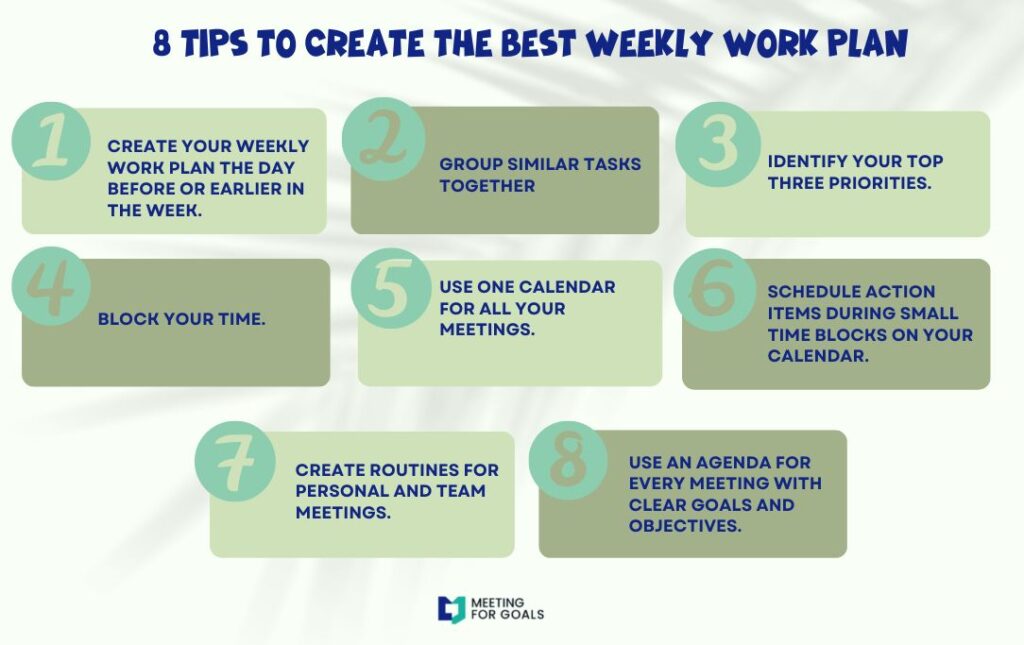
Want to learn how to structure different types of meetings? Browse our free meeting templates to get started.
V. Drive Engagement and Accountability
A great meeting isn’t just about what’s discussed—it’s about who participates and what happens next.
Start by creating a space where everyone feels comfortable speaking up. Encourage diverse perspectives. Ask questions. Invite input from quieter team members.
Rotating the facilitator role can also help. It gives different team members a chance to lead and keeps the energy fresh.
Use interactive tools to keep people engaged. Live polls, Q&A sessions, and collaborative whiteboards can make meetings more dynamic. Meeting For Goals has these features built in—no need to switch between apps.
But engagement is only half the battle. Without accountability, even the best meetings won’t lead to action.
Every meeting should end with clear next steps. Assign tasks, set deadlines, and define what success looks like. Make sure every action item has an owner.
Meeting For Goals makes this seamless. You can assign tasks during the meeting, track them across sessions, and send automated reminders. No more chasing people down for updates.
You can also review past action items at the start of each meeting. This reinforces accountability and helps your team build momentum.
Want a real-world example? According to a study by the Harvard Business Review, teams that regularly review past actions during meetings are 33% more likely to hit their performance goals.
VI. Measure and Improve Over Time
The best teams don’t just run meetings—they refine them. Take time to review how your monthly meetings are going:
- Are they running too long?
- Are people engaged?
- Are action items getting done?
Use feedback and data to improve. Meeting For Goals provides analytics on meeting duration, participation, and follow-through. You’ll see what’s working—and what needs to change.
Consider sending a quick post-meeting survey. Ask participants what worked, what didn’t, and what could be improved. This helps you make small tweaks that lead to big gains over time.
Remember: productivity isn’t just about doing more. It’s about doing the right things, with the right people, in the right way.
VII. Conclusion: Turn Monthly Meetings Into a Strategic Advantage
Monthly meetings don’t have to be a chore. When structured with intention, they become a powerful tool for alignment, execution, and growth.
Let’s recap the key strategies:
- Set clear, goal-aligned objectives
- Invite only the right participants
- Choose a meeting format that fits your purpose
- Keep meetings structured and on time
- Foster engagement and assign accountability
- Measure outcomes and continuously improve
By following this framework, you’ll transform your monthly meetings from time-wasters into productivity powerhouses.
And with Meeting For Goals, it’s easier than ever. Our platform is designed to help high-performing teams plan, run, and follow up on meetings that actually get results.
Ready to take your meetings to the next level? Sign up for Meeting For Goals today and start using our free meeting templates to get a head start.
Visit Meeting For Goals to learn more about how we help teams run smarter, faster, and more focused meetings. Let’s turn your monthly meetings into your most valuable leadership tool.
External Sources
Harvard Business Review – How to Make Your One-on-Ones with Employees More Productive