
In a world where time is money and meetings can make or break a team’s momentum, having a well-structured meeting agenda is no longer optional—it’s essential.
For high-performing teams and forward-thinking executives, the difference between a productive meeting and a time-wasting session often comes down to one thing: preparation.
At Meeting For Goals, we specialize in transforming meetings into strategic tools for goal achievement, accountability, and team alignment. Whether you’re a Director, VP, or part of the C-suite, this guide will empower you to make every meeting count.
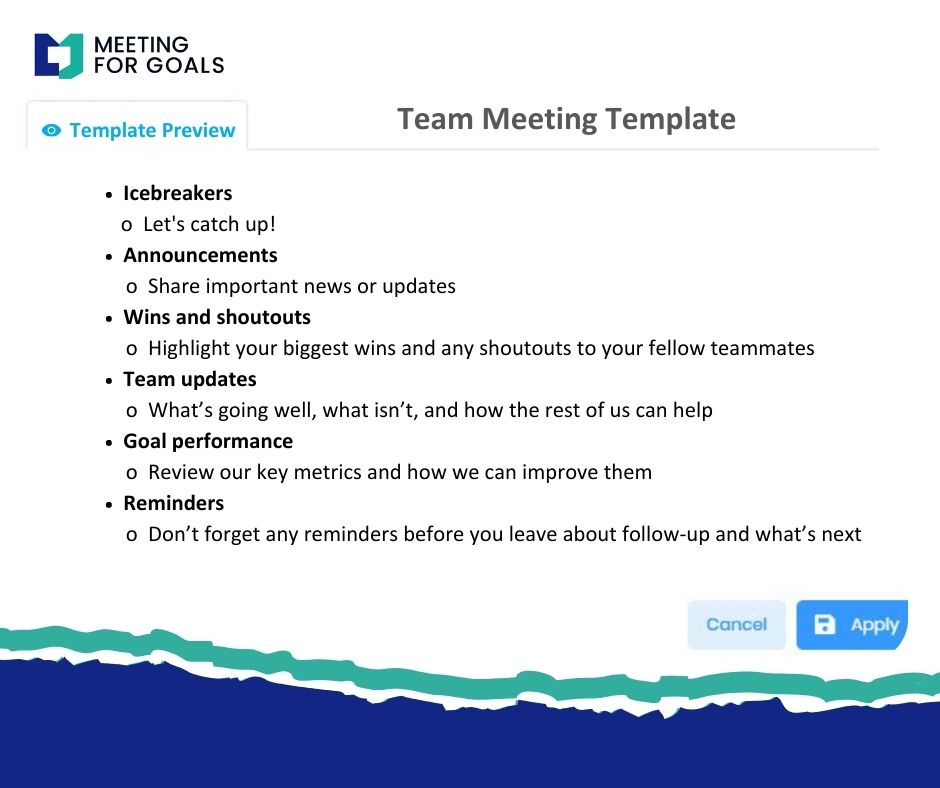
Looking to improve your meetings immediately? Start with our free meeting templates and try our platform by signing up here.
Meeting Agenda Outline for Effective Meetings
I. Introduction
Why Meeting Agendas Matter
Let’s face it—meetings can either be a team’s biggest asset or its biggest time-waster. For leaders overseeing mid-sized teams, the challenge isn’t just fitting meetings into a busy schedule. It’s making sure they’re worth the time.
A clear, structured agenda is the secret weapon of productive meetings. It sets expectations, keeps the conversation on track, and ensures everyone knows what they’re there to do.
Without it, meetings can easily spiral into off-topic tangents or vague discussions that leave everyone wondering what just happened.
For companies with 40–70 employees, the stakes are even higher. Every minute counts. A poorly run meeting isn’t just annoying—it’s costly. That’s why high-performing teams treat agendas as strategic tools, not just administrative checkboxes.
Who We Are: Meeting For Goals
At Meeting For Goals, we go beyond basic scheduling. Our platform helps teams run shorter, more focused meetings that align with company goals. From assigning responsibilities to tracking progress, we help you ensure that every meeting has a purpose—and a payoff.
We’ve designed our tools specifically for mid-sized companies looking to scale without losing momentum. This guide walks you through a six-part meeting agenda framework that you can start using today. And with our software, implementing these strategies is easier than ever.
Learn more about how Meeting For Goals can support your team’s growth.
2 Minute Video
Watch a 2 minute demo of our meeting management software in action
II. Setting Objectives for the Meeting
Define the “Why” of Your Meeting
Every meeting should start with a clear purpose. Without a defined goal, meetings can quickly drift into unproductive territory.
Whether you’re reviewing a project, making a decision, or brainstorming ideas, the objective should be crystal clear.
Ask yourself:
- What do I want the team to walk away with?
- Is it clarity on next steps?
- A decision?
- Alignment on strategy?
The more specific you are, the more focused your meeting will be.
And don’t forget to tie your meeting goals to broader company objectives. If your quarterly target is improving customer retention, your meeting should support that—maybe by discussing service improvements or analyzing churn data.
Communicate Objectives Early
Once your objectives are set, share them with your team before the meeting. This gives everyone a chance to prepare, think through questions, and come ready to contribute.
Using Meeting For Goals, you can embed objectives right into the meeting invite. You can also assign pre-meeting tasks—like reviewing a report or preparing a slide deck—so everyone shows up informed and ready to engage.
Clear objectives lead to better conversations. When every team member understands how their input connects to the bigger picture, participation and accountability naturally improve.
Want to see how this works in action? Sign up now and try it for yourself.
Adding an Agenda
How to add an agenda instantly on Meeting For Goals
III. Structuring the Agenda
Break It Down to Build It Up
A meeting agenda isn’t just a list of topics—it’s a roadmap. It helps guide the conversation, manage time, and ensure that the meeting achieves its goal. Without structure, meetings can quickly become chaotic or one-sided.
Start with the basics:
- A clear title
- A list of participants
- The meeting’s objective
Then, break the meeting into time blocks. For example, a 60-minute meeting might look like this:
- 5 minutes: Welcome and review objectives
- 15 minutes: Project updates
- 20 minutes: Discussion on issues or roadblocks
- 15 minutes: Decision-making or brainstorming
- 5 minutes: Action items and next steps
This structure helps you prioritize high-impact items and ensures that nothing critical gets rushed at the end.
Assign Roles to Keep Things Moving
Even the best agenda can fall flat without the right people in the right roles. Assign a facilitator to lead the meeting and keep things on track. The facilitator should know the objectives and be comfortable managing group dynamics.
Next, assign a note-taker to document key points, decisions, and action items. This creates a record that can be shared afterward. A timekeeper can also help keep discussions within their allotted times, especially when conversations get lively.
Meeting For Goals makes it simple to assign these roles ahead of time. Everyone knows what’s expected, and the meeting runs more smoothly as a result.
IV. Distributing the Agenda
Don’t Wait Until the Last Minute
One of the biggest mistakes leaders make is not sharing the agenda ahead of time. If participants don’t know what to expect, they can’t prepare. Unprepared participants often lead to unproductive meetings.
Distribute your agenda at least 24–48 hours before the meeting. For more complex topics, give even more time. This allows team members to review materials, gather data, and come ready to contribute.
Respecting your team’s time by preparing them in advance also boosts morale and engagement. People are more likely to take meetings seriously when they feel their time is valued.
Use Tools That Make It Easy
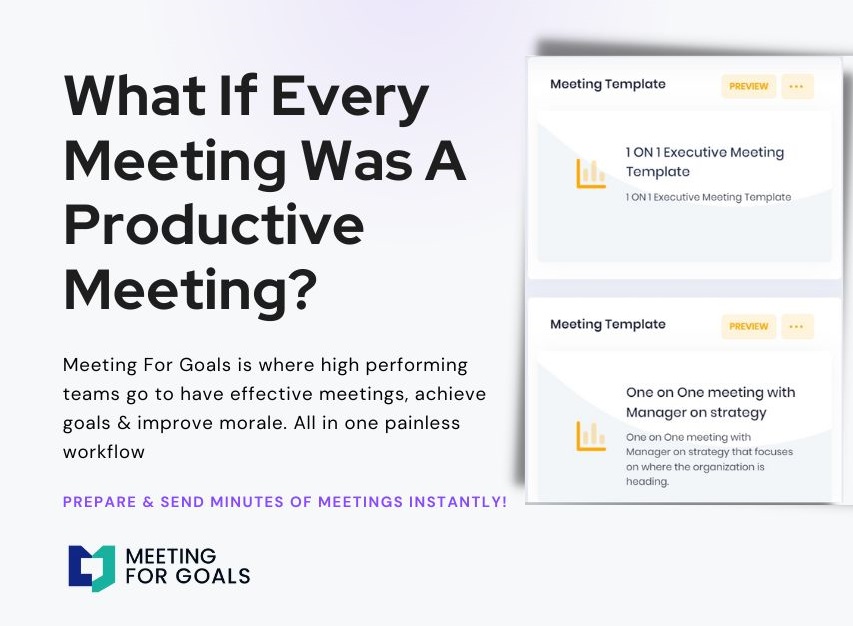
With Meeting For Goals, you can build and share your agenda in just a few clicks. You can even track who’s viewed it, send reminders, and collect feedback—all in one place.
This kind of transparency builds a culture of preparation and accountability. When your team knows what’s coming, your meetings become more efficient and effective.
V. Facilitating the Meeting
Start Strong, Stay Focused
Facilitating a meeting isn’t just about keeping time—it’s about guiding the group toward a clear outcome. Start by reviewing the objectives and agenda. This sets the tone and reminds everyone why they’re there.
Encourage participation from all attendees. Ask open-ended questions to spark discussion. If someone’s dominating the conversation, gently redirect to hear from others. If someone’s quiet, invite them to share their thoughts.
Always keep the goal in mind. Every discussion should move the group closer to the meeting’s objective.
Use Tools to Stay on Track
It’s easy for meetings to veer off course. That’s where tools like a “parking lot” come in. Jot down off-topic ideas that deserve attention later. This respects the speaker while keeping the meeting focused.
Meeting For Goals includes live collaboration tools that let you track the agenda, document decisions, and assign action items in real time. No more chasing down notes or wondering what was agreed upon.
By combining strong facilitation with the right tools, you’ll run meetings that are not just efficient—but energizing.
Want to improve your facilitation skills? Harvard Business Review’s guide to running effective meetings offers great insights.
VI. Following Up After the Meeting
Keep the Momentum Going
The meeting might be over, but the work isn’t. Follow-up is where real progress happens. Without it, even the best meetings can fade into memory.
Send out a summary that includes:
- Key takeaways
- Decisions made
- Action items
Make sure each task has an owner and a deadline. This keeps everyone accountable and ensures that nothing falls through the cracks.
Use Meeting For Goals to automate this process. Our platform generates meeting summaries and tracks follow-ups, so your team stays aligned and on task.
Track Progress and Celebrate Wins
Following up isn’t just about accountability—it’s about motivation. Track progress on action items and celebrate when goals are met. This reinforces the value of the meeting and keeps your team engaged.
You can also use follow-ups to gather feedback. What worked? What could be improved? Use this input to make your next meeting even better.
For more tips on post-meeting follow-up, check out this article from Atlassian on effective meeting wrap-ups.
VII. Conclusion
Why a Strong Agenda Changes Everything
In today’s fast-moving business world, meetings are a key driver of success—or failure. A well-structured agenda is the foundation of a productive meeting. It brings clarity, focus, and accountability to every conversation.
We’ve walked through a six-part framework that covers everything from setting objectives and structuring the agenda to assigning roles, distributing materials, and facilitating the discussion. These are proven strategies used by top-performing teams to get more done in less time.
Take the Next Step
If you’re a Director, VP, or C-suite leader at a mid-sized company, now is the time to transform your meetings. Implementing these strategies can boost your team’s productivity, improve morale, and accelerate your company’s progress.
Meeting For Goals makes it easy. Our platform simplifies every step of the meeting process—from planning to follow-up. With built-in tools for collaboration, role assignment, and goal tracking, we help you turn meetings into powerful business drivers.
Ready to meet smarter, not longer? Start your free trial today and experience the difference.
Start your journey here.
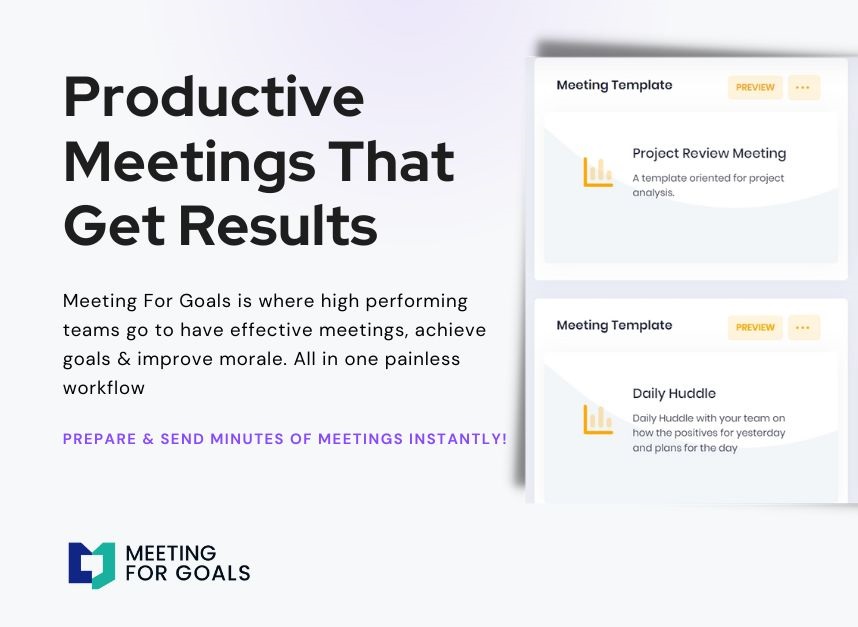
And don’t forget to explore our free meeting templates to help you hit the ground running.
Visit us at https://meetingforgoals.com for more resources, insights, and tools designed to make your meetings more effective than ever.