
The Ultimate Kick-Off Meeting Agenda: A Blueprint for High-Performing Teams
In today’s fast-paced business environment, where time is money and every meeting counts, a well-run kick-off meeting can be the game-changer that sets your project on the path to success.
At Meeting For Goals, we know that productive meetings are the heartbeat of high-performing teams. That’s why our all-in-one meeting management software is designed to help teams align with business objectives, boost accountability, and make every meeting matter.
Whether you’re a VP, Director, or C-suite executive at a company with 40 to 70 employees, this guide will walk you through a practical, results-driven kick-off meeting agenda. You’ll also discover how to use Meeting For Goals to make your meetings more effective, engaging, and impactful.
Want to skip ahead and start planning? Sign up for Meeting For Goals now and explore our free library of meeting templates.
I. Introduction
Every successful project starts with a strong foundation—and that begins with a kick-off meeting. This isn’t just another calendar invite. It’s your chance to align your team, set expectations, and energize everyone around a common mission.
For companies with 40 to 70 employees, collaboration across departments is essential but can be tricky. A kick-off meeting helps:
- Break down silos.
- Create shared understanding.
- Get everyone rowing in the same direction.
At Meeting For Goals, we believe meetings should be short, focused, and aligned with business objectives. Our platform helps teams:
- Plan agendas.
- Assign roles.
- Track follow-ups.
In this guide, we’ll walk you through a six-part agenda that will help you lead kick-off meetings that drive real results. Whether you’re launching a new product, starting a marketing campaign, or kicking off a cross-functional initiative, you’ll find practical tips to ensure your meeting sets the right tone.
Kick-off meetings are more than logistics—they’re leadership moments. Done right, they can:
- Inspire your team.
- Clarify direction.
- Create momentum that lasts long after the meeting ends.
2 Minute Video
Watch a 2 minute demo of our meeting management software in action
II. Objectives of the Kick-Off Meeting
Let’s start with the “why.” The main goal of a kick-off meeting is to create clarity.
You need to answer three questions:
- What are we trying to achieve?
- Who’s doing what?
- When will we deliver?
Start by defining clear, measurable goals. Instead of saying “increase sales,” say, “Grow Q3 revenue by 15% through targeted digital campaigns.” This gives your team a specific target to aim for.
Next, outline who’s responsible for what. In mid-sized companies, people often juggle multiple roles. Clarify responsibilities upfront to avoid confusion later. This is also a great time to identify key stakeholders and decision-makers.
Timelines matter, too. Break your project into phases with clear milestones and deadlines. This helps everyone stay on track and gives leadership visibility into progress.
Meeting For Goals makes this easy. You can:
- Define objectives.
- Assign roles.
- Map out milestones.
Everything is centralized, so there’s no guesswork. By the end of this section, your team should understand the project’s purpose, their individual roles, and the timeline for delivery. Clarity now prevents chaos later.
Want to see how it works? Check out our free meeting templates to get started with goal-setting and role assignments.
Adding an Agenda
How to add an agenda instantly on Meeting For Goals
III. Agenda Overview
A clear agenda is your meeting’s roadmap. It keeps everyone focused and ensures no time is wasted.
Here’s a simple structure you can use:
- Welcome and introductions
- Project overview
- Goals and success metrics
- Roles and responsibilities
- Timeline and milestones
- Risks and mitigation
- Q&A
Share the agenda ahead of time so participants can prepare. Encourage input—ask team members if there are topics they’d like to add. This builds engagement and ensures you’re covering what matters most.
During the meeting, stick to the schedule. It’s easy to go down rabbit holes, especially when multiple departments are involved. A structured agenda keeps the conversation on track.
With Meeting For Goals, you can:
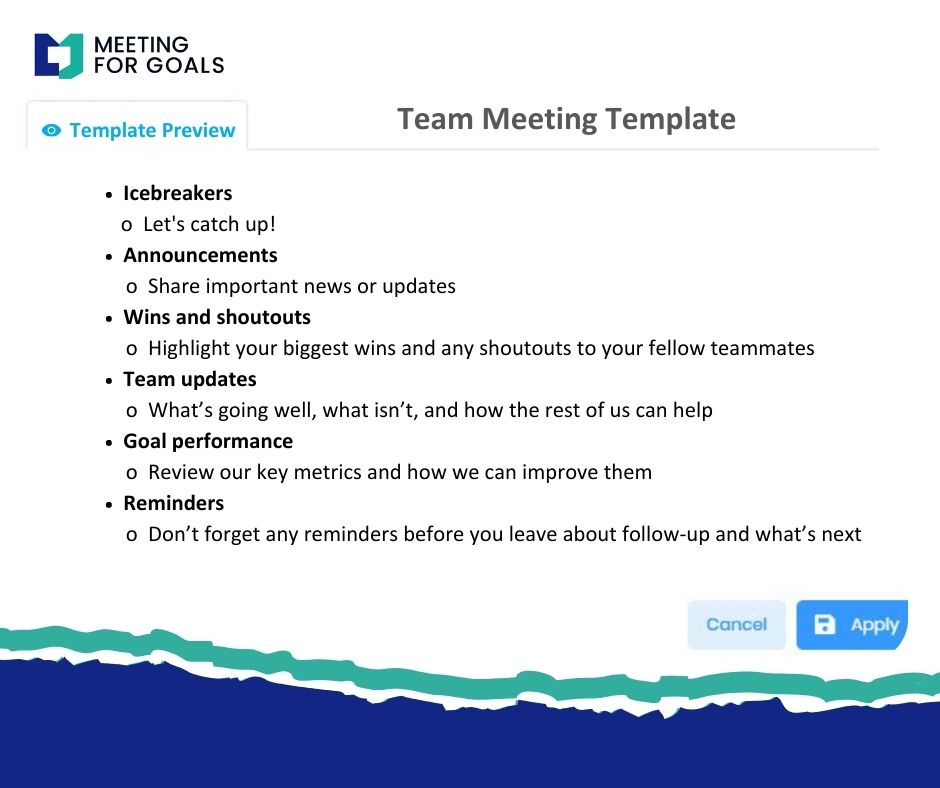
- Build, share, and manage your agenda in one place.
- Track how much time is spent on each item, helping you improve future meetings.
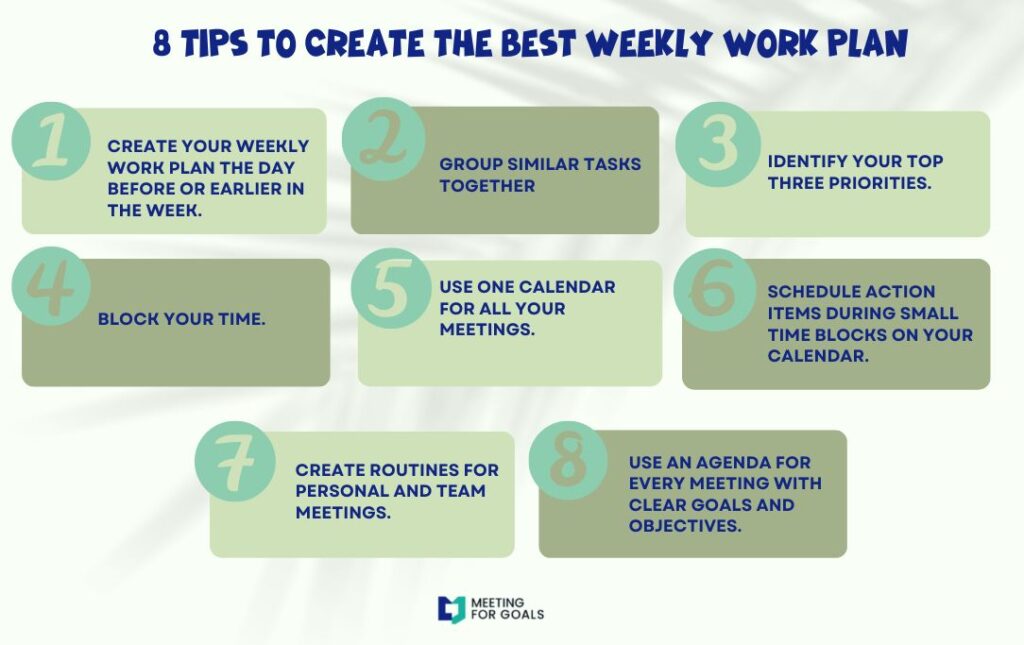
Remember, your agenda isn’t just a checklist—it’s a tool for alignment. Use it to create clarity, foster collaboration, and keep your team moving forward.
IV. Roles and Responsibilities
One of the most common reasons projects fail? Confusion over who’s doing what.
Use your kick-off meeting to clearly define roles. Start by identifying the core team, then outline each person’s responsibilities.
For example:
- Project Lead: Oversees execution and tracks progress
- Marketing Manager: Manages campaign strategy and creative assets
- Data Analyst: Monitors KPIs and reports results
- Customer Success: Communicates updates to clients
Don’t forget about supporting roles—IT, finance, or legal may not be involved daily but can impact timelines.
Assigning roles is just the start. You also need to establish how the team will communicate. Consider:
- Will you meet weekly?
- Use Slack or email for updates?
- How will decisions be documented?
Meeting For Goals makes this seamless. You can:
- Assign tasks.
- Set deadlines.
- Track updates—all from your meeting dashboard.
Automated reminders ensure nothing slips through the cracks. When everyone knows their role and how to communicate, they’re empowered to take ownership. That’s how you build accountable, high-performing teams.
Need help defining roles? Use our meeting templates to get a head start.
V. Setting Expectations
Setting clear expectations is key to long-term success. It’s not just about what needs to be done—it’s about how you define success and handle challenges.
Start by identifying success metrics. These should tie directly to your project goals. For example:
- Increase lead conversion by 20% in 3 months.
- Launch product by June 15 with zero critical bugs.
- Reduce support ticket volume by 10% post-launch.
Next, talk about risks. Every project has them. Maybe you’re short on resources, or you’re relying on another team’s input. Acknowledge these risks early and brainstorm ways to mitigate them.
Encourage open feedback. Create a space where team members can raise concerns or offer suggestions. This builds trust and helps you catch issues before they become problems.
Transparency is everything. When people know what’s expected—and how they’ll be measured—they’re more likely to stay focused and motivated.
Meeting For Goals helps you:
- Track KPIs.
- Log risks.
- Capture feedback in real time.
You’ll have a clear record of expectations and a system for keeping everyone aligned. Need inspiration for setting expectations? Harvard Business Review offers great insights on setting team norms and performance standards.
VI. Conclusion
As your kick-off meeting wraps up, it’s time to bring everything together and set the stage for execution.
Start with a quick recap:
- What are the project goals?
- Who’s doing what?
- What are the key milestones?
Then, reinforce the importance of collaboration. Remind your team that their combined effort is what will drive success. Celebrate the beginning of a new initiative and express your confidence in their ability to deliver.
Outline next steps. Maybe it’s scheduling the first status check-in, finalizing the project plan, or assigning follow-up tasks. Use Meeting For Goals to do this in real time—no extra emails needed.
Finally, encourage your team to fully leverage Meeting For Goals. With features like:
- Automated follow-ups.
- Real-time tracking.
- Meeting analytics,
our platform helps teams stay organized, accountable, and aligned. A successful kick-off meeting isn’t just about planning—it’s about creating momentum. With the right structure and tools, you’ll inspire your team, drive action, and set your project up for long-term success.
Ready to make your meetings more effective? Sign up for Meeting For Goals today and start using our free meeting templates to streamline your next project.
VII. Bonus Tips for Kick-Off Meeting Success
- Keep It Interactive
Don’t just present—engage. Ask questions, run polls, or use breakout groups to brainstorm. Interactive meetings keep energy high and improve retention.
- Document Everything
Use Meeting For Goals to capture notes, decisions, and action items in real time. This creates a single source of truth and saves time on follow-ups.
- Follow Up Promptly
Send a summary within 24 hours. Include key decisions, assigned tasks, and next steps. This reinforces accountability and keeps momentum going.
- Evaluate and Improve
After the meeting, ask for feedback. What worked? What didn’t? Use this input to improve your next kick-off session.
- Use Templates
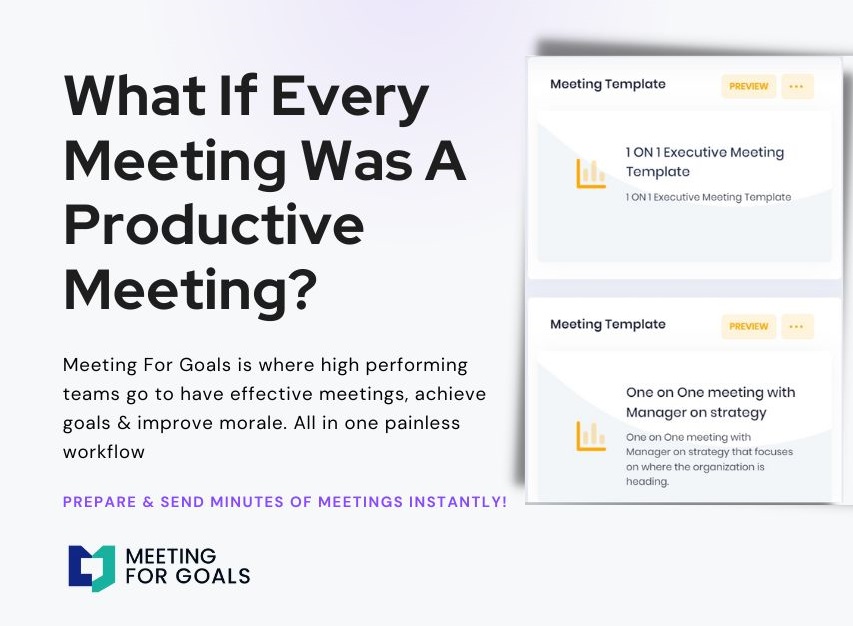
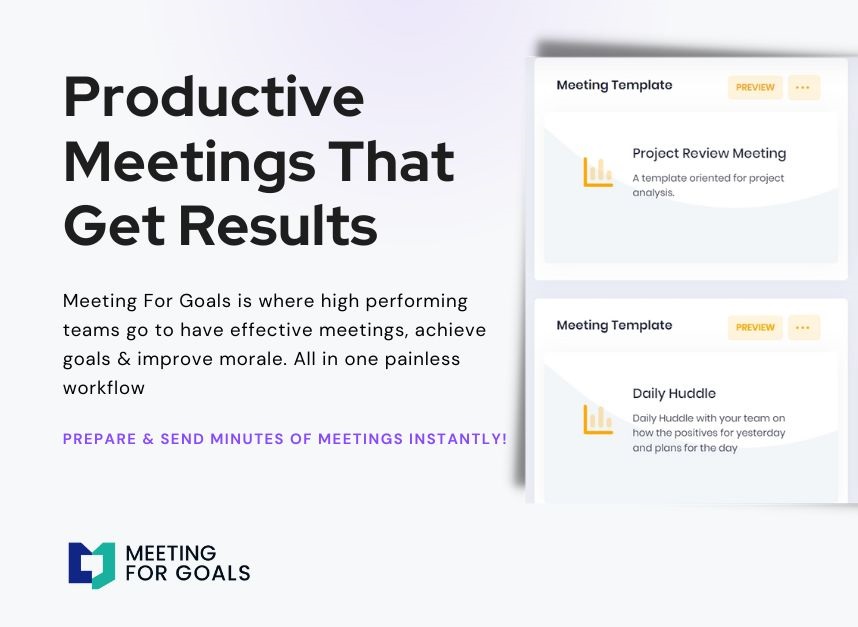
Don’t start from scratch. Our free meeting templates help you structure your agenda, assign roles, and track progress—all in one place.
VIII. Why Kick-Off Meetings Matter More Than Ever
In a hybrid or remote work environment, alignment is harder to achieve. Teams are spread out, communication is fragmented, and it’s easy for projects to lose focus.
Kick-off meetings bring people together—physically or virtually—and create a shared sense of purpose. They align everyone on goals, clarify roles, and build the trust needed for collaboration.
According to a study by McKinsey, companies that prioritize cross-functional collaboration are 5x more likely to outperform their peers. A strong kick-off meeting is the first step in building that collaborative culture.
So don’t treat your kick-off meeting as a checkbox. Treat it as a strategic opportunity to lead, align, and inspire.
Conclusion
A great kick-off meeting sets the tone for your entire project. It creates clarity, builds momentum, and sets your team up for success.
With Meeting For Goals, you have everything you need to make your meetings more focused, accountable, and results-driven. From agenda planning to task tracking, our platform turns meetings into powerful tools for execution.
Ready to elevate your next project? Sign up now and start using our free meeting templates to plan your next kick-off meeting.
Because when meetings are aligned with goals, everyone wins.
External References:
- McKinsey & Company: How to build a culture of collaboration
- Harvard Business Review: Setting Team Norms for High Performance
Internal Links:
- Sign up to Meeting For Goals: https://app.meetingforgoals.com/TenantRegistration/Register
- Free Meeting Templates: https://meetingforgoals.com/meeting_templates
- Learn more about our platform: https://meetingforgoals.com