
The Essential Traits of a Great Group Leader
Excerpt: In today’s fast-moving and results-driven business environment, the difference between a high-performing team and one that struggles often comes down to leadership. A great group leader doesn’t just manage tasks—they inspire, align, and empower their team. If you’re a high-level executive aiming to boost your team’s performance, understanding what makes a group leader truly effective is essential. In this article, we break down the core traits of great group leaders and show how tools like Meeting For Goals can turn your meetings into powerful productivity engines.
Introduction: In companies with 40 to 70 employees, every team matters—and so does every meeting. As an executive, you already know that leadership is the glue that holds a team together. But what makes a group leader great? It’s not just about assigning tasks or hitting deadlines. True leadership is about guiding teams with clarity, empathy, and purpose.
One of the most visible places where leadership shows up is in meetings. Meetings are where strategies are discussed, goals are aligned, and decisions are made. Unfortunately, many teams suffer through meetings that are too long, lack focus, and fail to deliver results. That’s where strong leadership becomes essential.
At Meeting For Goals, we help companies run shorter, more effective meetings that align with business goals and drive accountability. Our meeting management platform is built to support leaders in turning meetings into moments of clarity and action. If you’re interested in improving your team’s performance, start by exploring our free meeting templates and sign up to get started.
2 Minute Video
Watch a 2 minute demo of our meeting management software in action
Section 1: Understanding the Role of a Group Leader
A group leader is more than a task manager—they’re the heartbeat of the team. In mid-sized companies, where teams are large enough to require structure but small enough for close collaboration, leadership plays a pivotal role.
At the core, a group leader is responsible for:
- Setting direction
- Aligning efforts
- Creating a culture of collaboration
They define goals, delegate tasks, resolve conflicts, and ensure the team’s work supports the company’s bigger mission.
One of the most overlooked areas where leaders make a big impact is in meetings. Meetings are where teams sync up, solve problems, and make decisions. A great leader ensures every meeting has:
- A clear purpose
- Stays on track
- Leads to concrete outcomes
In companies that are scaling or optimizing operations, group leaders act as the bridge between executive strategy and team execution. They translate high-level goals into actionable tasks and use meetings as checkpoints for progress.
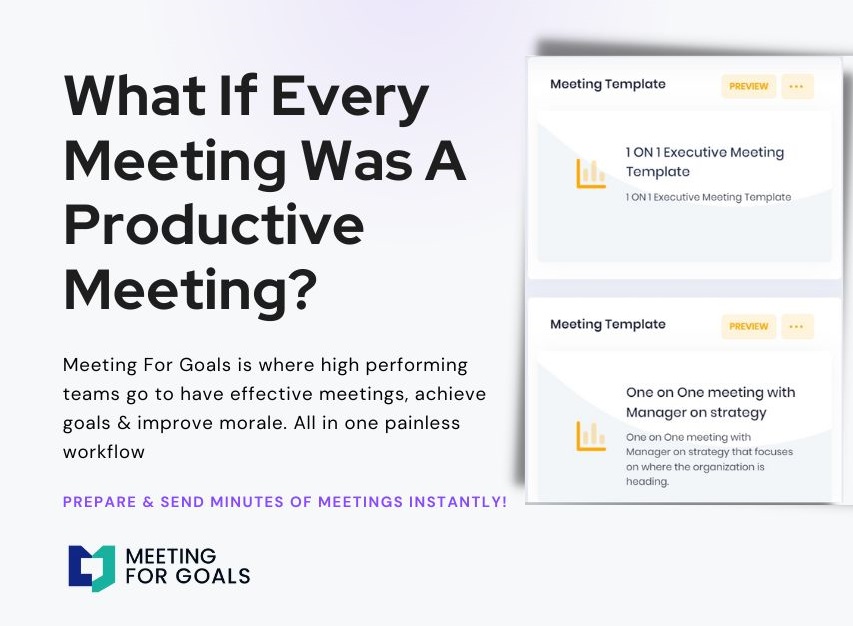
That’s where Meeting For Goals comes in. Our platform helps leaders:
- Prepare
- Run
- Follow up on meetings with ease
With features that align meetings to company goals, track responsibilities, and measure results, we help leaders lead more effectively.
Adding an Agenda
How to add an agenda instantly on Meeting For Goals
Section 2: Key Traits of a Successful Group Leader
Not all leaders are created equal. The best group leaders share a common set of traits that help them inspire and guide their teams. Let’s explore the most important ones:
- Vision and Goal Orientation: Great leaders have a clear vision—and they know how to share it. They understand the company’s strategic objectives and align their team’s work accordingly. This alignment is especially important in mid-sized companies, where teams need to stay agile and focused. Leaders who set SMART goals (Specific, Measurable, Achievable, Relevant, Time-bound) help their teams stay motivated and on track. Using Meeting For Goals, leaders can track progress on these goals and ensure meetings focus on what really matters.
- Communication Skills: Strong communication is the foundation of effective leadership. Leaders need to clearly express goals, offer feedback, and listen to their team. In meetings, this means guiding the conversation without dominating it and making sure everyone has a chance to contribute. Meeting For Goals makes this easier by offering shared agendas, real-time note-taking, and collaborative tools that keep everyone informed and involved.
- Emotional Intelligence: Emotional intelligence, or EQ, is about understanding your own emotions and those of others. Leaders with high EQ can handle conflicts, build trust, and keep the team united—even during tough times. In meetings, emotionally intelligent leaders can read the room, adjust their tone, and make sure everyone feels heard. This creates a safe space for open dialogue and innovation. According to Harvard Business Review, emotional intelligence is one of the key predictors of leadership success.
- Accountability and Integrity: Great leaders walk the talk. They take responsibility for outcomes, follow through on commitments, and hold others accountable—without micromanaging. Meeting For Goals reinforces accountability by assigning action items, tracking follow-ups, and providing visibility into who’s doing what. This helps teams stay on track and builds a culture of trust. By modeling integrity and encouraging ownership, leaders set the tone for the entire team.
Section 3: The Role of a Group Leader in Effective Meetings
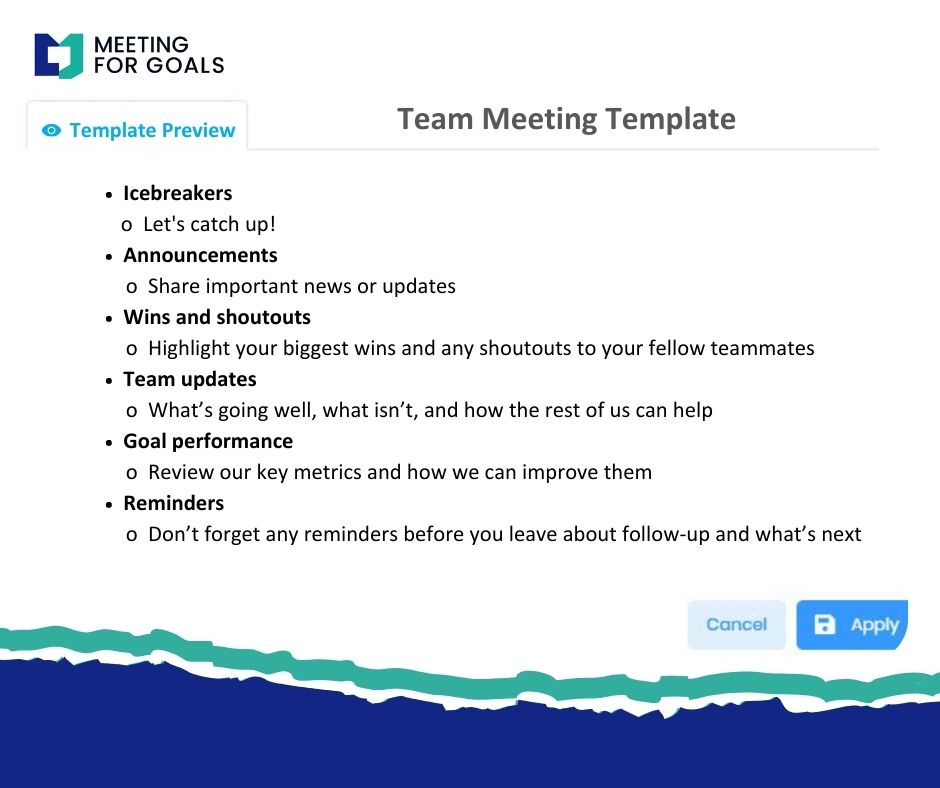
Meetings are where leadership is on full display. A group leader’s ability to run effective meetings can make or break a team’s momentum. Here’s how great leaders approach meetings:
- Setting a Clear Agenda: Every productive meeting starts with a purpose. Leaders should define the meeting’s goals ahead of time and share a clear agenda with the team. This helps everyone come prepared and keeps the conversation focused. With Meeting For Goals, leaders can create and share agendas in just a few clicks.
- Facilitating Productive Discussions: A great leader doesn’t just talk—they facilitate. That means encouraging others to speak up, managing time effectively, and keeping the conversation on track. Our platform includes tools like timers and topic tracking to help leaders guide discussions without letting them drag on.
- Driving Accountability: Meetings should end with clear next steps. Leaders need to assign tasks, set deadlines, and ensure there’s follow-up. Meeting For Goals captures action items automatically and sends reminders, so nothing slips through the cracks. This keeps teams moving forward between meetings.
- Reviewing and Reflecting: Effective leaders use meetings to reflect on past progress. Reviewing what was accomplished helps maintain momentum and identify areas for improvement. With Meeting For Goals, leaders can access past meeting data, track outcomes, and celebrate wins. This reinforces a culture of continuous improvement and accountability.
Section 4: Building Trust and Collaboration Among Team Members
Trust and collaboration are what turn a group of individuals into a team. Without them, even the most skilled employees can struggle to work together. Here’s how great leaders build these essential qualities:
- Leading with Transparency: Trust starts with openness. Leaders should be honest about goals, challenges, and decisions. This encourages team members to be open too. In meetings, transparency means sharing data, explaining decisions, and being receptive to feedback. Meeting For Goals supports this by making notes, action items, and decisions visible to everyone.
- Encouraging Participation: Collaboration works best when everyone feels included. Leaders should actively invite input from all team members, especially those who may be more reserved. Features like collaborative agenda building in Meeting For Goals allow team members to suggest topics ahead of time, making meetings more inclusive and engaging.
- Celebrating Wins and Learning from Losses: Recognizing success boosts morale. Learning from mistakes builds resilience. Great leaders do both. Meeting For Goals makes it easy to track progress and review outcomes, so leaders can celebrate achievements and identify growth opportunities.
- Promoting Cross-Functional Collaboration: In mid-sized companies, teams often work across departments. Leaders play a key role in breaking down silos and encouraging collaboration. Regular cross-functional meetings, supported by Meeting For Goals, help teams stay aligned and informed. For more on how to foster collaboration, check out our guide to effective meeting templates.
Section 5: Continuous Development as a Leader
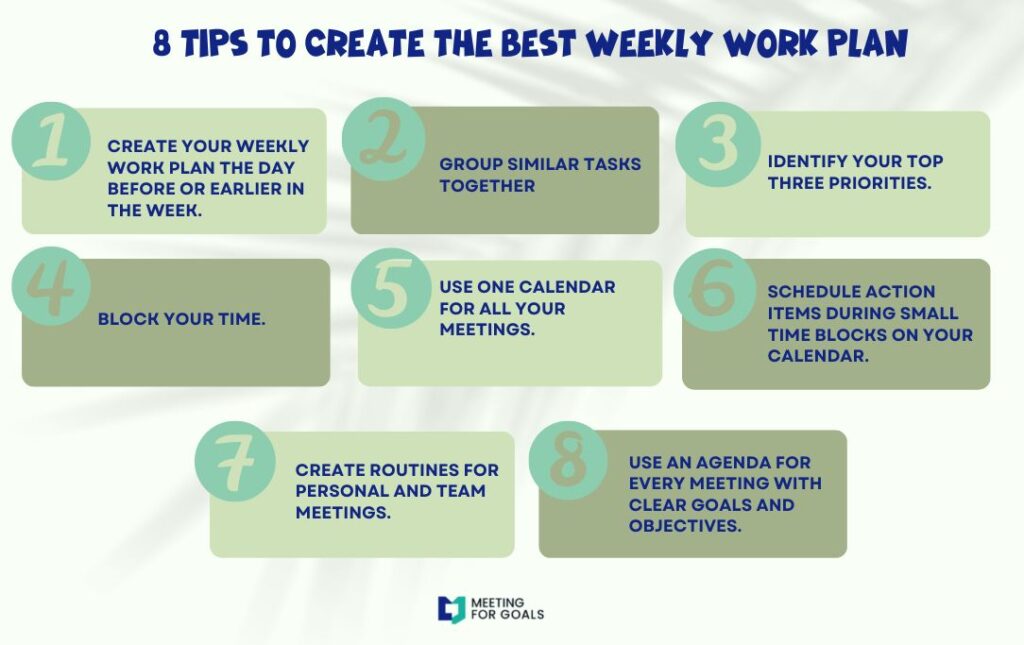
Leadership isn’t a one-time achievement—it’s an ongoing journey. Great leaders are always learning, growing, and adapting. Here’s how they stay ahead:
- Practicing Self-Awareness: Self-awareness is the first step to growth. Leaders should regularly reflect on their strengths, weaknesses, and the impact they have on others. This helps them adapt their approach and become more effective.
- Seeking Feedback: Feedback is fuel for improvement. Leaders should ask for input from their team and use it to refine their communication, decision-making, and meeting facilitation. Meeting For Goals includes post-meeting feedback tools that make it easy to gather insights and improve over time.
- Staying Informed: The business world changes fast. Great leaders stay current by reading, attending workshops, and learning from others. Resources like the Center for Creative Leadership offer valuable insights on leadership development and trends worth exploring.
- Leveraging Technology: Modern leaders use tools that help them lead better. Meeting For Goals is designed to streamline meeting management, track goals, and build accountability—so leaders can focus on what matters most. Want to see how it works? Sign up today and start transforming your meetings.
Conclusion
Great group leadership is the secret sauce behind successful teams. From setting clear goals and running effective meetings to building trust and continuously improving, the best leaders bring out the best in their teams.
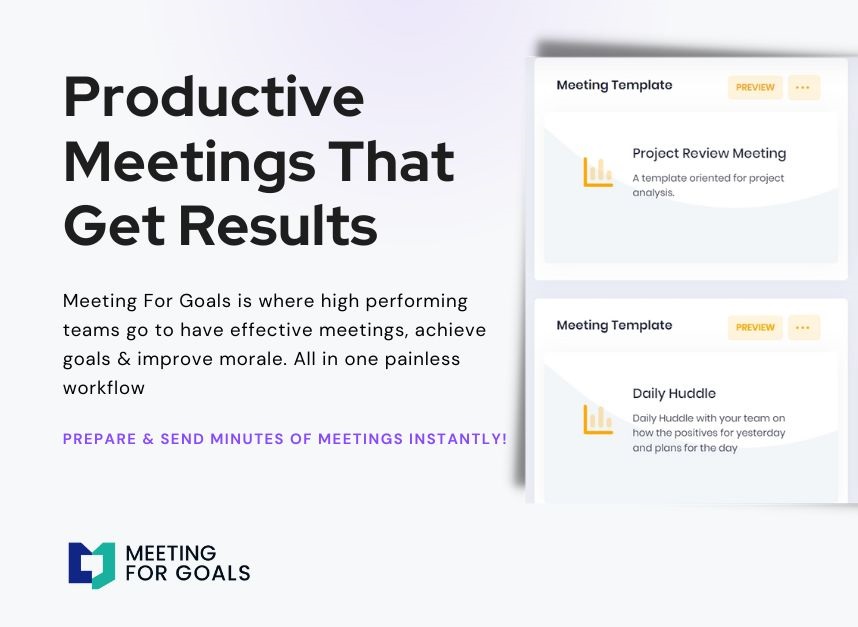
In today’s fast-paced business world, tools like Meeting For Goals give leaders the structure and support they need to thrive. Our platform helps teams align meetings with business objectives, improve accountability, and save time—all in one simple workflow.
If you’re an executive looking to boost your team’s productivity and morale, investing in leadership development and meeting management tools is a smart move.
Start by evaluating your current leadership practices. Then explore how Meeting For Goals can help you and your team achieve more—together.
Ready to take the next step? Sign up now and start running better meetings today: https://app.meetingforgoals.com/TenantRegistration/Register
You can also explore our free meeting templates to get inspired: https://meetingforgoals.com/meeting_templates
For more insights and tools, visit our website: https://meetingforgoals.com