
Effective Meetings: A Strategic Guide for High-Performing Teams
I. Introduction
In today’s fast-paced business world, meetings can be powerful tools for progress or frustrating wastes of time. For growing companies with 40 to 70 employees, collaboration across departments is crucial. Therefore, meetings must be more than just calendar fillers. They need to create clarity, drive decisions, and move the company forward.
So, what makes a meeting truly effective? It’s not about how long it lasts or how many people attend. Instead, it’s about having a clear purpose, engaging the right people, and walking away with actionable results.
That’s exactly what Meeting For Goals helps you achieve. Our platform is designed for high-performing teams that want shorter, more focused meetings that align with business objectives. Whether you’re a Director, VP, or C-suite leader, this guide will walk you through a proven process for planning, running, and following up on meetings that actually make a difference.
Ready to level up your team’s meetings? Start by exploring our free meeting templates to get a head start.
2 Minute Video
Watch a 2-minute demo of our meeting management software in action.
II. Understanding the Components of Effective Meetings
Before diving into preparation and tools, it’s vital to understand what separates effective meetings from the rest. Two core elements stand out: clear objectives and active participation.
A. Clarity in Objectives and Agenda
Every meeting needs a purpose. Without a clear objective, meetings tend to drift, waste time, and leave participants wondering what was accomplished. Whether your goal is to make a decision, solve a problem, or share updates, it must be defined upfront.
Start by asking: What should we accomplish by the end of this meeting?
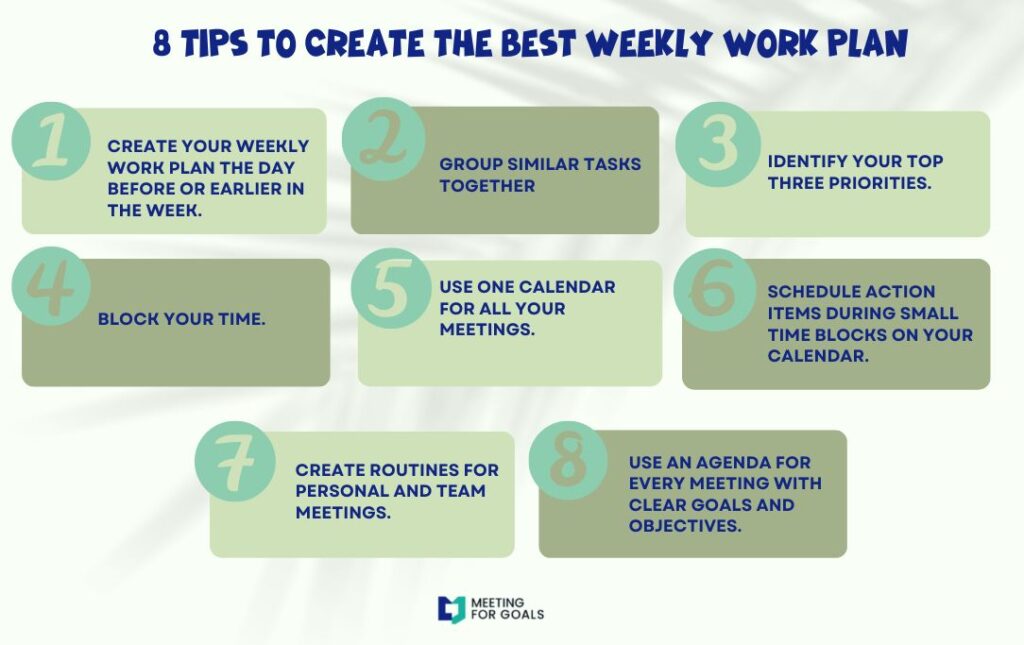
Once that’s clear, build an agenda that supports the goal. Consider the following steps:
- Break the meeting into time-bound sections.
- Assign owners to each topic.
- Prioritize what matters most.
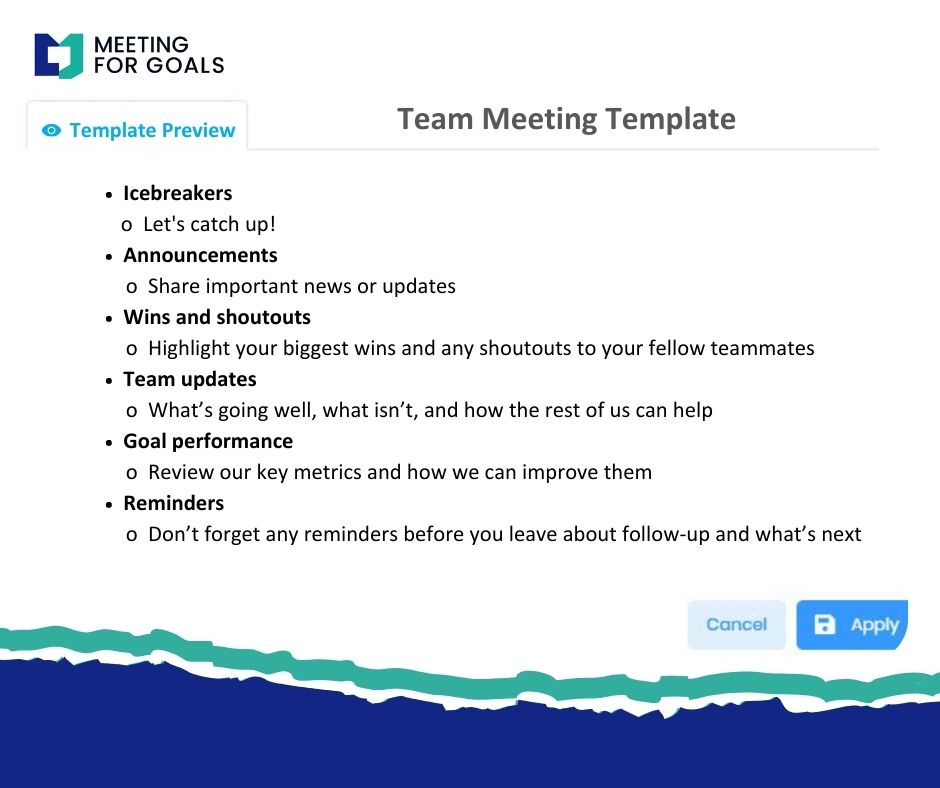
This structure keeps everyone focused and helps avoid distractions. Meeting For Goals simplifies this with built-in agenda templates that connect each topic to broader business objectives. You can align items with company goals, ensuring every discussion has a strategic purpose.
B. Role of Participation and Engagement
A productive meeting involves more than just showing up. It requires active engagement from everyone in the room. When only a few voices dominate, valuable insights are missed, and team morale can suffer.
Leaders should encourage participation by setting a collaborative tone. Consider using:
- Round-robin sharing
- Breakout groups
- Anonymous polls
Keep things interactive. Avoid long lectures. Instead, use visuals, live documents, and dashboards to keep the conversation dynamic and data-driven.
Meeting For Goals boosts engagement by allowing participants to collaborate on agendas, track progress in real-time, and assign action items during the meeting. This shared ownership improves accountability and keeps everyone involved.
Adding an Agenda
How to add an agenda instantly on Meeting For Goals.
III. Preparing for Successful Meetings
Great meetings start long before the first word is spoken. Preparation is key to ensuring your meeting is focused, efficient, and impactful.
A. Pre-Meeting Logistics
First, identify who really needs to attend. Too many attendees can slow things down. Conversely, missing key voices can lead to poor decisions. Invite only those directly involved in the topic or decision-making process.
Next, share materials in advance. This includes:
- The agenda
- Relevant reports
- Data
- Any pre-reading
When people come prepared, you spend less time explaining and more time discussing.
Even your meeting invite matters. Make sure it includes the purpose, agenda, and expectations. This shows respect for your team’s time and signals that the meeting will be productive.
B. Utilizing Meeting Management Software
Manual preparation is time-consuming and often inconsistent. That’s where Meeting For Goals comes in. Our platform helps you:
- Create and share agendas
- Assign pre-meeting tasks
- Keep everything aligned with your company’s goals
Key features include:
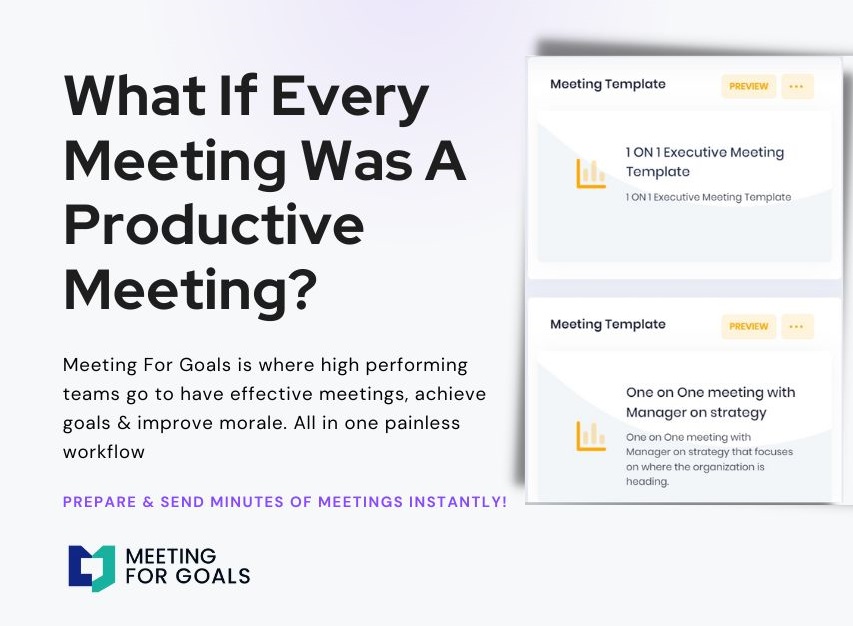
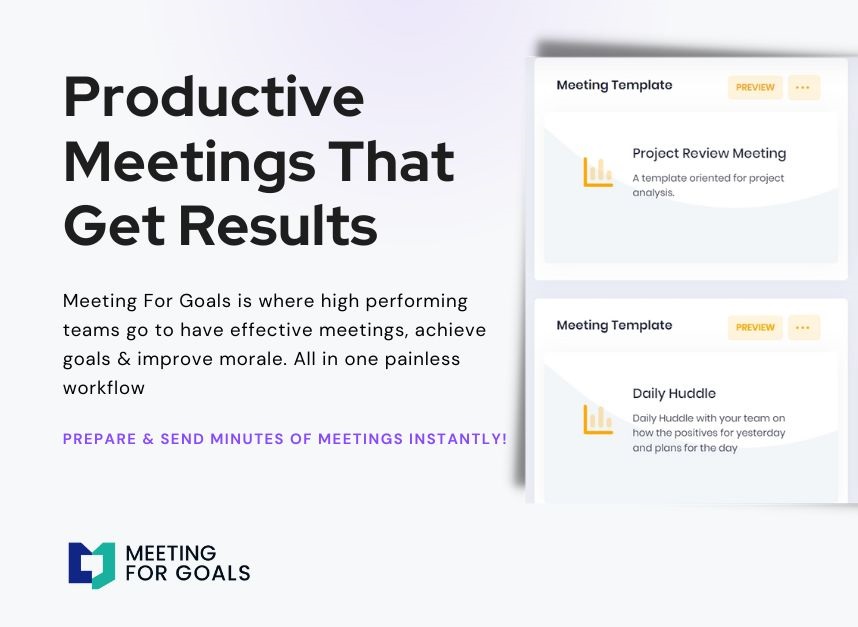
- Customizable agenda templates for different types of meetings
- Tools to align meeting topics with strategic objectives
- Pre-meeting collaboration that lets teams contribute asynchronously
For executives, this means less time spent on logistics and more time leading. By standardizing your preparation, you ensure every meeting starts strong—with purpose, clarity, and alignment.
Want to streamline your prep process? Sign up now to start using Meeting For Goals.
IV. Conducting the Meeting Effectively
Once the preparation is done, it’s time to run the meeting. This phase emphasizes structure, leadership, and making the most of everyone’s time.
A. Time Management Strategies
Time is one of your most valuable resources. Poorly managed meetings often run long, go off-topic, and leave people drained. To avoid this, set time limits for each agenda item.
Use checkpoints throughout the meeting to stay on track. If a topic is taking too long, decide:
- To continue
- To table it for later
- To assign it to a smaller group
Meeting For Goals makes this easy with built-in timers and visual alerts that help facilitators manage time without distraction.
B. Role of the Facilitator
Every meeting needs a leader. The facilitator’s job is to guide the discussion, enforce the agenda, and ensure every voice is heard. This doesn’t have to be the highest-ranking person, but it must be someone empowered to lead.
Start the meeting by restating the objective and reviewing the agenda. During the discussion, keep an eye on engagement and steer conversations back on track if they drift.
If disagreements arise, focus on solutions and maintain a constructive energy.
Meeting For Goals supports facilitators with live note-taking, action tracking, and real-time feedback tools. This reduces the burden of managing logistics and enables facilitators to focus on leading effectively.
V. Post-Meeting Follow-Up
What happens after the meeting is as important as what happens during it. Without follow-up, even the best discussions can fade into inaction.
A. Importance of Accountability and Clarity
Immediately after the meeting, send out a summary. This should include:
- Key takeaways
- Decisions made
- Action items
Each task should have a clear owner and deadline to ensure follow-through. Make the summary accessible to everyone involved. This reinforces accountability and keeps the team aligned.
Meeting For Goals automates this by generating and storing meeting summaries and action plans. Everything lives in one place, making it easy to track progress and revisit past decisions.
B. Measuring Outcomes and Effectiveness
To improve over time, measuring what works is essential. After each meeting, ask:
- Did we achieve our objective?
- What can we improve?
Use short post-meeting surveys to collect feedback. Over time, you’ll see patterns that help you refine your process.
Meeting For Goals includes analytics that track meeting effectiveness, goal alignment, and task completion. These insights empower leaders to continuously improve and build a culture of accountability.
Looking for more tools to help your team follow through? Check out our free meeting templates to get started.
VI. Real-World Examples of Effective Meetings
Let’s look at how real teams are using these strategies to improve their meetings:
Case Study 1: Marketing Team Alignment
A mid-sized SaaS company used Meeting For Goals to revamp their weekly marketing sync. By using agenda templates and aligning topics with quarterly goals, they cut meeting time by 30% and increased campaign velocity by 25%.
Case Study 2: Cross-Functional Project Review
A manufacturing firm with 60 employees struggled with scattered project updates. After implementing Meeting For Goals, they consolidated updates into one focused meeting with clear action items. This improved project delivery timelines by two weeks on average.
These examples show that with the right tools and structure, meetings can become powerful drivers of performance.
VII. Additional Tips for High-Performing Teams
Here are a few extra strategies to take your meetings to the next level:
- Rotate facilitators to build leadership skills across the team.
- Use visuals like dashboards or Kanban boards to make data easy to digest.
- Keep a “parking lot” for off-topic ideas—this keeps the meeting on track without losing valuable insights.
- Start and end on time to build trust and respect for everyone’s schedule.
Also, consider exploring external resources like Harvard Business Review’s guide to running effective meetings and Atlassian’s team playbook. These tools offer additional frameworks and insights that complement what Meeting For Goals provides.
VIII. Conclusion
Effective meetings aren’t just about talking—they’re about progress. For companies with 40 to 70 employees, where every hour and decision counts, mastering your meeting strategy can be a game-changer.
We’ve walked through the full lifecycle of effective meetings—from setting clear goals and preparing strategically to facilitating with purpose and following up with accountability. Along the way, tools like Meeting For Goals make it easier to stay aligned, save time, and drive results.
Want to turn your meetings into a competitive advantage? Start using Meeting For Goals today.
👉 Sign up now and empower your team to run focused, goal-driven meetings: https://app.meetingforgoals.com/TenantRegistration/Register
👉 Explore our free meeting templates to get started: https://meetingforgoals.com/meeting_templates
👉 Learn more about how we help high-performing teams: https://meetingforgoals.com
Make every meeting count. Your team—and your bottom line—will thank you.