
Keyword Debrief Meeting: The Secret to Productive, Goal-Oriented Team Discussions
Excerpt:
In fast-paced organizations, every meeting must count. Yet, too often, meetings become time-consuming, unfocused, and disconnected from broader company objectives. Enter the keyword debrief meeting—a structured approach that transforms meetings into powerful tools for alignment, accountability, and action. In this article, we’ll explore how high-performing teams can leverage keyword debrief meetings to drive productivity, align with strategic goals, and boost morale. Plus, we’ll show how Meeting For Goals software makes it all seamless.
I. Introduction
In today’s business world, time is precious—and meetings are everywhere. If you’re leading a team of 40 to 70 employees, you know how quickly a meeting can go off track. Long-winded updates, unclear goals, and no follow-up? That’s a recipe for frustration.
That’s why keyword debrief meetings are a game-changer. They bring structure, focus, and purpose to every conversation. Instead of endless chatter, you get clear discussion points tied directly to your company’s goals. And the best part? You walk away with real, actionable outcomes.
At Meeting For Goals, we’ve worked with countless leaders who were tired of wasting time in meetings. Our software was built to help teams run shorter, sharper, and more strategic meetings. With features like keyword tracking, real-time task assignment, and progress monitoring, we’re making every meeting matter.
In this guide, we’ll break down everything you need to know about keyword debrief meetings. From planning and execution to follow-through, you’ll learn how to turn meetings into a powerful tool for performance.
Ready to make your meetings more productive? Start by exploring our free meeting templates or sign up to Meeting For Goals today.
2 Minute Video
Watch a 2 minute demo of our meeting management software in action
II. Understanding Keyword Debrief Meetings
So, what is a keyword debrief meeting? Simply put, it’s a meeting format where the entire discussion revolves around a few carefully chosen keywords. These aren’t just buzzwords—they’re terms that reflect your team’s current goals, challenges, or priorities.
For example, if you’re in a quarterly planning meeting, your keywords might be “revenue growth,” “Q3 launch,” and “team bandwidth.” These keywords guide the conversation and keep everyone focused on what really matters.
Traditional meetings often feel like a free-for-all. Everyone shares updates, but there’s no central theme. In contrast, keyword debrief meetings are like laser beams—they cut through the noise.
Here’s what makes them so effective:
- They keep the conversation aligned with business objectives.
- They encourage team members to come prepared.
- They help identify issues and opportunities faster.
- They create a culture of accountability and follow-through.
For leaders, this format offers a strategic advantage. You can quickly assess progress on key initiatives, uncover blockers, and make data-driven decisions. It’s also a great way to reinforce company values and priorities.
Psychologically, keywords prime your team to focus. When people know the meeting will center on “customer retention” or “budget variance,” they show up ready to contribute—not just listen.
Tools like Meeting For Goals make this process even smoother. You can pre-select keywords, link them to your strategic goals, and track discussions in real time. This ensures your meetings are not only productive but also measurable.
Want to see how this works in action? Check out our meeting templates to get started with keyword debriefs today.
Adding an Agenda
How to add an agenda instantly on Meeting For Goals
III. Preparing for the Keyword Debrief
A great meeting starts before anyone joins the call.
Preparation is where keyword debrief meetings truly shine. By setting the stage early, you ensure that everyone walks into the room (or logs into Zoom) with clarity and purpose.
Step one? Choose your keywords.
These should reflect what’s most important right now. Are you launching a new product? Use keywords like “launch timeline,” “feature readiness,” and “go-to-market.” Reviewing team performance? Try “KPI review,” “customer feedback,” and “resource allocation.”
Don’t overdo it—3 to 5 keywords is the sweet spot. Too many, and the meeting loses focus.
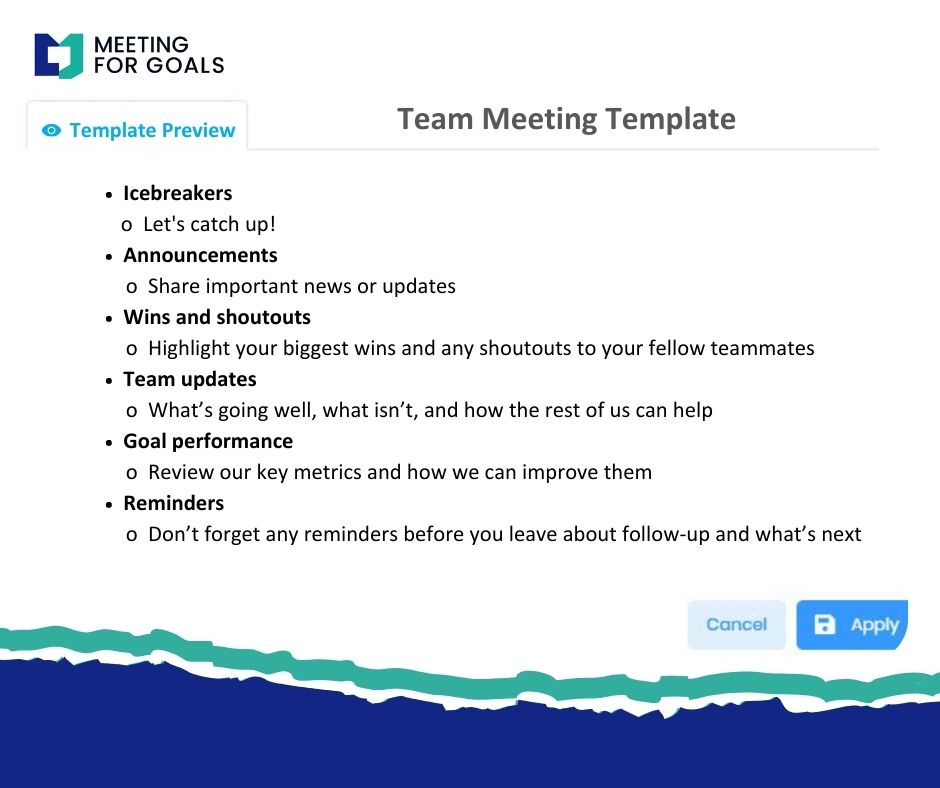
Next, build your agenda around those keywords. Each keyword becomes a discussion point. For example:
- Keyword: “Pipeline Velocity”
- Review current metrics.
- Discuss bottlenecks.
- Identify ways to accelerate deals.
This structure helps participants know exactly what to expect—and how to prepare.
Now, gather your data. Bring reports, dashboards, or customer insights that relate to each keyword. If you’re discussing “customer churn,” show the churn rate, recent feedback, and any exit survey data. This grounds the conversation in facts, not opinions.
Assign pre-meeting tasks, too. Ask team members to review documents, answer a quick survey, or bring recommendations. This encourages ownership and gets everyone mentally engaged.
Finally, define what success looks like. Do you want to walk away with a new strategy? A list of action items? A decision on next steps? Make that clear upfront.
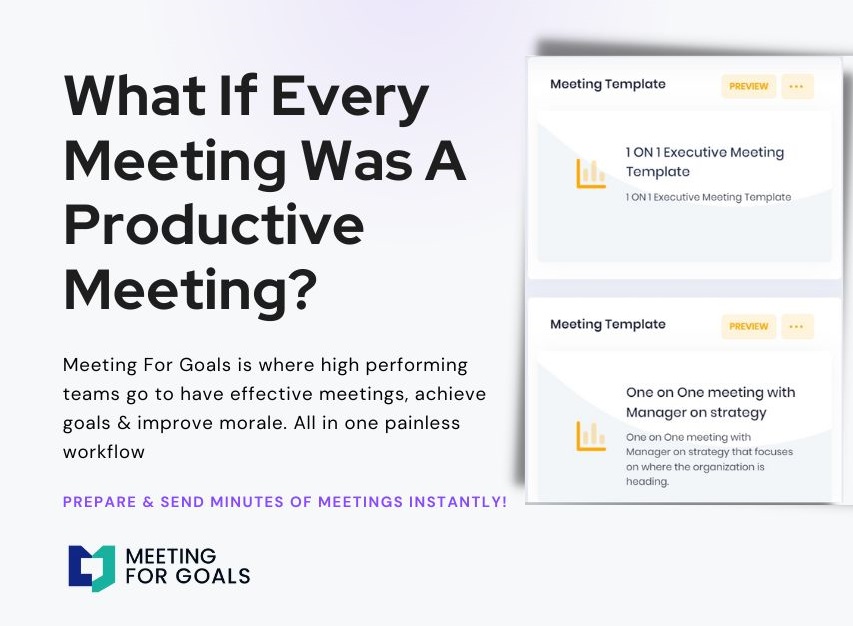
Meeting For Goals simplifies all of this. You can set agendas, assign tasks, and upload data—all in one place. It’s meeting prep without the hassle.
Want to try it yourself? Sign up now and see how easy it is to plan your next keyword debrief.
IV. Conducting the Meeting Effectively
Now that you’re prepared, it’s time to run the meeting.
Start strong. Open the meeting by reviewing the agenda and explaining the keywords. This sets the tone and reminds everyone of the purpose.
Time management is critical. Allocate a time slot for each keyword—say, 10 minutes per topic—and stick to it. Use a timer to stay on track, or leverage Meeting For Goals’ built-in time tracking feature.
Encourage participation from all departments. Keyword debriefs thrive on cross-functional input. If the keyword is “budget,” you want finance, marketing, and operations all weighing in. This leads to more well-rounded decisions.
Assign a facilitator to guide the conversation. This person should keep things moving, make sure everyone’s voice is heard, and steer the group back if the discussion drifts. They should also capture key takeaways and assign tasks in real time.
Meeting For Goals makes this easy. You can take live notes, assign action items, and even link each task to a company objective—all during the meeting.
Use real-time feedback tools to gauge consensus. Quick polls or thumbs-up/thumbs-down reactions help you make fast decisions without endless debate.
Always end with a recap. Review what was discussed, confirm action items, and set deadlines. This ensures that everyone leaves the meeting with clarity and direction.
Pro Tip: Use this opportunity to reinforce how the meeting ties into bigger goals. It helps people see the value of their contributions and keeps morale high.
Want to run your next meeting like a pro? Use Meeting For Goals to guide you every step of the way.
V. Analyzing Outcomes and Action Steps
The real value of a meeting comes after it ends.
Once the keyword debrief is over, it’s time to turn insights into action. This is where many teams drop the ball—but not yours.
Start by reviewing the meeting’s effectiveness. Did you stay on topic? Were the keywords relevant? Did you hit your objectives?
Meeting For Goals provides analytics that show participation levels, time spent per keyword, and task completion rates. This helps you fine-tune future meetings for even better results.
Next, look at the action items. Every keyword should have at least one follow-up task. For example:
- Keyword: “Customer Retention”
- Action: Launch a feedback survey by Friday.
- Keyword: “Timeline”
- Action: Revise project milestones and share with stakeholders.
Make sure each task is SMART—Specific, Measurable, Achievable, Relevant, and Time-bound.
Assign clear ownership. Every action item needs a responsible person, a deadline, and a way to track progress. Meeting For Goals automates this with reminders and status updates, so nothing falls through the cracks.
Don’t forget to follow up. Schedule a quick check-in or use asynchronous updates to keep momentum going. This reinforces accountability and keeps your team aligned.
Also, document key learnings. What worked? What didn’t? What surprised you? These insights are gold for future planning and can help improve your overall meeting culture.
Finally, tie everything back to your company’s strategic goals. Meeting For Goals lets you link each task to a broader objective, giving you a clear view of how your meetings are driving real business impact.
Looking for more ways to streamline your follow-ups? Explore our free templates and take your meetings to the next level.
VI. Conclusion
Keyword debrief meetings aren’t just a new way to run meetings—they’re a better way.
They bring structure, clarity, and focus to every discussion. They help teams stay aligned with strategic goals, make faster decisions, and follow through on action items. And they boost morale by showing that every meeting has a purpose.
Whether you’re a VP looking to improve performance or a director aiming for better alignment, keyword debrief meetings can help you get there.
Throughout this guide, we’ve walked through the full process—from prepping your keywords to analyzing outcomes. We’ve also shown how Meeting For Goals supports every step, making it easier to run effective, engaging, and goal-driven meetings.
The key takeaways?
- Prep matters. Choose the right keywords and set clear expectations.
- Structure drives focus. Stick to the agenda and manage your time.
- Accountability fuels progress. Assign tasks and follow up.
- Tech makes it easy. Use Meeting For Goals to streamline the process.
Ready to transform your meetings? Start by exploring our free meeting templates or sign up now to experience the power of keyword debrief meetings with Meeting For Goals.
Don’t let another meeting go to waste. Make every minute count.
👉 Try Meeting For Goals for Free
👉 Explore Our Free Meeting Templates
👉 Sign Up Today and Align Every Meeting with Your Goals
External Resources:
- Learn more about SMART Goals from MindTools: https://www.mindtools.com/a4wo118/smart-goals
- Harvard Business Review on making meetings more effective: https://hbr.org/2015/03/what-everyone-should-know-about-running-productive-meetings
Word Count: Approximately 2,120 words.