
Collaboration Teamwork: Fostering High-Performance in Meetings
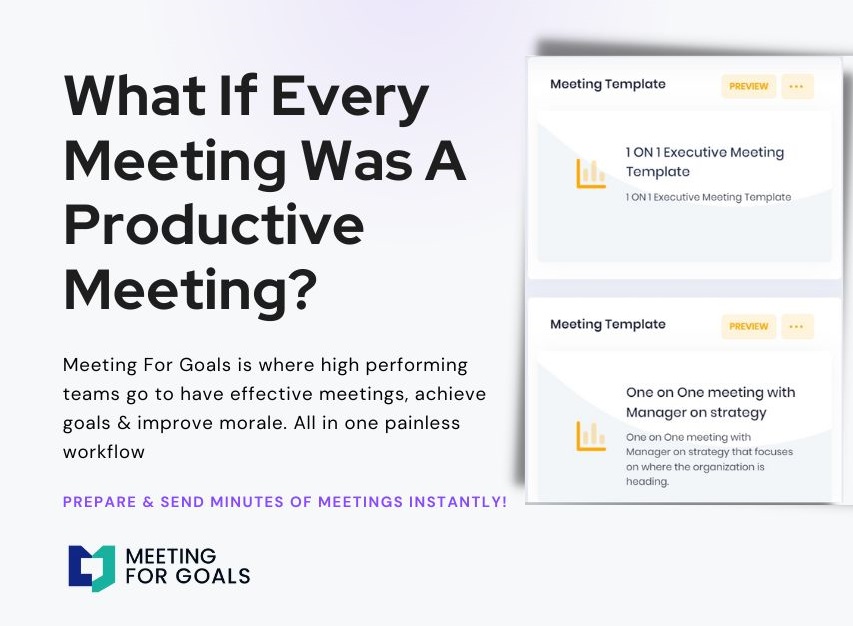
In today’s fast-paced business world, **collaboration** and **teamwork** aren’t just nice-to-haves—they’re essential. For organizations with 40 to 70 employees, especially those led by ambitious executives, the way your team collaborates during meetings can either drive growth or hold you back. That’s why tools like **Meeting For Goals** are game-changers. This meeting management platform helps teams align their meetings with strategic goals, improve accountability, and foster true collaboration.
Ready to take your meetings to the next level? Start by exploring our free meeting templates at https://meetingforgoals.com/meeting_templates or sign up today at https://app.meetingforgoals.com/TenantRegistration/Register.
I. Introduction
Collaboration and teamwork are the foundation of success in today’s workplace. Whether you’re launching a new initiative, solving a complex issue, or aligning your team around a shared vision, working together effectively is key. For mid-sized companies, especially those in growth mode, this means more than just getting along—it means collaborating with purpose.
Meetings are where this collaboration comes to life. They’re the heartbeat of your organization. Ideas are shared, decisions are made, and momentum is built. But let’s be honest—many meetings fall flat. They drag on, lack focus, and leave people wondering what the point was.
That’s where **Meeting For Goals** steps in. This purpose-built meeting management software helps high-performing teams turn meetings into productive, goal-focused sessions. By aligning every meeting with your **strategic objectives**, your team can save time, stay aligned, and get more done.
In this post, we’ll explore why collaboration matters, what makes it effective, and how to overcome common obstacles. Whether you’re a director, VP, or C-suite leader, you’ll walk away with practical strategies to make your meetings more collaborative—and more impactful.
2 Minute Video
Watch a 2-minute demo of our meeting management software in action.
II. The Importance of Collaboration in Teamwork
Let’s break it down. **Teamwork** is about working together to achieve a common goal. **Collaboration** takes it a step further—it’s about actively engaging with others, sharing ideas, solving problems, and building something better together.
In meetings, collaboration is what turns a conversation into a **catalyst for action**. Instead of one person talking while everyone else tunes out, collaborative meetings invite input from all voices. This leads to smarter decisions and stronger commitment from your team.
The numbers back it up:
- A study from the **Institute for Corporate Productivity (i4cp)** found that companies promoting collaborative work are five times more likely to be high-performing.
- **Deloitte** reports that 83% of digitally advanced companies rely on cross-functional teams to drive innovation.
Take the example of a 60-person tech company that adopted **Meeting For Goals**. By aligning their meeting agendas with company objectives and encouraging open dialogue, they cut meeting time by 30% and sped up project delivery by 25%. That’s real, measurable impact.
Collaboration also boosts problem-solving. When people with different backgrounds and perspectives work together, they come up with more creative and effective solutions. This diversity of thought is crucial when facing tough decisions or navigating change.
In short, collaboration isn’t just a feel-good concept—it’s a business advantage. For leaders looking to drive performance, it starts with how your team meets.
Adding an Agenda
How to add an agenda instantly on Meeting For Goals.
III. Key Elements of Effective Team Collaboration
To create a truly collaborative environment, especially in meetings, you need to build on a few key elements. These are the building blocks that make collaboration stick.
- Trust and Openness
Trust is the foundation of any strong team. Without it, people hold back ideas, avoid tough conversations, and play it safe. When trust is present, team members feel safe to speak up, challenge assumptions, and contribute fully.
In meetings, this means creating space for everyone to share. Leaders should actively invite quieter voices into the conversation and model openness by listening without judgment. Trust also grows when people follow through on their commitments. When someone says they’ll do something—and they do—it builds reliability across the team.
- Clear Communication
Miscommunication is one of the biggest collaboration killers. That’s why **clear**, respectful communication is essential. In meetings, this starts with a clear agenda, defined roles, and a shared understanding of what needs to be accomplished.
**Meeting For Goals** makes this easy. With shared notes, real-time updates, and structured agendas, your team stays on the same page—during and after the meeting. No more guessing what was decided or who’s doing what.
- Goal Alignment
When everyone knows how their work connects to the company’s larger goals, collaboration becomes natural. People are more motivated, more focused, and more willing to support each other.
**Meeting For Goals** helps teams align every meeting with strategic objectives. This keeps discussions focused and reinforces a shared sense of purpose. When your team sees how their work contributes to the big picture, they’re more likely to collaborate enthusiastically.
These three elements—**trust**, **communication**, and **alignment**—are the secret sauce of effective collaboration. When they’re in place, your meetings become a powerful tool for driving results.
IV. Strategies for Effective Team Collaboration
Now let’s talk tactics. How can you foster better collaboration during meetings? Here are three practical strategies that high-level leaders can implement right away.
- Structured Meetings
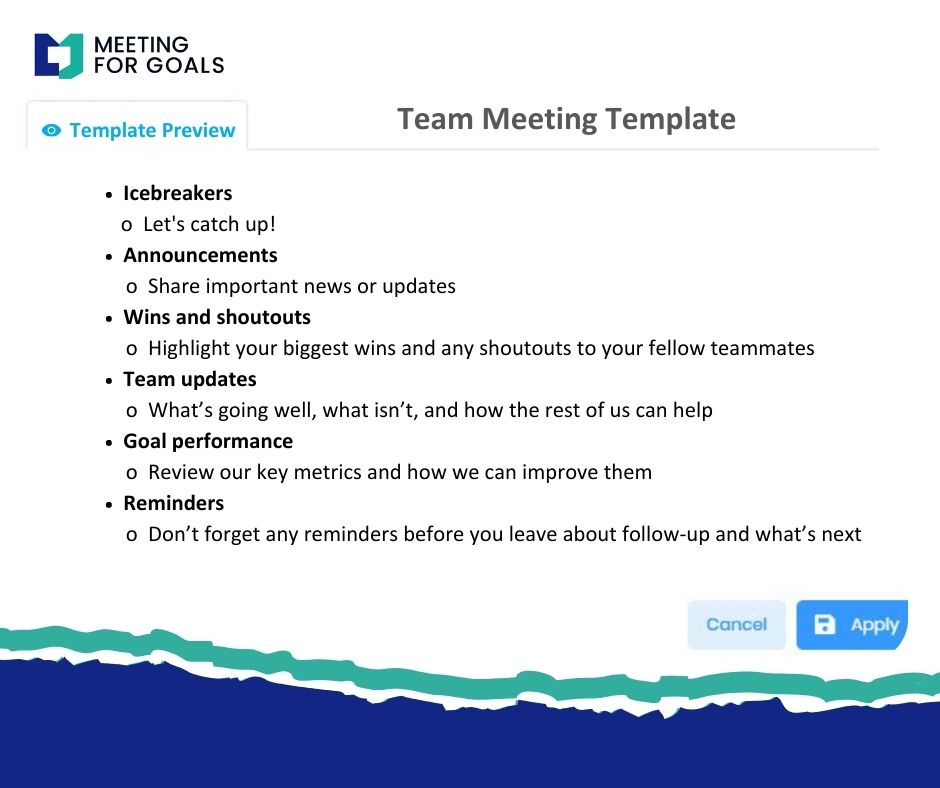
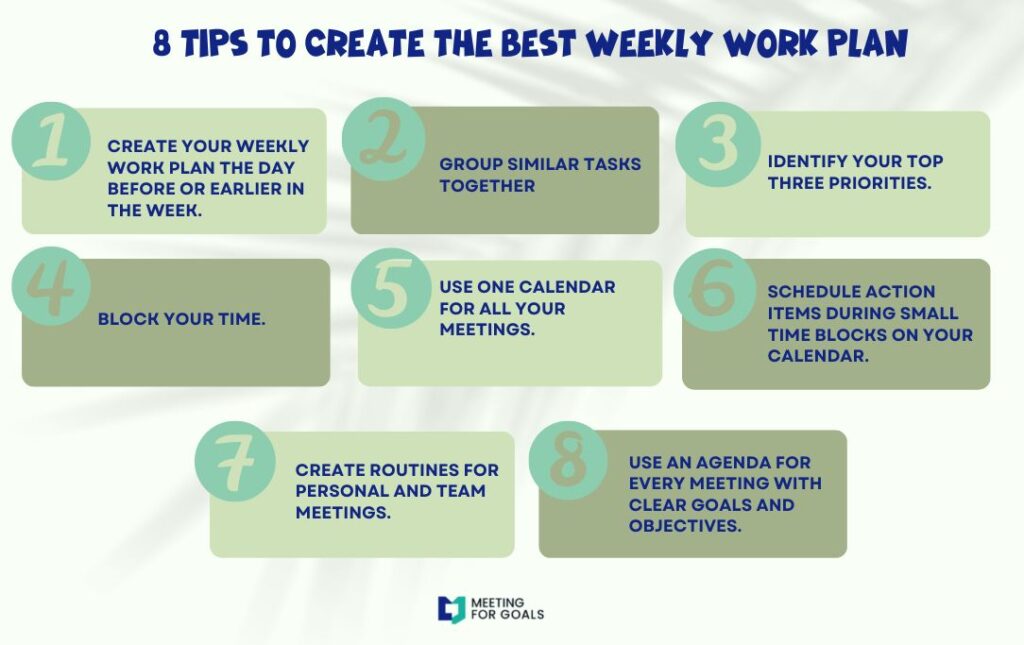
Structure creates clarity. Start every meeting with a clear agenda that outlines the goals, topics, and timeframes. Share it ahead of time so everyone comes prepared. During the meeting, stick to the schedule and assign someone to facilitate.
**Meeting For Goals** makes this simple. You can build and share agendas right in the platform, track discussion points in real time, and assign follow-ups on the spot. This keeps meetings focused and ensures that nothing falls through the cracks.
- Leveraging Technology
In today’s hybrid and remote work environments, technology is essential for collaboration. Tools like **Meeting For Goals** provide a centralized space where teams can collaborate before, during, and after meetings.
Key features include:
- **Goal tracking** to keep meetings aligned with strategy
- **Shared notes** for transparency and accountability
- **Assignable action items** to ensure follow-through
- **Integration** with your calendar and task tools
By using the right tech, you eliminate silos, streamline communication, and keep your team connected—no matter where they are.
- Accountability Frameworks
Collaboration works best when everyone knows their role and follows through. That’s where **accountability** comes in. When people are responsible for their contributions, the whole team performs better.
**Meeting For Goals** helps by assigning tasks with due dates and tracking progress. It also supports regular check-ins, visual dashboards, and recognition tools to celebrate wins. This reinforces a culture of ownership and keeps everyone moving forward together.
Want to see how structured collaboration can transform your team? Sign up now at https://app.meetingforgoals.com/TenantRegistration/Register and start building a culture of accountability today.
V. Overcoming Common Collaboration Challenges
Even strong teams can hit roadblocks when it comes to collaboration. Here are some common challenges—and how to tackle them.
- Remote and Hybrid Work
Working remotely can make collaboration tricky. Without face-to-face contact, it’s easy to feel disconnected or misaligned.
Solution: Use tools like **Meeting For Goals** to bridge the gap. Shared agendas, real-time updates, and action tracking keep everyone aligned. Encourage video calls for a more personal touch, and schedule regular check-ins to maintain team cohesion.
- Different Communication Styles
Not everyone communicates the same way. Some people are direct, others are more reserved. These differences can lead to misunderstandings.
Solution: Promote a culture of empathy and active listening. Set ground rules for meetings—like not interrupting and summarizing key points. **Meeting For Goals** helps by documenting discussions and decisions, reducing confusion and keeping everyone on the same page.
- Unclear Goals
If people don’t know what they’re working toward, collaboration suffers. It’s hard to work together when the destination isn’t clear.
Solution: Align every meeting with specific, measurable goals. **Meeting For Goals** lets you link meetings to strategic objectives, so everyone understands the “why” behind their work. This clarity boosts focus and engagement.
- Resistance to Change
Some team members may be hesitant to adopt new tools or processes. Change can be uncomfortable, especially if they’re used to doing things a certain way.
Solution: Involve your team in the decision-making process. Show them how collaboration tools like **Meeting For Goals** save time and improve outcomes. Offer training and support, and share success stories to build buy-in.
For more tips, check out this **Harvard Business Review** article on overcoming resistance to change: https://hbr.org/2019/05/why-people-really-resist-change.
By addressing these challenges head-on, you’ll create a more resilient, collaborative culture that can thrive in any environment.
VI. Conclusion
**Collaboration** and **teamwork** aren’t just buzzwords—they’re the fuel that powers high-performing organizations. For mid-sized companies led by ambitious executives, the ability to collaborate effectively in meetings can unlock new levels of productivity, innovation, and morale.
We’ve covered why collaboration matters, what makes it work, and how to overcome common barriers. The common thread? **Structure**, **clarity**, and **accountability**. That’s exactly what **Meeting For Goals** delivers.
Whether you’re a team leader, director, or part of the executive suite, this platform helps you align meetings with goals, empower your team, and make every minute count.
Ready to transform your meetings into engines of growth? Start by exploring our free meeting templates at https://meetingforgoals.com/meeting_templates or visit https://meetingforgoals.com to learn more.
When you’re ready to take the leap, sign up today at https://app.meetingforgoals.com/TenantRegistration/Register.
When collaboration thrives, your business does too. Let’s start making your meetings matter.