
The Ultimate Annual Performance Review Template for High-Performing Teams
Excerpt:
Annual performance reviews are more than just a yearly checkpoint. They are a strategic opportunity to align team efforts, boost employee morale, and drive company-wide growth. For high-performing teams in mid-sized companies, a well-structured review process can be the difference between stagnation and success. In this blog, we’ll walk you through a comprehensive annual performance review template designed to enhance accountability, align with company goals, and improve productivity. With the Meeting For Goals platform, you’ll have the tools and structure you need to make every review meaningful and results-driven.
Introduction
Annual performance reviews might not be the most exciting meetings on your calendar. However, they are among the most important. For mid-sized companies with 40 to 70 employees, these reviews offer a rare chance to pause, reflect, and realign. They are not just about evaluating past performance; they are about setting the stage for future success.
At Meeting For Goals, we help teams run more effective, goal-driven meetings. And guess what? A performance review is just another meeting—one that can drive real growth when done right. That’s why we created this practical, easy-to-follow performance review template for high-level leaders like Directors, VPs, and C-suite executives.
If you are looking to make your reviews more actionable and less of a checkbox exercise, you’re in the right place. If you’re ready to streamline the process, check out our free meeting templates to get started.
2 Minute Video
Watch a 2 minute demo of our meeting management software in action
Understanding the Purpose of Annual Performance Reviews
Annual reviews aren’t just about checking in. They are about creating alignment, boosting engagement, and driving personal and organizational growth.
Why Do Performance Reviews Matter?
For growing companies, the benefits of performance reviews go far beyond HR compliance:
- Alignment with Company Goals: Reviews help employees understand how their work supports the bigger picture.
- Development Opportunities: They open the door for skill-building, promotions, and new responsibilities.
- Two-Way Feedback: Employees and managers can voice concerns, clarify expectations, and share insights.
- Motivation and Recognition: Acknowledging achievements keeps morale high and reinforces positive behaviors.
According to Gallup, only 14% of employees strongly agree that their performance reviews inspire them to improve. That’s a huge opportunity to do better—and we can help you get there.
Tailoring Reviews for High-Performing Teams
High-performing teams need more than generic feedback. They need personalized, data-backed discussions that reflect their unique strengths and challenges. Leaders should treat reviews as strategic conversations, not just formalities.
At Meeting For Goals, we believe performance reviews should be a natural extension of your regular goal-setting meetings. When integrated into your workflow, they become powerful tools for growth—not dreaded calendar invites.
Want to make performance reviews a seamless part of your team’s rhythm? Sign up now and start using our performance tracking tools today.
Adding an Agenda
How to add an agenda instantly on Meeting For Goals
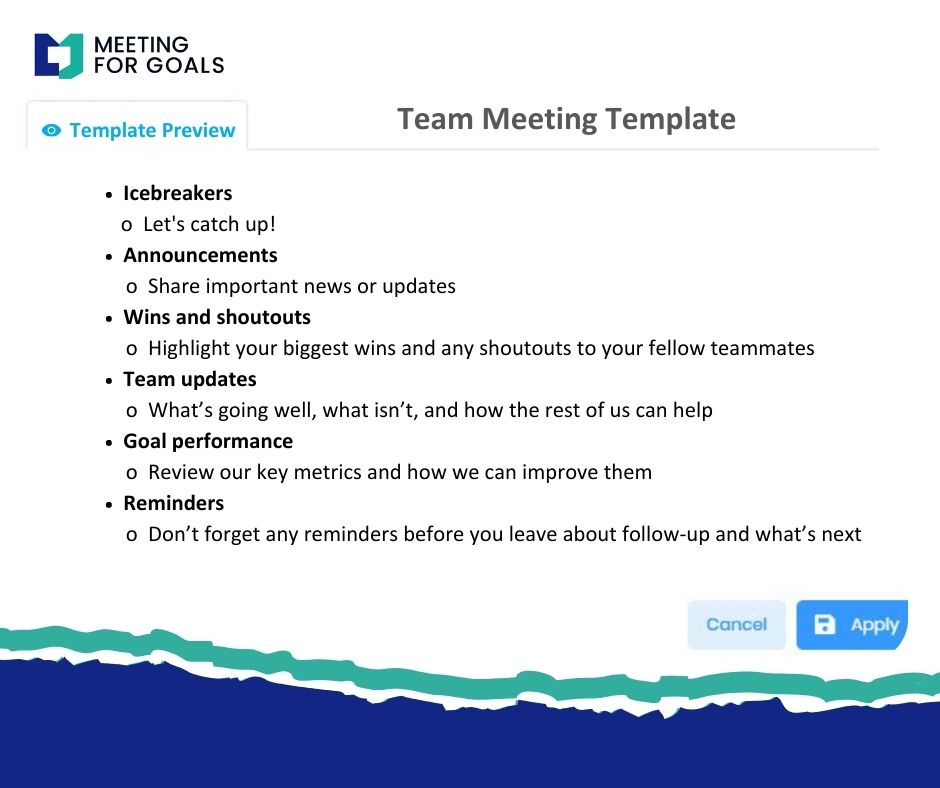
Key Components of an Effective Performance Review Template
A solid performance review template keeps things consistent, fair, and focused. Here’s what your template should include:
- Employee Information
Start with the basics:- Full name
- Job title
- Department or team
- Review period
- Reviewer’s name and title
This section helps keep records organized and clear.
- Performance Metrics
Use a mix of hard data and soft skills to evaluate performance:- Quantitative: KPIs, sales targets, project milestones, customer satisfaction scores
- Qualitative: Communication, teamwork, leadership, creativity
Make sure metrics are role-specific. A sales rep and a product manager won’t have the same benchmarks.
- Goal Review
Look back at the goals set during the last review:- Which goals were met or exceeded?
- Where did performance fall short, and why?
- Were there any shifts in priorities?
This section helps identify trends and sets the stage for future goal-setting.
- Strengths and Accomplishments
Recognizing wins is critical. Highlight:- Major achievements
- Positive feedback from peers or clients
- Leadership moments or stretch projects
This boosts morale and reinforces what’s working.
- Areas for Improvement
Keep this constructive and specific:- Highlight skills or behaviors that need work
- Use real examples to avoid vagueness
- Frame feedback as opportunities for growth
For example, instead of saying “Improve communication,” say, “In team meetings, clarify your action items to avoid confusion.”
- Development and Support Needs
This section is about building a path forward:- Recommend training or courses
- Suggest mentorship or coaching
- Offer stretch assignments or cross-functional projects
When employees see a future with the company, they’re more likely to stay engaged.
Need help creating a customized review template? Explore our full library of templates to find what fits your team best.
Structuring the Review Process
A great review doesn’t start in the meeting. It starts with preparation. Here’s how to structure the process for success.
Step 1: Collect Well-Rounded Feedback
Use a 360-degree approach:
- Self-assessments: Let employees reflect on their own performance.
- Peer feedback: Gather insights from colleagues who work closely with the employee.
- Manager’s notes: Document observations throughout the year.
- Goal tracking: Review progress using tools like Meeting For Goals.
This approach reduces bias and gives a fuller performance picture.
Step 2: Set a Clear Agenda
Structure helps keep the meeting focused. A typical agenda might include:
- Welcome and meeting purpose
- Review of goals and outcomes
- Discussion of strengths and wins
- Areas for improvement
- Goal setting for the next year
- Open discussion and employee feedback
A clear agenda reduces anxiety and ensures nothing important gets missed.
Step 3: Schedule Thoughtfully
Don’t cram reviews into a tight schedule. Give each one 45–60 minutes in a quiet, private space. This shows respect for the process—and the person.
Step 4: Use the Right Tools
With Meeting For Goals, you can:
- Track goals all year
- Store notes and feedback
- Create shared agendas
- Document outcomes
This makes performance reviews part of your continuous improvement cycle—not a once-a-year scramble.
Want to see how easy it is to integrate your review process? Register today and start managing reviews the smart way.
Best Practices for Conducting Performance Reviews
Even with the best template, the conversation itself is what makes or breaks a review. Here’s how to lead it effectively.
Practice Active Listening
Give your full attention. Put away distractions. Use eye contact and nods to show you’re engaged. This builds trust and encourages honest dialogue.
Balance Positive and Constructive Feedback
Start with what went well. Then move into areas for improvement. Use specific examples to keep the conversation grounded and fair.
Example: Instead of “You need to be more proactive,” say, “During the Q3 launch, you waited for direction instead of taking initiative. How can we change that moving forward?”
Encourage Employee Input
Make it a two-way conversation:
- “What accomplishments are you most proud of?”
- “What challenges did you face?”
- “Where do you want to grow next year?”
This increases engagement and ownership.
Document Everything
Summarize key points, decisions, and next steps. Use Meeting For Goals to log everything in one place—so nothing falls through the cracks.
Avoid Common Pitfalls
- Don’t bring up new issues for the first time
- Don’t compare employees to each other
- Don’t let recent events overshadow the full year
Keep the review fair, consistent, and forward-looking.
Want more tips on running better meetings year-round? Visit our website and explore how we help teams stay aligned and productive.
Follow-Up and Goal Setting After the Review
The review isn’t the end. It’s the beginning of the next chapter. Here’s how to keep the momentum going.
Schedule a Quick Follow-Up
Within 2–3 weeks, hold a shorter meeting to:
- Confirm understanding of feedback
- Finalize development plans
- Answer any lingering questions
This shows that the review wasn’t just a formality—it’s part of an ongoing process.
Set SMART Goals
Work together to set 3–5 SMART goals:
- Specific: What exactly needs to be done?
- Measurable: How will success be tracked?
- Achievable: Is it realistic?
- Relevant: Does it align with team and company objectives?
- Time-bound: What’s the deadline?
Use Meeting For Goals to track these goals throughout the year and revisit them in your regular check-ins.
Identify Development Opportunities
Based on the review, suggest growth paths:
- Online training or certifications
- Cross-functional projects
- Leadership opportunities
- Mentorship programs
Investing in employee growth pays off in retention and performance.
Create a Continuous Feedback Loop
Don’t wait until next year to talk performance. Use regular team meetings to:
- Check in on goals
- Celebrate wins
- Address roadblocks early
With Meeting For Goals, you can weave performance management into your weekly rhythm.
Conclusion
Annual performance reviews don’t have to be stressful or stale. With the right structure, tools, and mindset, they can be powerful growth conversations that align your team and drive results.
For high-performing teams in mid-sized companies, the stakes are high. You need a process that’s efficient, engaging, and integrated into your everyday workflow.
That’s where Meeting For Goals comes in.
Our platform gives you everything you need to run effective performance reviews—from customizable templates to goal tracking and meeting workflows.
When you align your review process with your company’s mission and use the right tools to support it, you create a culture of accountability, productivity, and continuous improvement.
Call-to-Action
Ready to transform your performance reviews into strategic growth conversations?
Visit Meeting For Goals to explore our platform and see how we help high-performing teams stay aligned and productive.
- 👉 Want to get started right away? Sign up now to access our customizable review templates and goal-tracking tools.
- 👉 Looking for more resources? Check out our free meeting templates to streamline your team’s workflow.
Let’s make every meeting count—because high-performing teams don’t leave success to chance.