All Hands Meeting Meaning: A Complete Guide for High-Performing Teams
In today’s fast-paced business world, clear communication and alignment are more important than ever—especially for growing companies with 40 to 70 employees. One of the most effective ways to keep everyone on the same page is through an All Hands Meeting. But what exactly is an All Hands Meeting, and why should your company prioritize them?
In this guide, we’ll break down the meaning, purpose, and structure of All Hands Meetings. We’ll also show you how tools like Meeting For Goals can help you make these meetings more engaging and productive. Whether you’re a team lead, director, or C-suite executive, this guide is designed to help you elevate your team’s communication strategy.
Start improving your team’s communication today by signing up for Meeting For Goals at https://app.meetingforgoals.com/TenantRegistration/Register. You can also explore our free meeting templates at https://meetingforgoals.com/meeting_templates.
2 Minute Video
Watch a 2 minute demo of our meeting management software in action
Purpose of All Hands Meetings
Sharing the Company Vision and Goals
One of the top reasons to hold an All Hands Meeting is to share your company’s vision and goals. Leaders may think everyone understands the mission, but that’s not always the case. These meetings are your chance to make sure every employee knows the “why” behind their work.
When people understand the bigger picture, they’re more motivated. They see how their work contributes to the company’s success. This is especially important in growing companies, where changes happen quickly and clarity can get lost.
According to a report by Gallup, only 41% of employees strongly agree that they know what their company stands for and what makes it different. All Hands Meetings can help close that gap.
Building Transparency and Team Alignment
Transparency is key to building trust. All Hands Meetings give leaders a platform to be open about what’s going well and what’s not. Sharing financial updates, recent wins, and even mistakes builds credibility and shows employees that leadership is honest and accountable.
It also helps align teams. When everyone hears the same message at the same time, there’s less confusion. This is especially helpful for cross-functional projects where coordination is essential.
Creating a Stronger Company Culture
All Hands Meetings aren’t just about numbers and updates—they’re also about people. Use them to recognize team achievements, celebrate work anniversaries, or spotlight employee contributions.
For remote or hybrid teams, these meetings are even more important. Seeing faces—even on a screen—helps people feel connected. It reminds everyone that they’re part of a team, not just working in isolation.
Want ideas for what to include in your next meeting? Check out our free meeting templates at https://meetingforgoals.com/meeting_templates.
Adding an Agenda
How to add an agenda instantly on Meeting For Goals
Key Features of an Effective All Hands Meeting
Start with a Clear Agenda
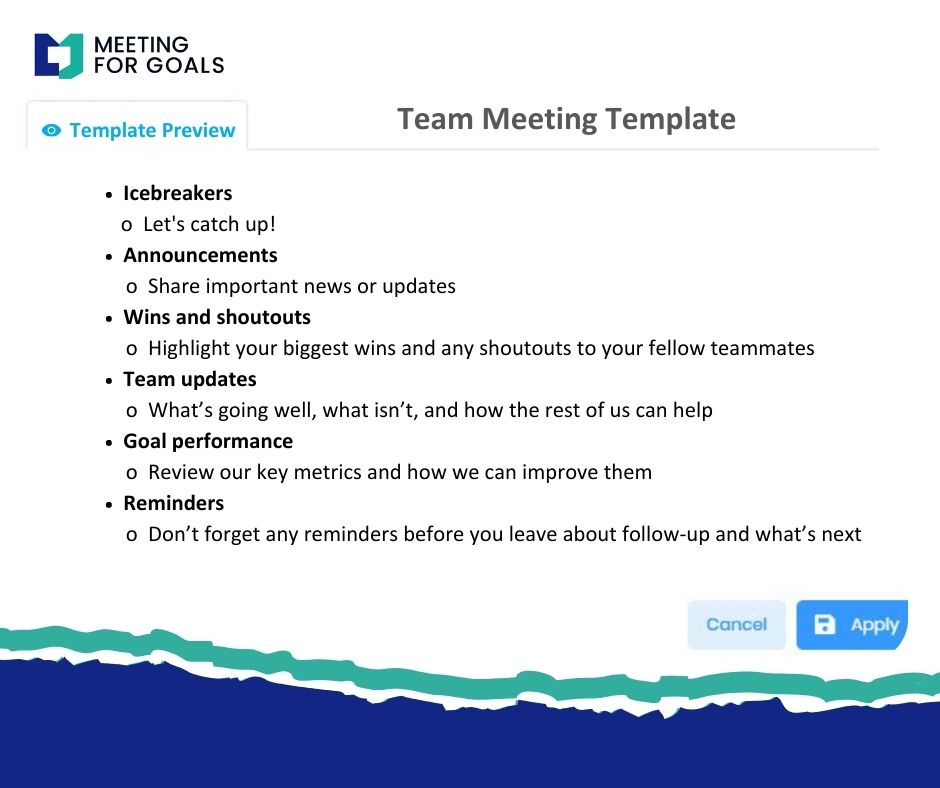
A great All Hands Meeting starts with a clear agenda. Without one, the meeting can easily go off track. A good agenda keeps everyone focused and ensures you cover the most important topics.
Share the agenda in advance so people know what to expect. This also gives employees a chance to submit questions or suggest topics. It makes the meeting feel more inclusive and collaborative.
Keep Presentations Engaging
Let’s be honest: no one wants to listen to a long, one-person monologue. Keep your presentations lively and interactive. Use visuals, videos, or real-life examples to make your points more relatable.
Rotate speakers to keep things fresh. Hearing from different departments or team leads adds variety and gives more people a voice. You can even include customer testimonials or product demos to keep things interesting.
Make Time for Q&A and Feedback
An All Hands Meeting should be a two-way conversation. Set aside time for a Q&A session where employees can ask questions—anonymously if needed. This shows that leadership values transparency and is open to feedback.
After the meeting, collect input on what worked and what didn’t. Tools like Meeting For Goals make it easy to gather and analyze feedback so you can improve over time.
Frequency and Timing
How Often Should You Hold an All Hands Meeting?
The right frequency depends on your company’s size and pace of change. For teams of 40 to 70 people, a monthly meeting is a good rule of thumb. It’s often enough to stay aligned without overwhelming your schedule.
Quarterly meetings also work well for deeper updates, like reviewing KPIs or discussing long-term strategy. Whatever frequency you choose, be consistent. Employees should know when to expect the next meeting.
Pick the Right Time
Timing is crucial. Choose a time that works for most of your team, especially if you have people in different time zones. Mid-morning or early afternoon usually works best.
Avoid scheduling on Mondays or Fridays, when people are either catching up or winding down. Send out calendar invites well in advance and include reminders to ensure high attendance.
Align with Key Milestones
Make your All Hands Meetings more impactful by aligning them with major events. For example, you could schedule them after a product launch, at the end of a quarter, or following a big client win.
This gives the meeting a natural focus and makes the content more relevant. It also helps employees feel more connected to the company’s journey.
Role of Technology
How Meeting For Goals Enhances All Hands Meetings
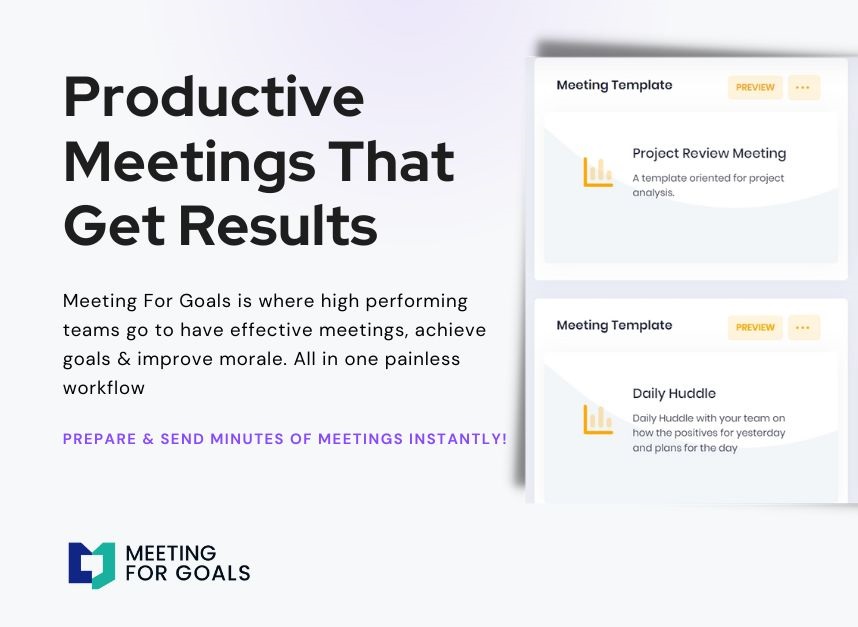
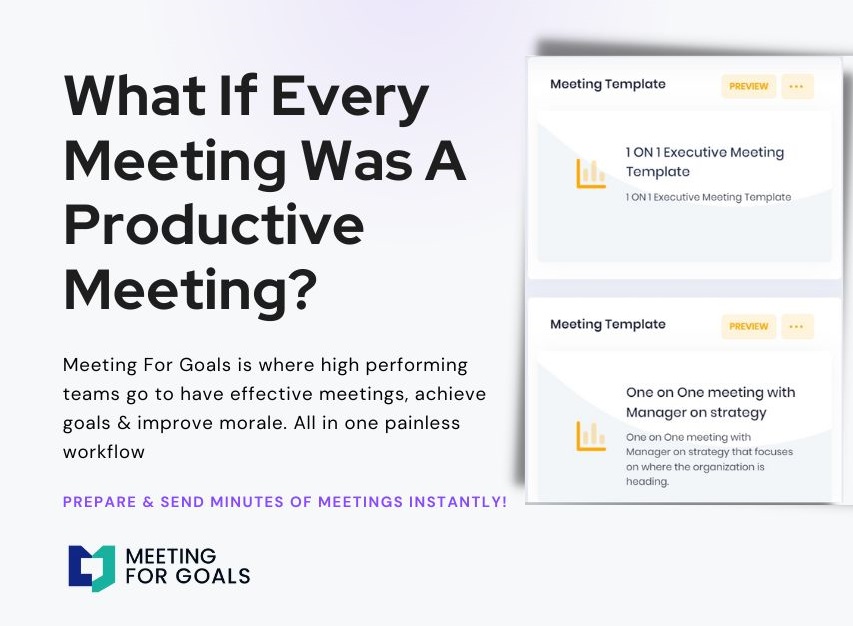
Meeting For Goals is designed to make meetings more productive and goal-oriented. It helps you connect each meeting to your company’s strategic objectives, track follow-ups, and ensure accountability.
With features like shared agendas, real-time collaboration, and action tracking, your All Hands Meetings become more than just updates—they become drivers of real progress.
Want to see it in action? Visit https://meetingforgoals.com to learn more.
Boost Engagement with Interactive Tools
Keeping your team engaged—especially in virtual meetings—can be tough. That’s why Meeting For Goals integrates with tools that support live polling, Q&A, and real-time feedback.
These features make your meetings interactive and help you gauge how well your message is landing. You can also use engagement data to improve future meetings.
Follow Through with Action Items
What happens after the meeting is just as important as what happens during it. Meeting For Goals helps you assign tasks, set deadlines, and send reminders so nothing falls through the cracks.
This ensures that your All Hands Meetings lead to real outcomes—not just good intentions. It’s one of the best ways to maintain momentum and accountability.
Conclusion
Why All Hands Meetings Are Essential
All Hands Meetings are more than just a routine—they’re a powerful way to align your team, build trust, and drive results. For growing companies, they’re especially important for keeping everyone informed and connected.
When done right, these meetings create a culture of openness and collaboration. They remind employees that their work matters and show them how they contribute to the company’s success.
Take Action and Improve Your Meetings
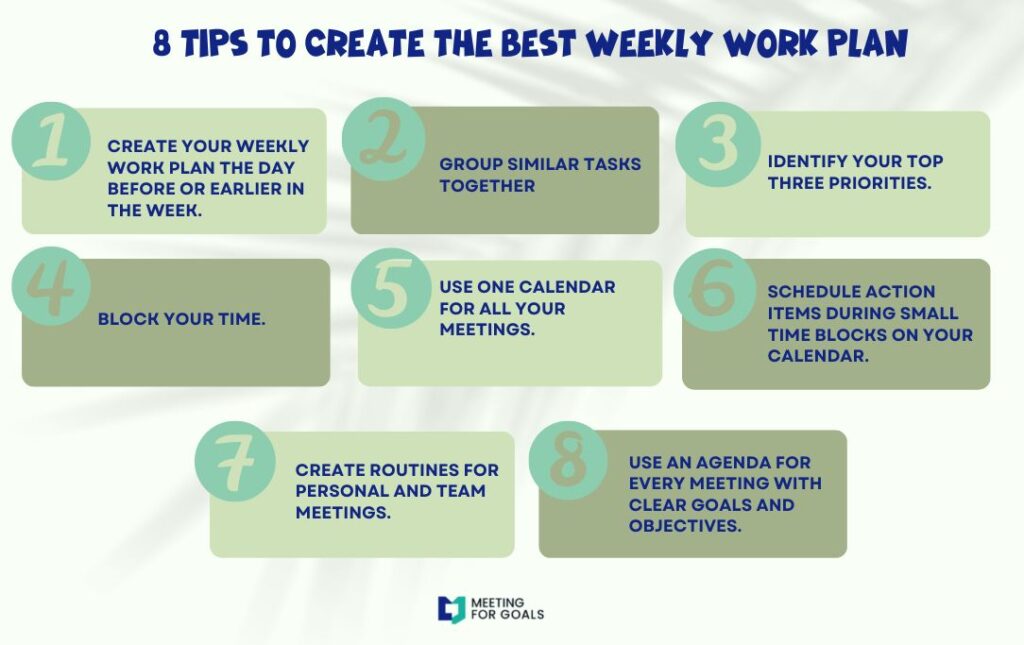
If you’re ready to make your meetings more effective, start by setting clear goals, creating engaging content, and using the right tools. Meeting For Goals can help you do all of that—and more.
Don’t just have another meeting. Make it count.
Ready to get started? Sign up today at https://app.meetingforgoals.com/TenantRegistration/Register and explore our free meeting templates at https://meetingforgoals.com/meeting_templates.
Learn more about how Meeting For Goals can help your team run better meetings at https://meetingforgoals.com.
—
By understanding the true purpose of All Hands Meetings and using the right tools to support them, you can turn these gatherings into a strategic advantage. Whether you’re scaling your team or strengthening your culture, All Hands Meetings are your opportunity to lead with clarity, purpose, and impact.
For additional insights on effective communication in organizations, check out this Harvard Business Review article on How to Make Your One-on-Ones with Employees More Productive: https://hbr.org/2016/08/how-to-make-your-one-on-ones-with-employees-more-productive.
You can also explore this Forbes article on The Importance of Company Culture: https://www.forbes.com/sites/forbeshumanresourcescouncil/2020/09/09/the-importance-of-company-culture/?sh=2c9b6b3c4a2c.
Make every meeting matter—starting now.