
Minutes of the Meeting Template: A Complete Guide for Productive Teams
In today’s fast-paced work environment, time is your most valuable asset. But let’s face it—too many meetings feel like a waste of that time. They run long, lack focus, and often end without clear next steps. That’s where structured meeting minutes come in. They can turn your meetings from time-drains into productivity powerhouses.
In this guide, we’ll walk you through a complete minutes of the meeting template. Whether you’re a VP, Director, or C-level executive leading a team of 40–70 employees, this resource—powered by Meeting For Goals—will help you run meetings that actually move the needle.
Want to skip ahead? Check out our free meeting templates to get started right away: https://meetingforgoals.com/meeting_templates
Or, if you’re ready to upgrade your meeting culture, sign up for a free trial at: https://app.meetingforgoals.com/TenantRegistration/Register
Let’s dive in.
2 Minute Video
Watch a 2 minute demo of our meeting management software in action
I. Why Meeting Minutes Matter
Meetings are where your team aligns. Decisions are made, and plans are put into motion. But without a clear record, all that valuable discussion can get lost. That’s where meeting minutes become essential.
Meeting minutes aren’t just notes—they’re your team’s memory. They help track decisions, clarify responsibilities, and keep everyone on the same page. For mid-sized teams, this level of clarity is crucial.
Well-documented minutes:
- Keep your team aligned on goals
- Reduce confusion about who’s doing what
- Serve as a reference point for future meetings
- Create a culture of accountability
And with tools like Meeting For Goals, documenting and distributing meeting minutes becomes seamless. Our software integrates with your existing tools and automates agenda creation, minute-taking, and follow-up tracking.
To learn more about how we support productive meetings, visit our homepage: https://meetingforgoals.com
Adding an Agenda
How to add an agenda instantly on Meeting For Goals
II. The Purpose of Meeting Minutes
Meeting minutes aren’t just for compliance or record-keeping. They’re a strategic tool. Let’s break down their real purpose.
A. Capturing Decisions
How many times have you heard, “I thought we agreed on something else”? When decisions aren’t documented, confusion is inevitable.
Meeting minutes give you a time-stamped record of every decision. This is especially important in leadership or strategic meetings where outcomes can impact entire departments or budgets.
Let’s say your executive team decides to shift the product roadmap. If that decision is captured in the meeting minutes, there’s no room for misinterpretation later.
B. Tracking Action Items
Every meeting should end with clear next steps. Meeting minutes help you capture those tasks, assign them, and track their progress.
For example: “Sarah to present a revised marketing plan by next Friday.” That’s specific, actionable, and time-bound.
Meeting For Goals makes this even easier by allowing you to assign and track action items directly within the platform.
C. Informing Absent Team Members
It’s normal for some stakeholders to miss meetings. Well-written minutes keep them in the loop without needing another meeting.
This saves time, reduces redundant conversations, and ensures continuity. With a searchable archive of past meeting minutes, team members can quickly find what they need—no need to dig through email threads.
According to a study by Harvard Business Review, organizations that document and follow up on meeting outcomes are significantly more likely to meet their strategic goals. You can read more about that here: https://hbr.org/2021/03/why-do-we-keep-having-unproductive-meetings
III. Key Components of a Great Meeting Minutes Template
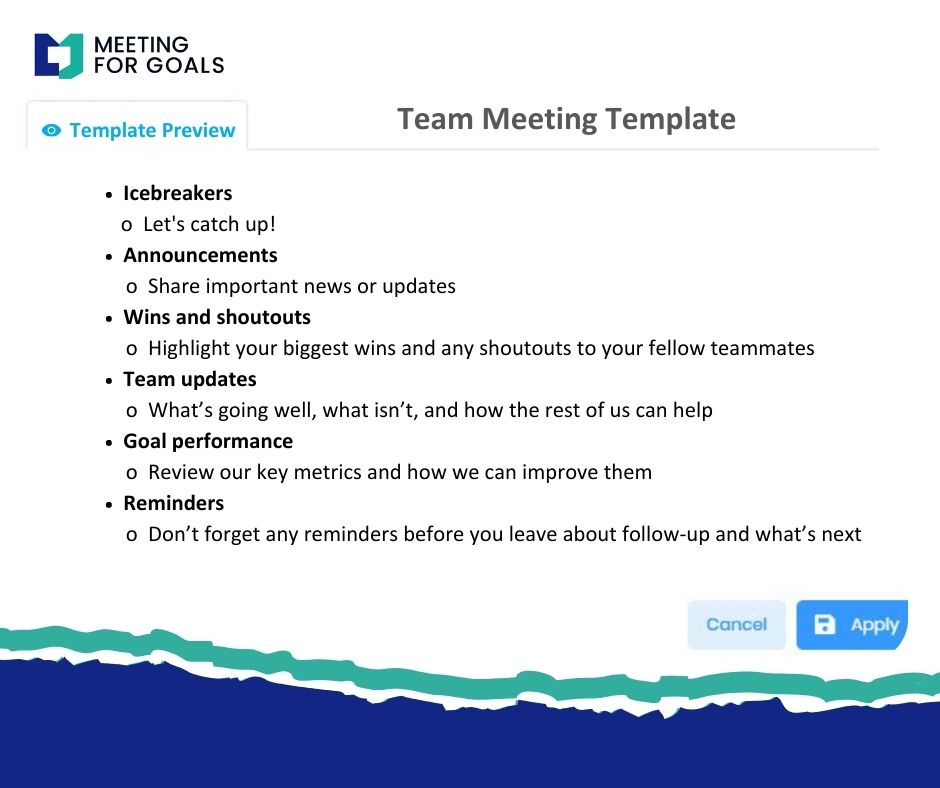
A solid template ensures consistency and completeness. Here’s what every meeting minutes document should include:
A. Basic Meeting Info
Start with the essentials:
- Date, time, and location (or virtual meeting link)
- List of attendees and those who were invited but absent
This sets the context and helps with future referencing.
Meeting For Goals automatically records this information, saving you time and reducing human error.
B. Agenda Items
A structured agenda keeps your meeting focused—and your minutes organized.
For each agenda item, include:
- A short summary of the discussion
- Time spent on the topic
- Any relevant decisions or action items
This makes it easy to evaluate whether your meetings are running efficiently and staying on track.
C. Key Discussions and Decisions
This is the heart of your meeting minutes. Focus on:
- What was discussed
- What was decided
- Who made the decision or approved it
Avoid word-for-word transcripts. Instead, summarize the key points and outcomes. Use bullet points for clarity.
With Meeting For Goals, you can tag decisions and discussions, making them easy to review later.
D. Action Items
Action items should be:
- Specific
- Assigned to a person
- Given a deadline
Example:
- “Tom to finalize Q3 budget projections by June 15.”
This ensures accountability and keeps projects moving forward.
IV. Turning Action Items Into Results
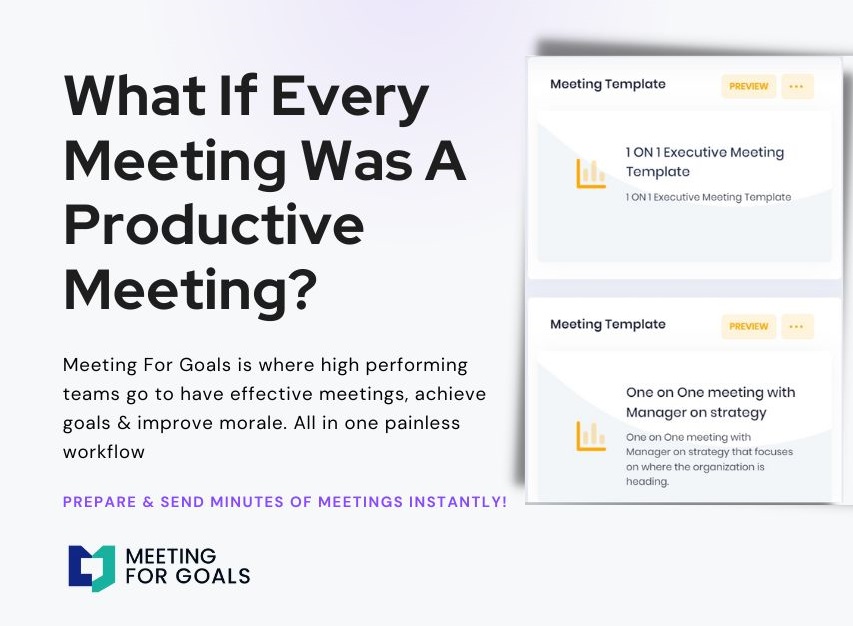
Meetings are only as valuable as the actions they produce. Here’s how to make sure your action items lead to real progress.
A. Define Clear Tasks
Avoid vague language. Instead of “look into new tools,” write “Evaluate two new CRM platforms and present findings by next Monday.”
Make sure every task includes:
- What needs to be done
- Who is responsible
- When it’s due
B. Assign Responsibilities
Each task should be assigned to one person. When multiple people are responsible, no one is.
Include context if needed. For example:
- “Jessica to draft employee survey questions (use last year’s survey as a reference).”
C. Track Progress
Following up is just as important as assigning tasks. Use a system that lets you:
- Monitor task completion
- Send reminders
- Update deadlines if needed
Meeting For Goals includes built-in tracking tools so you can see what’s done, what’s pending, and what needs attention.
This level of transparency helps managers lead without micromanaging and gives team members a clear path forward.
V. Best Practices for Writing Effective Meeting Minutes
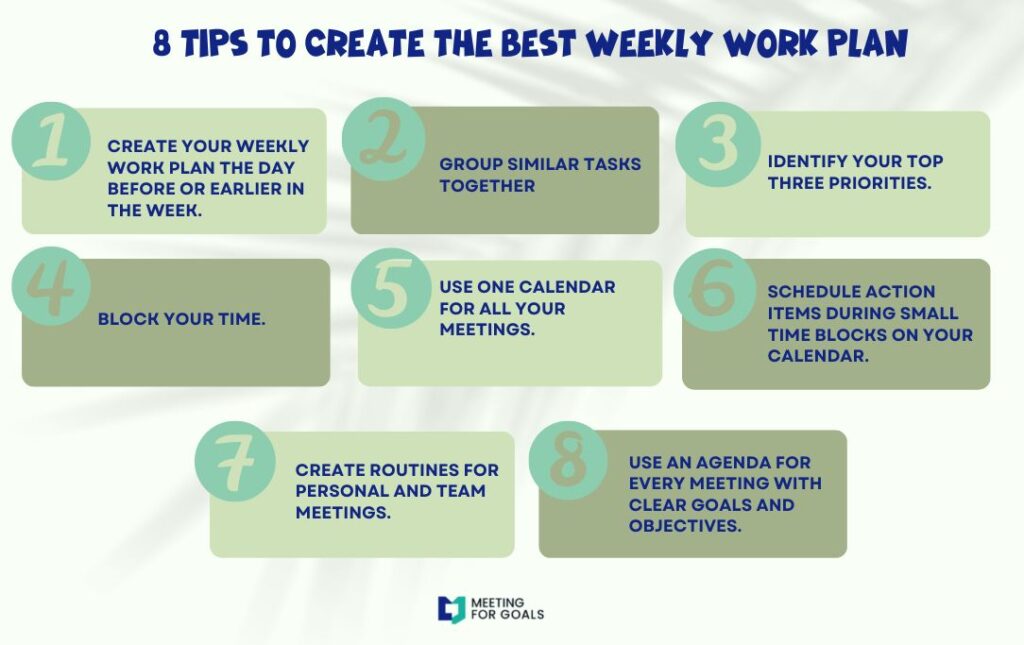
Writing great minutes doesn’t have to be hard. Follow these tips to make your minutes clear, concise, and useful.
A. Use Simple Language
Keep your writing easy to understand. Avoid jargon and long-winded sentences. Use bullet points to highlight key information.
Example:
- “Decision: Launch new onboarding process by Q3.”
- “Action: Alex to create training materials by June 10.”
Meeting For Goals also offers AI-assisted summaries to help distill complex discussions into simple takeaways.
B. Stay Neutral and Objective
Minutes should reflect what happened—not how people felt about it. Avoid personal opinions or emotional language.
Instead of:
- “Mark was annoyed with the new policy.”
Write:
- “Mark raised concerns about the implementation timeline for the new policy.”
C. Share Minutes Quickly
Minutes lose their value if they’re not shared promptly. Aim to send them within 24 hours.
This keeps the momentum going and ensures action items don’t fall through the cracks.
With Meeting For Goals, meeting summaries and tasks are automatically shared with all participants right after the meeting.
VI. Using Meeting Minutes to Build a High-Performance Culture
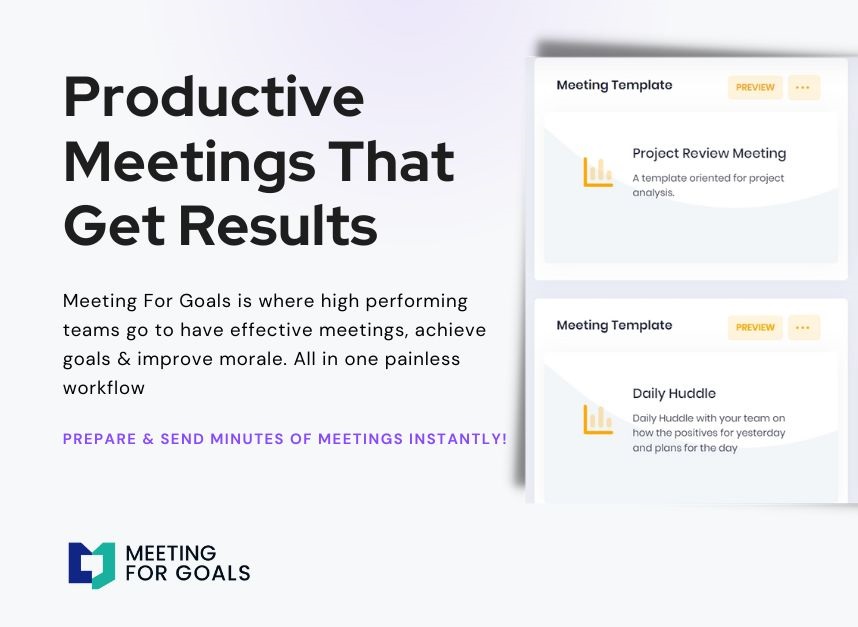
When you consistently document and follow up on meetings, you create a culture of accountability and results.
Here’s how structured meeting minutes help:
- Reduce confusion and rework
- Improve team communication
- Reinforce strategic alignment
- Support performance reviews and reporting
And when your team knows that every meeting ends with clear action items and follow-up, they show up more prepared and engaged.
Looking for templates to get started? Browse our free meeting templates here: https://meetingforgoals.com/meeting_templates
VII. How Meeting For Goals Can Help
Meeting For Goals is built for results-driven teams. Our platform helps you:
- Create structured agendas in minutes
- Take real-time notes and assign tasks
- Track action items and deadlines
- Share meeting summaries automatically
Plus, we integrate with tools you already use—like Slack, Google Calendar, and Microsoft Teams.
Whether you’re running leadership meetings, project updates, or departmental check-ins, Meeting For Goals helps you stay focused and aligned with company objectives.
Ready to make every meeting count?
Sign up for a free trial today: https://app.meetingforgoals.com/TenantRegistration/Register
VIII. Final Thoughts
Meeting minutes aren’t just a formality—they’re a strategic advantage. When used well, they help your team stay aligned, accountable, and focused on results.
By using a consistent template and following best practices, you can turn every meeting into a stepping stone toward your business goals. And with tools like Meeting For Goals, the process becomes simple, automated, and effective.
Don’t let another meeting go to waste.
👉 Try our free meeting templates: https://meetingforgoals.com/meeting_templates
👉 Sign up for a free trial of Meeting For Goals: https://app.meetingforgoals.com/TenantRegistration/Register
👉 Learn more about how we support high-performing teams: https://meetingforgoals.com
Make your meetings matter. Start today.