
Employee Accountability: The Cornerstone of Productive Teams
In today’s fast-paced business world, **employee accountability** isn’t just a trendy term—it’s the secret sauce of high-performing teams. For businesses with **40–70 employees**, where every person plays a crucial role, accountability can be the difference between hitting goals and consistently exceeding them.
But let’s be honest: accountability doesn’t just happen. It takes intentional leadership, the right tools, and a company culture that supports ownership. That’s where **Meeting For Goals** comes in. This meeting management software is built to help teams align meetings with company objectives, boost accountability, and save valuable time.
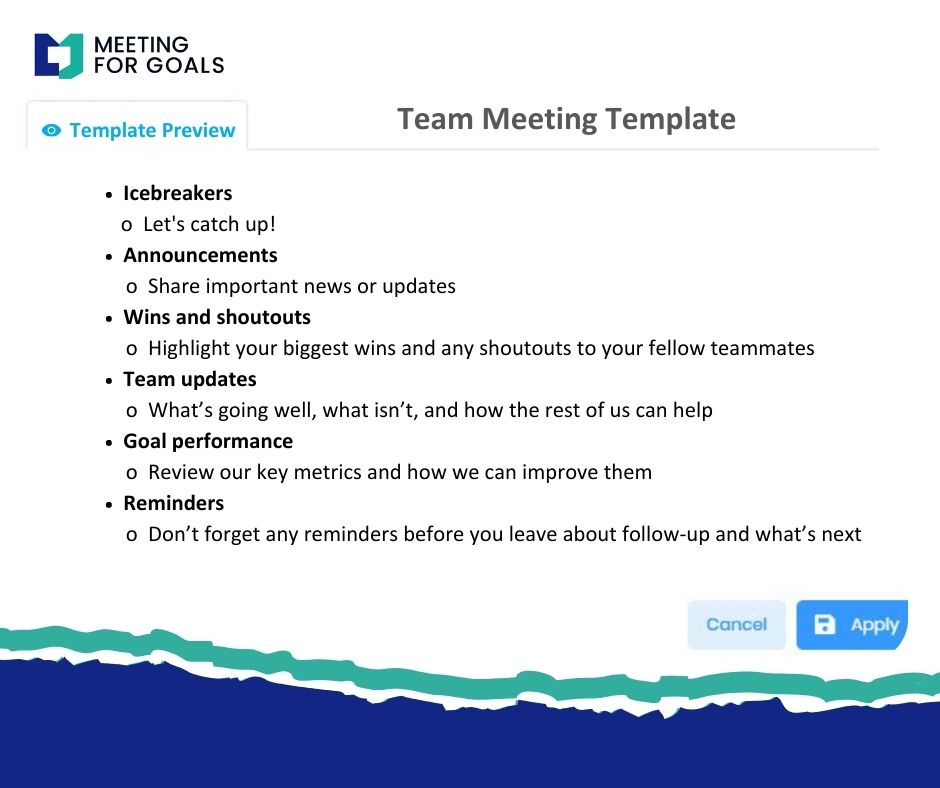
If you’re ready to improve how your team works together, start by exploring our **free meeting templates** or sign up today to get started with **Meeting For Goals**.
I. Introduction
Accountability is the foundation of every successful team. It’s about people taking ownership of their responsibilities, delivering on promises, and being answerable for the outcomes of their work.
For mid-sized teams—especially those with **40 to 70 employees**—accountability is even more important. These teams often work in **fast-paced environments** where every task matters and every meeting should move the needle.
But here’s the challenge: without a system in place, accountability can fall through the cracks. Meetings become unproductive, tasks go unassigned, and progress stalls.
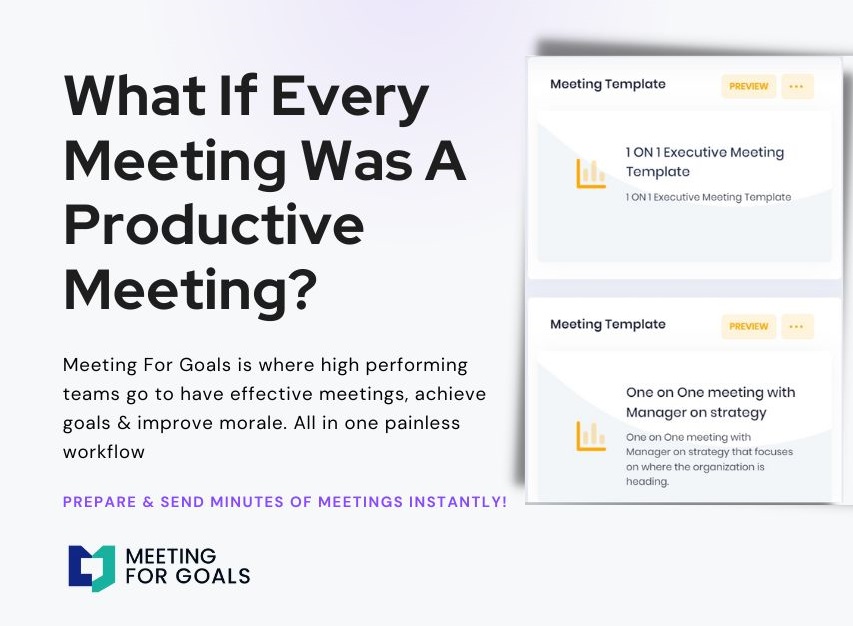
That’s where **Meeting For Goals** makes a difference. It’s a tool that helps teams run more effective meetings, track responsibilities, and stay aligned with company goals. In this article, we’ll explore:
- Why accountability matters
- The challenges businesses face
- Real-world strategies to build accountability
- How Meeting For Goals can help
Let’s dive in.
2 Minute Video
Watch a 2 minute demo of our meeting management software in action
The Role of Employee Accountability in Team Dynamics
When employees are accountable, they don’t just do their jobs—they take ownership. This ownership leads to better performance, stronger collaboration, and higher morale.
Fostering Trust and Transparency
Accountability builds trust. When people follow through on their commitments, team members begin to rely on each other. That trust makes it easier to collaborate, share ideas, and give honest feedback.
Transparency is another benefit. When roles and responsibilities are clearly defined, there’s no confusion about who’s doing what. This clarity reduces finger-pointing and encourages a culture of ownership.
Impact on Team Performance and Morale
Teams with strong accountability perform better. Everyone contributes, high performers aren’t overburdened, and no one feels like their efforts are going unnoticed.
This shared responsibility also boosts morale. When people know their work matters—and their teammates are equally committed—they’re more engaged and motivated.
Examples of Accountable Behavior
Accountability doesn’t have to be complicated. Here are a few everyday examples:
- A team member who admits they missed a deadline and proposes a new timeline
- A manager who follows up on action items from the last meeting
- A colleague who offers help when a teammate is struggling
These small actions build a culture of responsibility over time.
**Meeting For Goals** helps reinforce these habits. It provides a platform where tasks are logged, progress is tracked, and follow-through is expected. That way, accountability becomes part of your team’s daily rhythm.
Adding an Agenda
How to add an agenda instantly on Meeting For Goals
Challenges to Employee Accountability
Despite its importance, many companies struggle to build a culture of accountability. Let’s look at why.
Common Obstacles in the Workplace
One major challenge is unclear expectations. If employees don’t know what’s expected of them—or how their work is measured—they can’t be held accountable.
Another issue is inconsistent leadership. If managers don’t model accountability or avoid tough conversations, it sets the tone that responsibility is optional.
And let’s not forget fear. In some workplaces, people avoid taking responsibility because they’re afraid of being blamed for mistakes. That kind of environment stifles growth and innovation.
Ineffective Meetings as a Root Cause
Poorly run meetings are a hidden source of accountability problems. Think about it: if meetings end without clear decisions or assigned tasks, how can anyone be held responsible?
Imagine a weekly meeting where the same issues are discussed over and over, but nothing gets done. Tasks are forgotten, deadlines are missed, and frustration builds.
This is where **Meeting For Goals** can help. It brings structure to every meeting. Agendas are clear, tasks are assigned, and follow-ups are tracked—so nothing falls through the cracks.
The Cost of Lack of Accountability
The consequences of poor accountability are real. Missed deadlines, duplicated work, and unresolved issues cost time and money. More importantly, they damage trust and morale.
For executives, this can be especially frustrating. You’ve hired talented people, but without systems to support accountability, their potential is wasted.
**Meeting For Goals** solves this by creating a repeatable process for productive meetings. It ensures that every conversation leads to action—and every action is tracked.
Strategies for Promoting Employee Accountability
Building accountability doesn’t happen overnight. It takes smart strategies, consistent habits, and the right tools.
Set Clear Expectations and Goals
Start with clarity. Every team member should know:
- What they’re responsible for
- How success will be measured
- How their work supports company goals
Use **SMART goals** (Specific, Measurable, Achievable, Relevant, Time-bound) to define expectations. Break big goals into smaller tasks and assign ownership for each one.
**Meeting For Goals** makes this easy. You can align every meeting with your company’s objectives and assign tasks in real time. That way, everyone leaves meetings knowing exactly what to do next.
Prioritize Regular Feedback and Check-Ins
Accountability grows in environments where feedback is frequent and helpful. Regular check-ins help managers spot roadblocks early and celebrate progress.
Encourage peer-to-peer accountability too. When team members hold each other accountable, it builds a stronger sense of shared responsibility.
**Meeting For Goals** supports this with built-in tools for tracking progress and sharing updates. It keeps everyone on the same page and encourages continuous improvement.
Leverage Meeting For Goals Software
**Meeting For Goals** isn’t just another meeting app—it’s a full accountability system. Here’s what it offers:
- Goal alignment: Connect every meeting to your company’s priorities
- Task assignment: Clearly define who’s responsible for what
- Follow-up reminders: Make sure nothing gets forgotten
- Performance insights: Track progress and identify trends
For leaders, it’s a way to stay in the loop without micromanaging. You get visibility into what’s happening, where things stand, and what needs your attention.
If you’re ready to put these strategies into action, sign up for **Meeting For Goals** now.
Cultivating a Culture of Accountability
Tools and strategies are great—but real accountability comes from culture. It’s about creating an environment where responsibility is expected, supported, and rewarded.
Leadership Sets the Tone
Culture starts at the top. Leaders must walk the talk by being transparent, taking responsibility, and following through.
When leaders model accountability, it becomes part of the company’s DNA. It also builds trust, which is essential for long-term success.
Encourage Ownership and Responsibility
Give employees the freedom to own their work. This means trusting them to make decisions and supporting them when they hit roadblocks.
Avoid micromanaging. Focus on outcomes and provide the tools and resources people need to succeed.
**Meeting For Goals** supports this by giving everyone visibility into goals, tasks, and progress. When people see how their work fits into the bigger picture, they’re more invested in the outcome.
Real-World Examples
Let’s look at how real companies are using **Meeting For Goals** to build accountability:
- A mid-sized tech company rolled out **Meeting For Goals** across its product and marketing teams. Within three months, meeting time dropped by **30%**, and project delivery rates improved by **45%**. Employees reported feeling more focused and empowered.
- A healthcare organization used the software to streamline leadership meetings. By aligning agendas with strategic goals and tracking follow-ups, they made faster decisions and improved accountability across departments.
These stories show that, with the right culture and tools, accountability isn’t just possible—it’s transformative.
Conclusion
Accountability isn’t just a management trend—it’s a business necessity. For growing companies with **40–70 employees**, building a culture of accountability can unlock better performance, stronger collaboration, and higher morale.
We’ve covered why accountability matters, the challenges teams face, and how to overcome them. We’ve also shown how **Meeting For Goals** can help make accountability a daily habit—not just a buzzword.
If you’re ready to create more productive meetings, build a stronger team, and drive better results, it’s time to take action.
Explore our **free meeting templates** to get started, or sign up now to experience how **Meeting For Goals** can transform your team’s performance.
By investing in accountability today, you’re giving your team the tools they need to succeed tomorrow.
👉 Ready to build a culture of accountability? Sign up here: https://app.meetingforgoals.com/TenantRegistration/Register
👉 Want to run better meetings? Download our **free templates**: https://meetingforgoals.com/meeting_templates
👉 Learn more about **Meeting For Goals**: https://meetingforgoals.com