
Team Building Objectives: Aligning Meetings with Organizational Success
I. Introduction
In today’s fast-paced business world, building strong teams isn’t just a nice-to-have—it’s essential. For companies with 40 to 70 employees, especially those led by forward-thinking leaders, team building can be the difference between thriving and simply surviving.
If you’re a Director, VP, or C-suite executive, you know that assigning tasks isn’t enough. You need teams that trust each other, communicate well, and work toward shared goals. That’s where team building comes in.
Team building is all about turning a group of individuals into a high-functioning unit. It’s about trust, communication, and a shared sense of purpose. One of the most powerful tools to support that transformation? Meetings.
Too often, meetings are seen as time-wasters. But when done right, they’re strategic moments to build alignment, boost morale, and drive performance. That’s where Meeting For Goals can help. Our platform is built to make meetings shorter, smarter, and more aligned with your company’s mission.
Whether you want to improve communication, increase engagement, or create a more accountable team culture, we’re here to support you. Learn more about how you can start transforming your meetings today by signing up at Meeting For Goals Registration.
Let’s dive into how to align your team building objectives with meetings that actually move the needle.
2 Minute Video
Watch a 2 minute demo of our meeting management software in action.
II. Understanding Team Building Objectives
Before you can improve your team, you need to know what you’re aiming for. That’s where team building objectives come in.
These are the specific, measurable goals that help your team work better together. They’re not about individual KPIs—they’re about how the team functions as a whole.
Here are some common team building objectives:
- Improving communication
- Enhancing collaboration
- Building trust
- Increasing accountability
- Boosting morale
For example, if your company’s goal is to innovate faster, your team building objective might be to improve cross-departmental collaboration. That way, ideas can flow more freely between teams.
The key is alignment. Your team building objectives should support your broader business goals. Without that connection, your efforts can feel disconnected or even counterproductive.
In companies with 40 to 70 employees, this alignment is especially important. Teams are small enough to be agile but big enough to need structure. Team building helps bridge that gap.
And remember—team building isn’t a one-time event. It’s a continuous process. Your objectives should evolve as your team grows and your business priorities shift.
With tools like Meeting For Goals, you can track and reinforce these objectives in every meeting. Want a head start? Check out our free meeting templates at meeting templates.
Adding an Agenda
How to add an agenda instantly on Meeting For Goals.
III. The Role of Effective Meetings in Achieving Team Building Objectives
Meetings are often underestimated. But when managed well, they’re one of the best ways to build stronger teams.
Think about it: meetings are where your team comes together. It’s where ideas are shared, decisions are made, and goals are aligned. If your meetings are disorganized or unclear, it can hurt team morale and productivity.
Here’s how effective meetings help achieve team building objectives:
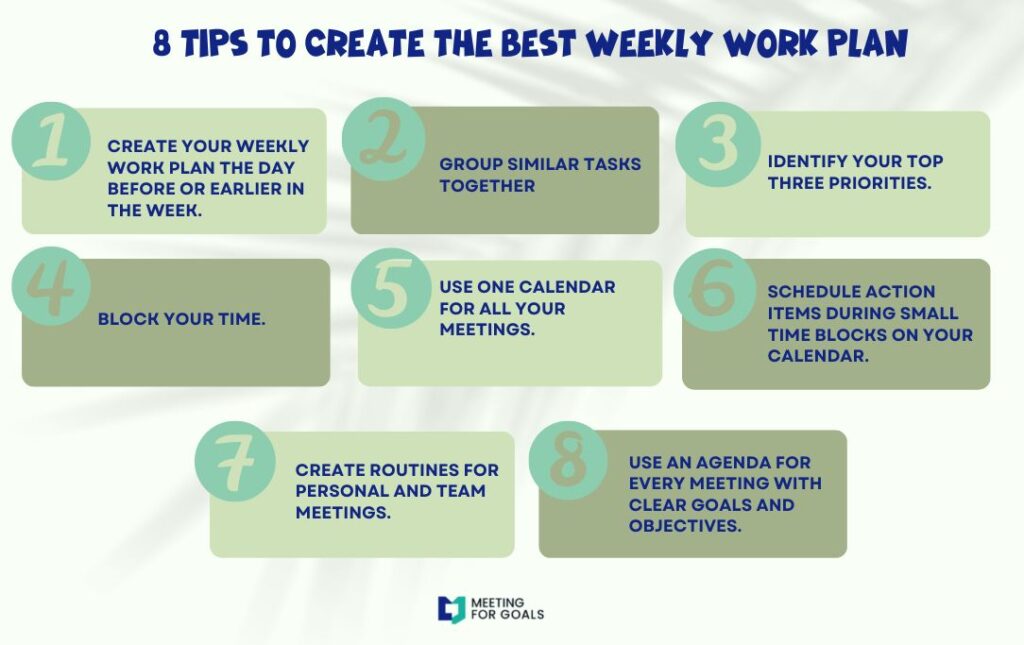
- Structure Creates Focus: A clear agenda and defined objectives keep meetings on track. When everyone knows what to expect, they’re more likely to engage. Use your agenda to tie in specific team building goals—like encouraging collaboration or open communication.
- Everyone Gets a Voice: Encourage input from all team members—not just the loudest ones. This builds trust and makes everyone feel valued. It also leads to better decision-making.
- Align with the Bigger Picture: Use meetings to connect daily tasks with big-picture goals. When people understand how their work contributes to success, they’re more motivated.
- Celebrate and Reflect: Recognize wins and talk openly about challenges. Celebrating success boosts morale. Addressing issues builds trust and encourages continuous improvement.
Meeting For Goals helps you do all of this more easily. With shared agendas, task tracking, and performance analytics, your meetings become more than just check-ins—they become growth opportunities.
Want to learn more about the science behind effective meetings? Harvard Business Review offers a great article on how leaders can run better meetings, which you can read here: What Everyone Should Know About Running Virtual Meetings.
IV. Implementing Team Building Objectives in Meetings
So how do you actually bring team building into your meetings? It’s easier than you think.
Here are some practical strategies:
- Set Purposeful Objectives: Every meeting should have a clear goal. If your team building objective is to improve communication, focus the meeting on open dialogue or cross-team updates. Meeting For Goals helps you define and track these goals in advance.
- Use the Right Tools: Collaborative tools make a big difference. Meeting For Goals includes shared agendas, real-time collaboration, and task assignments. This keeps everyone aligned and accountable.
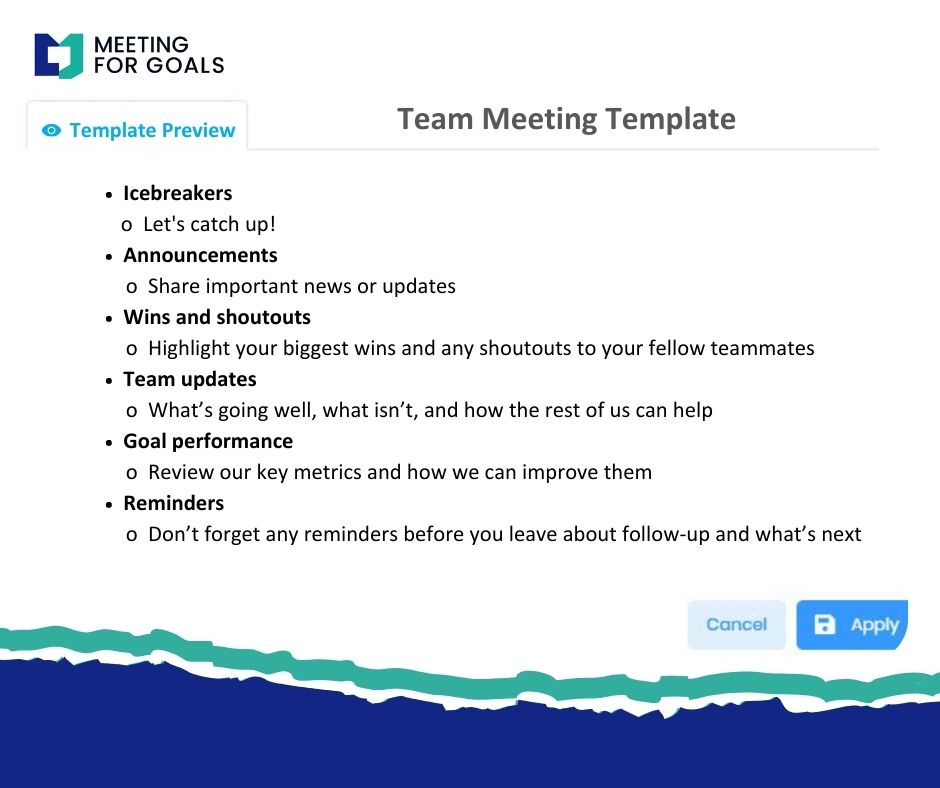
- Add Light Team Building Activities: You don’t need to run a full workshop. Even simple activities—like a quick icebreaker or a round of peer recognition—can improve morale and build trust.
- Rotate Meeting Leadership: Let different team members lead meetings or present updates. This builds confidence, encourages participation, and breaks down silos.
- Create Psychological Safety: Make it safe for people to speak up. When team members feel comfortable sharing ideas or admitting mistakes, innovation and trust thrive.
- Always End with Action: Every meeting should wrap up with clear next steps. Assign responsibilities and follow up. This reinforces accountability and ensures your meetings lead to results.
Meeting For Goals makes this process seamless. You can plan, run, and follow up on meetings all in one place. It’s designed to help you embed team building into your meeting culture.
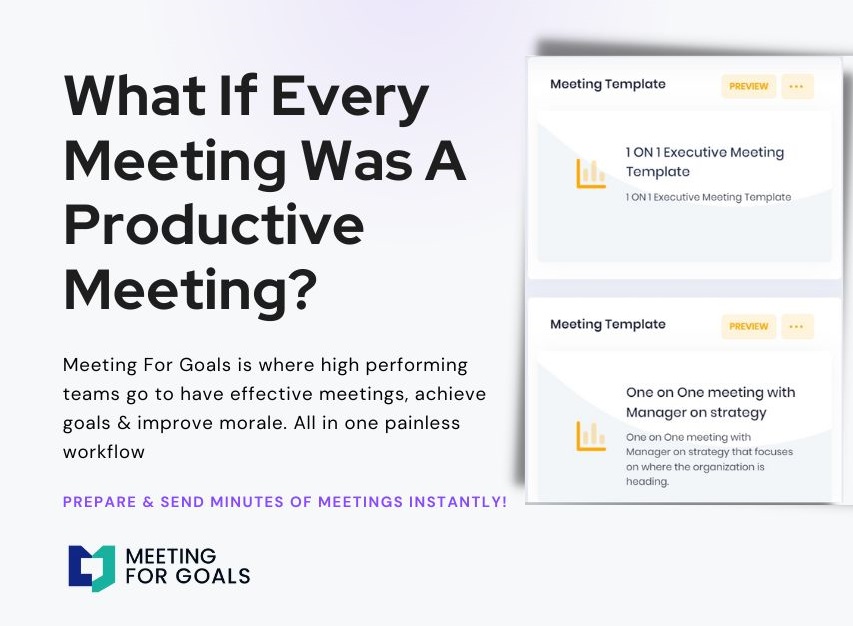
Looking for more ideas? Explore our meeting templates at meeting templates to get started quickly.
V. Measuring Success: Evaluating Team Building Objectives
You can’t improve what you don’t measure. That’s why tracking your team building efforts is so important.
Here’s how to evaluate your progress:
- Define Key Metrics: Start with KPIs that match your objectives. For example:
- Employee engagement scores
- Meeting participation rates
- On-time project completion
- Cross-functional collaboration metrics
- Use Meeting Analytics: With Meeting For Goals, you can track meeting frequency, duration, attendance, and follow-through on tasks. These insights help you understand what’s working—and what’s not.
- Collect Team Feedback: Ask your team how they feel. Use anonymous surveys, one-on-ones, or retrospectives to gather honest input. This helps you spot issues early and adjust as needed.
- Watch for Behavior Changes: Are people more engaged in meetings? Are they taking more initiative? These qualitative signs are just as important as the numbers.
- Adjust and Improve: If something isn’t working, tweak your approach. Team building is a long-term investment. The goal is steady progress, not perfection.
Meeting For Goals gives you the tools to connect your meeting outcomes to your bigger goals. That way, you can make sure your team building efforts are truly making a difference.
Want a deeper dive into evaluating team performance? Gallup’s research on employee engagement provides valuable insights: Employee Engagement Drives Growth.
VI. Conclusion
Team building isn’t just about trust falls or off-site retreats. It’s about creating a culture where people communicate, collaborate, and care about their work—and each other.
For companies with 40 to 70 employees, this can be a game-changer. And your meetings? They’re one of the best places to make it happen.
By aligning your team building objectives with your meetings, you turn everyday interactions into strategic opportunities. You boost morale, improve performance, and create a team that’s ready to take on any challenge.
Meeting For Goals is here to support that journey. With tools that help you plan, run, and follow up on meetings, we make it easier to build stronger teams—one meeting at a time.
Ready to take the next step? Sign up today at Meeting For Goals Registration and start transforming your meetings into engines of growth and morale.
And don’t forget to explore our free meeting templates at meeting templates to get started quickly.
Want to learn more about how we help teams succeed? Visit us at Meeting For Goals.
Your team’s success starts with better meetings. Let’s build it together.