
Product Owner vs Scrum Master: Understanding Key Roles in Agile Teams
In the fast-paced world of Agile development, two roles stand at the heart of every successful Scrum team: the Product Owner and the Scrum Master. While both are essential for delivering high-quality products and maintaining a productive team environment, their responsibilities, focus areas, and day-to-day activities are distinctly different. Understanding the nuances between these roles is critical for high-performing teams—especially for leaders aiming to improve meeting effectiveness, accountability, and goal alignment.
If you’re looking to boost your team’s performance, streamline collaboration, and run more effective meetings, sign up for Meeting For Goals today: https://app.meetingforgoals.com/TenantRegistration/Register
Let’s dive into how these two roles differ, how they complement each other, and how Meeting For Goals can help you get the most out of your Agile meetings.
- Introduction
Agile has become the go-to approach for modern teams who want to move fast, stay flexible, and deliver real value. At the heart of Agile—especially the Scrum framework—are clearly defined roles that help teams stay organized and focused.
Two of the most important roles? The Product Owner and the Scrum Master.
Even though they work closely together, their responsibilities couldn’t be more different. The Product Owner focuses on what the team should build and why it matters. The Scrum Master, on the other hand, focuses on how the team works together and how to make that process better.
For companies with 40–70 employees, especially those led by VPs, Directors, or C-suite leaders, understanding these roles is crucial. It helps you build stronger teams, run better meetings, and keep everyone aligned with business goals.
In this guide, we’ll break down each role, highlight the key differences, and show how tools like Meeting For Goals can help both roles succeed through smarter, goal-driven collaboration.
2 Minute Video
Watch a 2 minute demo of our meeting management software in action
What Does a Product Owner Do?
The Product Owner (PO) is responsible for making sure the team is building the right product. They’re the voice of the customer and the link between stakeholders and the development team.
Think of the Product Owner as the team’s GPS. They set the direction, clarify priorities, and make sure the team stays on course.
Vision Ownership
The Product Owner owns the product vision. This means they define what the product should become and communicate that vision clearly to the team.
For example, in a SaaS company, the Product Owner might:
- Gather user feedback.
- Analyze market trends.
- Work with leadership to create a roadmap.
That roadmap becomes the team’s north star. A strong product vision helps everyone understand the “why” behind their work. It also keeps stakeholders aligned and focused on long-term goals.
Backlog Management
The product backlog is a prioritized list of everything the team might work on—features, bug fixes, improvements, and more. The Product Owner owns this list and keeps it updated.
Backlog management is more than just organizing tasks. It’s about making tough decisions:
- What’s most valuable?
- What should come next?
- What can wait?
The Product Owner works with stakeholders to gather input, collaborates with developers to estimate effort, and constantly refines the backlog to reflect changing priorities.
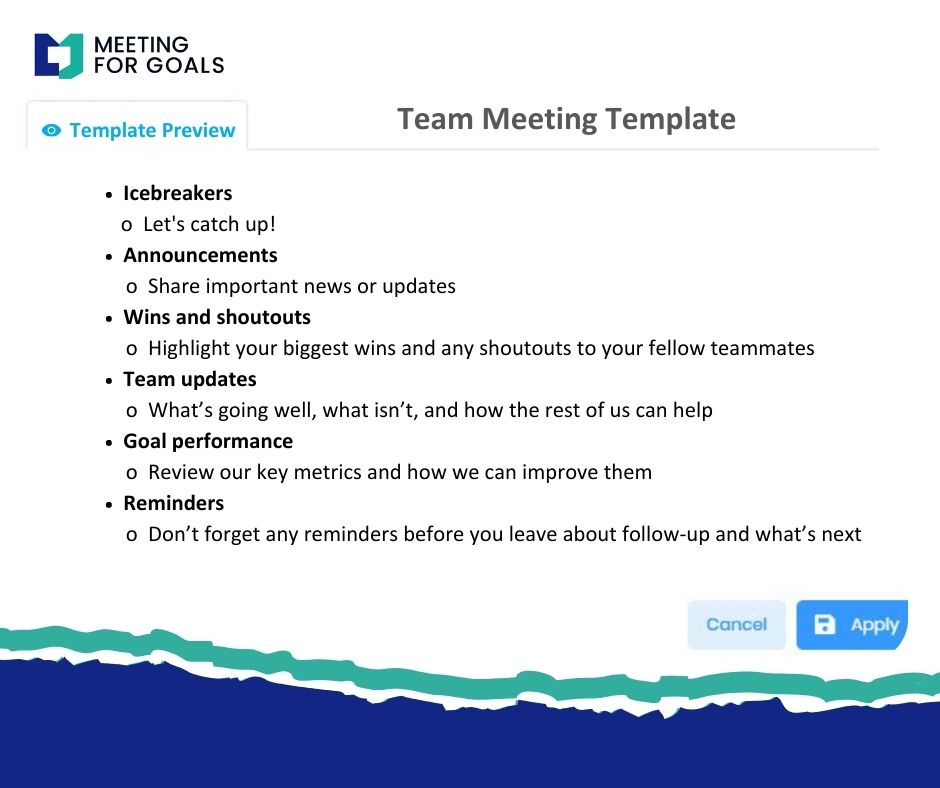
Using Meeting For Goals, Product Owners can run efficient backlog grooming sessions by setting clear outcomes and tracking decisions. Explore our free meeting templates to get started: https://meetingforgoals.com/meeting_templates
Stakeholder Engagement
The Product Owner spends a lot of time talking to people—customers, executives, sales teams, marketing, and more. Their job is to gather insights, manage expectations, and translate business needs into actionable backlog items.
This requires top-notch communication skills. The Product Owner must balance competing interests and ensure the team’s work supports the company’s big-picture goals.
Aligning Development with Business Goals
At the end of the day, the Product Owner is responsible for delivering value. Every sprint, every feature, and every release should move the product closer to its business objectives.
With Meeting For Goals, Product Owners can connect backlog items to specific company goals, making it easier to prioritize work and show stakeholders how each sprint drives results.
Adding an Agenda
How to add an agenda instantly on Meeting For Goals
What Does a Scrum Master Do?
While the Product Owner focuses on the product, the Scrum Master focuses on the team. They’re the coach, the facilitator, and the protector of Agile values.
The Scrum Master helps the team work better together. They remove obstacles, guide Agile practices, and ensure that meetings are productive and focused.
Facilitating Scrum Events
Scrum comes with a set of recurring meetings—or ceremonies—including sprint planning, daily stand-ups, sprint reviews, and retrospectives.
The Scrum Master ensures these events happen, stay on track, and deliver value.
- Sprint Planning: Helps the team commit to a realistic amount of work.
- Daily Stand-Ups: Keeps everyone aligned and identifies blockers quickly.
- Sprint Reviews: Brings in stakeholders to review progress and collect feedback.
- Retrospectives: Focuses on what went well and what can be improved.
With Meeting For Goals, Scrum Masters can run these meetings with clear agendas, track action items, and ensure follow-through.
Removing Impediments
One of the Scrum Master’s most important jobs is to remove anything that slows the team down.
Maybe a developer is waiting on access to a tool. Maybe there’s confusion between departments. Maybe the team is overloaded.
Whatever the issue, the Scrum Master steps in to resolve it—fast. This proactive support keeps the team focused and helps maintain momentum.
Coaching on Agile Principles
The Scrum Master is also a teacher. They help the team—and sometimes the whole company—understand and apply Agile principles.
This includes mentoring new team members, encouraging collaboration, and fostering a culture of accountability and learning. In mid-sized companies where Agile maturity varies, the Scrum Master plays a key role in driving improvement.
Meeting For Goals makes this easier by providing structured templates for retrospectives and improvement plans.
Fostering a Collaborative Environment
The Scrum Master creates a safe space where team members can speak up, share ideas, and try new things.
They also shield the team from distractions—like last-minute requests or shifting priorities—that can derail progress.
By focusing on team health and collaboration, the Scrum Master ensures that the team can deliver its best work.
Key Differences Between Product Owner and Scrum Master
Although the Product Owner and Scrum Master work closely, their roles are fundamentally different. Understanding these differences helps reduce confusion, improve accountability, and support better meetings.
Comparison Table
| Aspect | Product Owner | Scrum Master |
|---|---|---|
| Primary Focus | Business goals, product value | Team processes, Agile adherence |
| Key Responsibilities | Backlog management, stakeholder liaison | Facilitating Scrum events, removing blockers |
| Daily Activities | Prioritizing features, engaging stakeholders | Coaching team, resolving impediments |
| Stakeholder Interaction | High | Low to moderate |
| Team Interaction | Directs what to build | Facilitates how to build it |
| Decision-Making Authority | Owns product decisions | Guides process, no product authority |
Focus: Business vs. Process
The Product Owner is focused on the external world—customers, stakeholders, and business outcomes. The Scrum Master is focused on the internal world—team dynamics, process improvement, and Agile best practices.
Authority vs. Facilitation
The Product Owner has the authority to make product decisions. They decide what gets built and when.
The Scrum Master doesn’t make product decisions. Instead, they facilitate discussions, coach the team, and support decision-making.
Complementary Strengths
These roles aren’t in conflict—they’re complementary.
The Product Owner ensures the team is building the right things. The Scrum Master ensures the team is building things the right way.
Together, they create a balanced, high-performing Agile team.
To learn more about how Meeting For Goals supports role clarity and collaboration, visit https://meetingforgoals.com
How Product Owners and Scrum Masters Collaborate
For Agile teams to succeed, the Product Owner and Scrum Master must work together closely. Their collaboration drives effective sprints, productive meetings, and successful product delivery.
Joint Participation in Scrum Events
Both roles play key parts in Scrum ceremonies:
- In sprint planning, the Product Owner presents the backlog. The Scrum Master facilitates the meeting and ensures the team stays focused.
- In daily stand-ups, the Scrum Master keeps things moving, while the Product Owner may clarify priorities.
- In retrospectives, the Scrum Master leads the session, but the Product Owner provides valuable insights.
These shared touchpoints are essential for alignment and momentum.
Unified Goal Setting
The Product Owner brings the “what” and “why.” The Scrum Master ensures the “how” is efficient and sustainable.
When both roles align around shared goals, the team moves faster and delivers more value.
Meeting For Goals enables this alignment by tying meeting agendas and action items directly to company objectives.
Effective Communication
Open communication between the Product Owner and Scrum Master is non-negotiable.
They need to check in regularly, share updates, and resolve misunderstandings quickly.
With Meeting For Goals, you can set up recurring check-ins, assign tasks, and track progress—all in one place.
Resolving Conflicts
Disagreements will happen—over priorities, timelines, or team capacity. The key is handling them constructively.
The Scrum Master can mediate. The Product Owner can clarify business needs. Together, they can find a solution that works.
Structured agendas and decision logs in Meeting For Goals help keep these conversations focused and professional.
Why This Matters for Executives
If you’re an executive leading a team of 40–70 employees, clearly defining these roles can transform your organization.
You’ll see:
- More focused meetings
- Better alignment with business goals
- Increased accountability
- Higher team morale
Meeting For Goals is designed to support this transformation. It helps teams clarify roles, track goals, and run meetings that actually drive results.
Conclusion
The Product Owner and Scrum Master are two of the most important roles in any Agile team.
The Product Owner focuses on delivering the right product. The Scrum Master focuses on helping the team work better. Together, they create a powerful engine for innovation and execution.
For leaders and teams looking to improve meeting outcomes, boost collaboration, and align with company goals, Meeting For Goals is the tool you’ve been waiting for.
- Run shorter, more effective meetings
- Align every meeting with business objectives
- Clarify roles and responsibilities
- Track action items and outcomes
- Improve team morale and accountability
Whether you’re a Product Owner refining your backlog or a Scrum Master coaching your team, Meeting For Goals helps you do it better.
👉 Try it today: https://app.meetingforgoals.com/TenantRegistration/Register
Want to get started quickly? Check out our free meeting templates: https://meetingforgoals.com/meeting_templates
Learn more about how Meeting For Goals can transform your Agile meetings: https://meetingforgoals.com
Optimize your Agile meetings. Align your team. Achieve your goals—with Meeting For Goals.