
One-to-One Meetings: Maximizing Effectiveness for High-Performing Teams
Excerpt:
In high-performing organizations, one-to-one meetings are more than just a recurring calendar event—they’re a powerful tool for driving alignment, accountability, and performance. When done right, they create stronger manager-employee relationships, improve communication, and unlock growth opportunities. This guide breaks down how to structure and optimize one-to-one meetings so they truly boost your team’s success. Whether you’re a VP, Director, or C-suite leader, mastering these meetings can be a game-changer for productivity and morale.
I. Introduction
One-to-one meetings are one of the most valuable tools in a leader’s toolkit. They’re not just about checking in—they’re about building trust, aligning goals, and solving problems before they escalate.
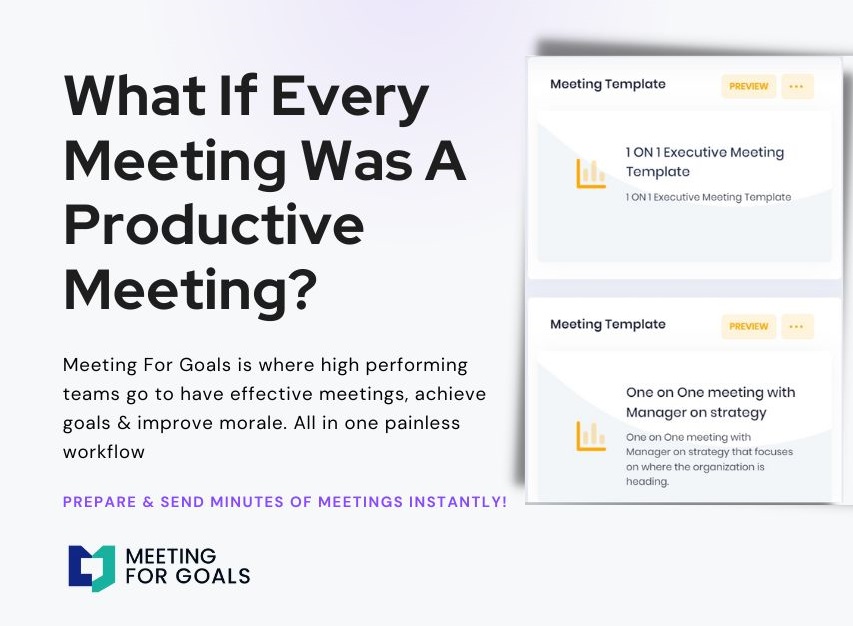
At Meeting For Goals, we believe every meeting should serve a purpose. Our platform is built to help fast-moving teams run meetings that are focused, goal-oriented, and productive. One-to-one meetings are a key part of that strategy.
In today’s hybrid and remote work environments, these meetings are even more critical. They offer a rare moment of uninterrupted conversation—a chance to connect, coach, and collaborate.
This article will walk you through everything you need to know to make your one-to-one meetings more impactful. You’ll learn how to structure them, best practices to follow, and how to avoid common pitfalls. By the end, you’ll be ready to turn your one-to-one meetings into a powerful habit that drives performance and engagement.
Want to start now? Sign up for Meeting For Goals and start transforming your meetings today: https://app.meetingforgoals.com/TenantRegistration/Register
2 Minute Video
Watch a 2 minute demo of our meeting management software in action
The Purpose of One-to-One Meetings
Understanding the “why” behind one-to-one meetings is the first step toward making them effective. These meetings aren’t just about status updates—they serve five key purposes:
- Building Strong Relationships
One-to-one meetings create space for meaningful conversations. This regular, personal interaction helps build trust and rapport between managers and employees. When people feel heard and valued, they’re more likely to be engaged and motivated.
Strong relationships are especially important in remote teams where casual hallway chats don’t happen. A consistent meeting rhythm helps fill that gap and keeps everyone connected.
- Providing Feedback and Support
These meetings are a perfect time to give and receive feedback. Whether it’s recognizing a win or addressing a challenge, feedback in a one-on-one setting is more personal and impactful.
They also allow employees to ask for help. Maybe they’re stuck on a project or need guidance. These meetings give them a safe place to speak up.
- Aligning Goals
Every team member should know how their work ties into the bigger picture. One-to-one meetings are your chance to connect individual goals with team and company priorities.
Using a meeting management tool like Meeting For Goals makes it easy to track this alignment. You can set goals, monitor progress, and make sure everyone stays focused on what matters most.
- Creating Accountability
When employees know they’ll be discussing their progress regularly, they’re more likely to stay on top of their responsibilities. This isn’t about micromanaging—it’s about creating a culture of follow-through and ownership.
- Supporting Career Growth
Want to retain top talent? Use one-to-one meetings to talk about career development. Ask about long-term goals, training needs, or new challenges they’d like to take on. These conversations show you care about their growth, not just their output.
Looking for structured agendas to support these conversations? Check out our free meeting templates: https://meetingforgoals.com/meeting_templates
Adding an Agenda
How to add an agenda instantly on Meeting For Goals
Structuring Effective One-to-One Meetings
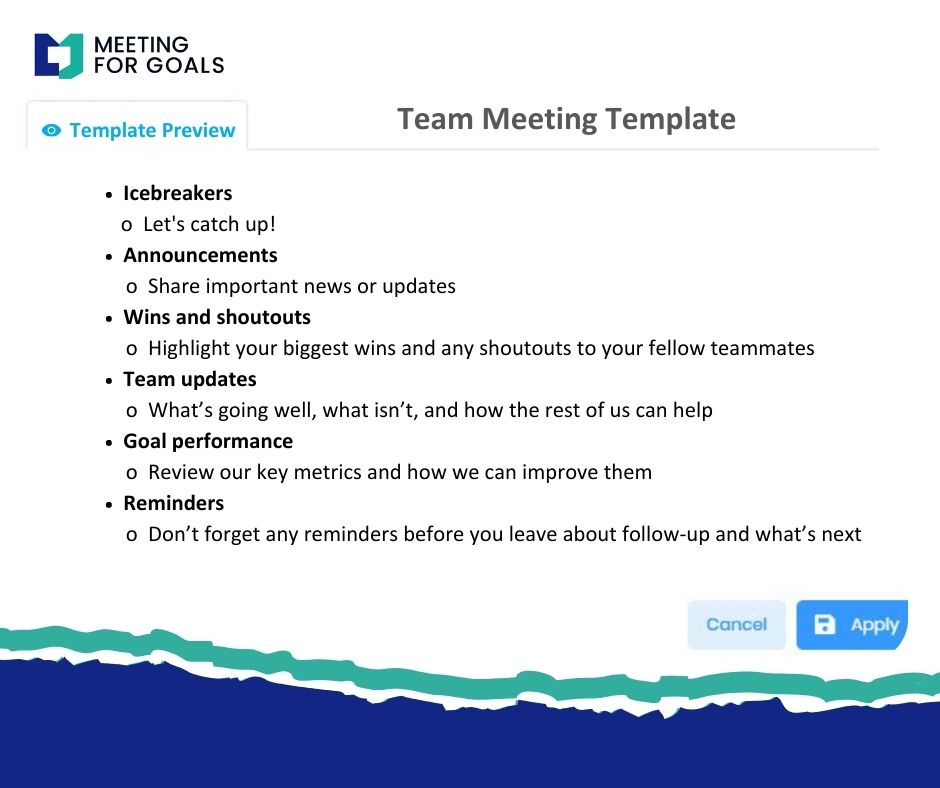
A good structure keeps your meetings focused and productive. Here’s a simple yet flexible format to follow:
- Start with a Personal Check-In
Begin with a few minutes of informal conversation. Ask how they’re doing—personally and professionally. This small gesture builds trust and sets a positive tone.
- Review Progress on Goals
Next, go over goals and action items from your last meeting. What’s been accomplished? What’s still in progress? Are there any blockers?
If you’re using Meeting For Goals, this step is easy. All your goals and notes are tracked in one place, so you can pick up right where you left off.
Ask:
- What progress have you made?
- Any challenges you’re facing?
- Any recent wins we should celebrate?
- Discuss Challenges and Offer Support
This is your chance to coach and problem-solve. Ask open-ended questions to dig deeper into any issues. Offer guidance, resources, or help removing barriers.
Encourage your team member to bring topics to the meeting too. This empowers them to take ownership and ensures their priorities are addressed.
- Set New Goals and Action Items
Wrap up by setting clear goals and next steps. Use SMART goals—Specific, Measurable, Achievable, Relevant, and Time-bound. This keeps everyone aligned and accountable.
Meeting For Goals lets you assign action items, set deadlines, and track progress—all within the platform.
- Stick to a Time Limit
Keep meetings to 30–45 minutes. Use a shared agenda to stay on track. Allocate time for each section and leave a few minutes at the end for feedback or wrap-up.
Want to make this even easier? Use our pre-built one-to-one meeting templates: https://meetingforgoals.com/meeting_templates
Best Practices for Conducting One-to-One Meetings
Even with a good structure, the way you run your meetings matters. Here are proven tips to make them more effective:
- Keep a Consistent Schedule
Set a recurring time—weekly, biweekly, or monthly. Consistency builds trust and ensures you’re always in sync. Avoid canceling unless absolutely necessary. Skipping sends the message that the meeting (and the person) isn’t a priority.
- Use a Meeting Management Tool
Software like Meeting For Goals helps you stay organized. You can create agendas, track goals, manage action items, and keep a history of past conversations—all in one place.
This turns your meetings from reactive to strategic. It also saves time and keeps everyone accountable.
- Practice Active Listening
Don’t just hear—listen. Give your full attention. Paraphrase what they say to confirm understanding. Ask follow-up questions.
This shows respect and creates a safe space for open conversation.
- Document and Follow Up
After the meeting, send a quick summary. List key takeaways, decisions made, and next steps. This reinforces accountability and avoids confusion.
Meeting For Goals automates this process, so nothing gets lost in translation.
- Eliminate Distractions
Silence notifications. Close unnecessary tabs. Be fully present. This shows you value the conversation and the person across from you.
- Invite Feedback
Ask your employees how you can improve. What’s working? What’s not? This builds trust and shows you’re committed to growing as a leader.
Want more leadership tips? Explore our blog at https://meetingforgoals.com.
Overcoming Common Challenges in One-to-One Meetings
Even the best leaders run into challenges. Here’s how to handle the most common ones:
- Feedback Anxiety
Many people get nervous about giving or receiving feedback. Normalize it by making it a regular part of your meetings. Use the SBI model—Situation, Behavior, Impact—to keep feedback objective and constructive.
- Time Constraints
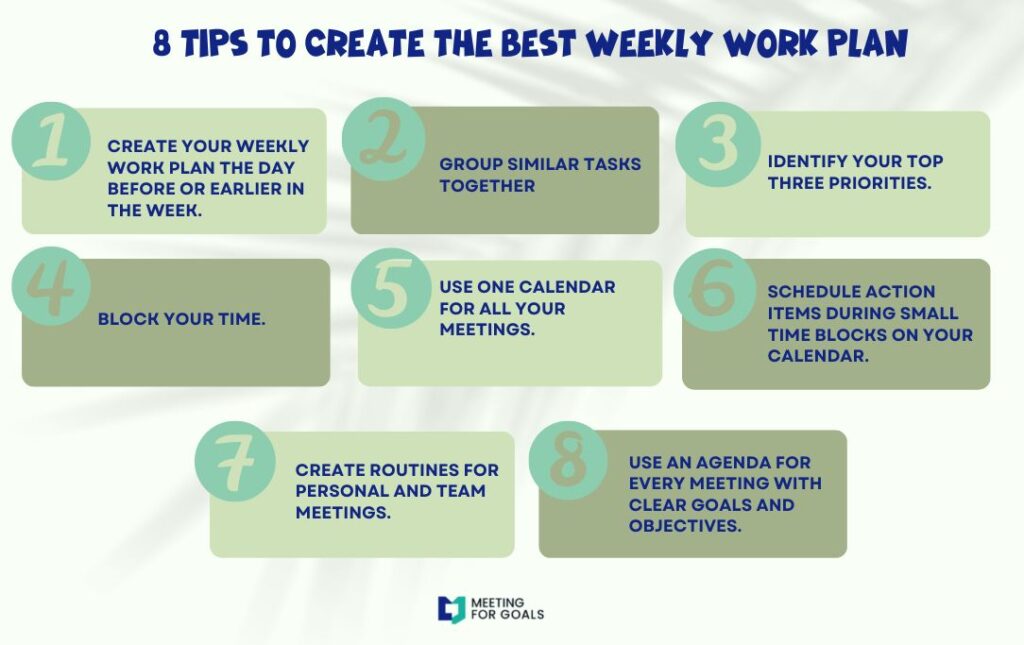
Busy schedules can push one-to-one meetings to the back burner. Don’t let that happen. Block time in advance and protect it. Keep meetings short and focused.
Using a tool like Meeting For Goals makes prep faster and follow-up automatic—so you save time without sacrificing quality.
- Different Communication Styles
Not everyone communicates the same way. Some people are talkative; others are more reserved. Adapt your approach to fit their style. Tools like DISC or MBTI can help you understand how to connect more effectively.
- Lack of Preparation
Unprepared meetings waste time. Encourage both parties to come with an agenda. Meeting For Goals lets you create shared agendas so everyone knows what to expect.
- Surface-Level Conversations
Go beyond status updates. Ask deeper questions:
- What’s something that’s been frustrating you?
- Where do you feel stuck?
- What’s something you’re proud of?
These questions build trust and uncover valuable insights.
Need help getting started? Use our free one-to-one meeting agenda templates: https://meetingforgoals.com/meeting_templates
Conclusion
One-to-one meetings are more than just a check-in—they’re a strategic tool for building strong teams, aligning goals, and driving results.
When structured well and run with intention, they improve communication, boost accountability, and support employee growth. They’re especially powerful for leaders managing growing teams of 40–70 people, where complexity is high and personal connection is harder to maintain.
Meeting For Goals is here to help you make every meeting count. Our platform gives you the tools to:
- Align meetings with strategic goals.
- Track performance and follow through on action items.
- Save time with automated workflows.
- Foster a culture of accountability and growth.
Ready to take your one-to-one meetings to the next level? Sign up today and start building a high-performing team: https://app.meetingforgoals.com/TenantRegistration/Register
Want to explore more tools and templates to make your meetings more effective? Visit us at https://meetingforgoals.com
External Resources:
- Harvard Business Review – How to Make Your One-on-One Meetings More Effective: https://hbr.org/2016/08/how-to-make-your-one-on-one-meetings-more-effective
- Gallup – State of the American Manager Report (on the importance of regular feedback): https://www.gallup.com/workplace/236441/state-american-manager-report.aspx
Meta Description:
Learn how to run effective one-to-one meetings that boost team performance, accountability, and engagement. Discover best practices and how Meeting For Goals software can help your team thrive.
Total Word Count: ~2,150 words