
The Ultimate Guide to Meeting Minutes: Boost Productivity, Accountability, and Goal Alignment
In today’s fast-paced business environment, every minute counts—especially when it comes to meetings. Yet, many organizations still suffer from unproductive meetings that lack focus, direction, and follow-through. One of the most overlooked tools for transforming these meetings into strategic powerhouses is the meeting minute. When done right, meeting minutes become a blueprint for action, accountability, and alignment with company goals.
Whether you’re a VP, Director, or C-Suite executive leading a team of 40 to 70 employees, this guide will help you unlock the full potential of your meetings. If you’re ready to take your meetings to the next level, start by signing up at https://app.meetingforgoals.com/TenantRegistration/Register and explore our free meeting templates at https://meetingforgoals.com/meeting_templates.
I. Introduction
Meetings are the lifeblood of organizational communication. But without structure and purpose, they can easily become time sinks. One of the most powerful ways to ensure meetings are productive is through effective meeting minutes.
So, what are meeting minutes?
Simply put, meeting minutes are the written record of what happened during a meeting. They capture key discussions, decisions, action items, and deadlines. But their true value goes beyond documentation—they drive clarity, accountability, and alignment.
For mid-sized teams, especially those with 40 to 70 employees, the stakes are high. Leaders need to ensure that meetings lead to action—not just talk. That’s where Meeting For Goals comes in.
Meeting For Goals is a meeting management platform built to help teams run shorter, more focused meetings that align with strategic objectives. With features that promote accountability and simplify note-taking, it turns meeting minutes into a powerful business tool.
In this guide, we’ll break down why meeting minutes matter, what makes them effective, and how to use them to drive results. By the end, you’ll have a practical playbook for making every meeting count.
2 Minute Video
Watch a 2 minute demo of our meeting management software in action
II. The Purpose of Meeting Minutes
Meeting minutes are more than just a summary of what was said. They’re a strategic tool that connects meetings to measurable outcomes. Let’s explore the core reasons why they matter.
A. Documenting Decisions and Actions
In fast-moving companies, verbal agreements can be forgotten or misunderstood. Meeting minutes solve this by clearly documenting what was decided, why it was decided, and how it will be executed.
This is especially useful for executives managing multiple departments. With a reliable record, there’s less confusion and more consistency in follow-through.
According to the Harvard Business Review, clear documentation of decisions helps teams avoid costly miscommunications and ensures everyone is aligned on next steps.
B. Providing Clarity on Accountability
Accountability is key to execution. Meeting minutes help by assigning action items to specific people along with deadlines.
When everyone knows who’s responsible for what, there’s less finger-pointing and more progress. Meeting For Goals makes this even easier by automatically tracking action items and sending reminders—no micromanaging needed.
C. Serving as a Reference for Future Meetings
Meeting minutes also serve as a historical record. Teams can refer back to them to check progress, revisit decisions, or prepare for upcoming meetings.
This is especially helpful for recurring meetings or long-term projects. Instead of starting from scratch, teams can build on past discussions.
Meeting For Goals stores all past minutes in one place, making it easy to access and review them anytime.
Adding an Agenda
How to add an agenda instantly on Meeting For Goals
III. Key Elements of Effective Meeting Minutes
Not all meeting minutes are created equal. To be effective, they need to be clear, concise, and actionable. Here are the must-have elements for every set of meeting minutes.
A. List of Attendees
Start by noting who attended the meeting. Include names, titles, and note any absentees. This helps identify who was involved in decisions and who needs follow-up.
B. Agenda Items and Discussions
Structure your minutes around the meeting agenda. For each item, summarize the key points discussed, differing perspectives, and any conclusions reached.
Keep this section brief but informative. Someone who missed the meeting should be able to get up to speed just by reading this.
Meeting For Goals allows you to create structured agendas ahead of time, making this part of the process much smoother.
C. Decisions Made and Assigned Actions
This is the heart of your minutes. Clearly state what decisions were made and what action items were assigned.
Each action item should include:
- Who’s responsible
- What needs to be done
- Deadline
- Any relevant notes or resources
Meeting For Goals automatically logs and tracks these items, ensuring nothing gets lost in the shuffle.
D. Time Stamps for Each Agenda Item
Adding time stamps helps teams understand how time was spent. It also provides insight into which topics took longer and where future meetings can be more efficient.
E. Upcoming Meeting Date and Topics
Wrap up your minutes by noting the date and time of the next meeting, along with any proposed agenda items.
This sets expectations early and helps participants prepare in advance.
By including these elements, your meeting minutes become more than just a summary—they become a roadmap for action.
IV. Best Practices for Writing Meeting Minutes
Writing effective meeting minutes isn’t just about what you write—it’s about how and when you write it. Here are some simple best practices to follow.
A. Preparation Before the Meeting
Great minutes start with good preparation. Review the agenda, understand the meeting goals, and set up your note-taking tools.
If you’re using Meeting For Goals, you can preload the agenda and attendee list into the platform. This makes it easy to stay organized during the meeting.
B. Techniques for Effective Note-Taking During the Meeting
During the meeting, focus on capturing the key points—not every word.
Use bullet points, abbreviations, and templates to keep up with the conversation. Highlight decisions and action items in real-time.
If possible, assign a dedicated note-taker. This allows others to stay engaged without worrying about documentation.
C. Ensuring Accuracy and Clarity Post-Meeting
After the meeting, review your notes while the information is still fresh. Clarify any unclear points and organize the content into a clean, readable format.
Use clear language and avoid jargon. Your goal is to make the minutes easy to understand for anyone who reads them.
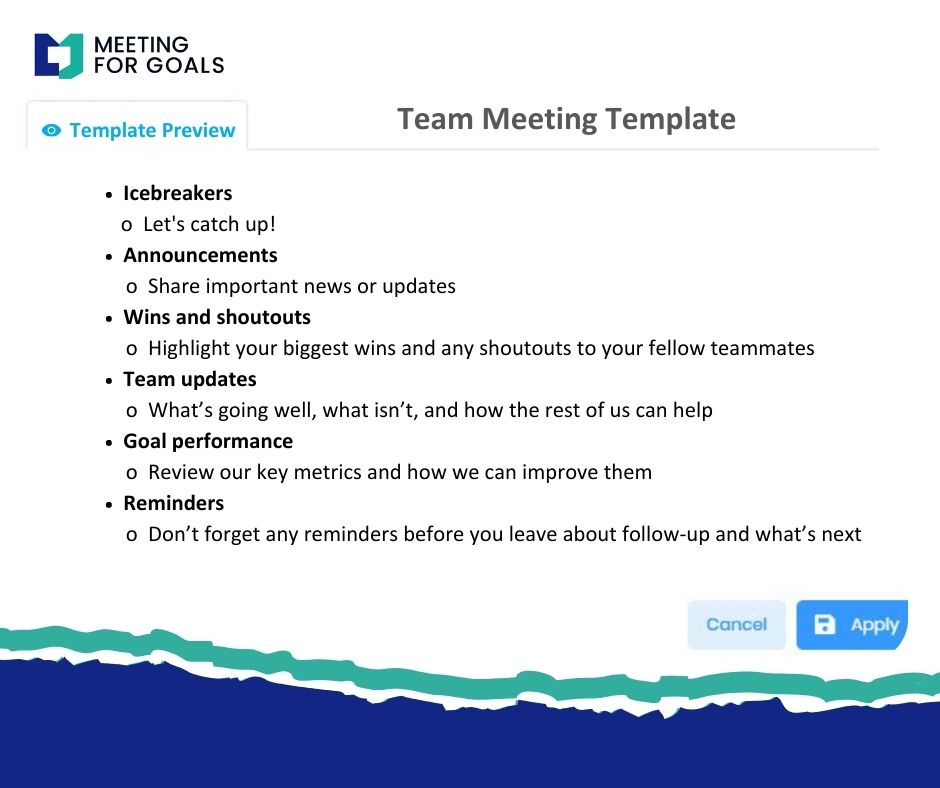
Meeting For Goals simplifies this step with built-in templates and formatting tools, so you can finalize and share minutes quickly.
D. Tools and Software to Streamline the Minute-Taking Process
Gone are the days of scribbling notes on paper or typing them up in Word. Modern tools like Meeting For Goals streamline the entire process.
With features like real-time collaboration, automated task assignment, and cloud storage, it’s easier than ever to keep everyone aligned and informed.
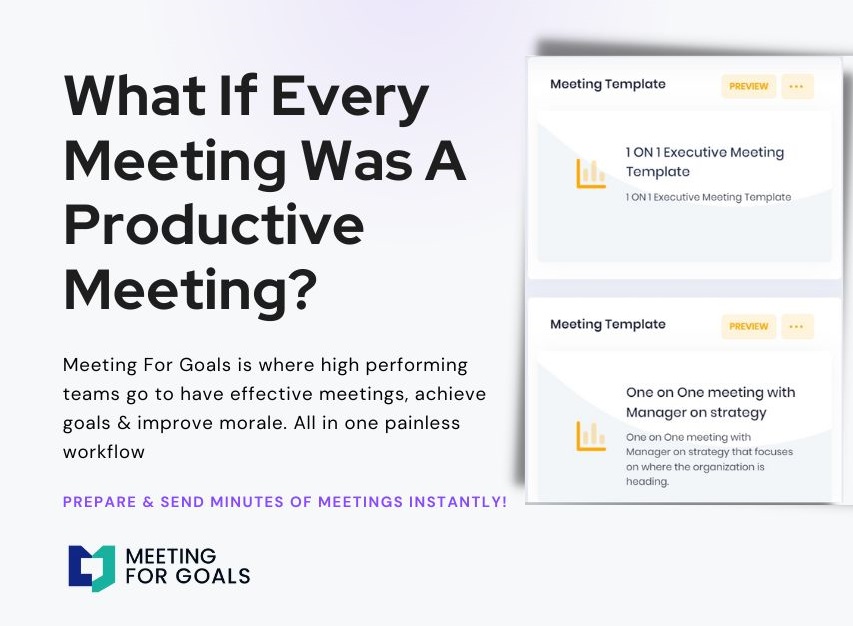
Want to save time and improve meeting outcomes? Check out our free templates at https://meetingforgoals.com/meeting_templates.
V. Integrating Meeting Minutes with Company Goals
Meeting minutes shouldn’t live in isolation. To be truly valuable, they need to connect with your company’s broader goals. Here’s how to make that connection.
A. Aligning Minutes with Organizational Objectives
Every meeting should serve a purpose that ties back to business goals. When writing minutes, highlight how each topic or decision supports these objectives.
This keeps teams focused and reinforces the strategic value of the meeting.
Meeting For Goals lets you link agenda items and action items directly to company goals, keeping everything aligned in one place.
B. Tracking Progress of Action Items Related to Goals
Assigning tasks is just the beginning. You also need to track progress over time.
Use your meeting minutes as a baseline to follow up on deliverables, measure performance, and adjust strategies as needed.
With Meeting For Goals, you can monitor the status of every action item and see how it contributes to bigger objectives—all from a centralized dashboard.
C. Leveraging Minutes to Enhance Accountability and Responsibility
When team members know their tasks are being tracked, they’re more likely to follow through.
Meeting minutes create a culture of transparency and ownership, where everyone understands their responsibilities.
This is especially important in mid-sized companies where collaboration across departments is common.
Meeting For Goals enhances accountability by making task ownership visible across teams, reducing the risk of things falling through the cracks.
Looking to improve team accountability? Start today at https://app.meetingforgoals.com/TenantRegistration/Register.
VI. Common Mistakes to Avoid
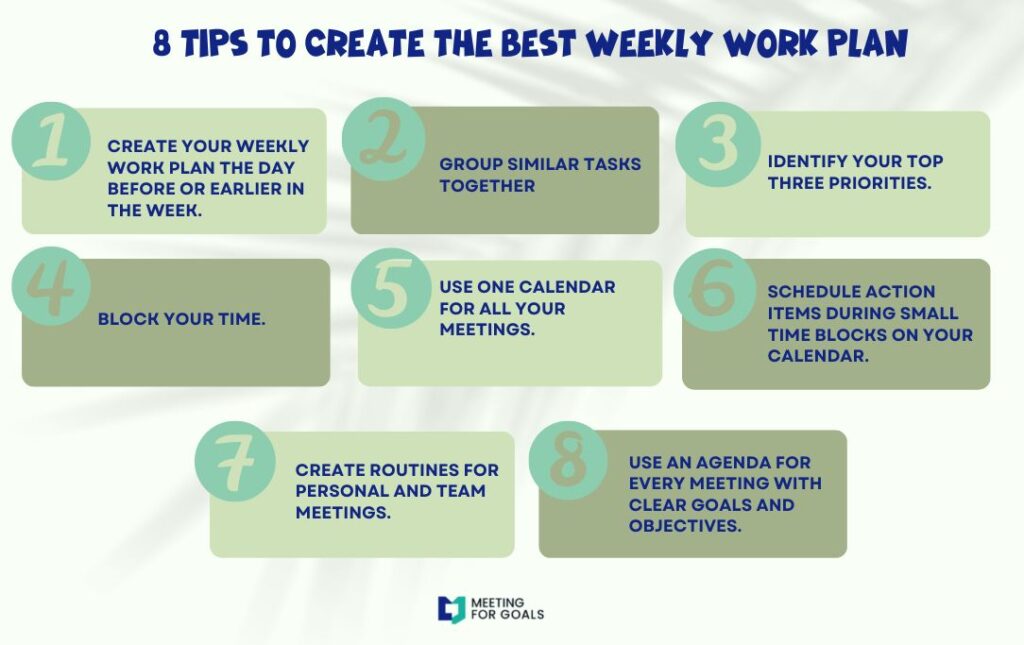
Even the best teams can fall into bad habits. Here are a few common mistakes to watch out for when creating meeting minutes:
- Being too vague: Avoid general statements like “Discussed marketing.” Be specific about what was said and what was decided.
- Missing action items: Every discussion should lead to a next step. If there’s no action, ask yourself why the topic was on the agenda.
- Delaying distribution: Minutes lose value the longer you wait to share them. Aim to distribute them within 24 hours of the meeting.
- Not following up: Meeting minutes are only useful if they’re used. Make sure to review them in future meetings to track progress.
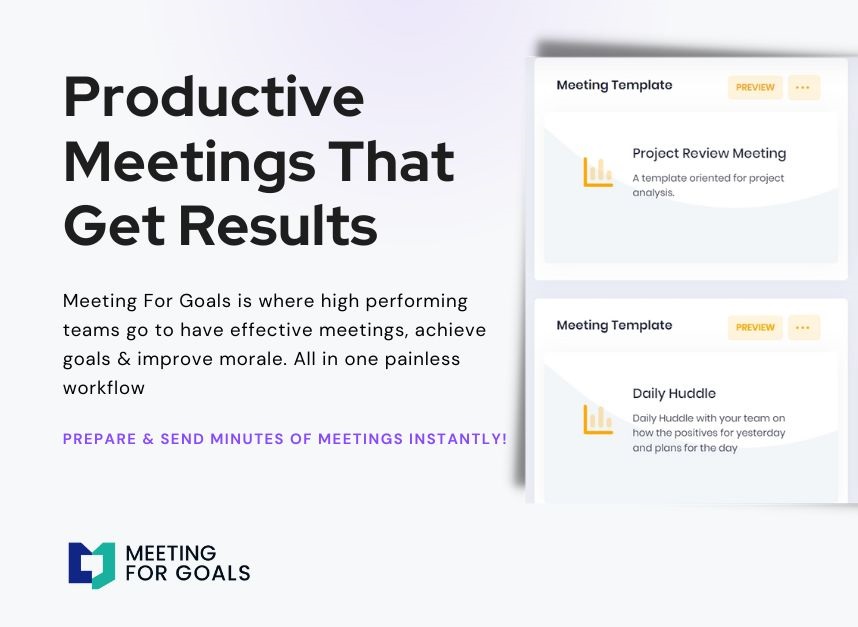
- Overcomplicating the format: Keep your format simple and consistent. Tools like Meeting For Goals provide templates that make this easy.
VII. Real-World Example: A Mid-Sized Marketing Team
Let’s say you’re leading a marketing team of 50 people. You hold weekly strategy meetings to align on campaigns, content, and performance.
Without meeting minutes, your team might forget who’s doing what, or revisit the same conversations week after week.
By using Meeting For Goals, you can:
- Create a clear agenda
- Assign tasks during the meeting
- Track progress in real-time
- Link each task to a quarterly goal
The result? Shorter meetings, better execution, and a team that’s always aligned.
Want to see how it works? Visit https://meetingforgoals.com for more info.
VIII. Conclusion
Meeting minutes may seem like a small detail, but they have a big impact. When done right, they drive productivity, accountability, and alignment.
Let’s recap:
- Meeting minutes capture decisions and action items.
- They promote accountability and serve as a reference.
- Effective minutes include attendees, agenda summaries, and deadlines.
- Best practices include preparation, real-time note-taking, and using modern tools.
- Aligning minutes with company goals turns them into a strategic asset.
Meeting For Goals is built to make this process seamless. From structured agendas to real-time task tracking, it’s the smarter way to run meetings.
If you’re a Director, VP, or executive looking to boost your team’s performance, it’s time to rethink your approach to meeting minutes.
Start today at https://app.meetingforgoals.com/TenantRegistration/Register
Explore our free templates at https://meetingforgoals.com/meeting_templates
Learn more about how we can help at https://meetingforgoals.com
Ready to transform your meetings?
👉 Try Meeting For Goals and experience the difference.
Word count: ~2,100 words.