
In today’s fast-paced business world, effective meetings are more than just a good idea—they’re critical to success.
In today’s fast-paced business world, effective meetings are more than just a good idea—they’re critical to success. But what really makes a meeting productive? The answer often comes down to one key ingredient: action items.
Action items are the difference between a meeting that sparks real progress and one that just eats up time. In this guide, we’ll break down what action items are, why they matter, and how Meeting For Goals helps high-performing teams turn meetings into results. Whether you’re a Director, VP, or part of the C-suite, this guide will help you make every meeting count.
Ready to level up your meetings? Sign up for Meeting For Goals now at https://app.meetingforgoals.com/TenantRegistration/Register and start driving accountability and results.
2 Minute Video
Watch a 2 minute demo of our meeting management software in action
What is an Action Item?
Meetings are where decisions get made, ideas get shared, and strategies take shape. But without clear follow-up, even the best discussions can go nowhere. That’s where action items come in.
An action item is a specific task assigned during a meeting. It includes:
- What needs to be done
- Who’s doing it
- When it’s due
Think of it as the “next step” that turns talk into action. For growing companies—especially those with 40–70 employees—action items are essential. They help teams stay agile, ensure accountability, and keep projects moving forward.
At Meeting For Goals, we’ve built our platform to help teams run more focused meetings that align with company goals. With built-in action item tracking, we make it easier to assign, follow up, and get things done.
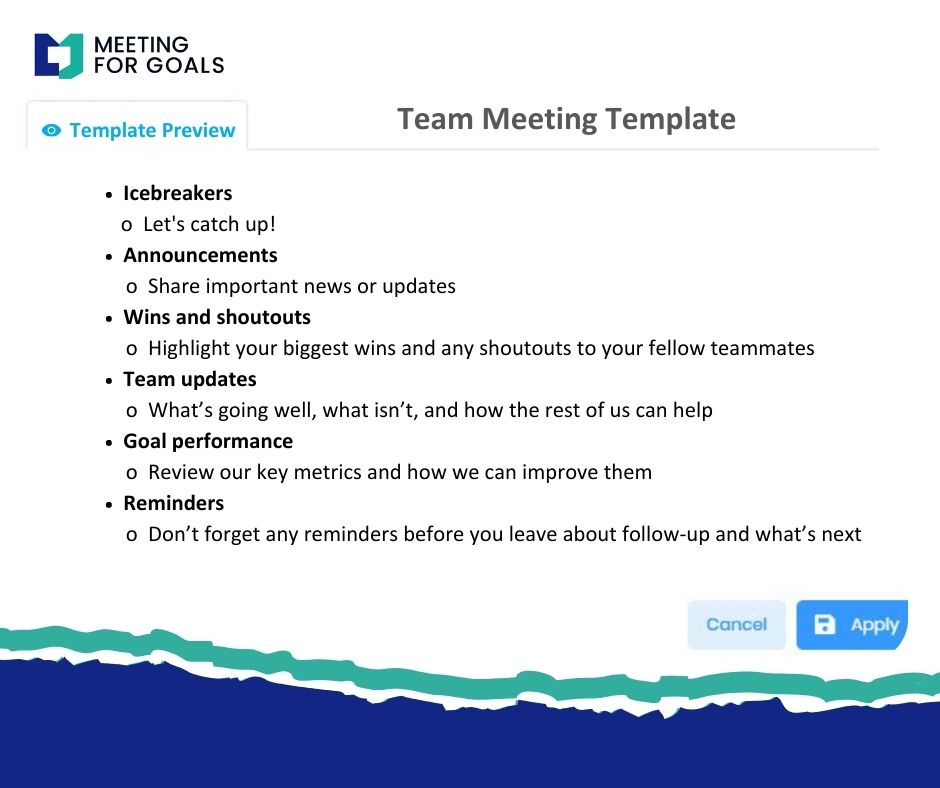
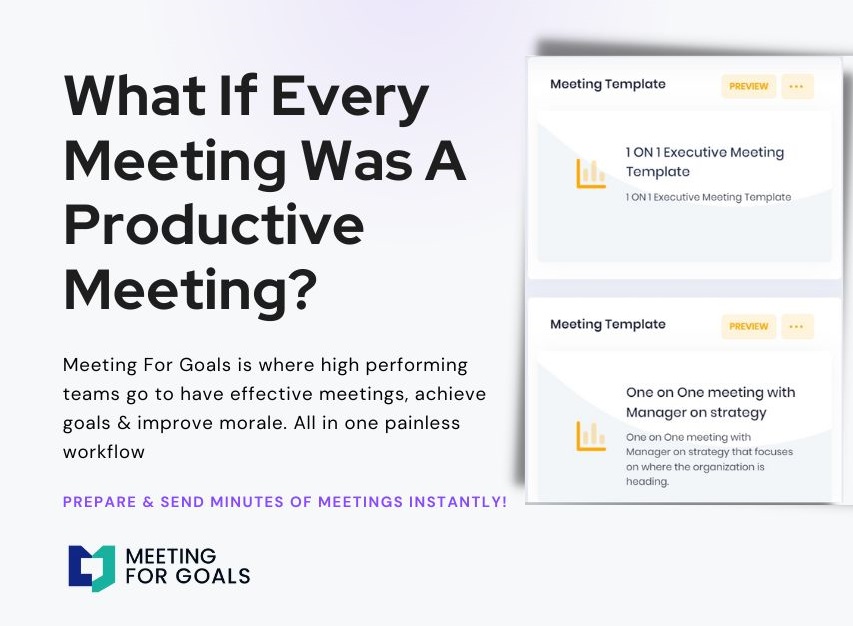
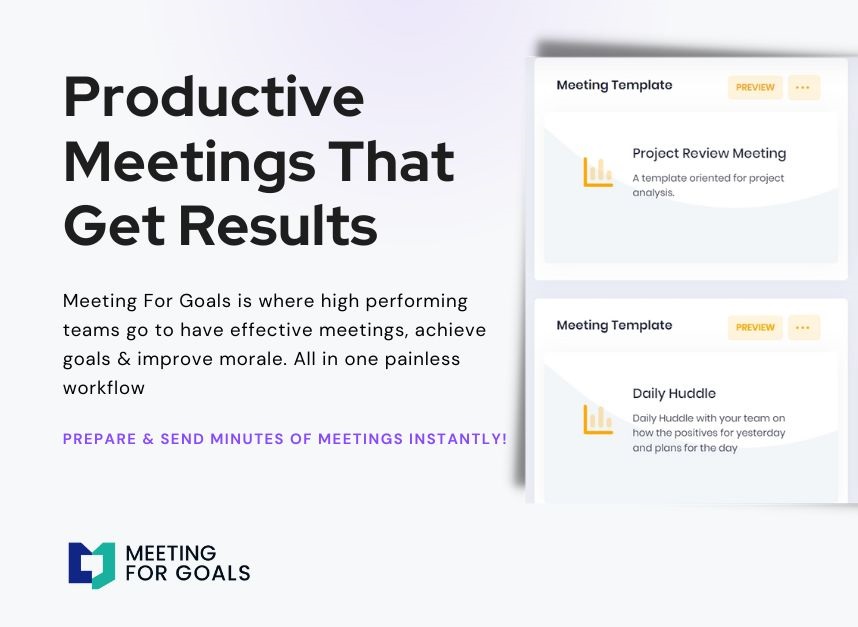
If you’re new to structured meetings, check out our free meeting templates to get started: https://meetingforgoals.com/meeting_templates.
Adding an Agenda
How to add an agenda instantly on Meeting For Goals
Understanding Action Items
Let’s get clear on what action items are—and what they’re not.
A. What Makes an Action Item?
An action item is a clearly defined task that comes out of a meeting. It includes:
- A specific action
- A person responsible
- A due date
It’s not a vague idea like “Let’s work on this.” Instead, it’s something like: “Alex to prepare the Q3 budget forecast by Friday, June 21.”
B. What Makes a Good Action Item?
Effective action items share a few key traits:
- Clarity – The task should be easy to understand.
- Specificity – Include details like tools, deliverables, or steps.
- Accountability – Assign it to one person, not a group.
- Deadline – Every task needs a due date.
These traits ensure that tasks don’t fall through the cracks.
C. Examples from Real Meetings
Want to see action items in action? Here are a few examples:
- Marketing: “Lena to design the Q4 landing page by October 5.”
- Sales: “Tom to follow up with three high-value leads by Wednesday.”
- Product: “Priya to collect user feedback on the beta release by next Monday.”
These tasks are specific, time-bound, and assigned to one person. That’s how you get things done.
Want more help running effective meetings? Visit https://meetingforgoals.com for tips and tools.
Why Action Items Matter in Meetings
Action items aren’t just helpful—they’re essential for turning meetings into progress.
A. Turning Talk into Results
Every meeting has a goal. Maybe it’s to make a decision, solve a problem, or align on a strategy. Action items are how you make sure those goals are achieved after the meeting ends.
They capture the “what’s next” and keep the momentum going.
B. Creating Ownership and Accountability
When each task is assigned to a specific person, there’s no confusion about who’s responsible. That kind of clarity is gold—especially in mid-sized companies where roles can overlap.
Plus, when you track action items over time, they become a record of accountability. You can see who’s delivering, what’s overdue, and what’s been completed.
According to a Harvard Business Review article, accountability is one of the key drivers of high-performing teams. Action items make it easy to build that culture.
C. Making Meetings More Efficient
When everyone knows action items will be assigned, meetings stay focused. Off-topic conversations are minimized, and people come prepared.
Reviewing last week’s action items at the start of each meeting also keeps things on track. It reminds everyone of ongoing goals and avoids rehashing old decisions.
In short, action items help you get more done in less time.
Best Practices for Creating Action Items
Creating effective action items isn’t hard—but it does take some strategy.
A. Use Clear, Action-Oriented Language
Start each action item with a verb: “Send,” “Create,” “Review,” “Schedule.” Avoid vague phrases like “Look into” or “Think about.”
Bad: “Discuss marketing ideas.”
Better: “Tina to draft three Q4 marketing ideas and share by Friday.”
B. Always Assign a Deadline
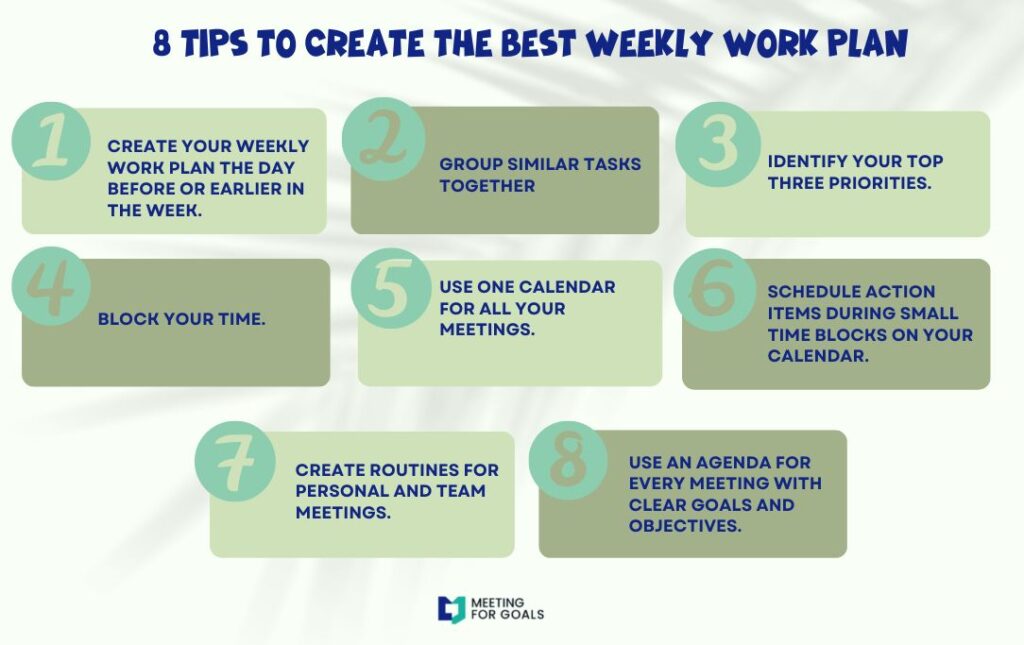
A task without a deadline is just a suggestion. Set realistic due dates during the meeting. This helps with prioritization and follow-up.
C. Assign to One Person
If everyone is responsible, no one is. Assign each task to one person, even if others are helping. That way, someone is clearly in charge.
D. Track and Follow Up
This is where many teams fall short. Assigning action items is just the start—you also need to track them.
Here’s how:
- Start each meeting by reviewing outstanding tasks.
- Use a centralized tool like Meeting For Goals to track everything in one place.
- Send reminders for upcoming or overdue items.
With Meeting For Goals, you can automate all of this. Tasks are tracked, deadlines are synced, and reminders go out automatically.
E. Document During the Meeting
Don’t wait until after the meeting to write things down. Capture action items as they’re discussed so nothing is missed.
Pro tip: Appoint a “scribe” or use software that logs action items in real time.
How Meeting For Goals Makes Action Items Easy
Understanding action items is one thing. Managing them is another. That’s where Meeting For Goals comes in.
A. Key Features That Keep You on Track
Meeting For Goals is designed to make meetings more productive and results-driven. Here’s how:
- Automatic action item tracking during meetings
- Assign tasks with deadlines and owners
- Calendar and task management integration
- Real-time dashboards for progress tracking
These features ensure that every meeting ends with a plan—and that plan gets executed.
B. Built-In Accountability
After the meeting, action items are automatically shared with attendees. Reminders are sent before deadlines. Managers can see what’s done and what’s still pending.
This visibility is a game-changer. You don’t need to chase people down or wonder what’s happening. It’s all right there.
C. Continuous Improvement with Recurring Meetings
Meeting For Goals supports recurring meetings, so you can easily revisit action items and track long-term progress.
This creates a feedback loop that helps your team get better over time.
D. Results from Real Teams
Companies that use Meeting For Goals report big improvements.
A VP at a 60-person SaaS company shared:
“Before Meeting For Goals, we had great ideas but poor follow-through. Now, every meeting ends with clear action items. We’ve cut our meeting time by 30% and improved project timelines.”
These results are common. When you combine structure with the right tools, everything gets easier.
Action Items in Different Types of Meetings
Action items aren’t just for leadership meetings. They work across all departments.
A. Sales Meetings
Sales teams move fast. Action items help reps follow up with leads, update the CRM, and prep for demos.
Example: “Mark to update lead status in Salesforce and send follow-up email by EOD.”
B. Marketing Meetings
Marketing plans involve lots of moving parts. Action items keep campaigns on track.
Example: “Anna to finalize blog calendar for August and submit for review by July 25.”
C. Product and Engineering Meetings
From bug fixes to feature rollouts, product teams thrive on clear next steps.
Example: “Dev team to deploy patch 1.2.4 by Thursday after QA approval.”
D. Strategy and Leadership Meetings
At the executive level, action items help turn strategy into execution.
Example: “CEO to draft investor update and circulate for feedback by next Monday.”
No matter your role, action items help you move from ideas to outcomes.
External Insights on Meeting Productivity
Want to know how important effective meetings are? A study by Atlassian found that the average employee attends 62 meetings per month—and considers half of them a waste of time.
That’s over 30 unproductive meetings every month.
Another report from McKinsey shows that companies with strong execution practices are 3x more likely to outperform their peers. Action items are a big part of that.
These stats highlight why tools like Meeting For Goals are so valuable. They help you make every meeting matter.
Conclusion
Action items are the secret weapon behind productive meetings. They bring clarity, accountability, and momentum to your team’s workflow.
In this guide, we’ve explored what action items are, how to create them, and how Meeting For Goals helps you manage them effortlessly. Whether you’re leading a sales team, managing a product launch, or steering company strategy, action items help you get results.
If you’re ready to take your meetings to the next level, don’t wait.
Start now by signing up at https://app.meetingforgoals.com/TenantRegistration/Register and experience how structured meetings can transform your team.
Want to jumpstart your next meeting? Explore our free meeting templates at https://meetingforgoals.com/meeting_templates.
And for more tips, tools, and insights, visit our homepage at https://meetingforgoals.com.
Make your next meeting count—one action item at a time.