
The Ultimate Meeting Agenda Template: How High-Performing Teams Run Productive Meetings
In today’s fast-paced business world, meetings can either be a strategic advantage or a time-wasting liability. For high-performing teams and forward-thinking leaders, the difference often lies in one simple yet powerful tool: a well-structured meeting agenda. In this guide, we’ll walk you through a comprehensive meeting agenda template, show you how to customize it for your team, and explain how tools like Meeting For Goals can streamline meeting management, boost accountability, and align every discussion with your company’s objectives.
I. Introduction
A. Why Effective Meetings Matter
In companies with 40 to 70 employees, every minute matters. Leaders—whether Directors, VPs, or C-suite executives—are constantly balancing strategic planning, team management, and performance metrics. Meetings can either be a powerful tool for alignment or an energy drain that derails momentum.
Done right, meetings are essential for decision-making, collaboration, and moving projects forward. But without structure, they often turn into long, unproductive discussions. In fact, a Harvard Business Review study found that 71% of managers believe meetings are inefficient and unproductive. That’s a huge problem for companies aiming to stay competitive.
B. What This Blog Will Teach You
This blog is here to help you fix that. We’ll walk you through a powerful meeting agenda template that can transform how your team collaborates. Whether you’re leading weekly check-ins, strategic planning sessions, or project updates, this template—when paired with Meeting For Goals—will help you run meetings that are focused, productive, and tied directly to your company’s goals.
Want to start using proven templates right away? Check out our free meeting templates here: https://meetingforgoals.com/meeting_templates.
By the end of this article, you’ll know how to run meetings that are shorter, more focused, and actually move the needle.
2 Minute Video
Watch a 2 minute demo of our meeting management software in action.
II. Understanding the Essential Components of a Meeting Agenda
A. What Makes a Good Agenda?
A meeting agenda isn’t just a checklist—it’s your game plan. It sets expectations, outlines responsibilities, and keeps everyone on track. Especially for busy leaders, a clear agenda ensures that no one walks into a meeting wondering, “Why am I here?”
A good agenda helps participants prepare, stay focused, and leave the meeting with clear action items. Let’s explore the key elements that make an agenda truly effective.
B. Key Components You Should Include
- Meeting Title: Be specific. Instead of “Team Meeting,” use something like “Q2 Marketing Strategy – Weekly Sync.” A clear title immediately tells participants what the meeting is about.
- Date and Time: Always include the full date and time, especially for remote or global teams. Don’t forget time zones!
- Attendees: List who’s attending and what their roles are. This helps everyone understand who’s responsible for what and ensures the right people are in the room.
- Purpose/Goals: What’s the meeting trying to achieve? Whether it’s decision-making, brainstorming, or reviewing progress, make the objective crystal clear.
- Topics & Discussion Points: Break the agenda into specific topics. Assign time limits and designate a discussion lead for each item. This keeps the conversation balanced and on track.
- Action Items/Next Steps: Summarize decisions and assign tasks with deadlines. This is how meetings turn into real results.
When you include these elements consistently, you’ll turn meetings into productive, goal-driven sessions that support your company’s success.
Adding an Agenda
How to add an agenda instantly on Meeting For Goals.
III. Customizing the Meeting Agenda Template
A. Tailor It to Fit Your Team
Not every team works the same way. Your marketing team might need more time for brainstorming, while your operations team might prefer a quick, structured update. That’s why customization is key.
Start by understanding how your team communicates. Are your meetings collaborative or directive? Do you need space for open discussion or a fast-paced status review?
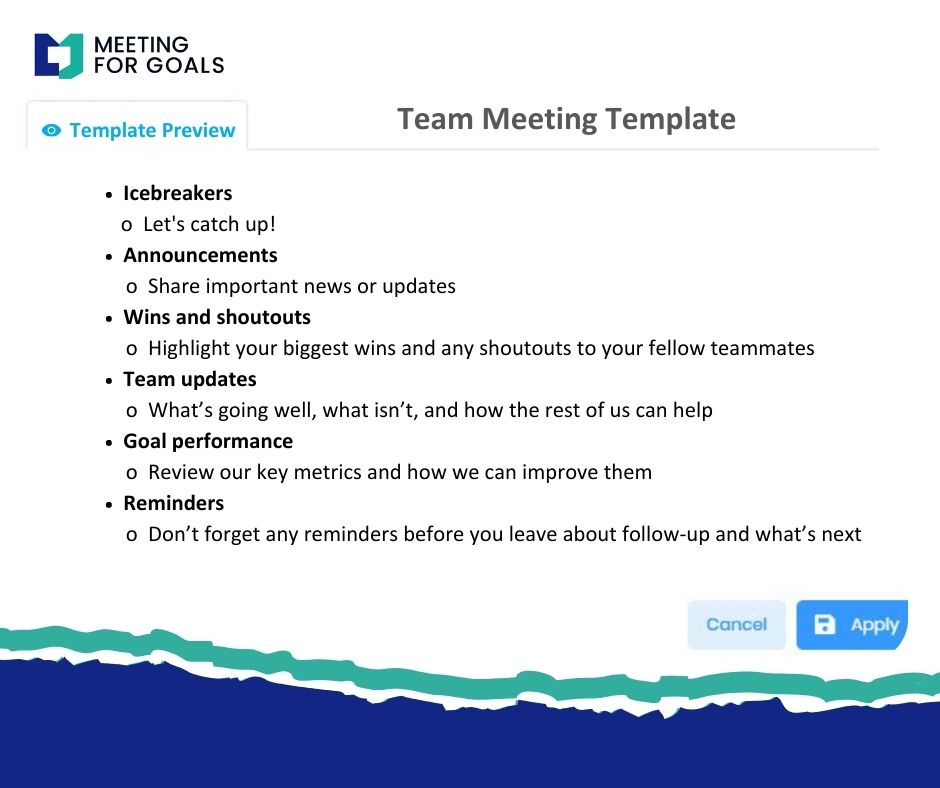
With Meeting For Goals, you can create and save customized templates for different types of meetings—so you’re not starting from scratch every time.
Want to see what great agendas look like? Explore our free meeting templates here: https://meetingforgoals.com/meeting_templates.
B. Real-World Agenda Examples
- Weekly Team Sync
- Title: Weekly Product Team Sync
- Purpose: Review progress, address blockers, align on weekly goals
- Topics:
- Sprint updates (10 min)
- Blockers (5 min)
- Goals for the week (10 min)
- Action items review (5 min)
- Project Update Meeting
- Title: Q3 Website Redesign Progress Review
- Purpose: Evaluate project milestones and adjust timelines
- Topics:
- Milestone status (15 min)
- Resource allocation (10 min)
- Risks and mitigation (10 min)
- Next steps (5 min)
- Executive Strategy Session
- Title: Annual Strategic Planning – Leadership Offsite
- Purpose: Define company goals and allocate resources for the next fiscal year
- Topics:
- Review of current performance metrics (15 min)
- Strategic priorities discussion (30 min)
- Budget and resource planning (20 min)
- Action plan and ownership (15 min)
Each of these templates can be saved and reused in Meeting For Goals, saving you time and ensuring consistency.
IV. Best Practices for Using a Meeting Agenda
A. Share the Agenda Early
One of the most common mistakes? Sending the agenda too late—or not at all. Share it at least 24 hours in advance. For executive meetings, 48 hours is even better.
This gives participants time to prepare, review materials, and come ready to contribute. With Meeting For Goals, you can automatically distribute agendas and even track who’s reviewed them.
B. Keep It Tight and Focused
Don’t try to cover too much in one meeting. A focused agenda leads to a focused conversation. Prioritize the most important topics and assign time blocks to each.
If something doesn’t align with the meeting’s goal, move it to a future meeting or handle it asynchronously.
C. Make It Interactive
Meetings shouldn’t be monologues. Assign roles—who’s leading each topic? Who’s taking notes? Who’s following up?
Encourage participation by adding discussion questions under each topic. This invites input and makes team members feel heard.
With Meeting For Goals, you can assign agenda items to specific team members and track their follow-through, boosting both engagement and accountability.
V. Leveraging Meeting Management Software
A. Why Software Makes a Difference
A good agenda is powerful. But when you combine it with the right tools, your meetings go from good to great.
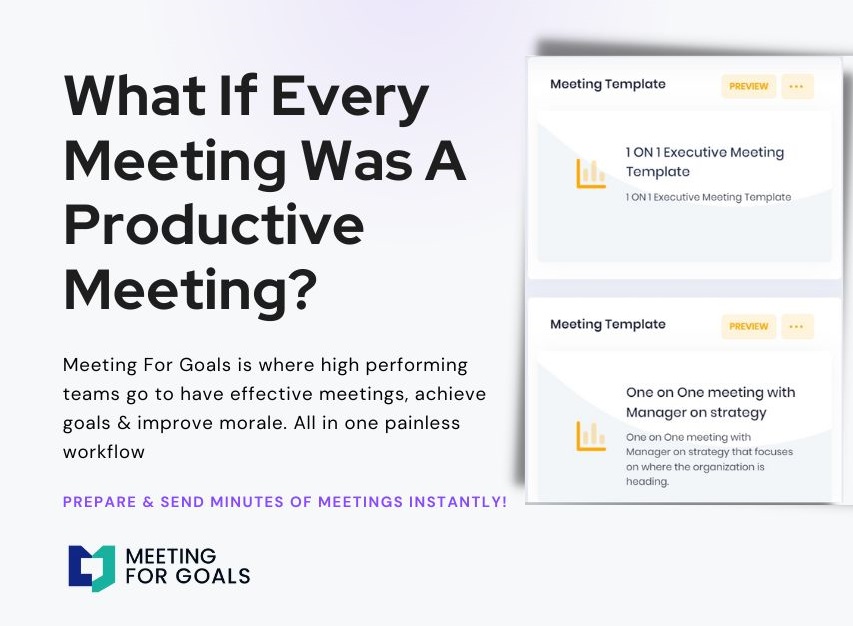
Meeting For Goals is built for high-performing teams that want to run efficient, goal-aligned meetings. It helps you:
- Align meetings with company objectives
- Automate agenda creation and sharing
- Track action items and follow-ups
- Analyze meeting effectiveness
- Integrate with tools you already use (Slack, Google Calendar, etc.)
This kind of all-in-one solution eliminates scattered notes and forgotten tasks—so your team can focus on what matters.
B. What to Look for in Meeting Software
When choosing a meeting management tool, make sure it offers:
- Customizable agenda templates
- Goal alignment features
- Real-time collaboration
- Task tracking and accountability
- Meeting analytics
- Seamless integrations
Meeting For Goals checks all these boxes—and more. For teams of 40 to 70 employees, where agility and alignment are critical, it’s a game-changer.
Ready to give it a try? Sign up here: https://app.meetingforgoals.com/TenantRegistration/Register.
VI. Conclusion
A. Why This Matters
Meetings are where decisions are made, strategies are aligned, and teams move forward. But without structure, they can waste time and lower morale.
A well-crafted meeting agenda ensures that every meeting has a purpose, stays on track, and leads to real outcomes. From understanding the essential components to customizing templates, to using tools like Meeting For Goals—you now have a roadmap to run meetings that are shorter, sharper, and more strategic.
B. Take the Next Step
Want to make your meetings more productive starting today? Use the agenda template outlined in this blog to bring structure and clarity to your next meeting.
Then take it a step further—explore how Meeting For Goals can help you streamline your workflow, align meetings with company goals, and build a culture of execution and accountability.
Start now by visiting https://meetingforgoals.com or sign up for free at https://app.meetingforgoals.com/TenantRegistration/Register.
External References
– Harvard Business Review: “Stop the Meeting Madness” – https://hbr.org/2017/07/stop-the-meeting-madness
– Atlassian: “State of Teams Report” – https://www.atlassian.com/blog/teamwork/state-of-teams-report
Internal Links Used
– https://app.meetingforgoals.com/TenantRegistration/Register
– https://meetingforgoals.com/meeting_templates
– https://meetingforgoals.com