
What is Inclusive Leadership? How Inclusive Leaders Drive Better Meetings and Team Performance
In today’s fast-changing workplace, **inclusive leadership** isn’t just a buzzword—it’s essential. As organizations aim to boost **innovation**, **engagement**, and **productivity**, leaders must evolve to meet the needs of a diverse workforce. Inclusive leadership ensures that every voice is heard, valued, and empowered—especially in meetings where collaboration and decision-making happen. At Meeting For Goals, we believe inclusive leadership is the foundation for high-performing teams and effective meetings. In this article, we’ll break down what inclusive leadership really means, why it matters, and how you can bring it into your meetings to drive better outcomes.
Introduction
Today’s teams are more diverse than ever. With employees coming from different cultures, backgrounds, and experiences, leaders need to do more than just manage—they need to lead inclusively.
**Inclusive leadership** is about creating a space where everyone feels safe to speak up, contribute, and thrive. It’s not just about hiring a diverse team—it’s about making sure that diversity is heard and supported. When people feel included, they’re more engaged, creative, and productive.
Why does this matter in meetings? Because meetings are where the magic happens. They’re where ideas are shared, decisions are made, and strategies are set. If only a few voices dominate, valuable perspectives get lost. But when leaders run inclusive meetings, everyone has a chance to contribute—and that leads to better results.
At Meeting For Goals, we’ve built tools that help leaders foster inclusivity in every meeting. Whether you’re a Director, VP, or C-suite executive, our platform helps you run meetings that are structured, goal-driven, and inclusive.
👉 Want to start leading more inclusive meetings? Sign up now at https://app.meetingforgoals.com/TenantRegistration/Register
Let’s dive into the core principles of inclusive leadership and how they can transform your meetings and team performance.
2 Minute Video
Watch a 2 minute demo of our meeting management software in action
Section 1: The Core Principles of Inclusive Leadership
**Inclusive leadership** is grounded in three key principles: **diversity**, **equity**, and **belonging**. These aren’t just buzzwords—they’re the building blocks of a strong, inclusive culture.
- Diversity means having a mix of people with different backgrounds, experiences, and perspectives. This includes race, gender, age, culture, and even how people think. A diverse team brings fresh ideas and different ways to solve problems.
- Equity is about fairness. It means giving people the support they need to succeed—not treating everyone the same, but giving everyone what they need. For example, some team members may need extra coaching or flexible schedules. Inclusive leaders recognize this and adjust accordingly.
- Belonging is the feeling that you’re accepted and valued. When people feel like they belong, they’re more likely to speak up, share ideas, and contribute fully. This is especially important in meetings, where participation drives collaboration.
Empathy is another core trait of inclusive leaders. Empathetic leaders listen to understand, not just to respond. They care about how their team members feel and take those feelings into account when making decisions.
Active listening is a powerful tool. It means focusing on the speaker, asking clarifying questions, and responding thoughtfully. In meetings, this helps quieter voices get heard and ensures that everyone feels included.
Inclusive decision-making is also key. Rather than making top-down decisions, inclusive leaders gather input from the team. They ask questions like:
- “How will this affect everyone?”
- “Who hasn’t had a chance to weigh in?”
At Meeting For Goals, our platform helps leaders implement these principles by offering features like structured agendas, role assignments, and feedback tools. These features ensure that everyone has a voice and that meetings drive real outcomes.
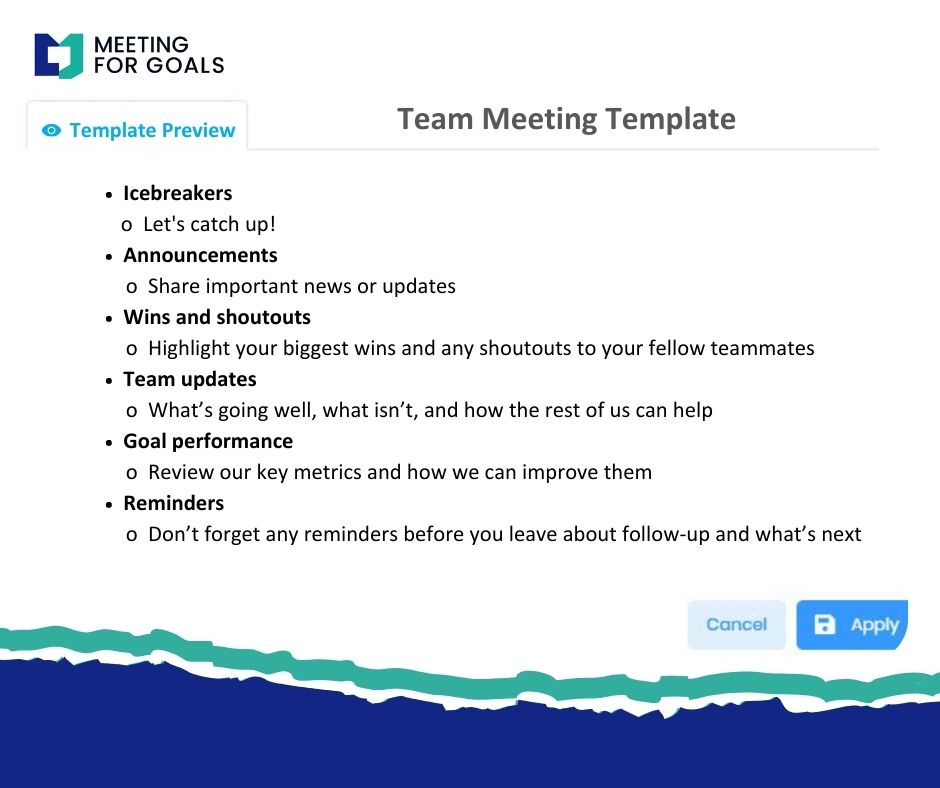
👉 Explore our free meeting templates to help you run inclusive, productive meetings: https://meetingforgoals.com/meeting_templates
Adding an Agenda
How to add an agenda instantly on Meeting For Goals
Section 2: The Benefits of Inclusive Leadership
**Inclusive leadership** isn’t just the right thing to do—it’s a smart business move. Companies that embrace inclusivity see better performance, happier employees, and more innovation.
- Boosted Team Performance and Innovation: When people feel safe to share their ideas, creativity flourishes. Diverse teams bring different viewpoints, leading to more innovative solutions. Inclusive leaders create an environment where it’s okay to take risks and suggest bold ideas. According to a study by Deloitte, inclusive teams are 8 times more likely to achieve better business outcomes.
- Higher Employee Engagement: Employees who feel included are more engaged. They care more about their work and are more committed to the team’s success. Inclusive leaders make people feel seen and appreciated, boosting morale and motivation.
- Reduced Turnover: When people feel excluded or undervalued, they’re more likely to leave. High turnover is expensive and disruptive. Inclusive leadership helps reduce turnover by creating a positive, respectful workplace culture.
- Better Meetings: Inclusive leaders run better meetings. They make sure everyone has a chance to speak, keep discussions focused, and align meetings with company goals.
- Stronger Team Morale: When everyone feels like they belong, team morale improves. People trust each other more, collaborate better, and support each other’s success.
Want to see how inclusive leadership can improve your team’s performance? Visit https://meetingforgoals.com to learn more.
Section 3: Characteristics of Inclusive Leaders
**Inclusive leaders** don’t just talk about inclusion—they live it. Here are the traits that set them apart and how these traits show up in meetings.
- Humility: Inclusive leaders don’t pretend to have all the answers. They admit when they’re wrong and are open to learning from others. In meetings, humble leaders ask for feedback and welcome different viewpoints.
- Self-Awareness: Great leaders know their strengths—and their blind spots. They regularly reflect on their actions and how they affect others. Self-aware leaders are more likely to recognize bias and take steps to correct it.
- Openness: Inclusive leaders are open to new ideas and different perspectives. They encourage dissent, leading to richer discussions and better decisions.
- Cultural Competence: Today’s teams are global. Inclusive leaders understand and respect cultural differences. They adjust their communication style to connect with everyone on the team.
- Empathy and Emotional Intelligence: Inclusive leaders care about their people. They listen with empathy, respond with compassion, and build strong relationships. This emotional intelligence helps them navigate team dynamics and resolve conflicts.
Examples in Action: An inclusive leader might rotate meeting roles to give everyone a chance to lead. They might use anonymous polls to gather honest feedback or set ground rules that encourage respectful dialogue.
With Meeting For Goals, leaders can assign roles, track action items, and collect feedback—all in one place. This makes it easy to lead inclusive, high-impact meetings.
Section 4: Developing Inclusive Leadership Skills
**Inclusive leadership** is a skill—and like any skill, it can be developed. Here’s how you and your organization can build inclusive leadership capabilities.
- Offer Training and Education: Regular training on topics like unconscious bias, inclusive communication, and emotional intelligence is essential. These sessions help leaders recognize their blind spots and learn how to lead more inclusively.
- Encourage Self-Reflection: Leaders should take time to reflect on their behavior and decisions. Tools like leadership journals, coaching, and 360-degree feedback can help.
- Provide Mentorship and Peer Learning: Pairing leaders with inclusive mentors can accelerate their growth. Peer learning groups also create space for sharing challenges, strategies, and successes.
- Use Feedback Loops: Inclusive leaders ask for feedback—and act on it. Anonymous surveys, one-on-one check-ins, and open forums can provide honest input.
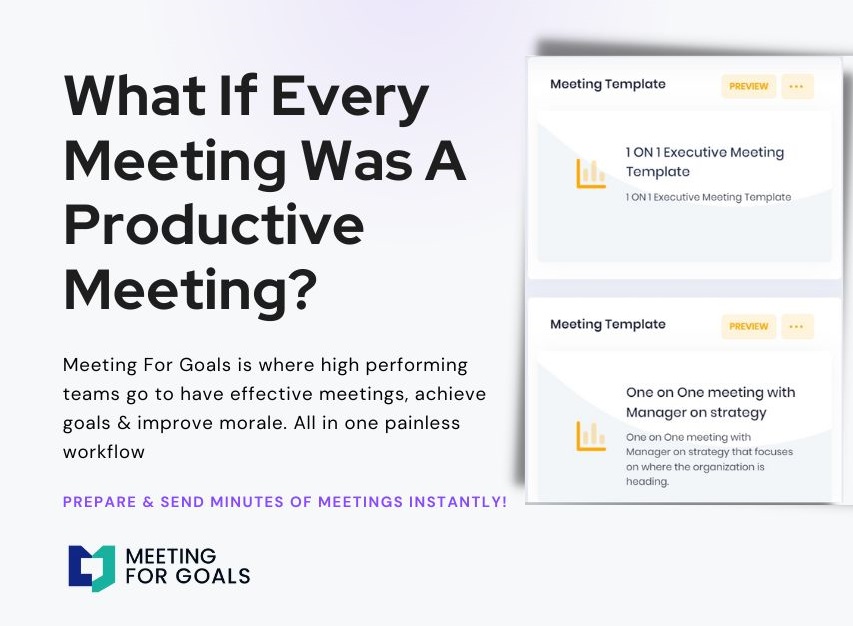
- Leverage Technology: Tools like Meeting For Goals support inclusive leadership by making meetings more structured, transparent, and participatory. Features like agenda templates, role assignments, and outcome tracking help leaders stay organized and inclusive.
By embedding inclusive practices into leadership development programs, companies can build a pipeline of leaders ready to lead diverse teams effectively.
Section 5: Implementing Inclusive Leadership in Meetings
Meetings are a great place to practice inclusive leadership. Here’s how to make your meetings more inclusive and productive.
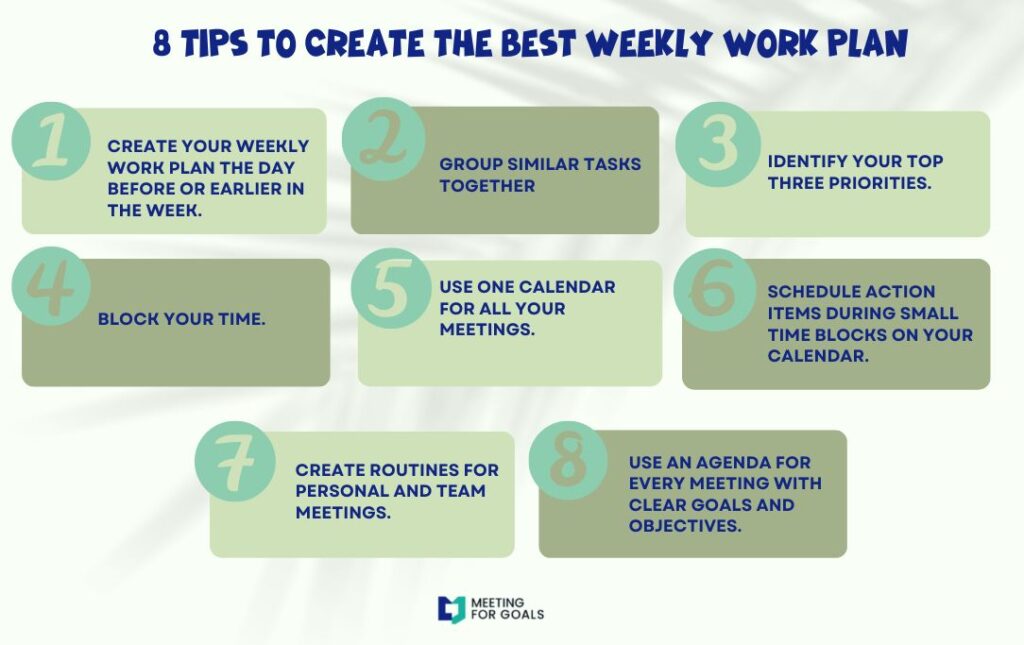
- Start with a Clear Agenda: A clear agenda keeps meetings focused and helps everyone prepare. It also sets expectations and gives quieter team members a chance to contribute.
- Rotate Meeting Roles: Assign roles like facilitator, timekeeper, and note-taker—and rotate them regularly. This gives everyone a chance to lead and keeps meetings dynamic.
- Encourage Equal Participation: Use tools like round-robin sharing, breakout groups, or anonymous polls to make sure everyone’s voice is heard.
- Use Inclusive Language: Avoid jargon or references that may not be understood by everyone. Use clear, respectful language that includes everyone.
- Follow Up and Provide Feedback: End meetings with a summary of decisions, action items, and next steps. Follow up to ensure accountability and ask for feedback on how the meeting went.
- Use Meeting For Goals Software: Our platform makes it easy to run inclusive, goal-oriented meetings. From setting the agenda to tracking outcomes, Meeting For Goals helps you stay organized and inclusive.
👉 Ready to try it? Sign up for a free trial today at https://app.meetingforgoals.com/TenantRegistration/Register
Conclusion
**Inclusive leadership** isn’t just good for people—it’s good for business. By embracing **diversity**, **equity**, and **belonging**, leaders can build stronger teams, run better meetings, and drive better results.
In meetings, inclusive leadership leads to more engagement, better decisions, and a more aligned team. With tools like Meeting For Goals, it’s easier than ever to lead inclusively and effectively.
As a leader, your style sets the tone for your team. By adopting inclusive practices, you can unlock your team’s full potential and create a culture where everyone thrives.
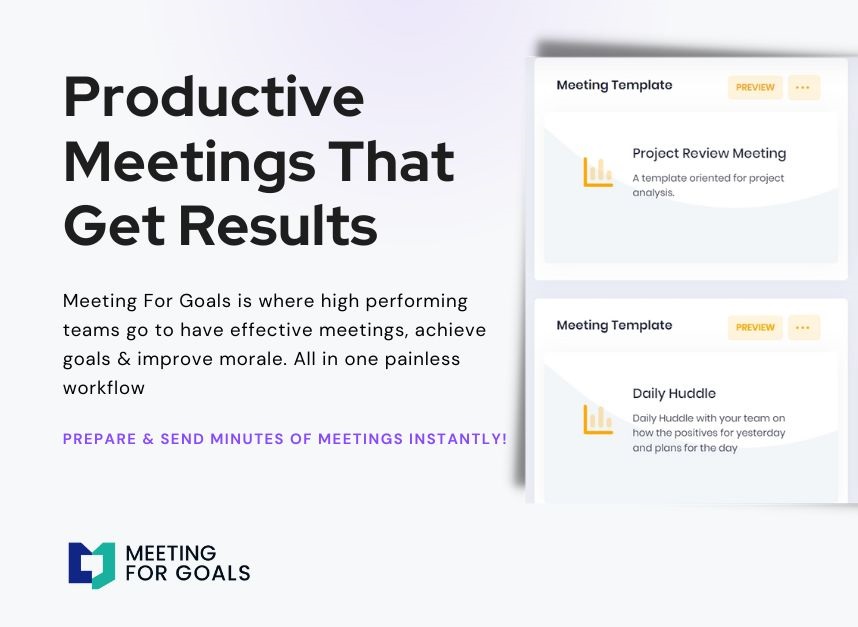
👉 Start your journey to inclusive leadership today. Explore our templates at https://meetingforgoals.com/meeting_templates or visit https://meetingforgoals.com to learn more.
Let’s build more inclusive, effective teams—one meeting at a time.