
How to Be a Great Manager
Excerpt:
Being a great manager in today’s fast-paced, goal-oriented business environment is more than just overseeing tasks and approving time-off requests. It means leading with clarity, empowering your team, and creating a culture where accountability and growth are the norm. For companies with 40–70 employees, where every role has a significant impact, effective management can be the difference between thriving and merely surviving. In this comprehensive guide, we’ll explore how to be a great manager by mastering communication, delegation, accountability, team development, and culture-building—while leveraging tools like MeetingforGoals.com to make every meeting and initiative more productive and aligned with company goals.
Start your journey to better meetings and stronger leadership by signing up for MeetingforGoals: https://app.meetingforgoals.com/TenantRegistration/Register. Also, check out our free meeting templates to get started: https://meetingforgoals.com/meeting_templates.
I. Introduction
A. Importance of Great Management
Great management is the secret sauce behind thriving teams and successful companies. Especially in organizations with 40–70 employees, where every person counts, the role of a manager becomes even more vital. You’re not just a supervisor—you’re a coach, a strategist, and a motivator.
When management is strong, teams are more aligned, more productive, and more engaged. Goals are hit faster, and people are happier. But when management falls short, you’ll see the signs:
- Miscommunication
- Low morale
- High turnover
- Missed opportunities
B. Overview of Key Elements
To become a truly great manager, you need to master a few core skills. In this guide, we’ll cover six essential areas:
- Effective Communication
- Delegation Done Right
- Accountability and Ownership
- Team Development and Growth
- Building a Strong Team Culture
- Using MeetingforGoals.com to Maximize Meetings
These areas are deeply connected. Together, they form the foundation of a high-performing, motivated, and goal-driven team.
2 Minute Video
Watch a 2 minute demo of our meeting management software in action
II. Effective Communication
A. Why Clear Communication Matters
Communication is the heartbeat of any team. Without it, even the best strategies fall apart. In mid-sized companies, where teams are small enough to know each other but big enough to need structure, communication becomes a make-or-break skill.
Clear communication builds trust. It eliminates confusion. It helps everyone stay on the same page, working toward a common goal. When your team knows what’s expected and feels heard, they’re more likely to perform at their best.
B. Simple Strategies for Better Communication
Here’s how to improve the way you communicate:
- Active Listening: Don’t just wait for your turn to talk. Listen to understand. Ask clarifying questions and repeat back what you’ve heard to confirm.
- Constructive Feedback: Be specific. Focus on actions, not personalities. Give feedback regularly, not just during reviews.
- Use the Right Tools: Platforms like Slack, Zoom, and Microsoft Teams help keep conversations flowing. But don’t forget the power of a good face-to-face (or video) check-in.
- Set Expectations: Define how and when your team communicates. Establish norms around response times, meeting etiquette, and updates.
C. Make Meetings Count
Meetings shouldn’t feel like a waste of time. Done right, they’re your best tool for alignment and collaboration.
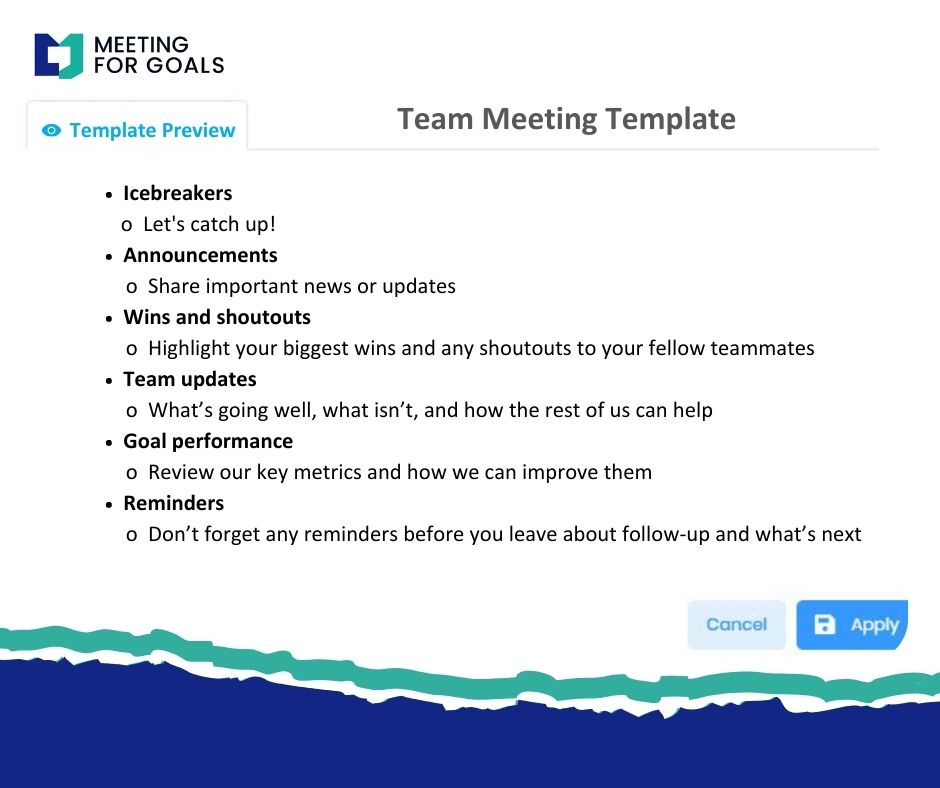
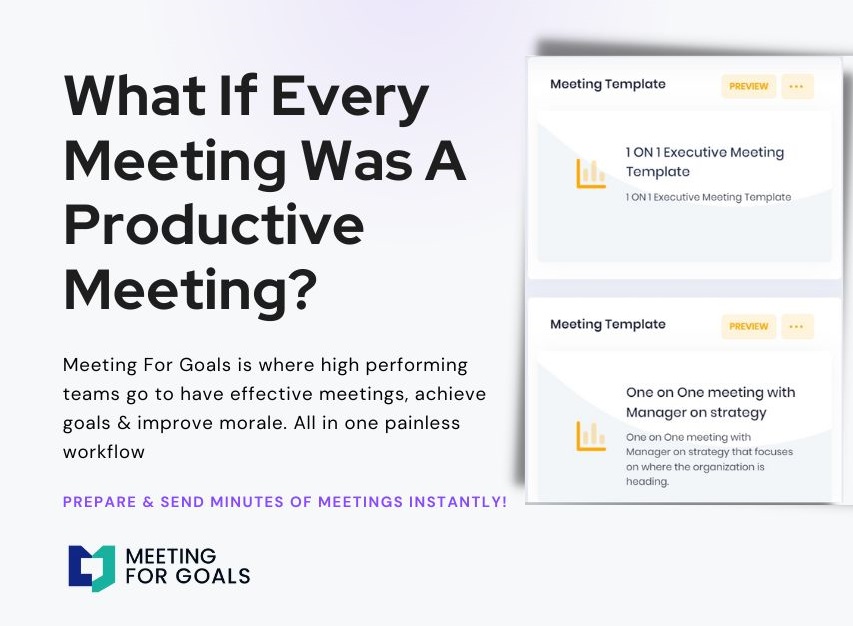
Use regular team meetings to check in, solve problems, and brainstorm. But keep them focused and intentional. That’s where MeetingforGoals.com comes in. With features like shared agendas, goal tracking, and action item logs, you’ll turn every meeting into a strategic session—not just another calendar filler.
Want to see how it works? Explore our meeting templates here: https://meetingforgoals.com/meeting_templates.
Adding an Agenda
How to add an agenda instantly on Meeting For Goals
III. Mastering the Art of Delegation
A. Why Delegation is a Superpower
Trying to do everything yourself? That’s a fast track to burnout. Delegation is about more than handing off tasks—it’s about empowering your team, building trust, and scaling your leadership.
In growing companies, managers often juggle multiple responsibilities. Delegating helps you stay focused on the big picture while giving your team the chance to grow and shine.
B. How to Delegate Effectively
Here are some delegation tips that actually work:
- Know Your Team: Understand each person’s strengths, interests, and career goals. Assign tasks that fit their skill set and stretch their abilities.
- Be Clear: Explain what needs to be done, why it matters, and when it’s due. Don’t assume people will “figure it out.”
- Offer Support: Provide resources, tools, and guidance. Be available for questions—but don’t hover.
- Follow Up: Check in on progress, offer feedback, and celebrate completion.
C. Tools That Make Delegation Easier
MeetingforGoals.com makes delegation seamless. During your meetings, you can assign tasks, set deadlines, and track progress—all in one place. Each task is tied to a specific goal and meeting, so nothing falls through the cracks.
This not only saves time but builds a culture of ownership and follow-through.
IV. Promoting Accountability and Responsibility
A. Why Accountability Matters
Accountability is what turns good teams into great ones. When everyone owns their work and follows through on commitments, things get done—faster and better.
In companies with 40–70 employees, every person’s performance has a big impact. That’s why managers must create a culture where accountability is the norm.
B. How to Build Accountability Into Your Team
Here’s how to make accountability part of your team’s DNA:
- Set Clear Goals: Use SMART goals—Specific, Measurable, Achievable, Relevant, and Time-bound. Everyone should know what success looks like.
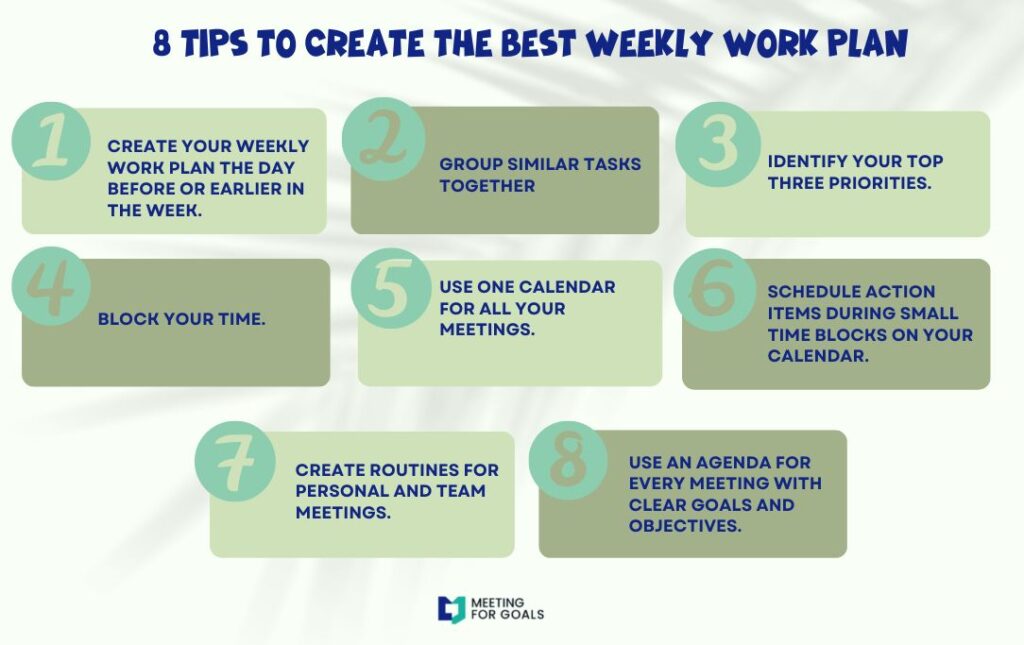
- Check In Regularly: Weekly one-on-ones and team meetings keep projects on track and allow time to address roadblocks.
- Make Progress Visible: Use dashboards or performance scorecards. When progress is transparent, motivation increases.
- Celebrate and Reflect: Recognize wins and talk openly about misses. Focus on learning, not blame.
C. Use Tech to Reinforce Accountability
MeetingforGoals.com integrates accountability into your workflow. Assign tasks, link them to goals, and set reminders—all from within your meetings. You can even track progress in real-time, so nothing gets lost.
This structured approach helps your team stay aligned, motivated, and responsible.
Want to learn more about our platform? Visit https://meetingforgoals.com.
V. Investing in Team Development
A. Why Team Growth is Non-Negotiable
Your team’s growth is your company’s growth. When employees learn new skills, take on new challenges, and feel supported in their careers, they’re more engaged and productive.
In competitive industries, companies that invest in development have a serious edge:
- Retention improves.
- Innovation increases.
- Your team becomes more resilient and adaptable.
B. Practical Ways to Develop Your Team
Here are some simple but powerful development strategies:
- Offer Learning Opportunities: Provide access to online courses, industry certifications, and workshops.
- Encourage Mentorship: Pair junior team members with experienced mentors. It builds relationships and accelerates learning.
- Use Performance Reviews Wisely: Go beyond ratings. Talk about goals, strengths, and growth opportunities.
- Assign Stretch Projects: Let team members lead initiatives or take on roles outside their comfort zone.
C. Create a Culture of Growth
Development isn’t just about formal training. It’s about creating an environment where curiosity, initiative, and experimentation are encouraged.
Support your team’s growth by giving feedback, recognizing effort, and making space for learning—even from failure. MeetingforGoals.com helps by aligning personal development goals with team objectives, tracking progress, and facilitating feedback through structured meetings.
For more on how to align development with your goals, check out our templates: https://meetingforgoals.com/meeting_templates.
VI. Fostering a Positive Team Culture
A. Why Culture is a Competitive Advantage
Culture isn’t just about perks or ping-pong tables. It’s about how your team works together, handles challenges, and supports each other.
In smaller companies, culture is felt more personally. A strong, positive culture improves:
- Engagement
- Retention
- Customer satisfaction
B. How to Build a Winning Culture
Here are a few culture-building strategies that work:
- Encourage Collaboration: Break down silos and foster teamwork across departments.
- Celebrate Wins: Recognize individual and team accomplishments regularly.
- Support Work-Life Balance: Respect boundaries, encourage time off, and offer flexibility.
- Lead with Empathy: Understand your team’s challenges and support their well-being.
C. Meetings Reflect Culture
Believe it or not, your meetings say a lot about your culture. Are they chaotic and disorganized? Or focused and inclusive?
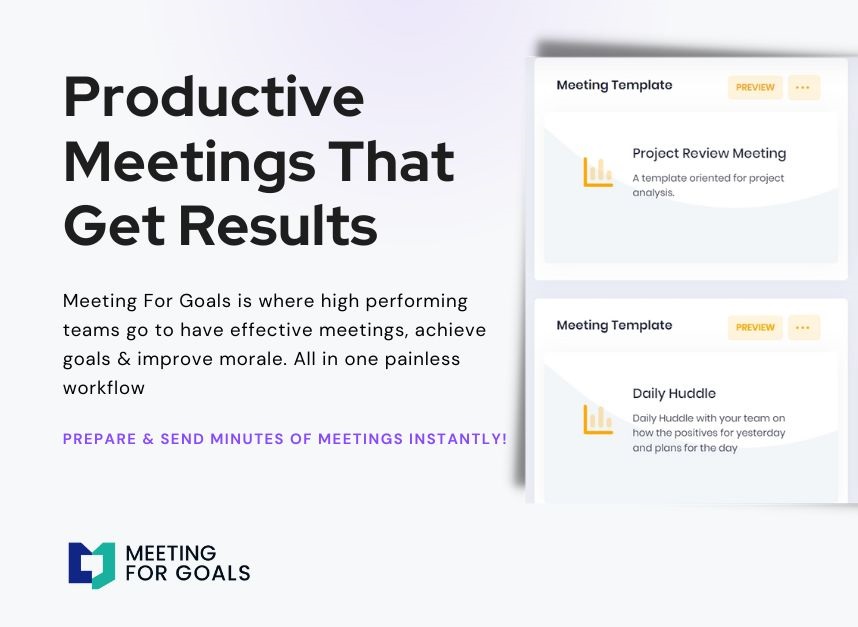
MeetingforGoals.com helps you run meetings that reflect the culture you want to build. With shared agendas, goal alignment, and follow-up tools, your meetings become productive and empowering—not frustrating.
VII. Conclusion
A. Key Takeaways
Great management is a blend of communication, delegation, accountability, development, and culture. Mastering these areas doesn’t just make you a better manager—it makes your team stronger, your company more successful, and your work more fulfilling.
B. Take the Next Step
If you’re ready to elevate your management game, start by putting these strategies into action. And don’t forget to use the right tools to support your journey.
Sign up now at https://app.meetingforgoals.com/TenantRegistration/Register and start transforming your meetings into powerful engines of progress.
C. Final Thoughts
Being a great manager is a journey—not a destination. It’s about consistently learning, adapting, and leading with purpose. With the right mindset and tools like MeetingforGoals.com, you can build a team that doesn’t just meet its goals—but exceeds them.
Ready to lead with clarity and confidence? Visit https://meetingforgoals.com and take your first step toward better meetings and better management.
External References:
- Harvard Business Review – “The Skills Leaders Need at Every Level” (https://hbr.org/2017/07/the-skills-leaders-need-at-every-level)
- Gallup – “State of the American Manager” Report (https://www.gallup.com/workplace/236441/state-american-manager-report.aspx)
Word Count: Approx. 2,130 words.