
Mom Minutes of Meeting: A Complete Guide for High-Performing Teams
I. Introduction
Let’s face it—most of us have sat through meetings that felt like a waste of time. There is often no clear direction, no follow-up, and by next week, no one remembers what was discussed. This situation can be frustrating for executives managing teams of 40 to 70 people, and it is also costly.
That’s why we’re here to talk about a game-changing tool: the Minutes of Meeting (MOM). At Meeting For Goals, we have seen how effective MOMs can completely transform a team’s productivity. They are not just notes—they are the blueprint for action.
If you are a Director, VP, or part of the C-suite, this guide will show you how to turn every meeting into a strategic opportunity. And if you’re ready to take action now, check out our free meeting templates or sign up today to streamline your meetings with ease.
2 Minute Video
Watch a 2 minute demo of our meeting management software in action
II. What Are Meeting Minutes?
Meeting minutes—or MOMs—are the written summary of what happens during a meeting. They serve as the go-to record for:
- What was discussed
- What decisions were made
- What needs to happen next
Think of them as the official memory of your team. Without them, even critical takeaways can slip through the cracks.
Formal vs. Informal Minutes
Not every meeting requires a 10-page report. Formal minutes are typically used in legal or board meetings where precision is key. Informal minutes are more common in team settings. They are flexible, to the point, and focus on results.
For mid-sized teams, informal yet structured minutes strike the right balance. They are detailed enough to track progress and simple enough to review quickly.
Core Components of Effective Meeting Minutes
Every great MOM includes:
- Meeting Title and Date: So you can easily reference it later.
- Attendees: Who was there and who wasn’t.
- Agenda Items: What was discussed.
- Key Points: The highlights of the conversation.
- Decisions Made: What was agreed upon.
- Action Items: What needs to be done, by whom, and by when.
These elements keep everyone aligned and accountable.
Why MOMs Matter
MOMs aren’t just paperwork. They are powerful tools for clarity, transparency, and execution. They reduce miscommunication, prevent duplicated work, and help your team stay focused on what matters most.
According to Harvard Business Review, 71% of senior managers said meetings are unproductive and inefficient. MOMs help fix that by making meetings actionable and trackable.
Adding an Agenda
How to add an agenda instantly on Meeting For Goals
III. The Role of Meeting Minutes in High-Performing Teams
High-performing teams don’t just talk—they execute. MOMs help make that possible by turning discussions into decisions and decisions into action.
Supporting Accountability
When action items are clearly documented with names and deadlines, there is no room for confusion. Everyone knows what is expected of them.
For example, if your marketing lead is supposed to deliver a campaign proposal by next Thursday, and that’s in the MOM, there is a clear record. It’s a simple way to build a culture of ownership.
Documenting Decisions and Avoiding Misunderstandings
Verbal agreements can be misheard or forgotten. Written minutes eliminate the guesswork.
If your product team agrees to pivot to a new feature, that decision should be documented. Later, if questions arise, you can refer back to the MOM and move forward confidently.
Guiding Future Meetings
MOMs aren’t just about the past—they help shape the future.
By reviewing past minutes, you can:
- Track progress on tasks
- Identify patterns or recurring issues
- Build better agendas for future meetings
- Maintain continuity, even when team members change
This is especially useful for growing teams. As your organization scales, institutional memory fades. MOMs help preserve it.
Aligning with Company Goals
Every meeting should serve a purpose—and that purpose should tie back to your company’s goals.
By linking action items to specific objectives or KPIs, MOMs help ensure that every discussion supports your broader strategy. This kind of alignment turns meetings from time-fillers into growth engines.
Looking for a way to align your meetings with your goals? Sign up now and start building a results-driven meeting culture.
IV. Best Practices for Capturing Effective Meeting Minutes
You don’t need to be a professional stenographer to write great MOMs. With the right approach, anyone can do it effectively.
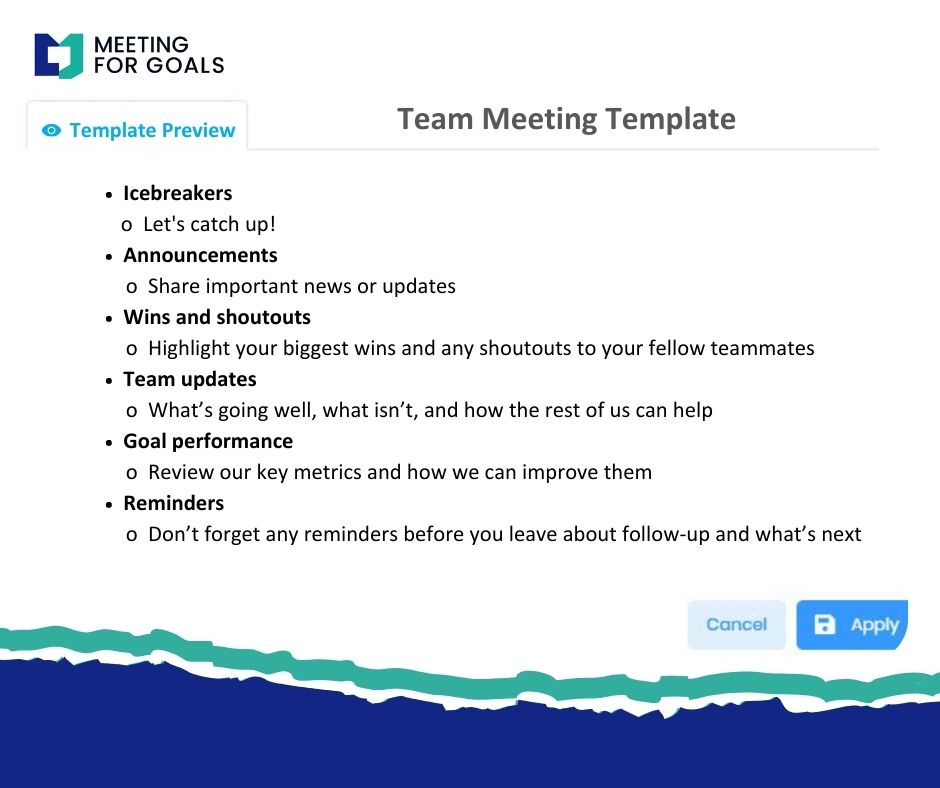
Use a Standardized Template
Consistency is key. A good template ensures that nothing important gets left out.
Your MOM template should include:
- Meeting name and date
- Attendees and absentees
- Agenda topics
- Summary of discussions
- Decisions made
- Action items with owners and deadlines
Need a head start? Try our free meeting templates to get going quickly.
Focus on Key Points, Not Transcripts
MOMs should be concise and easy to scan. Don’t try to capture every word.
Instead, summarize the essence of each discussion. Focus on the “what,” “why,” and “who.” Clear, simple language works best.
Assign a Dedicated Note-Taker
Having one person responsible for taking notes ensures consistency.
Choose someone who understands the meeting context. You can also rotate this role to share the load and bring in fresh perspectives.
Share Minutes Promptly
Timing matters. The sooner you share the minutes, the more effective they will be.
Aim to distribute MOMs within 24 hours. Use your meeting software to automate this step and save time.
Create Feedback Loops
Encourage your team to review the minutes and confirm accuracy.
If someone disagrees with a task or decision, it is better to resolve it early. This keeps everyone aligned and prevents future friction.
Follow Up and Review
Don’t let your MOMs gather dust. Use them.
Start each meeting by reviewing the previous minutes. This reinforces accountability, tracks progress, and keeps your team focused.
V. Integrating Meeting Minutes with Meeting For Goals Software
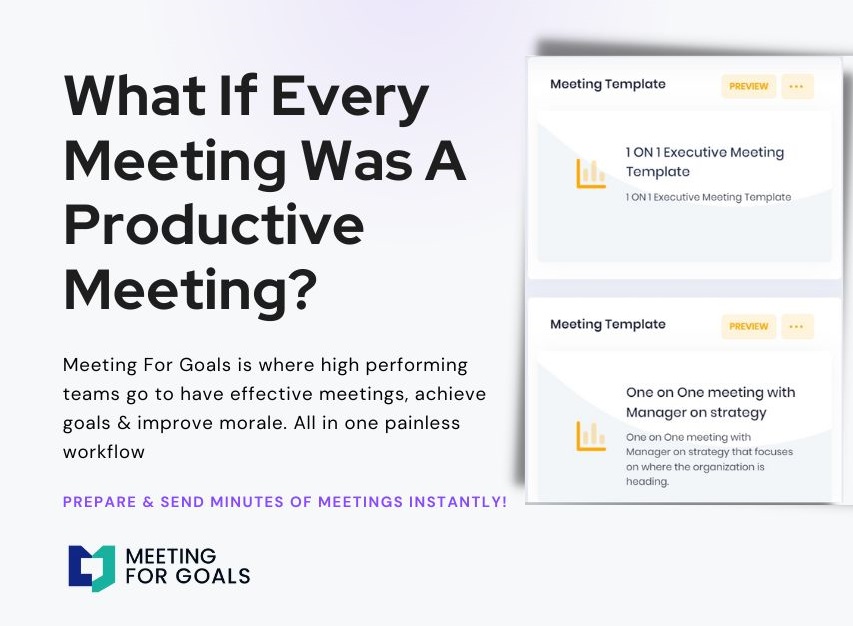
Let’s be honest—managing MOMs manually can be a pain. That’s why we built Meeting For Goals. Our platform simplifies the entire meeting process—from planning to follow-up.
Here’s how we make meeting minutes easy, effective, and aligned with your goals:
- Streamlined Documentation: With Meeting For Goals, you can create MOMs right inside the meeting interface. Our smart templates guide you through the process. You can link minutes directly to agenda items, decisions, and company goals. Everything is in one place, so nothing gets lost.
- Automated Distribution: Once your minutes are ready, the platform automatically sends them to all participants. No more chasing people down or wondering if they read the email. You can even set reminders for upcoming tasks and deadlines.
- Goal Alignment: One of our standout features is goal tagging. When you assign an action item, you can link it to a specific goal or KPI. This creates a direct connection between your meetings and your strategic outcomes. It’s a simple way to make sure your team stays focused on what really matters.
- Real-Time Collaboration: Need input from multiple team members? No problem. Our collaborative tools let everyone contribute to the minutes in real time. This is especially helpful for remote or hybrid teams. Everyone stays in sync, no matter where they are.
- Analytics and Reporting: Want to know which meetings are driving results? Our analytics dashboard gives you insights into team performance. You can see which meetings are most productive, who is completing their tasks, and where there is room for improvement. This kind of visibility helps you continuously refine your meeting strategy.
VI. Additional Tips for Success
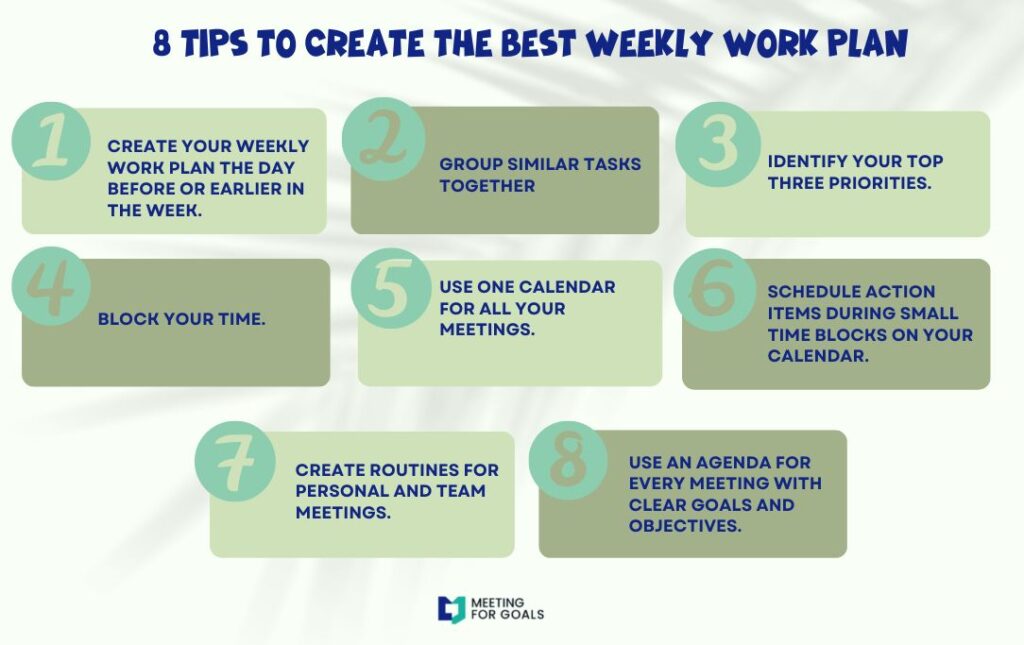
Train Your Team
Effective MOMs start with training. Make sure your team knows how to take notes, use templates, and follow up on tasks.
You don’t need a full-day workshop. A quick training session or guide can make a big difference.
Use Visuals When Helpful
Sometimes a chart or table can say more than a paragraph. If you’re discussing metrics, timelines, or workflows, consider adding visuals to your MOMs. It makes them easier to understand at a glance.
Keep a Central Repository
Don’t scatter your minutes across emails and folders. Store them in a centralized location.
Meeting For Goals offers a searchable archive, so you can find past minutes in seconds. This is a lifesaver when you need to revisit a decision or track long-term projects.
Encourage a Culture of Follow-Through
MOMs are only effective if people act on them. Make it part of your team culture to review minutes, complete tasks, and come prepared for the next meeting.
When everyone buys in, meetings become a powerful driver of progress.
VII. Conclusion
Meeting minutes—or “Mom Minutes of Meeting”—aren’t just an admin task. They are your secret weapon for driving accountability, alignment, and results.
For executives leading mid-sized teams, mastering MOMs can dramatically improve how your team communicates and executes.
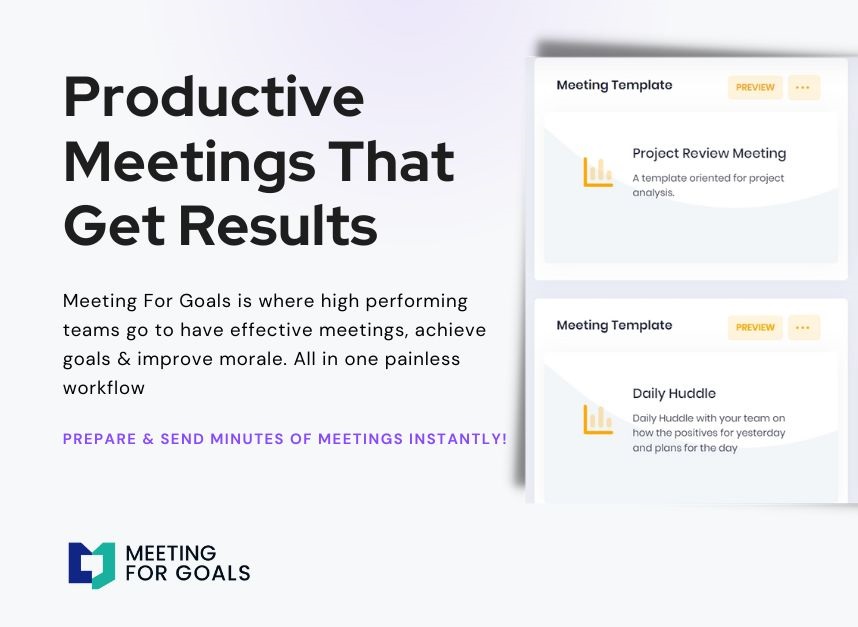
At Meeting For Goals, we are here to help you make every meeting count. Our platform is built to simplify MOMs, align them with your goals, and turn them into a strategic asset.
Ready to put your meetings to work? Visit Meeting For Goals today or sign up to start building more productive, goal-driven meetings.
And don’t forget to check out our free meeting templates to get started with effective MOMs right away.
External Resources:
Want to learn more about meeting effectiveness? Explore this article from the Harvard Business Review on Why Meetings Go Wrong.
For additional tips on writing great meeting minutes, check out this guide from the University of California, Berkeley.
Internal Links:
Sign up now to streamline your meetings: https://app.meetingforgoals.com/TenantRegistration/Register
Explore our free meeting templates: https://meetingforgoals.com/meeting_templates
Learn more about our platform: https://meetingforgoals.com