
Effective Team Meeting Agendas: A Blueprint for High-Performing Teams
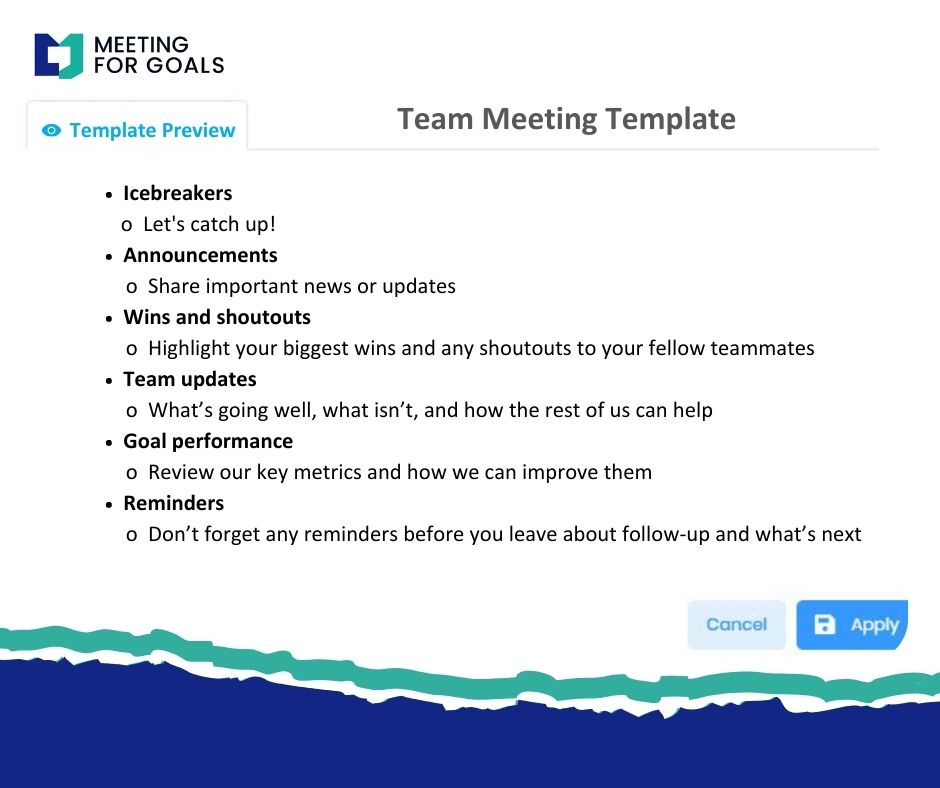
In today’s fast-paced corporate environment, ineffective meetings are more than just a nuisance—they’re a costly drain on time, morale, and productivity. For high-performing teams, especially in companies with 40–70 employees, every meeting should be a strategic touchpoint that drives results. That’s where effective team meeting agendas come into play.
At MeetingForGoals.com, we understand that aligning meetings with company objectives, assigning accountability, and streamlining communication are non-negotiables for executive leaders. In this guide, we’ll show you how structured, goal-oriented meeting agendas can transform your team’s performance, boost morale, and help you reclaim hours of lost productivity.
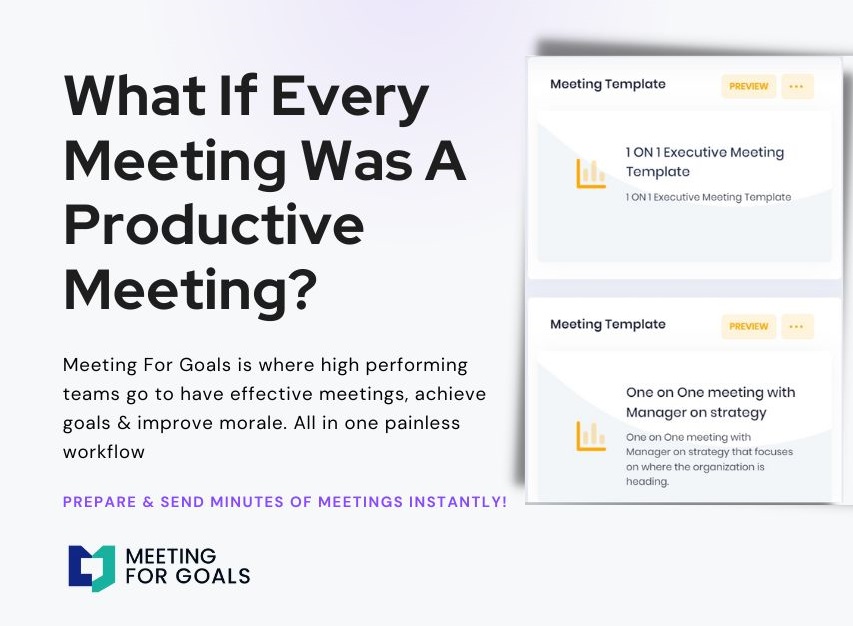
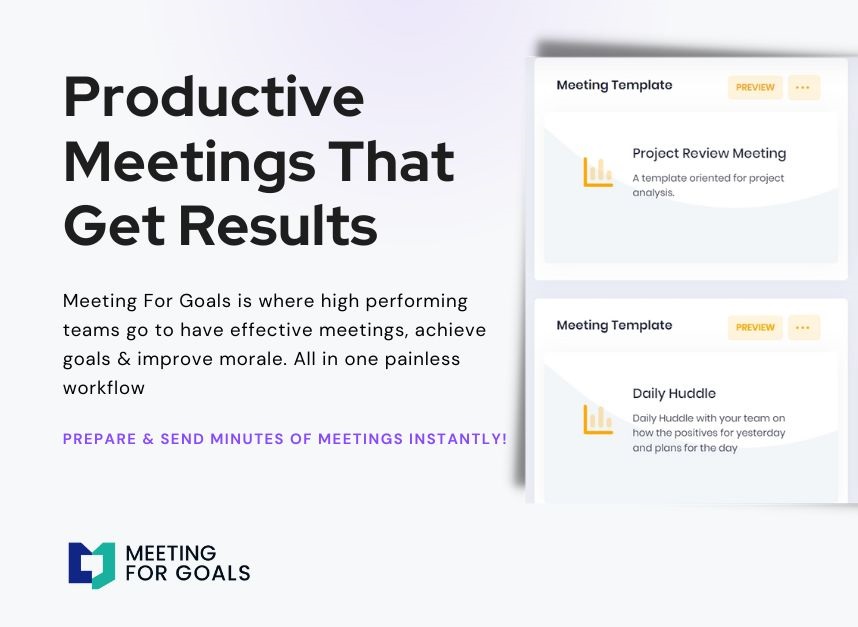
If you’re ready to take the first step, explore our free meeting templates at https://meetingforgoals.com/meeting_templates or sign up now at https://app.meetingforgoals.com/TenantRegistration/Register to start running better meetings today.
I. Introduction
Team meetings are the heartbeat of any successful organization. For companies with 40 to 70 employees, where agility and alignment are crucial, meetings are the main venue for decision-making, collaboration, and progress tracking.
But let’s be honest—without structure, meetings can feel like a waste of time. Tangents, unclear goals, and lack of follow-up often turn what should be a productive session into a frustrating experience.
That’s why effective team meeting agendas are essential. A strong agenda is more than a list of topics—it’s a strategic guide that helps your team stay focused, engaged, and aligned with broader company goals.
At MeetingForGoals.com, we help high-performing teams run focused, goal-driven meetings using our intuitive platform. Our tools streamline every part of the meeting process—from planning and execution to follow-up and accountability.
This article breaks down the anatomy of an effective agenda and shows how it can become your team’s secret weapon for productivity and morale.
2 Minute Video
Watch a 2 minute demo of our meeting management software in action.
II. Key Components of an Effective Meeting Agenda
Creating a great agenda isn’t rocket science—but it does take thoughtful planning. Here are the five key components every effective team meeting agenda should include:
- Purpose and Objectives
Start with the “why.” Why are you meeting? What do you want to accomplish?
Whether it’s making a decision, brainstorming ideas, or reviewing progress, defining a clear objective helps keep your meeting focused and actionable.
For example:
- A weekly check-in might aim to review project milestones and identify any blockers.
- A quarterly strategy session might focus on aligning departmental goals with the company’s vision.
When everyone knows the purpose, they come prepared—and meetings become more productive.
- List of Participants and Their Roles
Not everyone needs to be in every meeting. Identify who should attend and what their role is.
Are they there to provide input, make decisions, or just stay informed? Clarifying this ahead of time avoids over-crowded meetings and ensures everyone knows what’s expected.
With Meeting For Goals, you can assign roles in advance so participants know if they’re presenting, facilitating, or simply observing. This clarity minimizes confusion and maximizes engagement.
- Topics with Time Allocations
Time is your most valuable resource. Assigning time slots to each agenda item keeps things moving and ensures all topics get covered.
Prioritize items by urgency and importance. Use timeboxing—allocating a fixed amount of time per topic—to avoid spending too long on any one issue.
Meeting For Goals offers built-in timers and prompts to help you stay on track. This technique is used by top-performing teams worldwide, including companies like Atlassian, which emphasizes timeboxing in their meeting culture (source: Atlassian Team Playbook).
- Pre-Meeting Preparation
Great meetings start before the meeting begins. Your agenda should list what each participant needs to do beforehand—read a report, analyze data, prepare a presentation, etc.
This ensures everyone arrives ready to contribute, not just listen.
With Meeting For Goals, you can attach prep materials, assign tasks, and send automated reminders—all in one place. This level of preparation boosts engagement and keeps the meeting focused.
- Desired Outcomes and Action Items
Every agenda item should lead to a decision, a next step, or a clear outcome.
If you’re discussing a marketing campaign, the outcome might be finalizing the launch date. If you’re reviewing a project, the next step might be assigning a task to address a blocker.
At the end of the meeting, these outcomes should be documented and assigned to specific team members with deadlines.
Meeting For Goals turns your agenda into a living document that tracks these actions over time.
Adding an Agenda
How to add an agenda instantly on Meeting For Goals.
III. Aligning Agendas with Company Goals
One of the most powerful ways to improve meeting effectiveness is to align your agendas with your company’s strategic goals.
Why Alignment Matters
When meetings are tied to business objectives, they become more than just routine—they become drivers of progress.
High-performing organizations like Google use OKRs (Objectives and Key Results) to align teams and drive results. When your meetings reflect these goals, every conversation becomes more meaningful (source: What Matters by John Doerr).
For example, if your company’s goal is to increase customer retention by 15%, your meetings should include discussions on:
- Improving support
- Analyzing churn
- Launching loyalty initiatives
Meetings that don’t support strategic goals? Defer or eliminate them.
How to Align Agendas with Strategic Objectives
Start by mapping your OKRs or KPIs to your meeting cadence.
Weekly meetings can focus on tactical execution. Monthly or quarterly meetings can address long-term strategy.
With Meeting For Goals, you can tag agenda items with specific company goals. This ensures that every topic contributes to your broader mission.
Examples of Goal-Aligned Agenda Items
-
Goal: Improve customer satisfaction
Agenda Item: Review customer feedback and implement support improvements. -
Goal: Launch new product by Q3
Agenda Item: Finalize development timeline and assign next steps. -
Goal: Increase employee engagement
Agenda Item: Discuss results from engagement survey and plan initiatives.
By aligning your agenda with goals, you turn meetings into strategic checkpoints—not time-wasters.
IV. Assigning Responsibility and Accountability
Even the best plans fall apart without ownership. Assigning responsibility is essential to turning ideas into action.
Why Clear Ownership Matters
When no one owns a task, it gets lost in the shuffle. Assigning responsibility ensures that every action has a champion.
This not only boosts execution but also builds a culture of accountability.
For executives, this is key. You need to know things are moving forward without micromanaging.
How to Assign Roles Effectively
Each agenda item should have:
- A discussion leader
- Contributors
- A note-taker (optional)
- A follow-up owner
Use Meeting For Goals to assign these roles in advance. The platform also tracks ownership over time—so you can see who’s delivering and who needs support.
Example:
-
Agenda Item: Review Q2 Sales Performance
Owner: VP of Sales
Contributors: Sales Managers, Marketing Director -
Agenda Item: New Hire Onboarding
Owner: HR Director
Contributors: Department Heads
Accountability Follow-Up in Future Meetings
Don’t let action items disappear after the meeting ends. Review them in the next meeting.
Meeting For Goals makes this easy by automatically carrying over incomplete tasks and prompting owners for updates.
This creates a cycle of execution and trust. Everyone knows that what gets discussed gets done.
V. Tips for Keeping Meetings Focused and Efficient
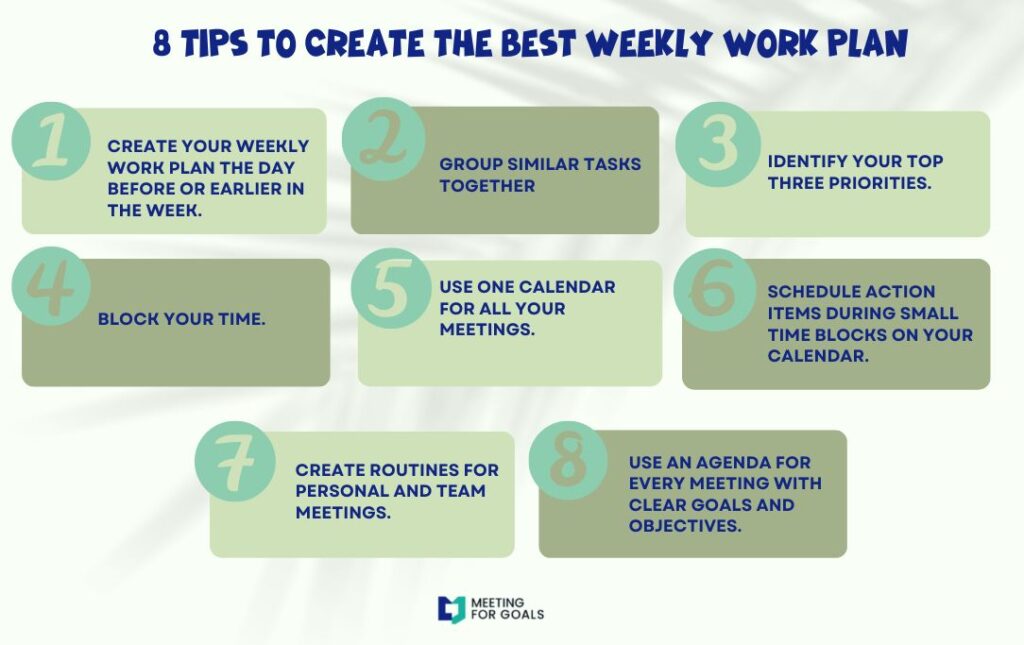
Even with a perfect agenda, meetings can go off the rails. Here are some proven tips to keep things sharp and productive:
Time Management Strategies
Start and end on time. Use timeboxing to allocate time to each topic.
Appoint a timekeeper or use Meeting For Goals’ built-in timers to stay on schedule. This shows respect for everyone’s time and keeps momentum high.
Use Tools That Work
Stop using static documents or endless email threads. Use a centralized tool like Meeting For Goals to:
- Build and share agendas
- Assign tasks and roles
- Track outcomes
- Store meeting history
This keeps everyone aligned and eliminates confusion.
Encourage Participation, Not Distractions
Make sure everyone has a voice—but keep the conversation focused.
Use a “parking lot” to note off-topic ideas for future discussion. This keeps your meeting moving while still capturing valuable input.
If someone goes off-topic, gently steer the conversation back. Meeting For Goals includes facilitation tools to help manage group dynamics.
Want to see these tools in action? Sign up now at https://app.meetingforgoals.com/TenantRegistration/Register and start transforming your meetings today.
VI. Common Meeting Pitfalls—and How to Avoid Them
Even experienced teams fall into common traps. Here’s how to avoid them:
- Too Many People: Only invite those who are essential. If someone doesn’t need to contribute or make decisions, they can be updated later.
- No Clear Agenda: Never start a meeting without an agenda. It’s like driving without a map. Use our free meeting templates at https://meetingforgoals.com/meeting_templates to get started quickly.
- No Follow-Up: If no one follows up, nothing gets done. Assign owners and review action items in the next meeting.
- Overrunning Time: Respect the clock. Use timers and stick to your agenda. If something needs more time, schedule a follow-up.
VII. Conclusion
Effective team meeting agendas aren’t just a nice-to-have—they’re a game-changer.
For companies with 40–70 employees, where every hour counts, structured agendas help turn meetings into engines of execution.
We’ve covered the core components of a high-impact agenda, from defining objectives and assigning roles to aligning with company goals and ensuring accountability.
We’ve also shared practical tips for keeping your meetings focused, efficient, and outcome-driven.
At MeetingForGoals.com, we specialize in helping executive teams like yours run better meetings. Our software streamlines every phase of the meeting lifecycle—from planning and facilitation to follow-up and tracking.
With features like goal alignment, task ownership, and time management tools, we help you save time, improve morale, and hit your business objectives.
Ready to transform your meetings?
Sign up now at https://app.meetingforgoals.com/TenantRegistration/Register and try our platform risk-free.
Want to get started with a proven structure? Check out our free meeting templates at https://meetingforgoals.com/meeting_templates.
Because when your meetings are aligned, accountable, and efficient, there’s no limit to what your team can achieve.
For more tips, resources, and tools, visit https://meetingforgoals.com and start your journey to more productive, goal-driven meetings today.