
How to Write Minutes of the Meeting: A Complete Guide for High-Performing Teams
In today’s fast-paced business world, time is one of your most valuable resources. Meetings are a major investment. However, without proper follow-up, even the most productive ones can lose momentum. That’s where meeting minutes come in. They’re not just a formality—they’re a powerful tool to boost team accountability, streamline communication, and drive real results.
Whether you’re a VP, Director, or C-suite executive, mastering the skill of writing effective meeting minutes can take your leadership game to the next level. In this guide, we’ll show you exactly how to write minutes that are clear, concise, and actionable. You’ll also discover how tools like MeetingForGoals.com can make the process easier and more effective.
If you’re ready to make your meetings more impactful, start by checking out our free meeting templates. You can also sign up for MeetingForGoals.com to manage and automate your meeting minutes from start to finish.
I. Introduction
Meetings are where ideas are born, decisions are made, and strategies come to life. But without a reliable way to document what was discussed and agreed upon, even the best meetings can fall short. That’s why meeting minutes matter.
For high-performing teams, especially in companies with 40 to 70 employees, meeting minutes are more than just notes. They’re a strategic tool that helps maintain focus, promote accountability, and align your team with business goals.
This guide is built specifically for leaders—Directors, VPs, Presidents, and C-suite executives—who want to run better meetings and follow through with precision. By the end, you’ll know how to write minutes that make a real difference and how to leverage digital tools to save time and boost productivity.
At MeetingForGoals.com, we help teams run more effective meetings with our all-in-one meeting management platform. From planning to follow-up, we’ve got you covered.
Let’s dive into what makes meeting minutes so essential—and how you can master them.
2 Minute Video
Watch a 2 minute demo of our meeting management software in action
II. Understanding the Purpose of Meeting Minutes
Before you start writing minutes, it’s important to understand why they matter. Meeting minutes aren’t just about recording what was said—they’re about ensuring clarity, promoting accountability, and helping your team stay aligned.
A. Creating a Reliable Record
Minutes serve as the official record of what happened in a meeting. They capture:
- Key decisions
- Action items
- Important discussions
This is especially valuable when multiple projects are running in parallel or when team members are unavailable. A clear record helps everyone stay on the same page—even weeks or months later. If questions arise about what was decided, you can refer back to the minutes.
B. Promoting Clarity and Transparency
In growing companies, communication can get messy. Meeting minutes offer a consistent way to share information across teams and departments. They eliminate confusion and ensure that:
- Everyone, whether they were in the meeting or not, has access to the same insights
This kind of transparency builds trust and keeps everyone informed.
C. Driving Accountability and Execution
One of the most powerful aspects of meeting minutes is their ability to hold people accountable. When you document who’s responsible for what—and by when—it becomes easier to follow up and ensure tasks are completed.
At MeetingForGoals.com, we take this a step further. Our platform lets you assign action items in real-time during the meeting, complete with deadlines and automated reminders. It’s a game-changer for teams that want to move fast and stay organized.
If you’re looking for additional best practices, Harvard Business Review offers a great article on how to run meetings that are actually useful.
Adding an Agenda
How to add an agenda instantly on Meeting For Goals
III. Preparing to Write Minutes
Great meeting minutes start before the meeting begins. A little preparation goes a long way in making the process smooth and effective.
A. Review the Agenda and Know Your Participants
Start by reviewing the agenda. This gives you a roadmap of what will be discussed and helps you focus on the most important points.
Next, get familiar with who will be attending. Knowing the participants helps you record contributions accurately and understand the context of the discussion.
With MeetingForGoals.com, your meeting invites and participant lists sync automatically, so you’re always prepared.
B. Use a Consistent Template
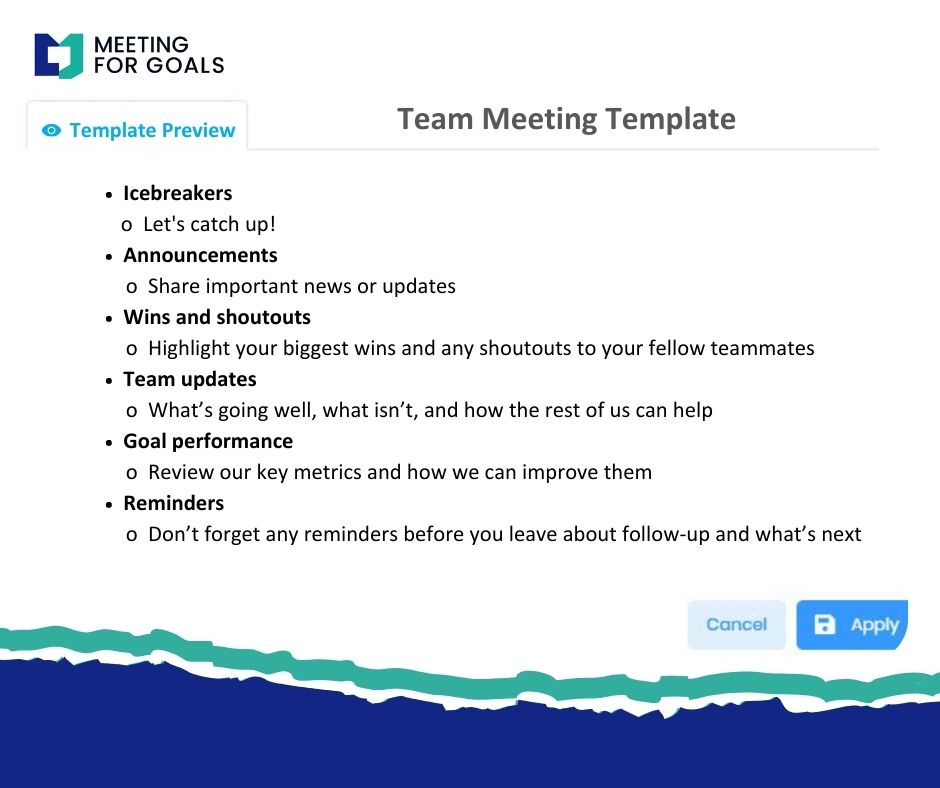
Using a standard template makes your minutes easier to read and reference. A good template should include:
- Meeting title
- Date, time, and location
- Attendees and absentees
- Agenda items
- Key discussion points
- Decisions made
- Action items with owners and deadlines
- Next meeting details
You can download our free meeting templates to get started quickly and professionally.
C. Don’t Forget the Basics
It might seem simple, but always include the date, time, and location of the meeting. These details help keep your records organized and provide context for future reference.
Preparation sets the tone for success. With your agenda, participant list, and template ready, you’re well-equipped to capture meaningful minutes.
IV. Key Components of Effective Minutes
Now that you’re prepared, let’s break down what to include in your meeting minutes to make them impactful and actionable.
A. Attendees and Absentees
List everyone who attended the meeting, along with their roles. Also note who was invited but couldn’t attend. This helps clarify who contributed to decisions and who needs to be updated afterward.
Example:
- Attendees: Sarah Lee (CMO), Jason Kim (CTO), Maria Gomez (Director of Operations)
- Absentees: Tom Nguyen (VP of Sales)
B. Summary of Discussions
You don’t need to write down everything word-for-word. Instead, summarize key points and decisions.
Example:
- “The product team presented user feedback from the beta launch, highlighting a need for improved onboarding.”
- “After reviewing vendor proposals, the team agreed to proceed with Vendor B due to better integration options.”
C. Action Items with Owners and Deadlines
This is the heart of your minutes. Be specific about what needs to be done, who’s responsible, and when it’s due.
Example:
- Action: Finalize onboarding tutorial script
- Owner: Maria Gomez
- Deadline: June 5, 2024
MeetingForGoals.com allows you to assign these tasks during the meeting, so nothing falls through the cracks.
D. Next Steps and Future Meetings
Wrap up your minutes by summarizing the next steps and confirming the date and time of the next meeting.
Example:
- Next meeting: June 10, 2024, 10:00 AM, Conference Room B
- Agenda: Review onboarding updates and finalize Q3 roadmap
Including these elements ensures your minutes are both useful and actionable.
V. Tips for Writing Clear and Concise Minutes
Even the best content won’t help if it’s hard to read. Here’s how to keep your minutes clear, concise, and easy to follow.
A. Use Bullet Points
Bullet points make your minutes scannable and user-friendly. Use them to list decisions, action items, and discussion highlights.
Avoid long paragraphs. Stick to short, digestible chunks of information.
B. Keep Language Simple and Neutral
Use straightforward, professional language. Avoid opinions, emotional language, or jargon.
Instead of:
- “John was annoyed with the delays.”
Say:
- “John expressed concern about the impact of project delays.”
C. Review Before You Share
Always proofread your minutes before distributing them. Check for spelling errors, confirm names and titles, and make sure action items are clear.
MeetingForGoals.com includes built-in review and approval workflows to help you polish your minutes before sharing them with the team.
D. Share Minutes Promptly
Timely distribution is key. Send out the minutes within 24 hours of the meeting to ensure the discussion is still fresh in everyone’s mind.
For more tips on writing effective minutes, check out this resource from the University of California, Berkeley.
VI. Common Mistakes to Avoid
Writing meeting minutes might seem straightforward, but there are a few pitfalls to watch out for.
A. Writing Too Much or Too Little
Avoid turning your minutes into a transcript. Focus on key points, decisions, and action items. On the flip side, don’t be too vague—your minutes should provide enough context to be useful.
B. Missing Action Items
Every meeting should result in at least one or two action items. If your minutes don’t include any, ask yourself: Did we actually make decisions? If so, what needs to happen next?
C. Failing to Follow Up
Writing the minutes is only half the job. Make sure there’s a system in place to follow up on action items. This is where MeetingForGoals.com really shines—our platform tracks tasks automatically and sends reminders to keep things moving.
D. Inconsistent Formatting
Stick to a standard format so your team knows where to find the information they need. Using a template helps maintain consistency and saves time.
VII. Conclusion
Meeting minutes are more than just a recap—they’re a powerful tool to drive execution, improve communication, and hold your team accountable.
To recap, effective meeting minutes:
- Keep everyone aligned on decisions and next steps
- Promote transparency across departments
- Drive accountability with clear action items
- Save time by reducing the need for follow-up meetings
At MeetingForGoals.com, we make it easy to manage your meetings from start to finish. With features like:
- Real-time note-taking
- Automated task assignments
- Built-in templates
Our platform helps your team get more done in less time.
Want to see the difference for yourself? Sign up to MeetingForGoals.com and start running better meetings today. Don’t forget to explore our free meeting templates to get started.
Let’s make every minute count. Visit MeetingForGoals.com and take your team’s productivity to the next level.