
Development Goals Examples: How to Drive Team Performance with Purpose
In today’s fast-paced business world, having a talented team isn’t enough. High-performing teams need clear direction. That’s where development goals come in. These goals act like a compass. They guide your team toward better performance, stronger accountability, and alignment with company objectives.
For mid-sized organizations—especially those with 40 to 70 employees—setting and achieving meaningful development goals can be a game-changer. When led by experienced executives like Directors, VPs, and C-suite leaders, these goals can turn good teams into great ones.
In this article, we’ll explore practical examples of development goals. We will also show you how Meeting For Goals, the leading meeting management platform, helps your team stay focused, aligned, and productive. If you’re ready to make every meeting count, check out our free meeting templates or sign up today to start transforming your team’s performance.
I. Introduction
Let’s face it—teams often get caught up in day-to-day tasks. They lose sight of the bigger picture. Development goals help bring that picture back into focus. They create a roadmap for growth. This could involve:
- Improving team communication
- Building leadership from within
- Keeping everyone accountable
For high-level executives, development goals are more than just a checklist. They’re strategic tools that help align team efforts with company-wide objectives. Every meeting, project, and decision can be tied back to a larger purpose.
That’s where Meeting For Goals steps in. Our meeting management software is built to help high-performing teams run effective meetings, achieve their goals, and boost morale. With features like:
- Structured agendas
- Accountability tracking
- Goal alignment tools
Meeting For Goals ensures your meetings are productive and purpose-driven.
In this guide, you’ll discover actionable development goals tailored for team environments. You’ll also find strategies to achieve them. We’ll demonstrate how effective meetings—powered by Meeting For Goals—can be a catalyst for lasting improvement.
Looking to streamline meetings, foster leadership, or improve team communication? This guide has everything you need to get started.
2 Minute Video
Watch a 2 minute demo of our meeting management software in action
II. Understanding Development Goals
Before diving into examples, let’s break down what development goals are and why they’re so important—especially for teams aiming to scale performance.
What Are Development Goals?
Development goals are clearly defined objectives that help improve individual or team capabilities. These goals can focus on:
- Soft skills like communication and leadership
- Hard skills such as technical knowledge or process efficiency
In team settings, development goals often focus on collective growth. They help ensure that everyone is working together toward shared outcomes that support the company’s mission.
Why Alignment Is Crucial
Goals only work if they align with your company’s bigger picture. Misaligned goals can waste time, drain resources, and frustrate employees. For instance, if your company is undergoing a digital transformation, your team goals should support that—like:
- Improving digital literacy
- Increasing tech adoption
Meeting For Goals bridges this gap. By integrating goal-setting directly into your meeting workflow, our platform ensures every discussion supports your company’s strategic objectives. This keeps teams focused and prevents meetings from drifting off track.
The Impact on Team Performance
Well-crafted development goals don’t just improve individual performance—they elevate the entire team. When goals are transparent and measurable, they create a culture of accountability and teamwork.
Teams that work toward shared goals are:
- More motivated
- More collaborative
- More aligned
Moreover, development goals give you a framework to measure progress. With Meeting For Goals, you can track key metrics in real time and adjust your approach as needed. In short, development goals provide direction, improve engagement, and help teams perform at their best.
Adding an Agenda
How to add an agenda instantly on Meeting For Goals
III. Examples of Development Goals for Teams
Now that we’ve covered the “why,” let’s talk about the “how.” Here are several development goals your team can start working on today—along with strategies to make them stick.
A. Enhancing Communication Skills
Goal: Improve team collaboration through better communication practices.
Good communication is the foundation of a strong team. Miscommunication can lead to delays, errors, and low morale. A goal focused on communication might include:
- Implementing structured feedback loops
- Encouraging transparency
- Adopting collaboration tools
How to Measure:
- Run regular team surveys to assess communication quality.
- Track project delays or rework due to misunderstandings.
- Use Meeting For Goals to log discussion points and follow-ups, ensuring clarity and accountability.
Want to get started quickly? Use our free meeting templates to build agendas that promote open dialogue and feedback.
B. Increasing Meeting Efficiency
Goal: Reduce average meeting time by 30% in the next six months.
Meetings are necessary—but they don’t have to be a time drain. This goal focuses on making meetings shorter and more productive.
Strategies:
- Use Meeting For Goals to create focused agendas with time blocks.
- Invite only essential participants.
- Analyze meeting data to identify and eliminate inefficiencies.
With our platform, you can track meeting durations and outcomes to continuously improve your process.
C. Building Leadership Skills
Goal: Identify and develop future leaders within the team.
Leadership development is critical for long-term success. This goal involves mentoring, training, and giving high-potential team members opportunities to lead.
Methods:
- Let team members lead parts of meetings or projects.
- Use Meeting For Goals to track leadership milestones and provide feedback.
- Encourage peer mentoring and knowledge sharing.
Leadership doesn’t have to come from the top. When team members are empowered, everyone benefits.
D. Improving Accountability
Goal: Establish clear roles and responsibilities for each team member.
When accountability is unclear, projects suffer. This goal focuses on defining expectations and ensuring follow-through.
Implementation:
- Assign action items with deadlines using Meeting For Goals.
- Review progress in each meeting and adjust as needed.
- Recognize and reward accountability wins to reinforce behavior.
Clear accountability leads to faster execution and higher morale.
E. Promoting Cross-Functional Collaboration
Goal: Increase collaboration between departments on shared projects.
Silos can slow down progress. This goal encourages teams to work across functions for better outcomes.
Tactics:
- Schedule regular cross-functional check-ins.
- Use Meeting For Goals to align goals and track shared tasks.
- Celebrate collaborative wins to build momentum.
According to a study by McKinsey, companies that promote cross-functional collaboration are 1.5 times more likely to outperform their peers.
F. Enhancing Decision-Making Skills
Goal: Improve the quality and speed of team decisions.
Slow or poor decisions can derail progress. This goal focuses on building a decision-making framework.
Steps:
- Use Meeting For Goals to document decisions and rationale.
- Train team members on decision-making models like SWOT or RACI.
- Review past decisions to identify patterns and improve future choices.
Improved decision-making leads to faster execution and fewer mistakes.
IV. Strategies for Achieving Development Goals
Setting goals is just the beginning. Achieving them requires structure, consistency, and the right tools.
A. Set SMART Goals
SMART stands for Specific, Measurable, Achievable, Relevant, and Time-bound. It’s a simple but powerful framework for setting goals that actually get done.
- Specific: Be clear about what you want to achieve.
- Measurable: Define how you’ll track progress.
- Achievable: Make sure the goal is realistic.
- Relevant: Align with team and company priorities.
- Time-bound: Set a deadline.
Meeting For Goals lets you embed SMART criteria directly into your agendas and goal-setting templates, so every goal is actionable and trackable.
B. Review Goals Regularly
Business needs change—and so should your goals. Regular reviews help you stay on track and adapt as needed.
Best Practices:
- Discuss goals in weekly or bi-weekly meetings.
- Use Meeting For Goals dashboards to track progress.
- Adjust timelines, scope, or resources based on new insights.
Frequent check-ins keep everyone aligned and accountable.
C. Use the Right Tools
The right tools make all the difference. Meeting For Goals supports every stage of goal achievement.
Key Features:
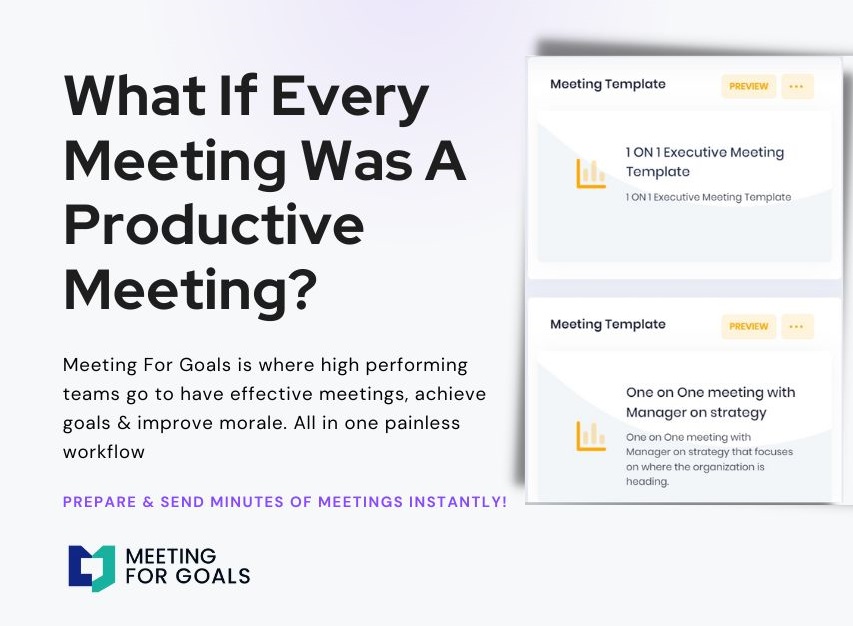
- Agenda Templates: Standardize goal discussions.
- Action Item Tracking: Assign tasks and monitor progress.
- Progress Dashboards: Visualize performance in real time.
- Feedback Tools: Capture insights from your team.
By integrating these tools into your workflow, you create a culture of continuous improvement.
D. Celebrate Wins
Recognition keeps morale high. Celebrate both small milestones and big achievements.
Ideas:
- Highlight wins in team meetings.
- Use Meeting For Goals to track and showcase progress.
- Offer rewards or shoutouts to team members hitting their goals.
Celebrating success keeps your team motivated and engaged.
V. The Role of Effective Meetings in Achieving Development Goals
Meetings are where goals are set, progress is reviewed, and decisions are made. Done right, they’re powerful drivers of success.
A. Structured Meetings Promote Alignment
Every meeting should have a purpose. When meetings are aligned with development goals, they become strategic—not just routine.
With Meeting For Goals, you can link each agenda item to a specific goal. This keeps discussions focused and relevant.
B. Agendas Drive Accountability
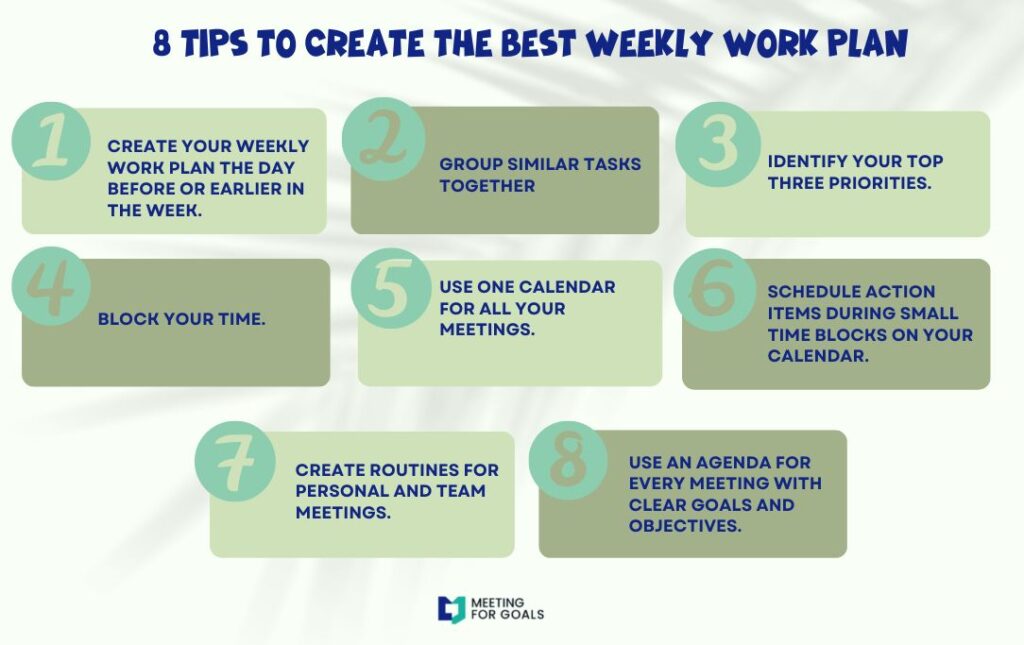
A solid agenda sets the tone. It tells your team what to expect and what’s expected of them.
Use Meeting For Goals to:
- Create recurring agendas that include goal reviews.
- Assign agenda items to specific team members.
- Track outcomes and next steps.
This structure makes sure nothing falls through the cracks.
C. Encourage Participation and Feedback
Engaged teams are more likely to meet their goals. Make sure everyone has a voice.
Tips:
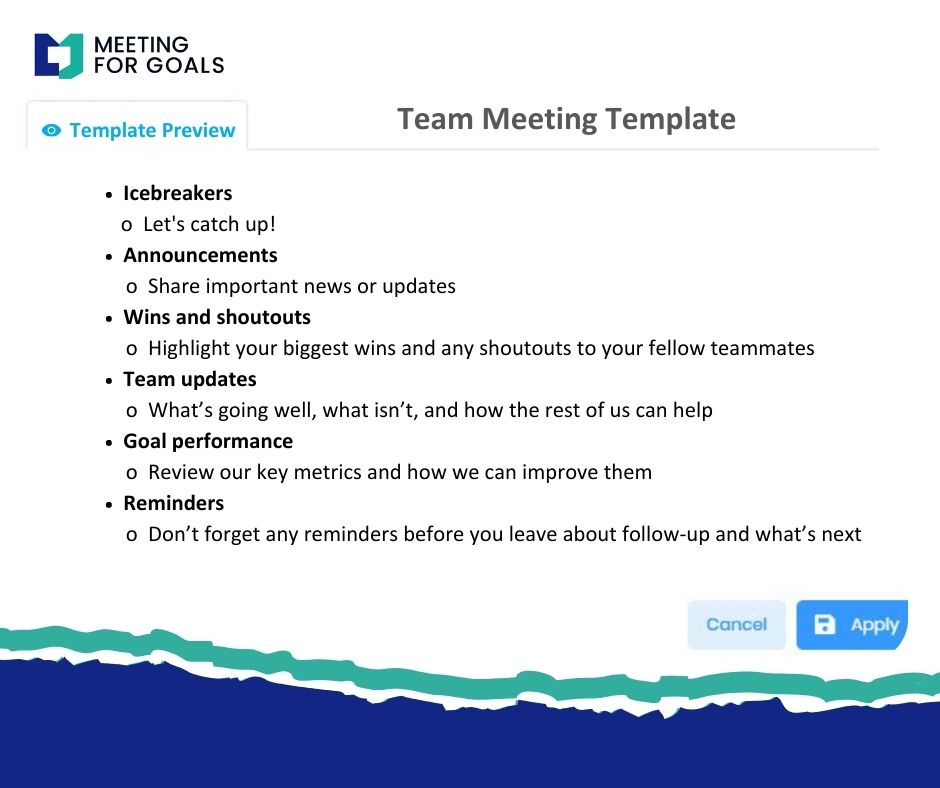
- Start meetings with quick check-ins or icebreakers.
- Ask for feedback on what’s working—and what’s not.
- Use Meeting For Goals’ feedback tools to gather insights.
A culture of openness leads to better ideas and stronger execution.
D. Use Data to Improve Meetings
Data tells a story. Use meeting analytics to identify what’s working and what needs improvement.
For example, Meeting For Goals tracks:
- Meeting durations
- Participation rates
- Action item completion
Use this data to fine-tune your approach and drive better outcomes.
VI. Conclusion
Development goals are more than performance metrics—they’re strategic tools that help your team grow, align with company objectives, and deliver results. For companies with 40–70 employees, especially those led by visionary executives, setting and achieving these goals can transform your organization.
Meeting For Goals is your partner in that transformation. Our platform turns meetings into powerful tools for progress. With features that boost focus, accountability, and alignment, we help your team stay on track and ahead of the curve.
Ready to level up your team’s performance? Start by using our free meeting templates or sign up now to see how Meeting For Goals can help you turn every meeting into a growth opportunity.
Visit https://meetingforgoals.com to learn more or go directly to https://app.meetingforgoals.com/TenantRegistration/Register to get started today. Your team’s next big win could be just one meeting away.