
What is a Sprint in Project Management? A Guide for High-Performing Teams
Excerpt:
In today’s fast-moving business world, delivering projects on time and staying adaptable is crucial. That’s where sprints come in—a core component of Agile project management that high-performing teams use to stay focused and aligned. But what exactly is a sprint in project management? How can your team use sprints to make meetings more productive, hit goals faster, and keep morale high? In this guide, we’ll break down what sprints are, how they work, their benefits, and how you can use them across different departments. Whether you’re a Director, VP, or C-suite executive, understanding sprints can help drive better results—and Meeting For Goals is here to help you make every sprint count.
Introduction: In project management, especially in Agile environments, a “sprint” isn’t just a trendy term—it’s a powerful, proven method for getting things done. A sprint is a short, time-boxed period where a team works together to complete a defined set of tasks. Rather than trying to finish everything at once, sprints help teams focus on smaller goals in a shorter timeframe. While sprints are commonly used in software development, their benefits go way beyond tech. Marketing, HR, finance, and even executive teams are now adopting sprints to boost productivity, improve collaboration, and align with strategic objectives. Meeting For Goals—a meeting management software built for high-performing teams—fits perfectly with sprint methodology. Our platform helps teams run shorter, more focused meetings that directly support sprint goals. We help teams save time, increase accountability, and keep everyone moving in the same direction. In this guide, we’ll explore the full picture of sprints in project management. From what they are and how they work to their benefits, challenges, and applications across industries, you’ll get a complete understanding of how sprints can elevate your team’s performance. Want to improve your meeting outcomes right away? Check out our free meeting templates at https://meetingforgoals.com/meeting_templates.
2 Minute Video
Watch a 2 minute demo of our meeting management software in action
Section 1: The Definition of a Sprint
A sprint is a short, fixed period—usually between one and four weeks—where a team focuses on completing a specific set of tasks. The concept comes from Agile and Scrum methodologies, which prioritize speed, flexibility, and continuous improvement. Instead of working on a project for months before seeing results, teams use sprints to break the work into smaller, more manageable parts. Each sprint ends with a deliverable—something that can be reviewed, tested, or even launched.
Key features of a sprint include:
- Time-boxed duration: The sprint has a fixed length, and the team works within that timeframe.
- Fixed goals: Once the sprint starts, no new tasks are added. This keeps the team focused.
- Cross-functional collaboration: Teams include members from different departments or skill sets.
- Incremental progress: Each sprint builds on the last, helping the project move forward step by step.
But a sprint isn’t just about checking off tasks. It’s about fostering collaboration, encouraging frequent feedback, and creating a culture of transparency and continuous improvement. For executive leaders managing teams of 40–70 people, understanding sprints is essential. It helps you set clear expectations, track performance, and ensure that everyone is working toward the same goals. Meeting For Goals reinforces these principles by helping you run focused meetings that directly support your sprint objectives. Still building your team’s sprint process? Sign up for free and start using Meeting For Goals today: https://app.meetingforgoals.com/TenantRegistration/Register.
Adding an Agenda
How to add an agenda instantly on Meeting For Goals
Section 2: The Sprint Process
Knowing what a sprint is becomes much more useful once you understand how it works. A sprint isn’t just a block of time—it’s a full cycle with specific steps that help teams stay on track and deliver results. Let’s break down the sprint process:
- Sprint Planning: This is where the sprint begins. The team gathers to decide what they’ll work on during the sprint. This includes setting a sprint goal, selecting tasks from the backlog, and assigning responsibilities.
- Define the sprint goal.
- Choose backlog items (tasks, user stories, etc.).
- Estimate effort and assign tasks.
- Align on priorities and expectations.
- Daily Stand-Ups: These are short, daily check-ins (usually 15 minutes) where each team member answers:
- What did I do yesterday?
- What will I do today?
- Are there any blockers?
- Sprint Review: At the end of the sprint, the team presents what they’ve completed. Stakeholders can give feedback, and the team can compare what was planned vs. what was delivered. This step ensures that the team is delivering value and staying aligned with business needs.
- Sprint Retrospective: This is a time for reflection. The team discusses what went well, what didn’t, and what they can improve in the next sprint. Retrospectives are key for continuous improvement. They help teams identify patterns, fix issues, and work better together in future sprints.
For leaders, this is the best time to ensure that team efforts align with company objectives. Meeting For Goals can streamline this phase with structured agendas, goal-setting tools, and automated follow-ups to keep everyone accountable.
These meetings keep communication flowing and help the team quickly address any issues. They also promote accountability and transparency.
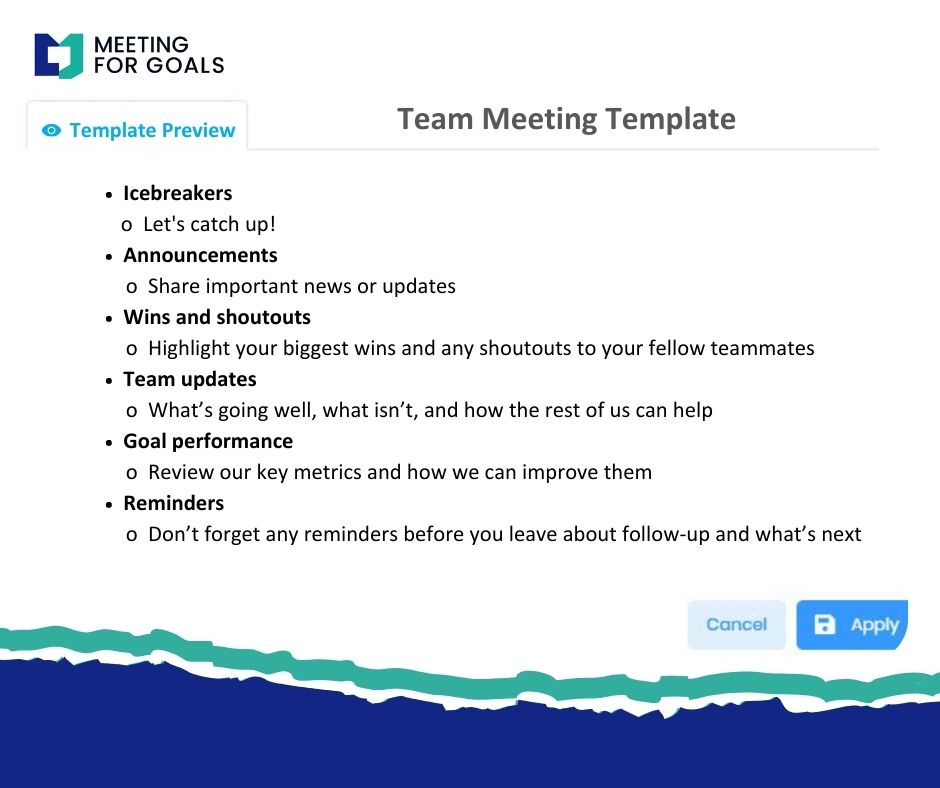
Meeting For Goals enhances every sprint phase with tools like meeting templates, collaborative notes, and goal-tracking dashboards. This makes your sprint meetings more effective and your team more aligned. Want to see how it works? Visit https://meetingforgoals.com and explore how we’re helping teams run better sprints.
Section 3: Benefits of Using Sprints
Sprints offer a wide range of advantages that can transform how your team works—especially in companies with 40 to 70 employees where alignment and agility are critical. Here are the top benefits:
- Improved Focus and Productivity: Sprints help teams stay laser-focused. With a clear time limit and specific goals, distractions are minimized. Everyone knows what they need to do and when it needs to be done. This structure increases motivation and reduces wasted time.
- Better Collaboration and Communication: Frequent meetings like daily stand-ups and reviews promote open communication. Teams work more closely together, solve problems faster, and build stronger relationships. Cross-functional collaboration becomes a natural part of the process.
- Faster Feedback and Adaptability: Sprints allow for regular feedback from stakeholders. This means teams can pivot quickly if priorities change or issues arise. This flexibility leads to better outcomes and more satisfied customers.
- Alignment with Company Goals: Because sprints require clear planning and defined objectives, they naturally align with broader company goals. Tools like Meeting For Goals make this even easier by linking every meeting and task to a larger objective.
- More Efficient Use of Time and Resources: Shorter cycles mean faster delivery. Teams can test ideas quickly, get feedback, and adjust as needed—without overcommitting resources. This efficiency helps teams do more with less. For executives, the return on investment is clear: faster results, better team performance, and improved alignment with strategic objectives.
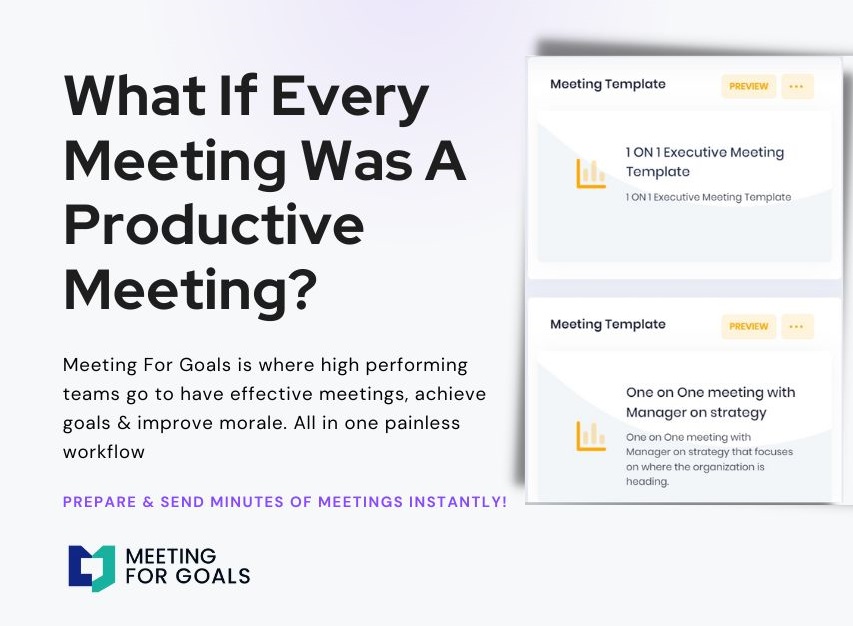
Need help aligning your sprint goals with your meetings? Check out our free meeting templates at https://meetingforgoals.com/meeting_templates.
Section 4: Challenges Associated with Sprints
While sprints are powerful, they’re not without challenges. Knowing what to watch for can help you avoid common pitfalls and keep your team on track.
- Scope Creep: Adding new tasks mid-sprint can derail progress. This is called scope creep, and it breaks the sprint’s focus. To avoid it, set clear goals during sprint planning—and stick to them.
- Miscommunication: Without structure, frequent meetings can lead to confusion. Daily stand-ups and sprint reviews must be well-organized to ensure everyone is on the same page. Meeting For Goals helps by providing structured agendas, real-time notes, and follow-ups that clarify expectations.
- Burnout: The fast pace of sprints can lead to team fatigue. If the pressure is too high for too long, burnout becomes a real risk. Use retrospectives to check in on team health and adjust the workload when needed.
- Lack of Accountability: Without clear tracking, it’s easy for tasks to be forgotten. That’s why it’s essential to assign action items and monitor progress. Meeting For Goals makes this simple with built-in accountability tools that link tasks to team members and goals.
By addressing these challenges proactively and using the right tools, your team can enjoy all the benefits of sprints—without the downsides.
Section 5: Sprints in Different Project Management Frameworks
Sprints started in Agile and Scrum, but their principles can be applied across different frameworks and industries.
Agile vs. Scrum vs. Kanban: Agile is a mindset focused on flexibility and continuous improvement. Scrum is a specific Agile framework that uses sprints as its main delivery method. Kanban is more visual and continuous, but it can still use time-boxed sprints for planning. Each method has its strengths. The key is to adapt sprint principles—like focus, feedback, and iteration—to your team’s workflow.
Cross-Industry Applications: Sprints aren’t just for developers. Here’s how other departments use them:
- Marketing: Run sprints to launch campaigns, test messaging, or create content calendars.
- HR: Sprint to roll out new onboarding processes or update policies.
- Finance: Use sprints to close books, build reports, or implement new systems.
- Operations: Sprint to improve logistics, reduce costs, or enhance customer service.
The flexibility of sprints makes them a valuable tool for any team. And with Meeting For Goals, you can apply sprint thinking to any meeting or project—no matter the industry. Want to see how sprint-based meetings can work for your team? Sign up now at https://app.meetingforgoals.com/TenantRegistration/Register.
Conclusion
Sprints aren’t just a project management buzzword—they’re a proven strategy for driving results, improving collaboration, and aligning your team with bigger goals. For leaders managing growing teams, sprints offer a scalable way to handle complex projects without losing speed or focus. By understanding how sprints work and integrating them with smart meeting practices, your team can accomplish more in less time. Meeting For Goals is your partner in making that happen. Our platform ensures every meeting during the sprint cycle is structured, aligned, and productive. Ready to sprint toward success? Explore our full range of tools and templates at https://meetingforgoals.com and start transforming your team’s performance today. Let’s make every sprint count—together.