
In today’s fast-paced business world, first impressions matter—especially during meetings.
In today’s fast-paced business world, first impressions matter—especially during meetings. Introductory meetings are often the first step in forming productive relationships, aligning on goals, and setting the tone for future collaboration. Yet, many organizations overlook their importance and fail to structure them effectively.
That’s where Meeting For Goals comes in. Designed for high-performing teams, our meeting management software helps turn every meeting into a strategic opportunity. In this article, we’ll explore:
- Why introductory meetings are so important
- How to run them effectively
- How Meeting For Goals can help your team save time, boost morale, and drive results
Start transforming your meetings today by signing up at https://app.meetingforgoals.com/TenantRegistration/Register and explore our free meeting templates at https://meetingforgoals.com/meeting_templates.
2 Minute Video
Watch a 2 minute demo of our meeting management software in action
The Importance of Introductory Meetings
Meetings aren’t just calendar events—they’re key moments that can either push a team forward or waste valuable time. Among the many types of meetings, introductory ones are foundational. These are the first formal conversations between new colleagues, departments, or external partners. They help build rapport, clarify roles, and set expectations.
For companies with 40–70 employees—especially those led by Directors, VPs, or C-suite executives—introductory meetings are crucial. These organizations are often in a growth phase where alignment, efficiency, and culture are everything. Done right, these meetings can:
- Prevent miscommunication
- Clarify objectives
- Build a shared sense of purpose
Meeting For Goals is built to help you get these meetings right. From agenda creation to accountability tracking, our software ensures every meeting is focused, efficient, and aligned with your company’s goals. With tools for managing time, setting expectations, and following up, we help you turn meetings into a competitive advantage.
Adding an Agenda
How to add an agenda instantly on Meeting For Goals
Purpose of Introductory Meetings
Introductory meetings are more than a formality—they’re a strategic tool. For mid-sized teams, especially those handling complex projects or scaling rapidly, these meetings lay the foundation for success.
Establishing Relationships and Rapport
The first goal of an introductory meeting is to build trust. When people meet for the first time, there’s often uncertainty. A well-structured meeting helps break the ice and makes future collaboration smoother.
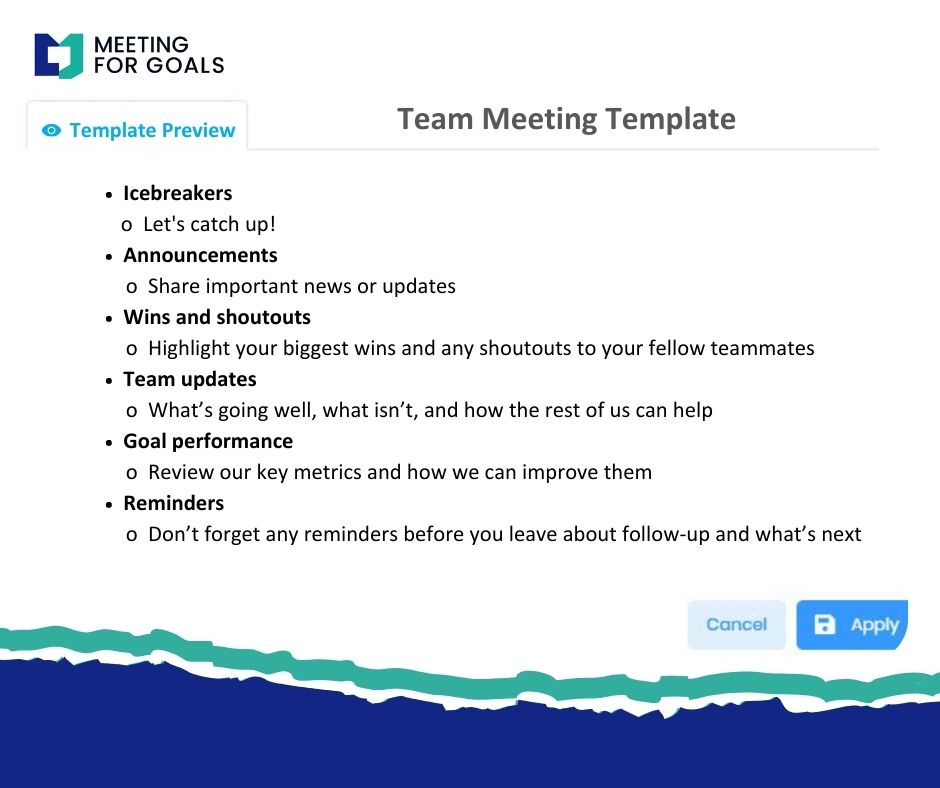
Executives should aim to create an environment where everyone feels heard and valued. This boosts morale and encourages open communication. With Meeting For Goals, you can use agenda templates that include time for personal introductions and icebreakers—so no one feels like just another face on a screen.
Understanding Roles and Responsibilities
Another key purpose is clarifying roles. In mid-sized companies, role confusion can lead to duplicated work, missed deadlines, and friction. By defining responsibilities early, you set the stage for efficiency.
Meeting For Goals allows teams to document and assign roles in real-time. Everyone leaves the meeting knowing what’s expected of them and how their work connects to larger goals.
Setting Expectations for Collaboration
Introductory meetings are also the perfect time to align on expectations. How often will the team meet? What tools will be used? What are the communication norms?
These details may seem small, but they’re critical. With Meeting For Goals, you can set recurring meetings, integrate with project management tools, and align every meeting with broader company goals. It’s all about building a strong, shared foundation.
Key Components of an Effective Introductory Meeting
Great meetings don’t happen by accident. They require planning, structure, and intentional follow-up. Let’s break down the key components of a successful introductory meeting.
Pre-Meeting Preparation
Preparation is everything. A few minutes of planning can save hours of confusion later.
Agenda Creation
A clear agenda sets expectations and keeps things on track. With Meeting For Goals, you can use pre-built templates made specifically for introductory meetings. These templates ensure that key topics—like introductions, roles, and goals—are covered efficiently.
Researching Participants
Know who’s in the room. Encourage team leads to review LinkedIn profiles or internal bios. Understanding each participant’s background adds a personal touch and shows respect for their time and expertise.
Agenda Structure
A great agenda keeps the meeting organized and focused.
Opening Statements
Start with a warm welcome and a short explanation of the meeting’s purpose. This sets a positive tone and gives everyone context.
Individual Introductions
Let each person introduce themselves, share their role, and explain what they hope to achieve. This builds rapport and helps everyone understand how they fit into the bigger picture.
Goals and Objectives Discussion
Discuss the team’s or project’s goals. Aligning early helps avoid scope creep and ensures everyone is working toward the same outcomes.
Conclusion and Next Steps
Always wrap up with a summary and clear next steps. Who’s doing what? What’s the timeline? When’s the next meeting?
Meeting For Goals makes this easy. You can document action items in real-time and assign responsibilities on the spot. This way, everyone leaves the meeting with clarity and purpose.
Utilizing Meeting For Goals Software
Meeting For Goals isn’t just a productivity tool—it’s a complete meeting management solution. It helps make every meeting, including introductory ones, more effective, focused, and time-efficient.
Features That Enhance Introductory Meetings
Agenda Templates: Our platform offers customizable templates for different types of meetings, including introductory ones. These templates ensure that you cover all the important points without missing anything.
Time Allocation Tools
We include built-in timers for each agenda item. This helps teams stay focused and avoid going off-track. It’s especially helpful for executives who need to keep meetings short and impactful.
Real-Time Feedback and Accountability Tracking
Meeting For Goals allows participants to give feedback during or after the meeting. This helps leaders understand what’s working and what needs improvement.
We also track action items and accountability. For example, if someone is tasked with creating a project timeline, that task is logged and followed up automatically. This reduces the need for managers to chase updates and keeps everyone aligned.
Integration with Company Objectives
One of the standout features of Meeting For Goals is its ability to connect meeting agendas with company goals. This ensures that every discussion—yes, even introductory ones—contributes to your organization’s big-picture objectives.
Executives can link meeting topics to KPIs, departmental goals, or company-wide initiatives. This creates a culture of purpose, where every meeting drives measurable value.
Best Practices for Conducting Introductory Meetings
Even with the best tools, the success of an introductory meeting depends on how it’s run. Here are some best practices for making the most of these important first interactions.
Engaging Participants
Introductory meetings should be interactive. Encourage everyone to speak, ask questions, and share their expectations. This builds trust and ensures all voices are heard.
Meeting For Goals supports this with shared agendas and real-time collaboration features. Participants can contribute before, during, and after the meeting.
Keeping It Focused and Concise
Time is valuable. Don’t let meetings drag on. Stick to the agenda, use time-tracking tools, and gently steer conversations back on track when needed.
With Meeting For Goals, you can allocate specific time slots for each topic and get alerts when time is running out. This keeps meetings efficient and respectful of everyone’s schedule.
Following Up After the Meeting
The meeting doesn’t end when the call ends. Effective follow-up is key to keeping momentum and ensuring accountability.
Send out meeting notes, summarize action items, and schedule the next check-in. Meeting For Goals automates much of this. Summaries, action items, and reminders are generated automatically, helping teams stay engaged and aligned.
Conclusion
Introductory meetings are more than just a handshake—they’re a strategic opportunity to build trust, clarify goals, and set the tone for future collaboration. For growing companies, especially those with 40–70 employees, getting these meetings right can have a huge impact on productivity, morale, and team performance.
Meeting For Goals is here to help. Our software empowers teams to run shorter, more focused meetings that actually get things done. From customizable agendas and time tracking to accountability tools and goal alignment, we turn every meeting into a strategic asset.
Don’t let another meeting go to waste. Start optimizing your introductory meetings today with Meeting For Goals. Visit https://meetingforgoals.com to learn more and schedule a demo.
Let your next introductory meeting be the first step toward a more aligned, efficient, and high-performing team.
To explore more strategies for better meetings, check out this guide from Harvard Business Review on How to Run a Meeting and this Forbes article on Why First Impressions Matter in Business.