
In today’s fast-paced business world, accountability is more than just a buzzword—it’s the secret sauce behind high-performing teams and effective meetings.
In today’s fast-paced business world, accountability is more than just a buzzword. It’s the secret sauce behind high-performing teams and effective meetings. If your company is scaling fast and aiming high, embedding accountability into your culture can be a game-changer. It boosts productivity, strengthens collaboration, and lifts team morale.
In this article, we’ll break down what accountability really means, why it’s crucial for team success, and how tools like Meeting For Goals can help you build a culture of responsibility and follow-through. Whether you’re a VP, director, or executive managing teams of 40 to 70 employees, this guide is packed with practical insights to help your meetings become more impactful and aligned with your strategic goals.
If you’re ready to take your meetings to the next level, start by exploring our free meeting templates or sign up to Meeting For Goals to streamline your team’s workflow.
2 Minute Video
Watch a 2 minute demo of our meeting management software in action
What Does It Mean to Be Accountable?
I. Introduction
You’ve probably heard the word “accountability” tossed around in meetings and performance reviews. But what does it really mean?
At its core, accountability is about **ownership**. It’s doing what you say you’ll do, being answerable for your actions, and taking responsibility—even when things don’t go as planned. It’s not about blame; it’s about commitment.
In a professional setting, accountability fuels **trust** and drives **results**. When team members own their responsibilities, projects move forward smoothly, goals are met, and collaboration thrives.
For executives managing mid-sized teams, accountability isn’t just helpful—it’s essential. It ensures that your team operates efficiently, stays aligned with company goals, and delivers consistent results.
One of the most visible places where accountability either shines or fails is in **meetings**. Without clear ownership and follow-through, meetings become repetitive, unproductive, and frustrating. But when accountability is built in, meetings become strategic tools for progress.
That’s where Meeting For Goals comes in. This meeting management platform is designed to help you embed accountability into every step of your team’s workflow—before, during, and after meetings.
In this guide, we’ll unpack the importance of accountability, explore its impact on team dynamics, and offer actionable strategies to foster it—plus show you how Meeting For Goals can make it all easier.
Adding an Agenda
How to add an agenda instantly on Meeting For Goals
II. The Importance of Accountability in Teams
Accountability is the glue that holds great teams together. Without it, even the most talented individuals can fall short.
Fostering Trust Within the Team
Trust is the foundation of successful teamwork. When team members know they can rely on each other, they’re more likely to take initiative, share ideas, and be honest about challenges.
Accountability builds that trust. When everyone follows through on their commitments, it creates a sense of reliability. People feel safe knowing they won’t be left to clean up someone else’s mess.
For leaders, this means less micromanaging and more time to focus on strategy.
Enhancing Communication and Collaboration
Clear communication is a natural result of accountability. When everyone knows what they’re responsible for, there’s less confusion and fewer crossed wires.
Team members are more likely to share updates, ask for help, and adjust timelines when needed. This transparency leads to better collaboration and smoother project execution.
Accountability also reduces the need for constant check-ins. When people own their work, they keep others informed without being asked.
Impact on Team Morale and Performance
Nothing kills team morale faster than a lack of follow-through. When some team members consistently drop the ball, others feel frustrated and undervalued.
On the flip side, when everyone is held to the same standard, it creates a culture of fairness. People feel motivated to bring their best because they know their efforts matter.
High morale leads to high performance. And when accountability is visible—through tools like Meeting For Goals—it reinforces that culture and keeps everyone on track.
Meeting For Goals helps by making responsibilities clear, tracking progress, and ensuring that no task slips through the cracks.
III. Key Elements of Accountability
Accountability isn’t just a vague concept. It’s made up of specific, actionable elements that can be nurtured and measured.
- Responsibility – Owning Tasks and Roles
- Responsibility is the first building block.
- It means knowing your role and owning your tasks from start to finish.
- It’s not enough to be assigned something—you need to take initiative, anticipate challenges, and see things through.
- In practice, this means leading a project, responding to client needs, or meeting a deadline without being reminded.
- Responsibility also means being proactive. Don’t wait for problems to escalate—address them early and communicate openly.
- Transparency – Being Open About Progress and Challenges
- Transparency is all about visibility.
- When team members share updates regularly, it helps everyone stay in the loop.
- It also allows teams to adapt quickly if something isn’t going as planned.
- No one likes surprises—especially when deadlines are tight.
- Meeting For Goals promotes transparency with shared dashboards and real-time progress tracking.
- Everyone can see what’s done, what’s pending, and what needs attention.
- Follow-through – Completing Tasks and Commitments
- Follow-through is where accountability becomes real.
- It’s not just about intention—it’s about action.
- When people consistently deliver on their commitments, it builds credibility.
- Trust grows, and the team moves faster.
- Leaders can support follow-through by setting clear expectations, removing obstacles, and recognizing achievements.
- Meeting For Goals helps by automating reminders, tracking deadlines, and making it easy to follow up on tasks.
- Constructive Feedback – Learning from Mistakes and Successes
- Accountability also means reflecting on what’s working—and what’s not.
- High-performing teams don’t just move from task to task.
- They pause, evaluate, and learn.
- Constructive feedback turns mistakes into valuable lessons and successes into repeatable strategies.
- Use meetings as a space for this reflection. Meeting For Goals lets you document insights, so they’re not lost—and can be applied to future projects.
IV. How Accountability Drives Productive Meetings
Meetings have a bad reputation—and often for good reason. But with accountability, they can become powerful tools for alignment and execution.
- Setting Clear Agendas and Goals
- A productive meeting starts with a clear agenda.
- Everyone should know what’s being discussed and what the goal is.
- When participants are accountable for coming prepared, meetings stay focused and efficient.
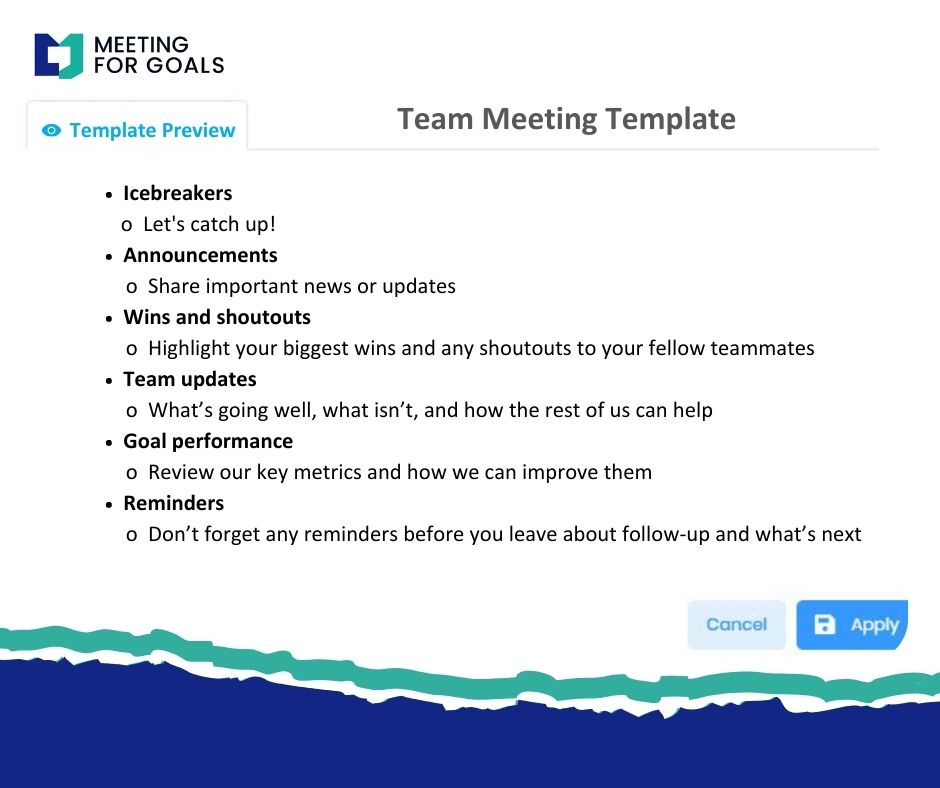
- Meeting For Goals makes this easy. You can set and share agendas in advance, link topics to company objectives, and keep everyone on the same page.
- Assigning Specific Roles and Responsibilities
- Every meeting should have clear roles—facilitator, timekeeper, note-taker, and owners of action items.
- When roles are defined, everyone knows what’s expected.
- There’s no confusion or finger-pointing after the meeting.
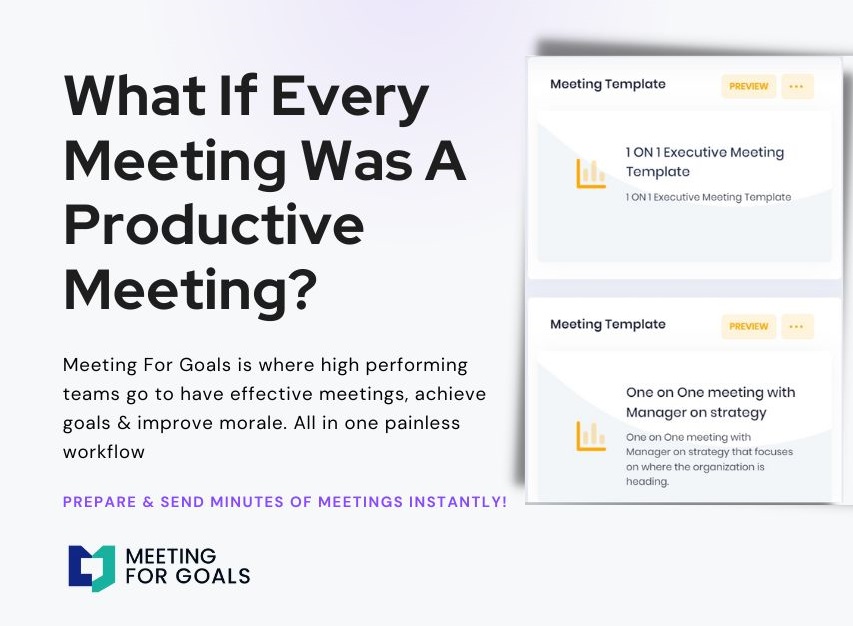
- With Meeting For Goals, you can assign and track these roles right in the platform.
- Establishing Metrics for Success
- If you don’t know what success looks like, how will you know if you’ve achieved it?
- Set clear, measurable outcomes for each meeting topic.
- Whether it’s closing a deal, launching a campaign, or resolving an issue—define what success means.
- Meeting For Goals helps by linking meeting topics to strategic KPIs.
- Maintaining Focus During Meetings
- We’ve all been in meetings that veer off course.
- Without accountability, it’s easy to lose focus.
- When roles, goals, and metrics are clear, it’s easier to keep things on track.
- Meeting For Goals supports this with visual timers, agenda tracking, and real-time updates.
V. Strategies to Foster Accountability in Teams
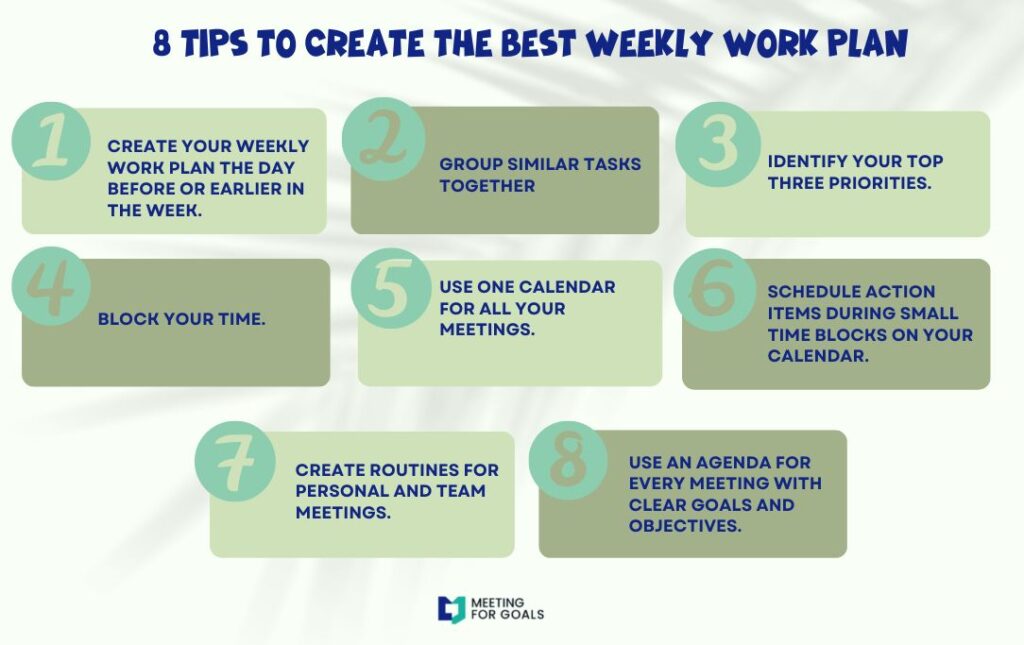
Creating a culture of accountability takes time—but it’s worth the effort. Here are some strategies to help you get there.
- Utilizing Meeting Management Software Like Meeting For Goals
- Technology can make accountability easier and more consistent.
- Meeting For Goals is an all-in-one platform that helps you manage agendas, assign tasks, track progress, and align meetings with your company’s goals.
- By centralizing your meeting workflow, it removes ambiguity and keeps everyone on the same page.
- It also gives leadership visibility into team performance—so you can spot bottlenecks and celebrate wins.
- Establishing a Culture of Open Communication
- Accountability thrives in open, honest environments.
- Encourage your team to speak up, share updates, and ask for help when needed.
- Transparency builds trust and helps you catch issues early.
- As a leader, model this behavior.
- Encouraging Peer Accountability and Support
- Accountability doesn’t have to come only from the top.
- Peer-to-peer accountability is just as powerful.
- When team members hold each other accountable, it creates a sense of shared ownership.
- Encourage this through team check-ins, peer feedback sessions, and collaborative tools.
- Implementing Regular Check-ins and Follow-ups
- Consistency is key.
- Regular check-ins keep everyone aligned and prevent tasks from slipping through the cracks.
- These can be weekly team meetings, one-on-ones, or project reviews.
- Use Meeting For Goals to automate follow-ups, track action items, and document updates.
VI. Conclusion
Accountability isn’t just a nice-to-have—it’s a must-have for any team that wants to perform at a high level.
It builds trust, improves communication, and drives results. When you apply it to your meetings, it turns them into strategic tools for execution.
For companies with growing teams, accountability can be the difference between chaos and clarity.
Meeting For Goals is more than just a meeting tool. It’s a platform designed to make accountability part of your team’s DNA. From setting agendas to following up on tasks, it helps you run meetings that actually move the needle.
Ready to build a culture of accountability and make every meeting count? Sign up to Meeting For Goals today and see the difference it makes in your team’s productivity, morale, and alignment.
Let’s turn every meeting into a step toward success.
Call to Action: Want to run better meetings and build a more accountable team? Try Meeting For Goals now and explore our free meeting templates to get started. Your path to more productive, focused meetings begins here.