
Example of Meeting Minutes: A Complete Guide for High-Performing Teams
In today’s fast-paced business environment, where time is money and every decision counts, high-performing teams understand the value of effective communication. At the heart of this communication is one often-overlooked but incredibly powerful tool: meeting minutes. Whether you’re a Director, VP, or C-suite executive in a growing company of 40 to 70 employees, mastering the art of meeting documentation can be the difference between chaotic follow-ups and streamlined execution.
In this article, we’ll dive into a real-world example of meeting minutes. We’ll explain why they matter. Finally, we will show you how Meeting For Goals—our all-in-one meeting management software—can transform your meetings into engines of productivity and alignment. If you’re ready to elevate your meeting culture, check out our free meeting templates and sign up today to start streamlining your workflow.
I. Introduction
Meetings are more than just scheduled conversations—they’re strategic checkpoints. For high-performing teams, meetings help drive execution, foster accountability, and align everyone with the company’s goals. However, even the most well-planned meetings can fall short without one crucial element: effective meeting minutes.
Meeting minutes are not just notes. They are strategic tools that help teams stay on track, document decisions, and follow through on action items. In a mid-sized company of 40 to 70 employees, where collaboration and communication are key, meeting minutes serve as the glue that holds everything together.
At Meeting For Goals, we understand how easily meetings can become time-consuming and ineffective. That’s why we built our platform to help leaders run shorter, more focused meetings that align with business objectives. With features like:
- Automated minute-taking
- Built-in templates
- Task tracking
Our software gives your team the clarity and structure needed to move forward.
This guide will walk you through everything you need to know about meeting minutes—from what they are, to why they matter, to how to write them effectively. We’ll even show you a real example so you can see what great meeting minutes look like in action.
Whether you’re a VP looking to improve team accountability or a CEO aiming for stronger execution, this article is your blueprint for meeting success.
Let’s get started—and if you’re ready to transform how your team meets, sign up now to try Meeting For Goals.
2 Minute Video
Watch a 2 minute demo of our meeting management software in action
II. What Are Meeting Minutes?
Meeting minutes are the official written record of what happens during a meeting. They capture key discussion points, decisions made, tasks assigned, and deadlines agreed upon. Think of them as a roadmap that guides your team from conversation to completion.
But meeting minutes are more than just a summary. They’re a tool for accountability, alignment, and continuity. When done well, they ensure that everyone knows what’s expected—and nothing slips through the cracks.
Here’s what effective meeting minutes should include:
- Title and Date – Clearly label the meeting and when it took place.
- Attendees and Absentees – List who was present and who wasn’t. This provides context and accountability.
- Agenda Items – Outline the topics discussed, in the order they were planned.
- Discussion Summary – Capture the main points without writing a transcript.
- Decisions Made – Document any conclusions or agreements reached.
- Action Items and Owners – List tasks, who’s responsible, and when they’re due.
- Next Meeting Details – Include the date, time, and location of the next meeting if scheduled.
For busy executives, these components are essential. When you’re managing multiple teams or initiatives, you need a clear record of what was decided and who’s doing what. Meeting minutes provide that clarity.
Plus, they serve as a legal and operational reference. If there’s ever a question about a decision or task, the answer is right there in the minutes.
Meeting For Goals simplifies this entire process. Our software lets you create agendas, take minutes, and assign action items—all in one place. You can even link meeting outcomes to company goals, so every conversation drives progress.
Want to see how easy it can be? Explore our free templates and get started today.
Adding an Agenda
How to add an agenda instantly on Meeting For Goals
III. Why Meeting Minutes Matter
So, why are meeting minutes such a big deal? Because they turn talk into action.
Without documentation, it’s easy for teams to forget what was discussed—or worse, misinterpret decisions. With clear, concise minutes, everyone stays on the same page and knows exactly what to do next.
Here’s how meeting minutes benefit your organization:
- Accountability – When tasks are documented and assigned, there’s no confusion about who’s responsible. This clarity fosters a culture of ownership and follow-through. For VPs and Directors juggling multiple priorities, this is a game-changer.
- Effective Follow-Up – Meeting minutes make it easy to track progress. Instead of revisiting the same issues, teams can refer back to the minutes and move forward. This is especially useful for cross-functional teams where coordination is key.
- Historical Record – Minutes serve as a record of decisions and discussions. This is crucial for long-term projects, compliance, and strategic planning. If you ever need to revisit a decision, the details are just a click away.
- Team Alignment – When everyone has access to the same information, misunderstandings decrease and collaboration improves. Meeting minutes ensure that even those who missed the meeting are informed and aligned.
- Better Meetings – Knowing that outcomes will be documented encourages participants to stay focused and results-driven. Over time, this leads to more productive, purpose-driven meetings.
Meeting For Goals enhances all of these benefits. With built-in task tracking and deadline reminders, our platform ensures that nothing gets lost. You can even track how each meeting contributes to broader company objectives.
Still not sure? Check out this article from Harvard Business Review on how effective meetings drive performance.
IV. Example Structure of Meeting Minutes
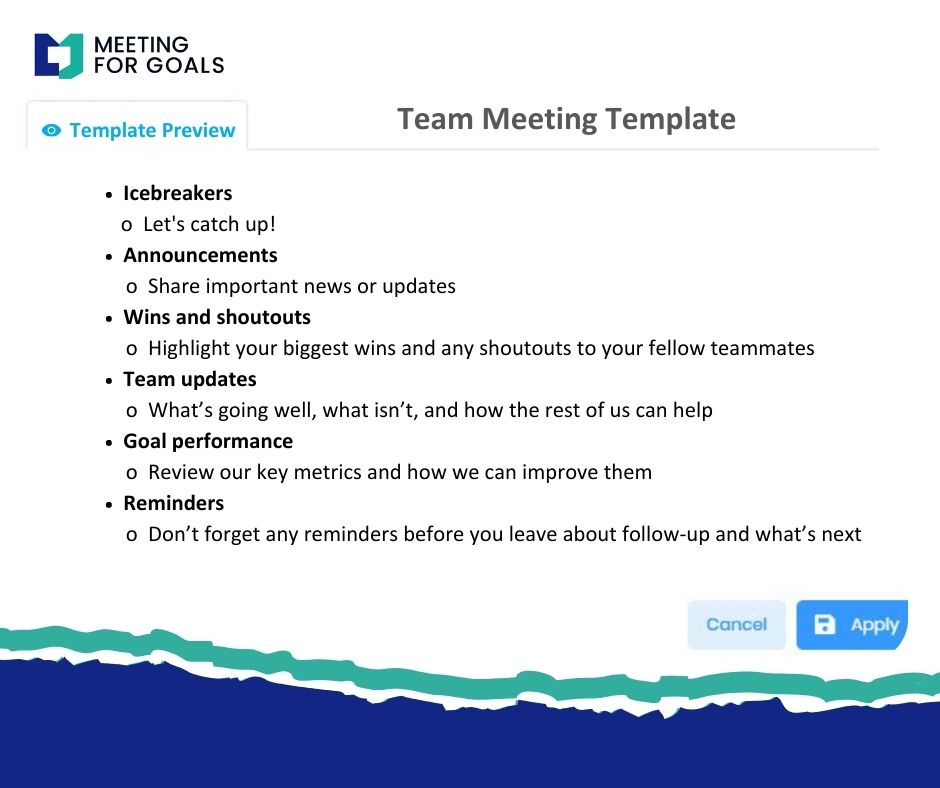
Let’s take a look at what great meeting minutes actually look like. Below is a sample template you can use or adapt to fit your needs.
Sample Meeting Minutes Template
- Title and Date – Marketing Strategy Meeting – April 15, 2024
- Attendees and Absentees – Present: John Smith (VP Marketing), Sarah Lee (Content Manager), Mike Johnson (SEO Specialist); Absent: Emily Davis (Social Media Lead)
- Agenda Items – Review of Q1 Campaign Results, Planning for Q2 Initiatives, Budget Allocation Discussion
- Summary of Discussions – Q1 campaigns led to a 15% increase in engagement. However, conversion rates remained flat. Sarah proposed a new content strategy for Q2. Mike recommended shifting more budget to paid search channels.
- Action Items – Sarah to draft Q2 content calendar by April 22. Mike to prepare revised paid search plan by April 19. John to review and approve final strategy by April 25.
- Next Meeting – Date: April 29, 2024; Time: 10:00 AM; Location: Zoom
Formatting Tips
- Use bullet points for clarity.
- Bold names and deadlines to highlight responsibilities.
- Keep language professional but simple.
- Use headings and subheadings to organize sections.
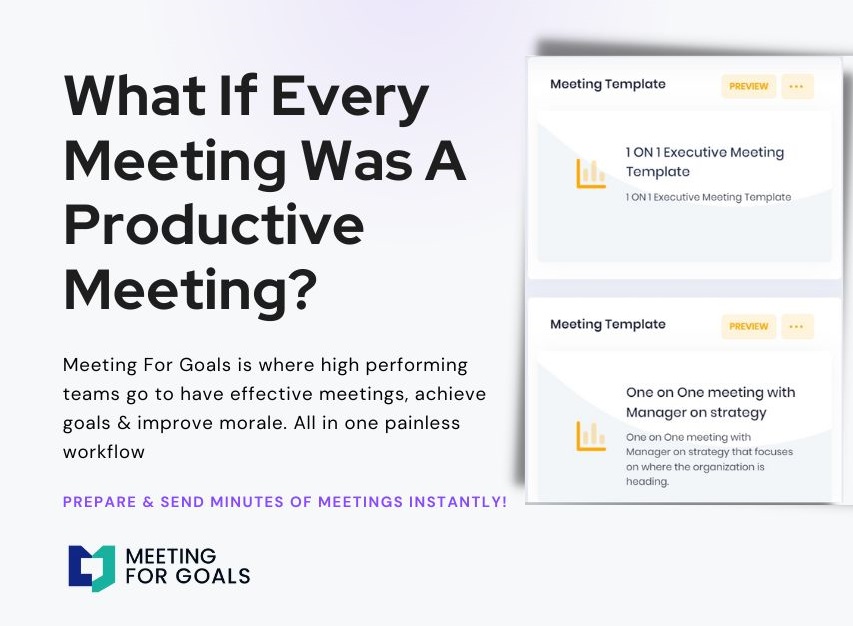
This structure ensures your minutes are easy to read and act on. With Meeting For Goals, you don’t have to build this from scratch. Our platform provides customizable templates that make minute-taking fast and easy.
Want to use this format in your next meeting? Download our free templates now.
V. Best Practices for Writing Meeting Minutes
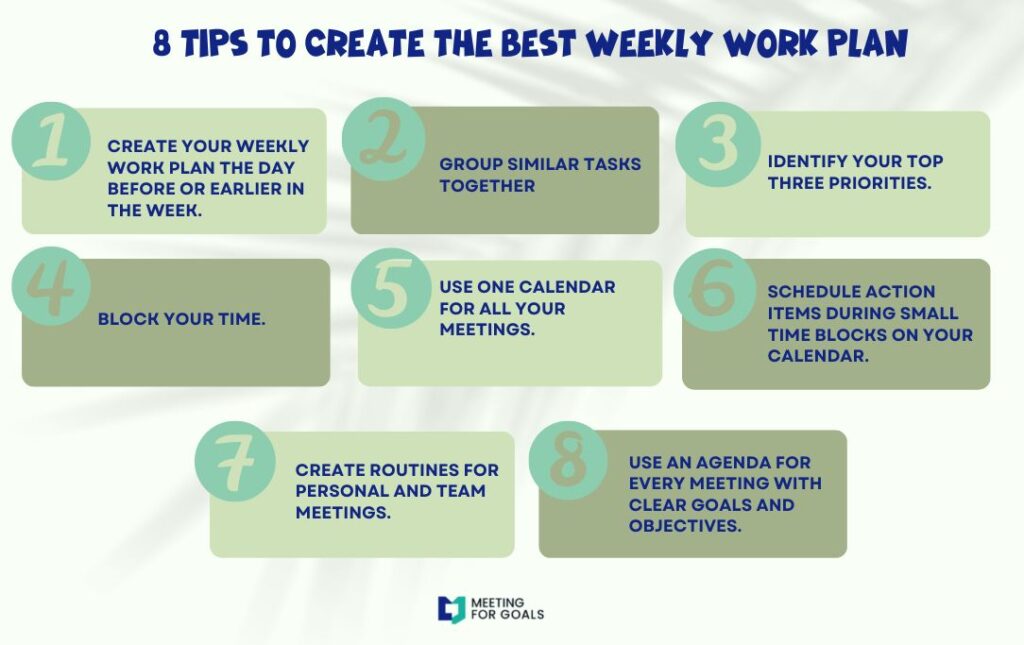
Writing great meeting minutes isn’t just about taking notes—it’s about capturing what matters. Here are some best practices to help you do it right:
- Prepare Ahead of Time – Start with a clear agenda and a minutes template. This gives your meeting structure and ensures you don’t miss anything. Meeting For Goals makes this easy with integrated agenda and minutes tools.
- Focus on What Matters – Don’t try to write down everything. Focus on key points like decisions, action items, and deadlines. Use concise, clear language that’s easy to understand.
- Stay Neutral – Avoid opinions or interpretations. Stick to the facts and use a professional tone. This ensures your minutes are objective and reliable.
- Use Clear Formatting – Organize your notes with bullet points, bolded names, and headings. This makes your minutes easier to read and reference later.
- Send Minutes Quickly – Share your minutes within 24 hours of the meeting. This keeps the momentum going and ensures tasks are acted on promptly. Meeting For Goals automates this step, so you can send minutes with just one click.
- Track Tasks – Follow through is everything. Use a system that lets you assign action items and track their completion. With Meeting For Goals, tasks are embedded right into your meeting notes.
- Keep Everything Organized – Store your minutes in one central location. That way, you can easily search past meetings and track long-term progress. Our platform keeps everything secure and searchable.
Want more tips? Check out this guide from Atlassian on how to run effective meetings.
VI. Conclusion
Meetings are opportunities—but only if they’re well-run and well-documented. That’s where meeting minutes come in.
Effective meeting minutes turn ideas into action. They ensure that every conversation has a purpose, every task has an owner, and every decision is captured. For mid-sized companies, this kind of structure is essential for staying aligned and moving fast.
Throughout this guide, we’ve covered:
- What meeting minutes are
- Why they matter
- How to structure them
- Best practices for writing them
- A real-world example you can use
- How Meeting For Goals helps you do it all faster and better
If you’re tired of unproductive meetings and scattered follow-ups, it’s time to make a change. Meeting For Goals was built for leaders like you—executives who want clarity, accountability, and results.
With our platform, you can create agendas, take minutes, assign tasks, and track progress—all in one place. You’ll save time, improve team alignment, and get more done.
Ready to transform your meetings? Sign up now and start using Meeting For Goals today.
And don’t forget to explore our free meeting templates to get started faster.
Because great meetings don’t just happen—they’re built, documented, and driven by goals.
Visit https://meetingforgoals.com to learn more or register directly at https://app.meetingforgoals.com/TenantRegistration/Register.