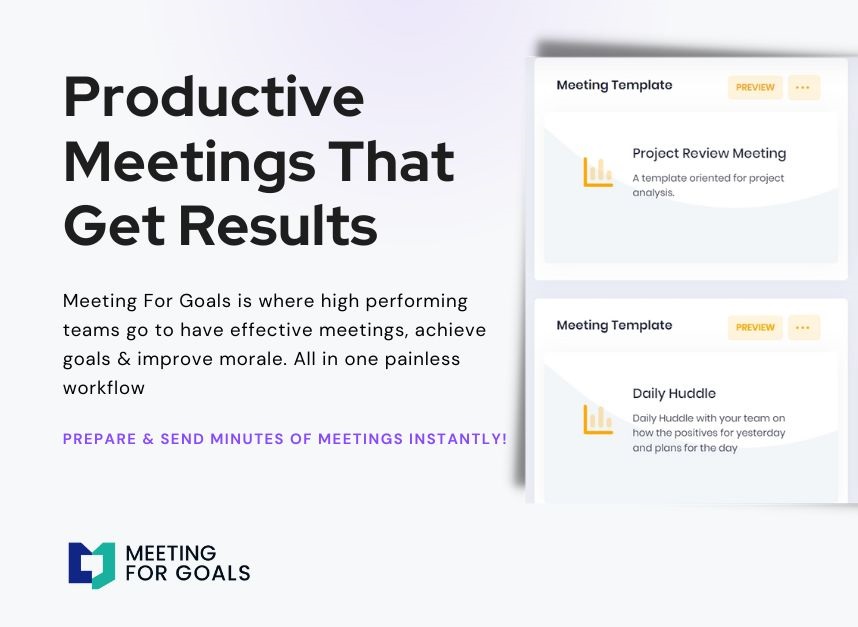
Are your meetings dragging on without direction or accountability?
If you’re a high-level executive looking to boost team productivity and morale, it’s time to rethink how your meetings are structured. Enter hot seat questions—a powerful tool that transforms meetings from routine to results-driven. In this blog, we’ll explore how hot seat questions, when paired with a meeting management platform like Meeting For Goals, can dramatically improve engagement, alignment, and accountability across your organization.
Discover how to turn every meeting into a high-impact session that drives performance and supports your company’s strategic goals. If you’re ready to streamline your meetings and boost productivity, check out our free meeting templates or sign up today at Meeting For Goals.
Hot Seat Questions for Improved Meeting Engagement
I. Introduction
Meetings are the heartbeat of any thriving organization. They’re where ideas take shape, strategies are sharpened, and decisions get made. For mid-sized companies—especially those with 40 to 70 employees—executive meetings are crucial checkpoints for tracking progress and aligning around shared goals.
Yet, too often, meetings feel like a time sink. They lack structure, accountability, and energy. Instead of being effective meetings, they become routine check-ins that leave participants disengaged and unclear on next steps.
That’s where hot seat questions come in. This simple yet powerful technique brings focus, clarity, and energy to your sessions. Hot seat questions encourage every team member to actively participate and take ownership of their role.
At Meeting For Goals, we’ve built our meeting management software to help leaders like you run productive meetings that align with strategic objectives. Our platform streamlines the meeting process and makes accountability easy and intuitive.
In this article, we’ll break down what hot seat questions are, why they work, and how to use them effectively—especially when paired with a tool like Meeting For Goals. Whether you’re a VP, Director, or C-suite leader, you’ll walk away with actionable strategies to make your meetings more engaging and impactful.
2 Minute Video
Watch a 2 minute demo of our meeting management software in action
II. Understanding Hot Seat Questions
So, what are hot seat questions? Hot seat questions are direct, thought-provoking questions aimed at individual team members during a meeting. They’re not meant to put anyone on the spot in a negative way. Instead, they foster open dialogue, ownership, and accountability.
Think of them as guided questions that cut through the noise. Instead of broad, unfocused discussions, hot seat questions get to the heart of what matters.
- “What’s the biggest blocker keeping your team from hitting this week’s goal?”
- “How does this initiative support our Q3 objectives?”
- “What’s one thing you’d change to improve your results this month?”
These questions are designed to prompt reflection and encourage honest, constructive conversations.
The Psychology Behind Hot Seat Questions
Why do hot seat questions work so well? It all comes down to psychology. When people know they’ll be asked to speak about their work, they naturally come more prepared. This taps into accountability theory—when we expect to be evaluated, we’re more likely to follow through on our commitments.
Hot seat questions also leverage the Hawthorne Effect, which suggests people perform better when they know they’re being observed. In meetings, this doesn’t mean creating pressure—it means creating a culture where everyone is seen, heard, and expected to contribute.
In short, hot seat questions make meetings more intentional. They shift the dynamic from passive listening to active participation.
Driving Better Team Dynamics
In companies with 40–70 employees, collaboration across departments is essential. Hot seat questions help break down silos and encourage cross-functional engagement. Instead of updates happening in isolation, they become opportunities for shared learning and alignment.
And when you use a platform like Meeting For Goals, incorporating these questions into your workflow becomes effortless. You can:
- Assign questions ahead of time
- Track responses
- Follow up on action items—all within the platform.
For more insight into how accountability can improve team culture, check out this article from Harvard Business Review on building a culture of accountability.
Adding an Agenda
How to add an agenda instantly on Meeting For Goals
III. The Benefits of Using Hot Seat Questions
Hot seat questions aren’t just a trendy tactic—they’re a proven way to improve meeting engagement and outcomes. Let’s explore the key benefits.
A. Increased Engagement
Traditional meetings often suffer from low engagement. A few people talk, while others tune out. Hot seat questions flip this script.
When team members know they may be asked a question, they stay alert and involved. They come prepared. They listen more closely to understand the context and contribute meaningfully.
This leads to more dynamic, inclusive discussions—where every voice matters.
For executives, this means richer insights and better decision-making.
B. Enhanced Accountability
Hot seat questions naturally build accountability.
When someone is asked to explain their progress, identify challenges, or share next steps—they’re more likely to take ownership of their responsibilities. This creates a culture where follow-through is expected and celebrated.
In mid-sized teams, where each person plays a critical role, this kind of accountability can make a big difference. It also reduces micromanagement. Instead of chasing updates, leaders can use hot seat questions to surface the right information at the right time.
C. Focused, Goal-Oriented Discussions
One of the biggest challenges in meetings is staying on track. Conversations drift. Priorities get lost. Time is wasted.
Hot seat questions bring the focus back to what matters.
- Asking, “How does this project support our quarterly goals?”
- “What’s the most important outcome this week?”
This keeps discussions aligned with strategy.
This not only saves time but ensures that meetings are driving real results.
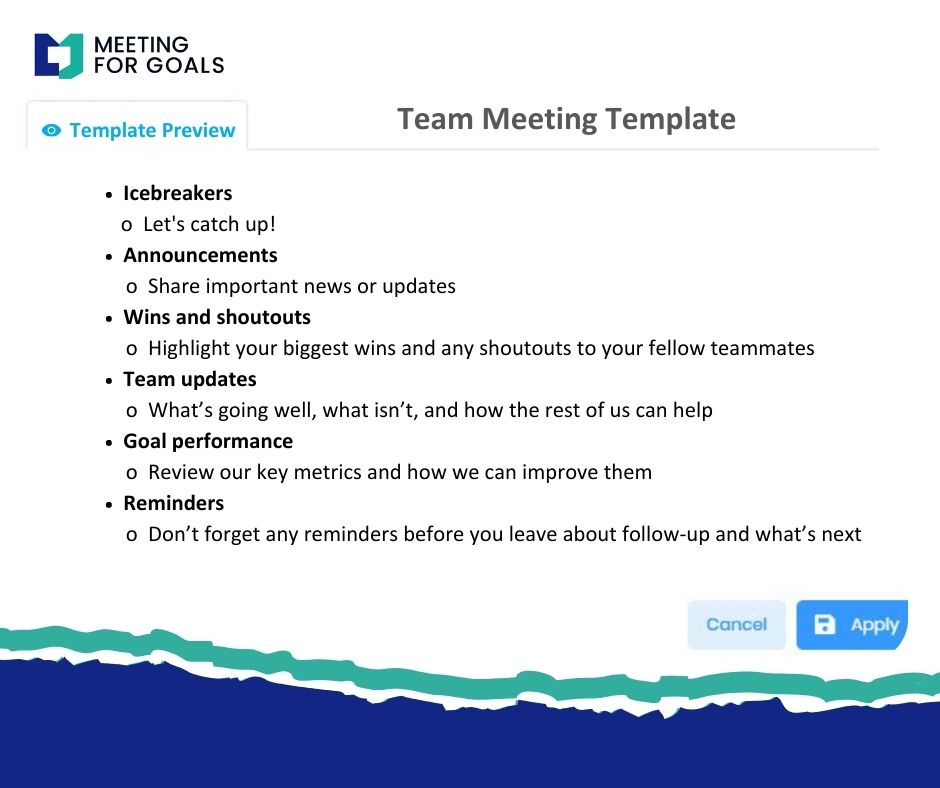
Want to see how structured questions can improve your meetings? Explore our pre-built meeting templates designed for executive teams.
IV. Examples of Effective Hot Seat Questions
The impact of hot seat questions depends on how you use them. They should be tailored to the meeting type and the goals you’re trying to achieve.
Here are some examples based on different meeting formats:
Project Update Meetings
- “What’s your top priority this week?”
- “Where are we off track, and what’s the plan to realign?”
- “What dependencies are slowing you down?”
Brainstorming Sessions
- “What’s an idea we haven’t explored yet?”
- “What’s a common assumption we’re making that might be wrong?”
- “What’s a low-effort, high-impact experiment we could try?”
Performance Reviews
- “What achievement are you most proud of this quarter?”
- “What feedback have you received, and how did you respond?”
- “What’s one area you want to grow in next month?”
Customizing Questions for Your Team
Every team is different. When introducing hot seat questions, consider your team’s culture and maturity.
For newer teams, start with reflective questions like “What’s going well?” or “What support do you need?” These encourage openness and build trust.
For more experienced teams, go deeper. Ask questions that challenge assumptions and push for better results.
Also, consider rotating who asks the questions. Let team members lead discussions. This builds empathy and strengthens collaboration.
Introducing Hot Seat Questions Smoothly
Worried about making people uncomfortable? The key is to frame hot seat questions as a tool for growth—not critique.
Lead by example. When leaders answer hot seat questions themselves, it sets the tone. It shows that accountability starts at the top.
Using Meeting For Goals, you can preview hot seat questions in the agenda. This gives participants time to prepare and respond thoughtfully.
For more on how to introduce new practices to your team, check out this guide from Atlassian on building healthy team rituals.
V. Implementing Hot Seat Questions with Meeting For Goals
At Meeting For Goals, we believe great meetings don’t happen by chance—they happen by design.
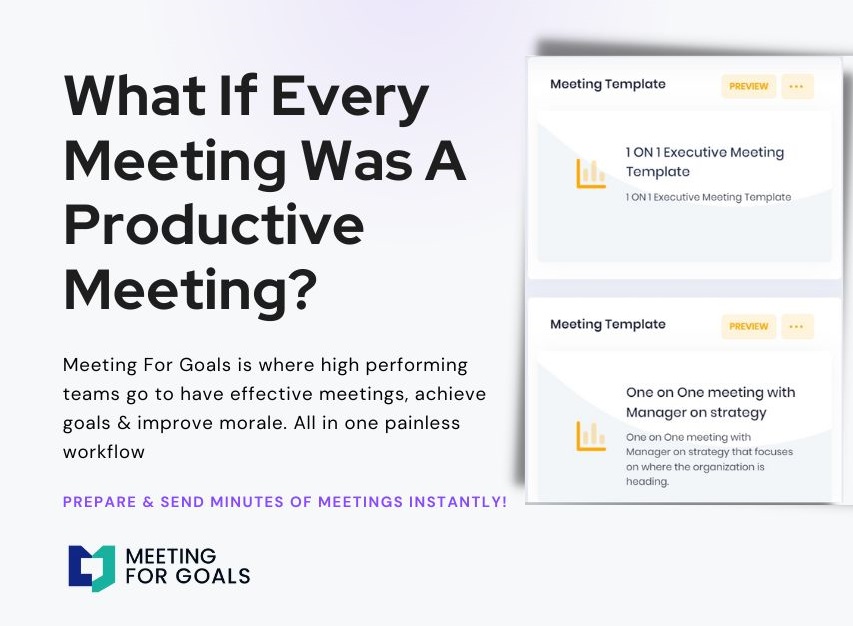
Our meeting management software is built to help teams run focused, goal-driven meetings that deliver results. Here’s how we make it easy to implement hot seat questions into your executive meeting strategy.
Seamless Integration
With our intuitive interface, you can embed hot seat questions directly into your meeting agenda. Assign questions to individuals, track answers, and follow up on action items—all in one place.
This ensures that hot seat questions aren’t an afterthought. They become a core part of your meeting structure.
Key Features That Support Engagement
- Digital Whiteboards: Capture live responses and visualize team input in real-time.
- Agenda Templates: Use pre-loaded templates with hot seat question sections tailored to different types of meetings.
- Real-Time Feedback: Collect input on what’s working and adjust your approach as needed.
- Auto-Generated Summaries: Get instant meeting summaries that highlight key takeaways and action items.
Creating a Culture of Accountability
When hot seat questions are built into your workflow, accountability becomes second nature.
Over time, your team begins to expect these questions—and prepare for them. This builds a culture where everyone is aligned, engaged, and focused on results.
Our platform also provides analytics that help you track trends in engagement and performance. This gives executives a clear view of what’s working and where to improve.
Ready to build a culture of accountability? Sign up today and start using Meeting For Goals to run more effective meetings.
VI. Conclusion
In today’s fast-paced business world, every meeting matters. For mid-sized companies and executive teams, meetings are where strategy turns into action.
Hot seat questions are a simple yet powerful way to transform your meetings. They increase engagement, promote accountability, and keep your team focused on what matters most.
When paired with a meeting management tool like Meeting For Goals, hot seat questions become more than just a technique—they become a cornerstone of your leadership strategy.
So if you’re tired of unproductive meetings and ready to lead with clarity and purpose, start by integrating hot seat questions into your next agenda.
Explore our free meeting templates to get started, or sign up now to experience how Meeting For Goals can help your team achieve more in less time.
👉 Ready to take your meetings to the next level? Visit https://meetingforgoals.com or sign up directly at https://app.meetingforgoals.com/TenantRegistration/Register and start running more productive meetings today.