
360 Feedback Template: A Guide to Building High-Performing Teams Through Effective Feedback and Meetings
In today’s fast-paced business environment, high-performing teams are built on trust, accountability, and continuous improvement. One of the most effective ways to foster these qualities is through a 360 feedback system. When paired with effective meetings, 360 feedback can transform team dynamics, boost morale, and align performance with company goals.
In this guide, we’ll show you how to implement a 360 feedback template, why it matters, and how Meeting For Goals can help turn feedback into results—while making meetings shorter, more focused, and more productive.
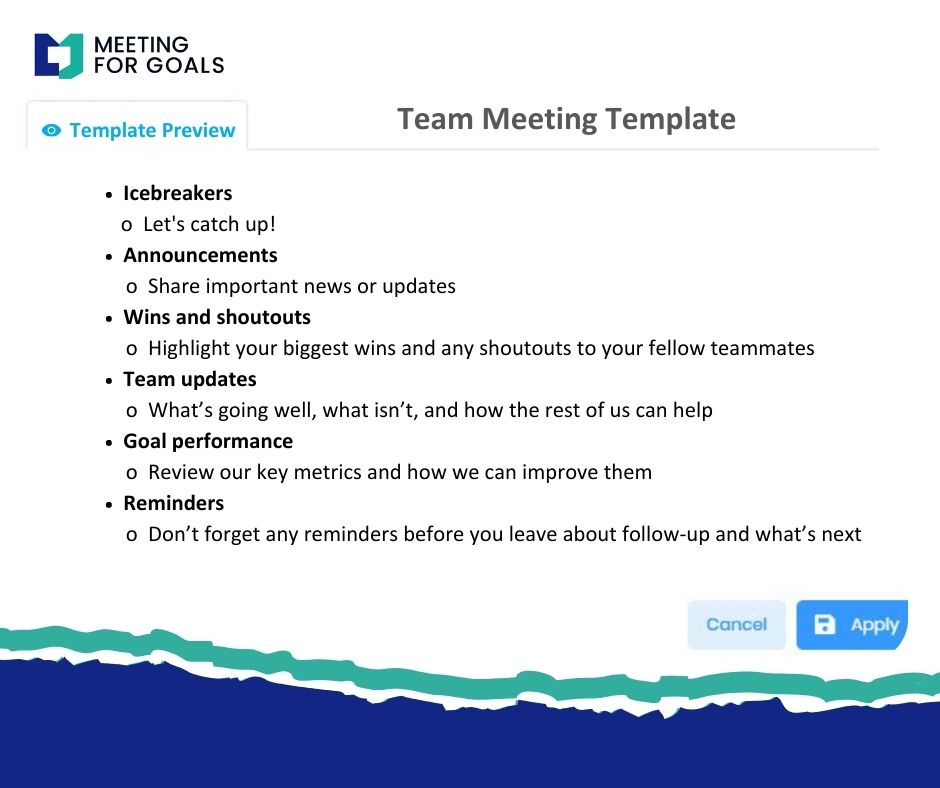
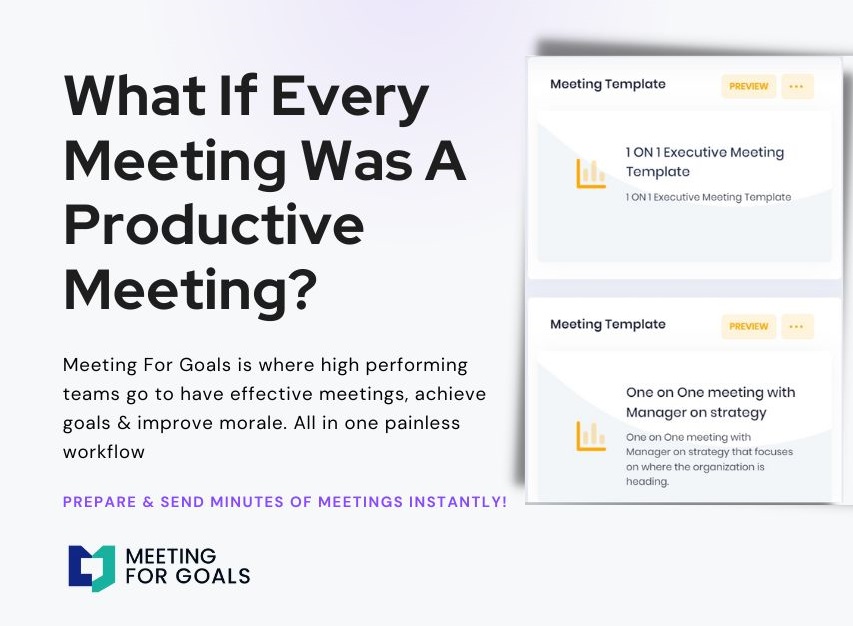
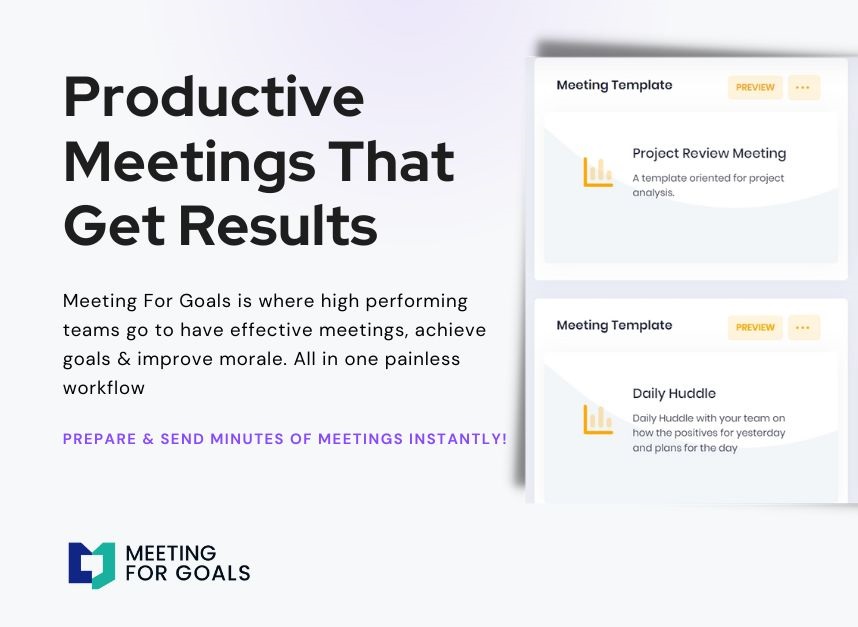
Ready to take your meetings to the next level? Start with our free meeting templates or sign up for Meeting For Goals today.
Introduction
Feedback is the fuel for growth in any organization. But not just any feedback—the kind that gives a complete, honest, and well-rounded view of performance. That’s where 360 feedback comes in.
Unlike traditional top-down reviews, 360 feedback gathers input from:
- Peers
- Direct reports
- Supervisors
- The employee themselves
This gives a full-circle view of how someone is performing from all angles. It’s not just about what the boss thinks—it’s about how the whole team sees your contributions.
In high-performing teams, feedback isn’t a once-a-year event. It’s a daily habit. It promotes transparency, accountability, and constant improvement. But feedback alone doesn’t drive change. It needs to be discussed, understood, and turned into action.
That’s where Meeting For Goals comes in. Our platform helps teams have focused, goal-driven meetings. It aligns feedback with company objectives, tracks progress, and saves time. By integrating 360 feedback into your meeting rhythm, you ensure every insight becomes a step forward.
Let’s explore how a 360 feedback template can transform your team—and how Meeting For Goals can help you make it happen.
2 Minute Video
Watch a 2 minute demo of our meeting management software in action.
Section 1: What is 360 Feedback?
360 feedback is a performance review method that collects input from multiple sources. This includes supervisors, peers, direct reports, and the employee themselves. The goal is to get a well-rounded view of someone’s strengths and areas for improvement.
Traditional reviews often rely on one person’s opinion—usually the manager. But that can miss important context. For example, a manager might not see how an employee supports teammates or handles conflict. 360 feedback fills in those gaps by gathering insights from across the team.
Here are the core components of a 360 feedback system:
- Peer feedback: Looks at teamwork, communication, and collaboration.
- Subordinate feedback: Evaluates leadership, delegation, and support.
- Supervisor feedback: Focuses on strategic alignment and performance.
- Self-assessment: Promotes self-awareness and reflection.
Why does this matter? Because it creates a more accurate and fair picture of performance. It also builds a culture of openness and learning. People feel seen, heard, and valued from all directions.
For team leaders managing 40–70 employees, 360 feedback is a powerful way to track team health and individual growth. It helps identify rising leaders and areas for development.
When you combine 360 feedback with a tool like Meeting For Goals, the process becomes seamless. You can schedule review meetings, track development plans, and make sure feedback leads to action—not just paperwork.
Want to get started quickly? Check out our free meeting templates to streamline your feedback sessions.
Adding an Agenda
How to add an agenda instantly on Meeting For Goals.
Section 2: Why Constructive Feedback Matters
Constructive feedback is essential for any high-performing team. It’s not about pointing fingers—it’s about helping people grow.
In a 360 feedback system, constructive feedback is even more important. Since it comes from multiple sources, it needs to be clear, respectful, and focused on behaviors—not personal traits.
Here’s why constructive feedback is a game-changer:
- Builds Accountability: When people know their performance is being observed from all angles, they take ownership of their actions. This creates a culture where everyone is striving for excellence.
- Encourages Growth: Constructive feedback highlights what’s working and what’s not. It motivates people to improve and take charge of their development.
- Strengthens Teams: Open, honest communication builds trust. Teams that regularly share feedback are more connected, resilient, and aligned.
- Aligns with Company Goals: Feedback helps ensure that everyone’s efforts are moving in the same direction. This is especially important in mid-sized companies where cross-team coordination is key.
Meeting For Goals makes it easy to turn feedback into action. You can create agenda items for feedback discussions, assign follow-ups, and track progress—all in one place.
Want more on how to give great feedback? Harvard Business Review offers a great guide on giving feedback that actually works.
Section 3: How to Implement a 360 Feedback System
Rolling out a 360 feedback system might sound complicated, but it doesn’t have to be. With a clear plan and the right tools, it can be smooth, effective, and even enjoyable.
Here’s a step-by-step guide:
- Step 1: Define Your Goals: What do you want to achieve? Better leadership? Stronger collaboration? Clear goals will shape your feedback process.
- Step 2: Choose the Right People: Select a mix of reviewers for each employee: managers, peers, direct reports, and the employee themselves. A diverse group gives a more balanced view.
- Step 3: Create a Feedback Template: Use a standardized template with both rating scales and open-ended questions. Focus on key skills like communication, leadership, and accountability.
- Step 4: Use Smart Tools: Manual feedback collection is a hassle. Use Meeting For Goals to automate the process. Our platform lets you send forms, gather responses, and analyze results—all in one place.
- Step 5: Be Transparent: Explain the process to your team. Make sure they know why you’re doing it, how it works, and that it’s focused on development—not punishment.
- Step 6: Discuss the Feedback: Schedule review meetings using Meeting For Goals. Talk through the feedback, set goals, and assign action items. Keep it constructive and forward-looking.
- Step 7: Review and Improve: After a few cycles, check in. Is the process working? Are people growing? Use feedback to fine-tune your system.
Want to see how this works in real life? Sign up for Meeting For Goals and try it with your team.
Section 4: Creating a Safe Space for Feedback
For 360 feedback to work, people need to feel safe. Without psychological safety, feedback can feel threatening or fake. That’s why creating a safe environment is so important.
Psychological safety means employees feel comfortable giving and receiving honest feedback. It’s the foundation for trust, innovation, and growth.
Here’s how to build that kind of environment:
- Lead the Way: Leaders should model the behavior they want to see. Share your own feedback and development goals. Show that it’s okay to be vulnerable.
- Make Feedback Regular: Don’t wait for annual reviews. Use Meeting For Goals to schedule monthly or quarterly feedback check-ins. The more often you do it, the less scary it becomes.
- Keep It Confidential: Assure people their feedback is private and used only for development. Our platform can anonymize responses and protect privacy.
- Teach Good Feedback: Train your team on how to give and receive feedback. Focus on being specific, kind, and behavior-focused—not personal.
- Celebrate Progress: Recognize people who act on feedback and improve. This shows that feedback leads to rewards, not punishment.
Google’s Project Aristotle found psychological safety to be the number one factor in team success. Creating a safe space isn’t just nice—it’s necessary.
Meeting For Goals supports this by giving you a respectful, structured environment for feedback. You can document outcomes, set expectations, and follow up—all without chaos.
Section 5: Turning Feedback into Action
Feedback is only valuable if it leads to change. That’s why action planning is the most important step in the 360 feedback process.
Here’s how to turn insights into results:
- Find Key Themes: Look for patterns in the feedback. Are there recurring comments about communication or leadership? Focus on what matters most.
- Set SMART Goals: Make goals Specific, Measurable, Achievable, Relevant, and Time-bound. For example: “Improve team communication by holding weekly check-ins for the next 3 months.”
- Assign Responsibility: Use Meeting For Goals to assign action items. Every goal should have an owner and a deadline.
- Track Progress: Review progress in your regular meetings. Celebrate wins and adjust goals as needed. Our platform makes it easy to document updates and stay on track.
- Offer Support: Provide coaching, training, or resources to help people succeed. Feedback should come with guidance—not just expectations.
- Revisit and Refine: After a few months, reassess. Has the person improved? Are new challenges emerging? Use this to keep the development cycle going.
This structured approach turns feedback into a powerful tool for growth. And with Meeting For Goals, it’s easy to keep everything organized and actionable.
Conclusion
360 feedback isn’t just a performance tool—it’s a culture builder. It creates trust, accountability, and alignment. When paired with focused, effective meetings, it becomes a powerful engine for team success.
Meeting For Goals helps you bring it all together. From collecting feedback to turning it into action, our platform makes the process simple, seamless, and effective.
Want to see it in action? Sign up today and start building the high-performing team you’ve been dreaming of.
Explore our free meeting templates to kick-start your next feedback session. Or visit our website to learn more about how we’re helping teams like yours save time, boost morale, and hit their goals.
External Sources
Harvard Business Review: How to Give Feedback People Will Actually Use
Gallup: Why Employee Feedback Is Critical to Business Success
Internal Links
Sign up for Meeting For Goals: https://app.meetingforgoals.com/TenantRegistration/Register
Explore free meeting templates: https://meetingforgoals.com/meeting_templates
Learn more at: https://meetingforgoals.com